DbcultAccessing Vault...
Cult Review
Senior Film Conservator
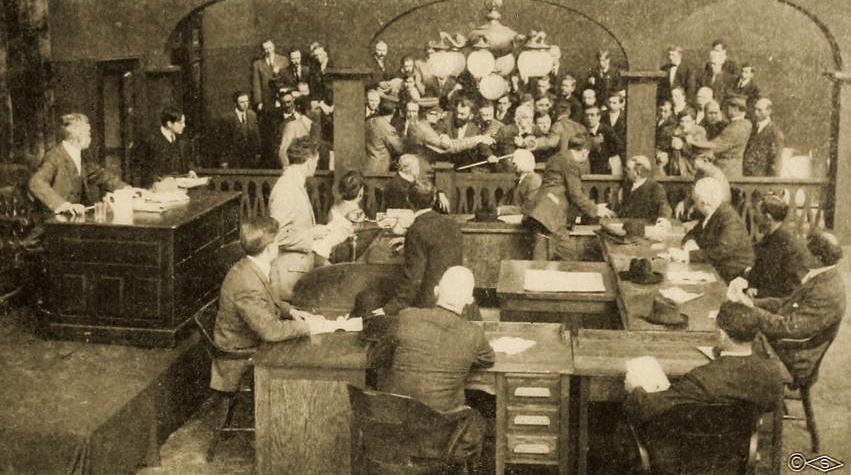
Imagine the newsroom as a cathedral of clacking typewriters, cigarette smoke curling like incense before the front-page altar. Into this sanctum storms Jimmie, collar up, eyes blazing with ink-pot ambition, ready to trade his byline for municipal salvation. Reporter Jimmie Intervenes may have been cranked through a 1913 hand-crank camera, but its pulse is defiantly modern: corruption for sale, truth on deadline, romance that files copy before it steals a kiss.
Director-scribe William E. Wing never spoon-feeds; he ricochets us from newsroom to council chamber to moon-soaked countryside in under thirty minutes, stitching a tapestry of shadowy alliances that feels closer to Beating Back’s moral battlegrounds than to polite drawing-room fare. The film’s aesthetic hinges on kinetics: a horse’s mane whipping like protest flags, auto headlamps boring predator holes into the night, a stolen document flapping like a wounded bird. Even the intertitles swagger—telegraphese so terse it could slice bread.
City editor hands Jimmie the assignment the way a card-sharp slaps an ace: "Break the steal, own the shop." Translation: expose the railroad trust moon-walking behind a façade of civic do-gooders, or watch democracy auctioned track by track. Wing sketches the cabal with brisk strokes—Councilman Blake’s frosty grin, Grayson’s top-hat predation, a boardroom vote dangling by a single abstention. Stakes crystallize faster than you can say muckrake.
Enter Alice, ostensibly a stenographer, but the camera lingers on her gaze a half-second too long—enough to telegraph a soul in tumult. She leaks Blake’s clandestine tête-à-tête to Jimmie, and the narrative pivots from ink-stained procedural to high-noon thriller. Wing stages the midnight summit at Grayson’s country manor as a chiaroscuro banquet: candelabra flicker on brandy snifters, but the real intoxicant is power. A quill hovers, ready to sign away the city’s arteries. Jimmie, eavesdropping from behind velvet drapes, becomes the ghost at the feast.
What follows is one of silent cinema’s earliest “document heists.” Jimmie leaps, Grayson is trussed like a goose, and the priceless contract changes pockets. The getaway—horse vs. automobile—prefigures every “chase the MacGuffin” sequence that would echo through Hitchcock and Spielberg decades later. Bullets kiss the air, a bullet creases Jimmie’s brow, yet he thunders toward the city, blood and ink mingling on his cuff.
Al W. Filson’s Jimmie is all forward motion—jaw set like a headline in 96-point Bodoni. Watch how he shrinks ever so slightly when Alice first smiles; bravery and bashfulness share the same frame. Stella Razeto’s Alice is no swooning accessory; her eyes telegraph calculations—risk, reward, heart. In the moment she lifts the telephone receiver to tip off Jimmie, the camera tilts up, haloing her against a grim office partition: sainthood via long-distance.
Fred Huntley’s Grayson oozes velvet malice, while Guy Oliver’s Blake exudes the weary amorality of a man who’s sold so many scraps of the future he’s lost count. Their handshake, viewed through a doorway from Jimmie’s hiding spot, is framed like a pagan nuptial—two shadows merging into one pestilence.
Cinematographer Gilbert Warrenton (uncredited, but historical records lean his way) bathes interiors in tungsten pools, leaving corridors ink-black. The effect? Every doorway yawns like a potential trap. When Jimmie sneaks out of Grayson’s manor, the silhouette of his fleeing back is swallowed by shrub-branch lattice—urban noir a full decade before the term existed.
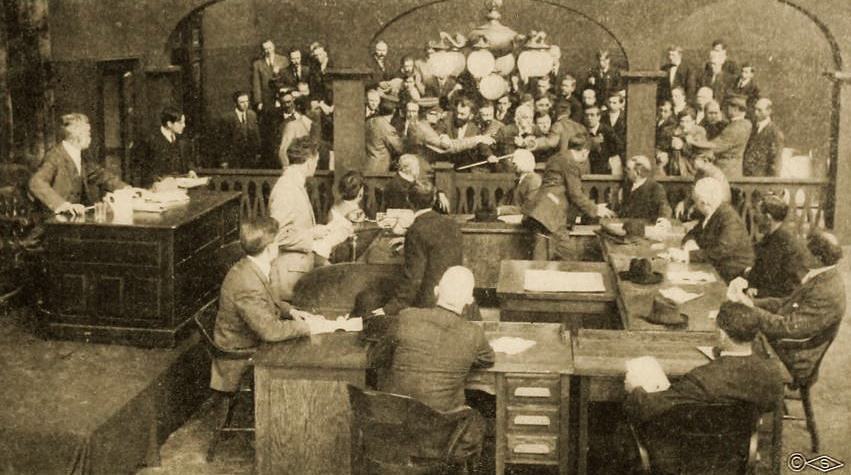
The cross-country chase cross-cuts between sweating horse flanks and the Packard’s chrome grin, a montage that rivals the train-vs-horse spectacle in 1903’s Great Train Robbery. Close-ups appear sparingly: a trembling hand clutching reins, the patrolman’s badge glinting under moonlight, Alice’s lower lip quivering as she awaits the verdict of the council vote. Each magnified detail lands like an uppercut.
Original exhibitors likely cued galloping "hurry" music for the chase, then shifted to a stately "andante maestoso" during the council vote. Modern restorations—piano, Wurlitzer, or small ensemble—underscore how rhythm dictates pulse. Try playing The Student of Prague’s brooding leitmotif over Jimmie’s rooftop sprint; suddenly the stakes feel cosmic, Faustian.
For 1913, Alice’s agency astonishes. She isn’t arm-candy or distressed damsel; she is the hinge upon which civic destiny swings. Contrast her with the heroines of Sapho or Dockan eller Glödande kärlek, who orbit male desire. Alice navigates patriarchal corridors, weaponizing information. The marriage proposal via telephone? A cheeky inversion: the scoop courts the source.
Swap railroad trust for tech conglomerate, council vote for spectrum auction, and you’ve got tomorrow’s headline. The film distills a cyclical truth: capital will always masquerade as philanthropy. Jimmie’s triumph is less personal than symbolic—proof that a single determined scribe can still dynamite the corridors of captured power. Viewers in the post-Citizens United era may wince at how little has changed, save the speed of broadband over bandolier.
Place Reporter Jimmie Intervenes beside Robbery Under Arms’ colonial banditry or Paradise Lost’s moral allegory, and Wing’s film emerges as the scrappy urban sibling—less epic, more streetwise. It lacks the poetic fatalism of The Merchant of Venice or the regal sweep of Les Amours de la reine Élisabeth, yet its velocity and journalistic swagger carve a unique niche: the proto-newspaper noir.
Let’s not varnish: minority representation is nil, and class politics tread a paternalistic line. The film’s resolution hinges on a patrolman’s arbitrary goodwill—deus ex badge—rather than systemic accountability. And Grayson’s comeuppance feels abrupt; a fade-out denies us the schadenfreude of his courtroom meltdown.
Surviving prints hover in 16mm at the Library of Congress and EYE Filmmuseum. A 2018 digital transfer—2K, grain intact—screens occasionally on TCM Silent Sundays. Bootlegs ripple across YouTube, but colors smear like wet ink. Cinephiles pray for a Blu-ray with contextual essays on muckraking cinema; until then, archival bookings are your best bet.
Reporter Jimmie Intervenes is a shot of adrenaline straight to the fourth estate’s heart. It preaches that stories can still outrun engines, that love can blossom between deadlines, that one vote—and one vow—can reroute history. Imperfect? Yes. Dated? Never. In an age when truth seems negotiable, Wing’s feverish reel reminds us that sometimes all it takes is a battered reporter, a blood-stained document, and a stenographer who refuses to stay silent.
IMDb —
1934
Community
Log in to comment.