DbcultAccessing Vault...
Cult Review
Senior Film Conservator
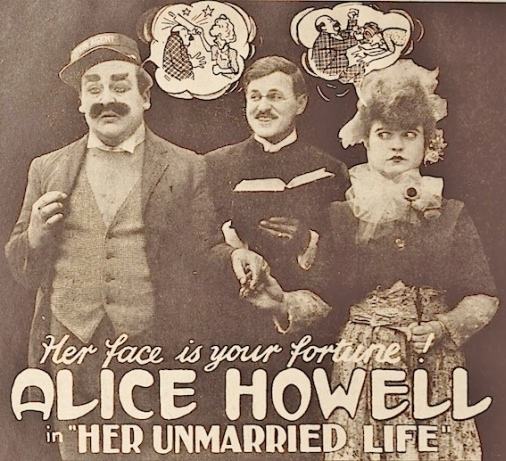
Step into the whimsical, often bewildering, world of early 20th-century silent cinema with a viewing of Her Unmarried Life, a delightful comedic romp that masterfully blends slapstick with a sharp commentary on societal avarice and the spirited pursuit of personal autonomy. Released during an era when film was still discovering its voice, this picture, featuring the inimitable Alice Howell, offers more than just a series of laughs; it provides a fascinating glimpse into the social dynamics and comedic sensibilities of its time. It’s a testament to the enduring appeal of well-executed physical comedy and a surprisingly nuanced portrayal of a young woman navigating a world intent on dictating her destiny. For enthusiasts of cinematic history, or simply those seeking a refreshing dive into the foundational elements of screen comedy, this film serves as a vibrant, albeit silent, dialogue with the past.
At the heart of this boisterous narrative lies Pansy Pickles, portrayed with an effervescent charm by Alice Howell. Pansy is the step-daughter of Peter Pickles, a man whose entrepreneurial spirit extends beyond his fashionable boarding house in Corncob Corner to encompass the lucrative prospect of his step-daughter's future. Pa Pickles, brought to life with a wonderfully grasping energy by Hughie Mack, is a character driven by the singular desire to live comfortably, preferably at someone else's expense. His scheme is simple: either educate Pansy to a degree where she becomes a valuable asset or, more appealingly, marry her off to a man of means, thereby securing his own golden years. This mercenary outlook sets the stage for a series of increasingly absurd events, each more hilarious than the last. The plot thickens with the arrival of two letters, each bearing tidings of inheritance, yet each destined to sow seeds of chaos rather than comfort.
The first missive informs Pa Pickles that Pansy's recently deceased uncle has left a vast estate, but, crucially, Pansy herself is not mentioned in the will. This unexpected turn immediately throws a wrench into Pa Pickles' carefully laid plans. Simultaneously, the diligent, if somewhat hapless, school teacher, played by Bert Roach, receives news of his own impending inheritance, a substantial sum to be shipped by express. This fortuitous coincidence does not escape the notice of the local station agent, a character whose opportunistic nature quickly comes to the fore. Overhearing these financial revelations, and shrewdly anticipating Pa Pickles' likely preference for the now-wealthy teacher, the agent concocts a brazen act of fraud. He seizes a bank book, crudely alters the name to his own, and inflates the figures, fabricating a convincing, albeit entirely false, claim to a considerable fortune. This act of deception ignites a chain reaction of mistaken identities, misplaced affections, and riotous misunderstandings that propel the narrative forward with an almost dizzying momentum.
Pansy, however, is no docile pawn in her stepfather's schemes. Her free spirit is evident from the outset, particularly in her disdain for formal education. When the teacher calls the roll, Pansy is conspicuously absent, a detail that sends Pa Pickles on a frantic search. He eventually discovers her ensconced in a tree, lost in the pages of a book, a delightful image of youthful rebellion and intellectual curiosity. In a moment of classic slapstick, Pa Pickles resorts to throwing a stone, dislodging Pansy from her arboreal sanctuary and sending her tumbling directly into the schoolroom, landing unceremoniously beneath the fearsome 'spanking machine'. This contraption, a symbol of rigid discipline, becomes the focal point for a truly memorable comedic sequence. With a spirit as fiery as her predicament, Pansy retaliates, thrusting the teacher into the very same device. The ensuing chaos is amplified when matches in the poor fellow's pocket ignite, burning and blazing like fury, transforming a scene of corporal punishment into a comical, albeit dangerous, inferno. This moment not only provides a hearty laugh but also serves to underscore Pansy's refusal to be passively subjected to authority, a theme that resonates throughout the film.
The discovery of the station agent's doctored bank book by Pa Pickles marks another pivotal turn. Convinced of the agent's sudden wealth, Pa Pickles, ever the pragmatist, immediately decrees that Pansy shall marry him. This decision, predicated entirely on financial gain, highlights the pervasive theme of marriage as a transactional arrangement rather than a bond of affection in the film's satirical lens. However, the truth, as it always does in these farcical narratives, eventually surfaces. Someone 'puts Pa wise' to the agent's deception, and the fraudulent suitor is unceremoniously thrown out, a well-deserved comeuppance for his avarice. The wedding, however, is far from over. The town's wealthiest man, present at the chaotic ceremony, offers his own son as a groom, presenting Pa Pickles with yet another opportunity for financial advancement. The minister prepares to solemnize this new union, but just as he is about to pronounce them man and wife, Pa Pickles makes another startling discovery: this bridegroom, despite his father's wealth, isn't worth a cent himself. He too is swiftly ejected, leaving Pansy thoroughly disgusted by the revolving door of unsuitable, financially motivated suitors.
Pansy's patience, clearly, has reached its limit. In a moment of brilliant improvisation and assertion of her own agency, she changes places with another girl who has come to the wedding, effectively orchestrating her own destiny. The unsuspecting school teacher is then pronounced bridegroom, and in a truly unexpected twist, they are married. His inheritance arrives at the same time, but to Pa Pickles' profound dismay, it turns out to be nothing more than a pig. The sight of this meager inheritance, after all the elaborate schemes and frantic machinations, pushes Pa Pickles to the brink; he is just about to 'murder the teacher' when he discovers the ingenious change in brides. This revelation, while initially frustrating for Pa, ultimately leads to a resolution that, remarkably, satisfies everyone. Pa Pickles, having exhausted all other avenues, finally accepts a bridegroom whom Pansy genuinely likes, and they are married with a triumphant 'whoop and hooray', signaling a joyous, if hard-won, end to the comedic mayhem. This conclusion, while still steeped in the transactional logic of the era, ultimately celebrates Pansy's ability to carve out her own happiness amidst the chaos.
The brilliance of Her Unmarried Life lies not just in its convoluted plot, but in the masterful performances of its cast, particularly Alice Howell. Howell, known for her expressive face and dynamic physical comedy, imbues Pansy with a vivacious spirit that transcends the limitations of silent film. She is not merely a damsel in distress or a passive object of her stepfather’s machinations; rather, she is an active participant in her own fate, capable of both rebellion and cunning. Her comedic timing is impeccable, a crucial element in an era where humor relied heavily on visual gags and exaggerated gestures. Hughie Mack's portrayal of Pa Pickles is equally commendable. He embodies the avaricious patriarch with a delightful blend of bluster and desperation, making him a character who is simultaneously despicable and comically endearing. Bert Roach, as the hapless school teacher, provides a perfect foil to Pansy's spirited independence and Pa Pickles' schemes, often finding himself in the most absurd and painful predicaments. The synergy between these performers creates a comedic rhythm that is both engaging and highly entertaining.
The direction of the film, characteristic of early silent comedies, emphasizes clear visual storytelling and rapid-fire pacing. The use of exaggerated expressions, broad gestures, and well-choreographed physical comedy ensures that the narrative remains comprehensible and amusing even without dialogue. The camera work, while perhaps rudimentary by modern standards, is effective in capturing the essential actions and reactions that drive the humor. The editing maintains a brisk tempo, ensuring that the comedic momentum never wanes, moving from one chaotic scene to the next with seamless transitions. The production design, though simple, effectively conveys the quaint charm of Corncob Corner and the various settings, from the schoolroom to the wedding ceremony. The film's ability to elicit genuine laughter, even a century after its release, speaks volumes about the timeless nature of its comedic principles and the enduring talent of its creators.
Beyond its surface-level comedy, Her Unmarried Life offers a surprisingly trenchant commentary on several societal themes prevalent in the early 20th century. The most prominent of these is the commodification of marriage, particularly for women. Pansy's potential husbands are evaluated not on their character or their compatibility with her, but solely on their perceived financial worth. Pa Pickles' relentless pursuit of a wealthy son-in-law underscores a societal pressure where a woman's marital status was often directly linked to her family's social and economic advancement. This theme resonates with other films of the era, such as What Money Can't Buy, which often explored the tension between material wealth and genuine affection. Furthermore, Pansy's defiant spirit and her ultimate agency in choosing her own partner, even if through a convoluted trick, speak to the nascent stirrings of female empowerment. Her refusal to be a passive object in her stepfather's schemes provides a refreshing counter-narrative to the more conventional portrayals of women in distress.
The film also delves into the absurdity of greed and the pitfalls of deception. The station agent's fraudulent bank book and Pa Pickles' repeated misjudgments of his prospective sons-in-law highlight the folly of prioritizing wealth above all else. This comedic exposé of human foibles is a common trope in silent comedies, often serving as a lighthearted critique of societal vices. The chaotic nature of the wedding, with its revolving door of grooms and Pansy's ingenious switch, echoes the farcical elements found in other contemporary comedies. One might draw parallels to the spirited antics of characters in films like Madcap Madge, where a strong-willed female lead often defies expectations and societal norms through clever, often mischievous, means. Similarly, the family dynamics and humorous misunderstandings bear a stylistic resemblance to comedies such as The Laugh on Dad, which often explored domestic chaos and the humorous clashes between generations.
In conclusion, Her Unmarried Life stands as a vibrant example of early silent comedy, showcasing the talents of Alice Howell and delivering a narrative rich with both slapstick humor and subtle social commentary. Its intricate plot, driven by greed, deception, and Pansy's spirited resistance, remains remarkably engaging. The film's ability to maintain a high level of comedic energy through physical gags and expressive performances is a testament to the enduring power of silent cinema. It’s a film that reminds us that even in the absence of spoken dialogue, human emotions, foibles, and triumphs can be conveyed with profound clarity and uproarious effect. For anyone interested in the foundational elements of cinematic humor, or simply seeking a delightful escape into a bygone era, this film is an absolute treat, a testament to the timeless appeal of a good laugh and a strong-willed heroine finding her own way.
IMDb —
1916
Community
Log in to comment.