DbcultAccessing Vault...
Cult Review
Senior Film Conservator
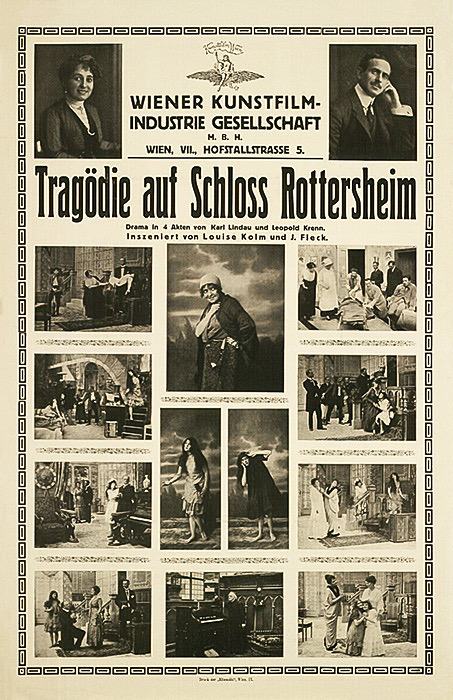
There are films that merely tell a story, and then there are those that absorb you, drawing you into their very fabric, allowing you to breathe the same rarefied, often tainted, air as their characters. Die Tragödie auf Schloss Rottersheim, a silent marvel from the early 20th century, undoubtedly belongs to the latter category. It is not merely a film; it is an experience, a plunge into the shadowed recesses of an aristocratic world on the brink of collapse, where ancient stones echo with recent betrayals and the specter of a bygone era looms large over every frame. This cinematic journey, penned by the evocative Leopold Krenn and Paul Lindau, transports viewers to a realm where human ambition and the weight of history collide with devastating force, leaving an indelible mark long after the final reel has spun.
From its opening shot, the film establishes a profoundly melancholic, almost gothic, atmosphere. Schloss Rottersheim itself is less a setting and more a character, its imposing architecture, often depicted through stark chiaroscuro, reflecting the crumbling fortunes and moral decay of its inhabitants. The cinematography masterfully employs deep shadows and dramatic angles, hinting at the Expressionist influences that were beginning to permeate German cinema of the period. One cannot help but draw parallels, however nascent, to the visual innovations seen in later, more overtly Expressionist works, where the external world becomes a projection of internal turmoil. The very air within the castle feels heavy with foreboding, a silent testament to generations of secrets buried beneath its ancient foundations. The visual language is rich with symbolism, from the flickering candlelight that dances across anxious faces to the gnarled trees outside, seemingly reaching like skeletal fingers towards the moonlit sky, each element meticulously crafted to amplify the pervasive sense of dread and mystery.
The narrative, while fundamentally a tale of inheritance and intrigue, transcends the simplicity of its premise through its nuanced exploration of human frailty and malevolence. The ailing Baron von Rottersheim, portrayed with a haunting fragility by Rudolf Beer, is a figure of tragic impotence, his physical decline mirroring the spiritual erosion of his lineage. His reclusive existence within the castle walls is a poignant metaphor for a dying aristocracy, clinging desperately to vestiges of power and prestige even as the foundations crumble. The arrival of Countess Isolde, brought to life with captivating elegance by Liane Haid, injects a vital, yet volatile, element into this stagnant environment. Haid, a luminous presence on screen, imbues Isolde with a blend of vulnerability and nascent strength, making her a compelling focal point for the unfolding drama. Her initial innocence is palpable, yet beneath it lies a resilient spirit, slowly awakened by the treacherous currents swirling around her.
The ensemble cast delivers performances that are, by the very nature of silent cinema, intensely physical and emotionally articulate. Walter Hofer’s Herr Doktor Richter is a chilling study in calculated villainy. Hofer eschews overt theatricality for a more insidious portrayal, his subtle shifts in expression and measured gestures conveying a depth of malevolence that is truly unsettling. He is not merely a stock antagonist; he is a man consumed by an almost pathological greed, a stark embodiment of the corrupting influence of power. His ambition is a palpable force, driving the plot forward with a relentless, almost predatory, energy. Contrast this with Karl Pfann’s Franz, the brooding cousin whose love for Isolde provides a glimmer of genuine human connection amidst the pervasive cynicism. Pfann's performance is marked by a quiet intensity, his longing and internal conflict conveyed through a potent combination of stoic reserve and sudden, heartfelt expressions. The silent language of the eyes, the subtle clench of a fist, the barely perceptible tremor of a lip – these are the tools through which these actors communicate a maelstrom of emotions, captivating the audience without uttering a single word.
Polly Janisch, as Martha the housekeeper, provides a grounding presence, her watchful eyes and knowing glances hinting at a deeper understanding of the castle's dark past. Her loyalty to the Baron, and later to Isolde, is steadfast, making her a crucial, albeit understated, figure in unraveling the mystery. Similarly, Hermann Benke’s Old Heinrich, the ancient groundskeeper, is a repository of local folklore and cryptic warnings, his weathered face a map of the castle’s long history. These supporting roles are not mere window dressing; they are integral threads in the narrative tapestry, each contributing to the film’s rich texture and authentic sense of place. The nuanced interplay between these characters, often conveyed through subtle glances and unspoken understandings, elevates the film beyond a simple melodramatic thriller, imbuing it with a profound sense of human drama. While perhaps not as overtly fantastical as Das Geheimschloss, which revels in its overt mystery, Die Tragödie auf Schloss Rottersheim crafts its intrigue from the more grounded, yet equally terrifying, machinations of human desire and deceit.
Leopold Krenn and Paul Lindau's screenplay is a masterclass in building tension and intricate plotting. The initial mystery surrounding the Baron's death is expertly layered with subsequent revelations, each twist and turn serving to deepen the audience's investment in Isolde's perilous journey. The condition of the will, forcing Isolde into a marriage within a year, is a classic dramatic device, effectively raising the stakes and creating a ticking clock against which the characters must operate. This narrative urgency propels the story forward, preventing it from ever feeling stagnant despite its deliberate pacing. The gradual unveiling of Richter's villainy is particularly well-executed; he is not introduced as an outright monster, but rather as a seemingly trustworthy figure whose true nature slowly bleeds through his carefully constructed facade. This slow-burn reveal makes his eventual unmasking all the more impactful, underscoring the insidious nature of his manipulation.
The film deftly balances the external plot of inheritance and murder with the internal struggles of its characters. Isolde's growing isolation and fear are palpable, her emotional journey mirroring the audience's own sense of unease. Her gradual reliance on Franz, and the blossoming of their forbidden love, provides a much-needed emotional anchor in a narrative otherwise dominated by darkness. This romantic subplot, far from being a mere distraction, serves to highlight the redemptive power of genuine human connection in the face of profound adversity. It is a testament to the writers' skill that they manage to imbue these silent characters with such complex inner lives, allowing their motivations and desires to resonate deeply with the viewer. The screenplay’s meticulous construction ensures that every clue, every cryptic utterance, and every suspicious glance contributes to the overarching mystery, leading inexorably to the dramatic confrontation in the castle’s ancient crypt.
The film’s climax in the crypt is a tour de force of silent cinema. The claustrophobic setting, lit by the flickering glow of lanterns, amplifies the tension to almost unbearable levels. Richter's desperation, now stripped bare of all pretense, is terrifyingly rendered, his frantic search for a hidden treasure revealing the extent of his deluded ambition. The revelation that the crypt holds not gold, but ancient family documents confirming Isolde's absolute rights, is a poignant subversion of audience expectations, underscoring the idea that true value lies not in material wealth but in truth and legitimacy. The physical struggle between Franz and Richter is visceral and impactful, a stark representation of the battle between good and evil that has simmered throughout the film. The resolution, while providing justice, does not shy away from the lingering shadows of the tragedy, acknowledging the profound scars left by greed and betrayal. It is a conclusion that feels earned, a cathartic release after a prolonged period of suspense and emotional turmoil. The film, in this regard, shares a thematic resonance with films like Chained to the Past, where the burdens of history and familial legacy play a pivotal role in shaping character destinies, though Rottersheim’s tragedy is perhaps more overtly sinister in its execution.
Die Tragödie auf Schloss Rottersheim stands as a remarkable testament to the power and artistry of early German cinema. It is a film that, despite its age, continues to resonate with contemporary audiences through its timeless themes of greed, love, justice, and the often-destructive weight of familial secrets. The directorial vision, while uncredited in specific records, clearly understood the unique capabilities of the silent medium, utilizing visual storytelling and powerful performances to convey a narrative of profound emotional depth. The film's influence, particularly in its atmospheric construction and character development, can be seen as a precursor to the more formalized Expressionist movement that would soon sweep through German filmmaking, shaping the visual language of countless subsequent works. Its exploration of a decaying aristocracy, struggling to maintain its facade amidst internal corruption, offers a fascinating socio-cultural commentary on the anxieties of post-WWI Germany.
The enduring appeal of a film like Die Tragödie auf Schloss Rottersheim lies not just in its compelling plot or its striking visuals, but in its ability to evoke a profound sense of empathy for its characters, even the flawed ones. We witness Isolde's transformation from a vulnerable heiress to a determined survivor, Franz's quiet strength, and even the tragic downfall of Richter, a man consumed by his own avarice. The film reminds us that the greatest tragedies often unfold not on grand battlefields, but within the intimate confines of human hearts and the ancient walls of forgotten homes. It is a powerful reminder of the human capacity for both profound evil and enduring love, all set against a backdrop of breathtaking cinematic artistry. For those with an appreciation for the foundational works of cinema, for stories that delve into the psychological complexities of their characters, and for visual narratives that transcend the need for spoken dialogue, Die Tragödie auf Schloss Rottersheim is an essential viewing experience. Its whispers of betrayal and redemption echo through the decades, a timeless testament to a tragedy that, paradoxically, birthed a new beginning for Schloss Rottersheim.
IMDb 7.6
1924
Community
Log in to comment.