DbcultAccessing Vault...
Cult Review
Senior Film Conservator
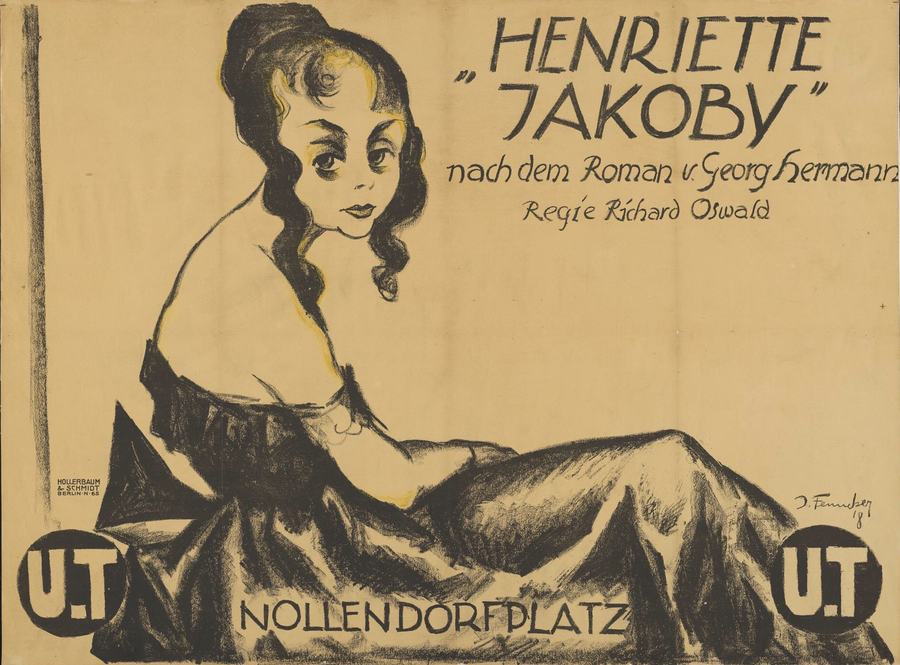
In the annals of silent cinema, where narratives often soared with grand melodrama and profound human struggle, Richard Oswald's 'Henriette Jacoby' stands as a compelling, albeit perhaps lesser-known, testament to the era's artistic prowess. Penned by the insightful Georg Hermann and Oswald himself, this cinematic endeavor plunges into the suffocating milieu of early 20th-century societal expectations, particularly as they shackle the aspirations and affections of its eponymous heroine. The film is a masterclass in emotional restraint juxtaposed with explosive internal conflict, a delicate balance that few productions of its time managed to achieve with such nuanced dexterity.
At its core, 'Henriette Jacoby' is an incisive examination of a woman caught in the relentless gears of familial duty and societal decorum. Helene Rietz embodies Henriette with a breathtaking fragility, her expressive eyes conveying volumes of unspoken anguish and nascent defiance. Henriette, a young woman of refined sensibilities and a quietly rebellious spirit, finds herself perpetually at the precipice of a life not her own. Her family, struggling to maintain a facade of gentility amidst dwindling fortunes, views her not as an individual with agency, but as a valuable asset, a means to secure their precarious social standing through a pragmatic, loveless marriage to Herr Salomon. Hugo Döblin, in his portrayal of Salomon, creates a character of chillingly detached pragmatism, a man whose wealth grants him dominion over human lives, reducing affection to a mere transaction. His presence on screen is less a character and more an oppressive force, a physical manifestation of the societal pressures bearing down on Henriette.
Contrasting sharply with this bleak prospect is Henriette's clandestine romance with David, the earnest and impoverished scholar brought to life by Julius Spielmann. Spielmann imbues David with an intellectual passion and a tender vulnerability that makes their forbidden love affair utterly captivating. Their stolen moments, often depicted through artful close-ups and subtle gestures, are the film's beating heart, offering fleeting glimpses of genuine human connection in a world otherwise devoid of warmth. The visual poetry of these scenes, bathed in soft light, serves as a poignant counterpoint to the stark reality of Henriette's impending nuptials. It's a classic cinematic trope, yet Oswald and Hermann manage to infuse it with fresh emotional resonance, making the audience acutely feel the injustice of their predicament. Much like the protagonists in The Price She Paid, Henriette's personal desires are constantly pitted against the seemingly insurmountable wall of external expectations, forcing her to consider the true cost of either path.
The arrival of Arthur, portrayed by the inimitable Conrad Veidt, injects a potent dose of psychological suspense and moral ambiguity into the narrative. Veidt, with his famously gaunt features and magnetic intensity, crafts a character who is at once alluring and deeply unsettling. Arthur is not merely a conventional antagonist; he is a complex, almost Byronic figure, a dissolute aristocrat whose charm masks a calculating mind. His motives remain tantalizingly opaque for much of the film – is he a cynical manipulator seeking to exploit Henriette's vulnerability for financial gain or a twisted game of power, or does he harbor a strange, possessive affection? Veidt's performance is a masterclass in understated menace, his every gesture and glance laden with unspoken threats and promises. His presence casts a long shadow over Henriette's already troubled existence, complicating her choices and pushing her further into a moral labyrinth. The dynamic here echoes the intricate power plays seen in films like Idols, where characters are often entangled in webs of deceit and desire, their true intentions shrouded in mystery.
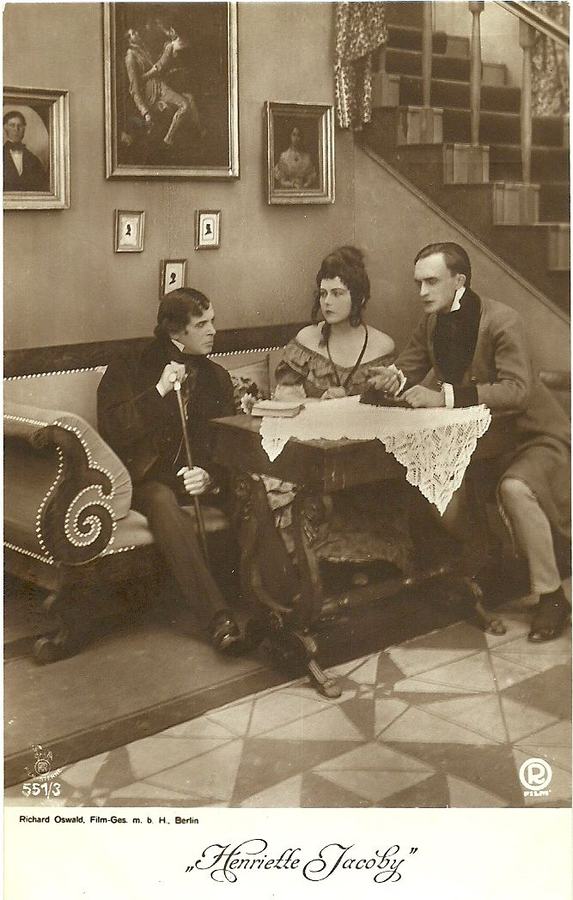
The interplay between Henriette, David, and Arthur forms a compelling love triangle, though one steeped in desperation rather than romantic idealism. Arthur's insidious influence serves to isolate Henriette, sowing seeds of doubt and despair, making her feel even more trapped. This psychological warfare is expertly rendered, relying heavily on the actors' nuanced expressions and Oswald's keen eye for visual storytelling. The film avoids simplistic villainy, instead presenting Arthur as a product of his own decadent environment, a man who finds amusement in the suffering of others, yet perhaps with a flicker of something more human buried deep beneath his cynicism. Veidt's ability to convey such layers of complexity, even in the absence of dialogue, solidifies his reputation as one of silent cinema's most compelling performers.
Beyond the central trio, the supporting cast paints a vivid portrait of a society in transition, clinging to antiquated values. Else Neft, as Henriette's stern mother, embodies the rigid adherence to social propriety, her performance a stark reminder of the pressures women faced from their own families. Her unwavering insistence on the match with Salomon, despite Henriette's obvious misery, is a powerful indictment of the era's patriarchal structures. Mechthildis Thein, as Henriette's sympathetic confidante, provides a much-needed counterpoint, her quiet support offering a glimmer of hope and understanding in Henriette's desolate world. Her character serves as a vital emotional anchor, reflecting the audience's own empathy for Henriette's plight. Similarly, the fleeting appearances of actors like Ilka Karen, Martin Kettner, Leo Connard, Max Gülstorff, Clementine Plessner, Fritz Richard, and Robert Koppel, though often brief, collectively build a rich tapestry of the community, each face adding to the pervasive atmosphere of judgment and expectation. They are the collective gaze of society, the silent chorus that dictates Henriette's fate, much like the omnipresent community in Children of the Feud, where individual destinies are often shaped by communal will and tradition.
Richard Oswald's direction is characterized by a remarkable sensitivity to the psychological nuances of his characters. He employs a visual language that transcends mere exposition, utilizing striking compositions and evocative lighting to convey internal states. The film's aesthetic leans into the expressionistic tendencies emerging in German cinema, though without fully embracing the grotesque distortions of later works. Instead, Oswald uses shadow and light to symbolize Henriette's emotional landscape – the oppressive darkness of her arranged future, the fleeting brightness of her stolen moments with David, and the shifting, ambiguous play of light around Arthur. His pacing is deliberate, allowing the emotional weight of each scene to fully settle, building a palpable sense of dread and anticipation. The camera often lingers on faces, drawing the audience into the characters' inner worlds, a technique that was vital in silent storytelling. The narrative progression, meticulously crafted by Hermann and Oswald, avoids simplistic resolutions, opting instead for a complex exploration of moral compromises and the enduring struggle for self-determination. The film's ability to evoke such profound emotion and intellectual engagement through purely visual means is a testament to Oswald's directorial genius, placing him alongside contemporaries who pushed the boundaries of cinematic expression, much like the innovative storytelling found in Der Mandarin.
'Henriette Jacoby' is more than just a period drama; it's a timeless exploration of themes that continue to resonate today: the conflict between individual desire and societal expectation, the corrosive power of class and wealth, and the enduring human quest for authenticity. Henriette's struggle to assert her agency in a world determined to define her is a powerful feminist statement, even if unintentional for its time. Her internal battle, culminating in a dramatic confrontation that threatens to unravel the carefully constructed facade of her life, speaks to the universal experience of feeling trapped and yearning for liberation. The film forces us to confront the hypocrisy of a society that values appearances over genuine happiness, and material gain over emotional fulfillment. In this regard, it shares thematic DNA with works like Rebecca the Jewess, where strong female characters often defy the constraints placed upon them by their communities and traditions.
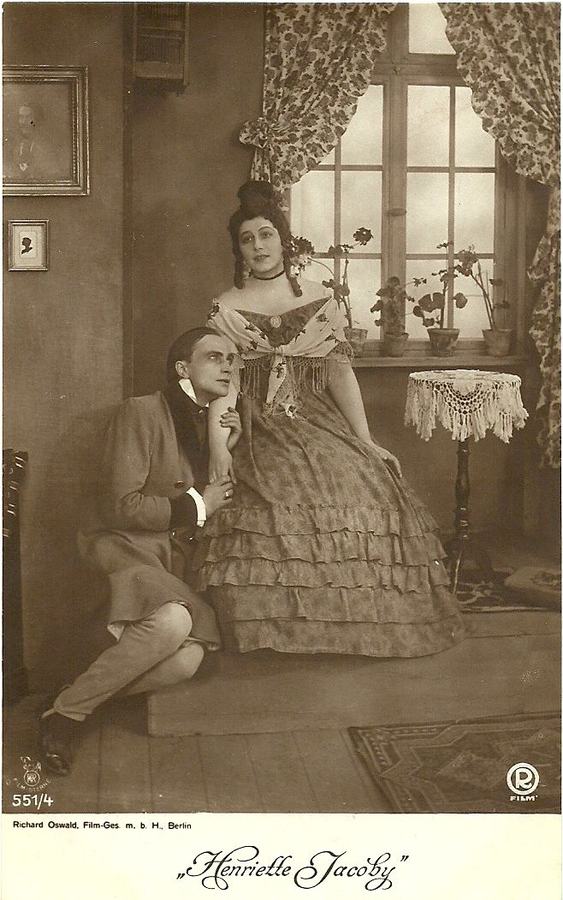
The film's ending, without giving away specifics, is particularly impactful, eschewing easy answers for a more ambiguous, thought-provoking conclusion. It leaves the audience to ponder the true cost of freedom and the indelible scars left by sacrifice. This refusal to neatly tie up all loose ends elevates 'Henriette Jacoby' beyond mere melodrama into the realm of profound artistic statement. It challenges viewers to consider the deeper implications of its narrative, rather than offering simple catharsis. The lasting impression is one of a woman's enduring spirit, even in the face of overwhelming adversity. This complexity is often a hallmark of significant cinematic achievements, distinguishing them from more formulaic productions, much like the intricate moral dilemmas presented in Casus.
While perhaps not as widely celebrated as some of its German Expressionist contemporaries, 'Henriette Jacoby' deserves a prominent place in film history. Its meticulous craftsmanship, stellar performances – particularly from Rietz and Veidt – and its enduring thematic relevance make it a film that rewards careful viewing. It serves as a potent reminder of the rich storytelling capabilities of the silent era and the profound emotional depth that could be achieved without spoken dialogue. For cinephiles and historians alike, rediscovering 'Henriette Jacoby' is akin to unearthing a hidden treasure, a film that speaks volumes about the human condition and the relentless pursuit of individual destiny against the backdrop of an unforgiving world. One might draw parallels to the powerful, often overlooked narratives found in films such as The Shielding Shadow or A Mother's Ordeal, which similarly explore personal struggles within larger societal frameworks.
The film's intricate plot, driven by Georg Hermann's literary sensibilities and Richard Oswald's keen directorial vision, ensures that every character, every interaction, contributes to the overarching tragic beauty of Henriette's journey. From the subtle glances between Henriette and David to the calculating stares of Arthur, the film masterfully uses the visual medium to convey a narrative rich in psychological depth. The performances from the wider ensemble, including the nuanced contributions of Clementine Plessner and Fritz Richard, further ground the narrative in a believable social reality, enhancing the sense of a community observing, judging, and ultimately shaping Henriette's choices. This collective portrayal of society's influence is a recurring motif in films of this period, often seen in the way communities impact protagonists in stories like The Silent Lie or even the more action-oriented The Warrior, where personal honor is tied to communal perception.
In conclusion, 'Henriette Jacoby' is a captivating piece of cinematic artistry that transcends its historical context. It is a powerful narrative about resilience, sacrifice, and the eternal struggle for self-possession. It demands to be seen not just as an artifact of a bygone era, but as a living, breathing work of art that continues to speak to the human experience with profound eloquence. The film serves as a crucial reminder of the depth and complexity that characterized early filmmaking, a period often overshadowed by later, more technically advanced productions. Its enduring power lies in its ability to evoke universal emotions, making Henriette's struggle feel as immediate and relevant today as it was a century ago. It’s a compelling argument for the preservation and re-evaluation of silent films, proving that true artistry knows no temporal bounds, much like the timeless human stories depicted in The Ships That Meet or Kampen om barnet.
IMDb —
1917
Community
Log in to comment.