DbcultAccessing Vault...
Cult Review
Senior Film Conservator
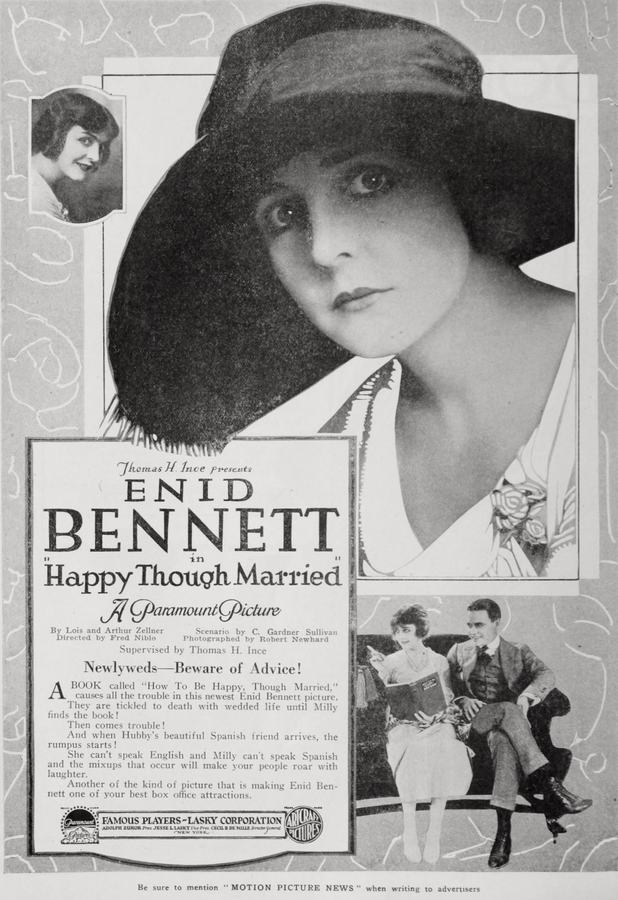
In the cinematic landscape of 1919, the medium was transitioning from the nickelodeon's kinetic simplicity to a more nuanced exploration of the human condition. Happy Though Married, directed with a deft touch that balances levity with psychological undercurrents, stands as a testament to this evolution. Unlike the visceral maritime struggles found in The Sea Wolf, this film operates within the claustrophobic, albeit gilded, confines of the American household. It is a work that demands we look past the flickering silver grains to see the burgeoning anxieties of a society renegotiating the terms of the marriage contract.
The film introduces us to Millicent Lee, portrayed by the luminous Enid Bennett. Bennett’s performance is a masterclass in silent-era micro-expressions. She navigates the transition from blissful ignorance to agonizing suspicion with a grace that avoids the histrionics common to the era. When she discovers the book "How to Be Happy, Though Married" in her husband’s possession, the film shifts from a romantic vignette into a study of epistemological doubt. The book itself serves as a silent antagonist, a physical manifestation of a husband's unspoken dissatisfaction. It suggests that happiness is not a natural state but a manufactured one—a concept that would have resonated deeply with an audience living through the birth of modern consumerism and self-help culture.
The discovery of the photograph—a beautiful, unidentified young woman—complements the manual's presence, creating a dual catalyst for Millicent’s descent into jealousy. This narrative pivot is handled with more sophistication than the broad strokes seen in His Blooming Bloomers. Here, the photograph isn't just a clue; it is a ghost that haunts the periphery of the frame. The direction utilizes deep focus to keep the domestic space feeling both expansive and trapping. As Millicent stares at the image, we see the internalizing of 1910s beauty standards, a theme that echoes the social pressures explored in Ambition.
"The silent film era often used objects as emotional anchors. In 'Happy Though Married', a simple manual becomes a weapon of psychological warfare, proving that the greatest dramas are often the ones whispered behind closed doors."
Douglas MacLean provides a perfect foil to Bennett. His portrayal of the husband is layered with a curious ambiguity. Is he a man seeking genuine improvement, or is he a bumbling architect of his own domestic ruin? MacLean’s physicality is less about the slapstick of A kölcsönkért csecsemök and more about the subtle discomfort of a man caught in a misunderstanding he cannot yet name. The supporting cast, including the formidable Philo McCullough and the versatile Vola Vale, populates this world with recognizable social types that give the film a grounded, lived-in feel.
Special mention must be made of Hallam Cooley and Charles K. French. Their presence provides the necessary social scaffolding to make the central conflict feel consequential. In the world of 1919, a marriage wasn't just a private union; it was a public-facing institution. The stakes of Millicent’s suspicion are elevated by the threat of social ruin, a theme heavily present in The Gay Lord Quex. Where that film deals with the aristocracy's scandals, Happy Though Married democratizes the anxiety, placing it squarely in the middle-class parlor.
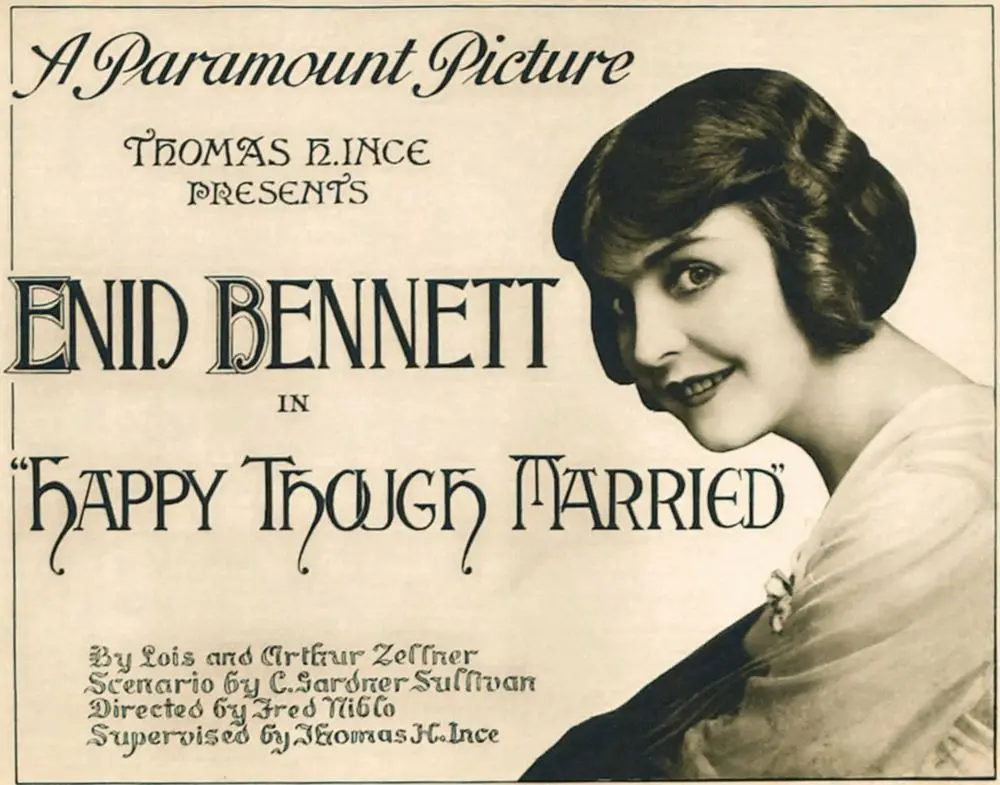
The screenplay, a collaborative effort between Lois Zellner, C. Gardner Sullivan, and Arthur J. Zellner, is remarkably tight. Sullivan, known for his work on more sprawling epics like Whispering Smith, shows a surprising aptitude for the minutiae of domestic friction. The dialogue intertitles are witty without being overly theatrical, allowing the visual storytelling to carry the emotional weight. This film avoids the disjointed pacing often found in early silent features like Das Rätsel von Bangalor, opting instead for a rhythmic escalation of tension.
The inclusion of the Zellners brings a certain groundedness to the script. They explore the 'How to' manual not just as a joke, but as a symbol of the era's obsession with scientific management—even in the bedroom. This intellectual layer elevates the film from a standard 'misunderstanding' comedy to a satirical critique of the modern condition. It shares a certain DNA with Law of the Land, though it trades that film's melodrama for a more acerbic wit.
The cinematography in Happy Though Married utilizes the lighting techniques of the late 1910s to great effect. Shadows in the Lee household lengthen as Millicent’s doubts grow, creating a visual metaphor for her darkening perspective. It lacks the overt expressionism of Gefangene Seele, but it employs a naturalistic approach that was quite advanced for its time. The framing often places Millicent against large, imposing furniture, emphasizing her perceived smallness in the face of marital tradition.
The editing is equally commendable. The cross-cutting between Millicent’s frantic investigations and her husband’s oblivious activities creates a sense of dramatic irony that fuels the comedic engine. This is far more sophisticated than the linear progression seen in The Footsteps of Capt. Kidd. The film understands the power of the 'reaction shot'—a tool that Enid Bennett uses to full advantage, her eyes communicating volumes that intertitles never could.
At its core, the film asks a fundamental question: Can happiness be taught, or is it an organic byproduct of honesty? By framing the conflict around a book, the filmmakers comment on the alienation of the written word versus lived experience. This thematic depth is what separates Happy Though Married from contemporary fluff like A Widow's Camouflage. It isn't just about the 'what' of the plot, but the 'why' of the characters' insecurities.
The resolution of the film, while adhering to the expected tropes of the era, feels earned. It avoids the nihilism of The Feud, opting instead for a restoration of the status quo that is tempered by a newfound wisdom. The characters aren't just back where they started; they have navigated a psychological minefield and emerged with a more robust, if slightly more cynical, understanding of their union. This nuance is reminiscent of the character growth in The Prince and Betty, yet it feels more intimate here.
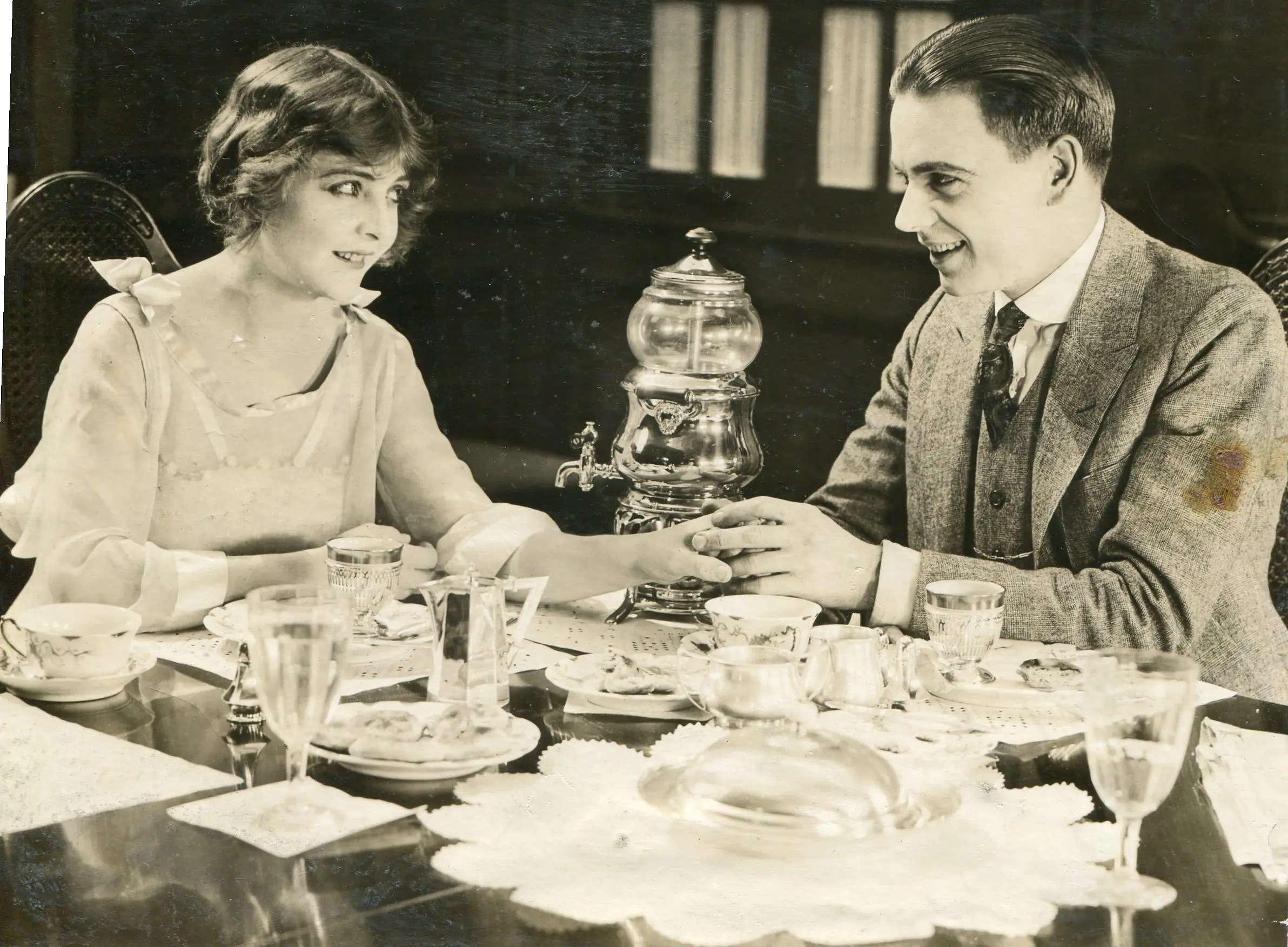
To watch Happy Though Married today is to look through a keyhole into the American soul at the end of the Great War. The world was changing; women were gaining the vote, and the Victorian ideals of the previous century were crumbling. Millicent Lee represents a bridge between the old world and the new—a woman who still operates within the domestic sphere but who possesses a fierce agency in her search for the truth. This film doesn't have the grand historical sweep of Marse Covington, but it captures a different kind of history: the history of the private heart.
The film's exploration of jealousy and the 'manual for life' trope would go on to be a staple of screwball comedies in the 1930s. In many ways, Bennett and MacLean are the precursors to the Lombard and Powell archetypes. While it may not have the surrealist leanings of a film like Habakuk, its commitment to a grounded, relatable reality makes it surprisingly modern. It reminds us that while technology and social norms change, the fundamental insecurities of the human heart—the fear of being replaced, the desire for genuine connection—remain constant.
Ultimately, Happy Though Married is a film that rewards the attentive viewer. It is a work of subtle textures and quiet revelations. In an age where we are bombarded with 'how-to' guides in the form of social media influencers and self-help podcasts, the film’s central conceit feels more relevant than ever. It is a cautionary tale about looking for answers in books when they should be found in conversation. It is a comedy that isn't afraid to be a little bit sad, and a romance that isn't afraid to be a little bit suspicious.
For those interested in the evolution of the domestic comedy, this is essential viewing. It showcases a moment in time when cinema was beginning to realize its power to reflect the internal lives of its audience. The performances are timeless, the direction is precise, and the script is as sharp as a Victorian corsetry needle. We may no longer find it scandalous to possess a book on marital happiness, but the vulnerability Millicent feels when she thinks her world is built on a lie is a feeling that will never go out of style.
Critic's Rating: 8.4/10
A sophisticated, witty, and surprisingly modern look at the fragility of trust. Enid Bennett is a revelation.
IMDb —
1918
Community
Log in to comment.