DbcultAccessing Vault...
Cult Review
Senior Film Conservator
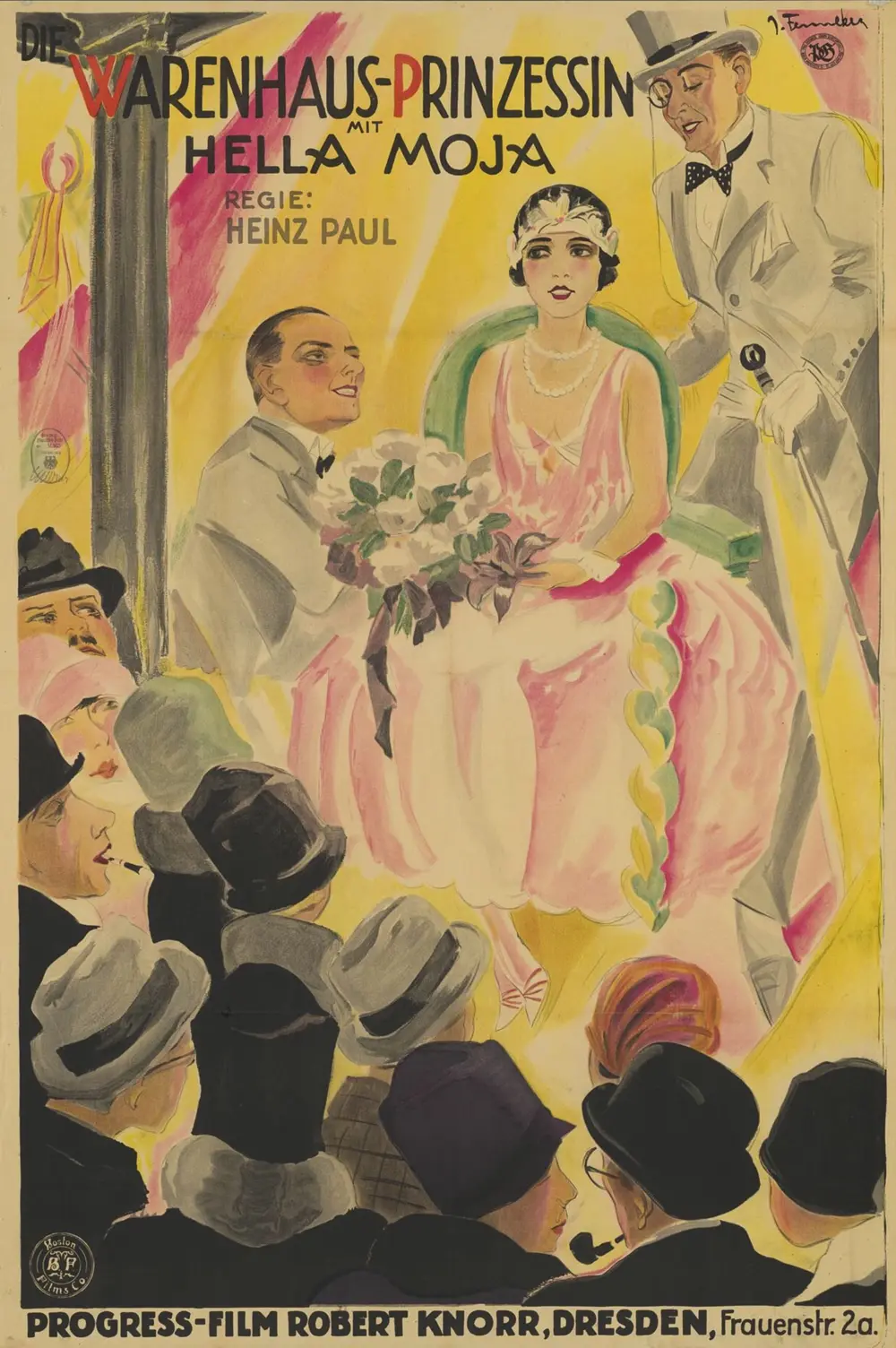
Is Die Warenhausprinzessin worth watching today? Short answer: yes, but with significant caveats that demand a particular kind of viewer. This silent-era drama, anchored by the formidable Hella Moja, offers a fascinating, if sometimes frustrating, window into early German cinema and the social anxieties of its time.
It is unequivocally for those with a deep appreciation for cinematic history, silent film enthusiasts, and anyone curious about the foundational performances that shaped the art form. Conversely, it is decidedly not for viewers seeking modern pacing, crisp dialogue, or narratives free from the melodramatic flourishes typical of the period. Approach it as an archaeological dig, not a contemporary blockbuster.
This film works because of Hella Moja's captivating screen presence and the surprisingly sharp social commentary woven into its ostensibly romantic plot. Her ability to convey complex emotions without a single spoken word is a masterclass in silent acting, making Elsa's struggle feel genuinely poignant.
This film fails because its pacing can be excruciatingly slow for modern sensibilities, and some of the narrative contrivances, particularly the 'hidden secret' trope, feel overly convenient and detract from the more grounded class struggle. The melodrama, while characteristic, occasionally tips into the absurd, testing the patience of even the most dedicated cinephile.
You should watch it if you are prepared to immerse yourself in a historical artifact, willing to overlook dated conventions for the sake of witnessing a pivotal performance and understanding the roots of cinematic storytelling. It's a testament to the power of silent acting and the enduring themes of love against adversity.
At its core, Die Warenhausprinzessin is a Cinderella story draped in the anxieties of societal stratification. The narrative, penned by Herbert Juttke, Georg C. Klaren, and Hella Moja herself, attempts to navigate the treacherous waters of class divide through the eyes of Elsa Schmidt, a woman whose ambition is as pronounced as her beauty. The setting of a bustling department store serves as a brilliant metaphor for the era's nascent consumer culture and the tantalizing, yet often unattainable, dreams it peddles.
Elsa's entanglement with Baron von Hohenfels, played with a commendable mix of charm and aloofness by Albert Paulig, is the central romantic engine. Their courtship is depicted with a delicate balance of longing glances and stolen moments, punctuated by the harsh realities of aristocratic disapproval. The film doesn't shy away from portraying the casual cruelty of the upper echelons, making their disdain for a 'shop girl' palpable through the exaggerated gestures and severe expressions of the supporting cast.
The introduction of Herr Gruber, portrayed by Karl Beckersachs, as the pragmatic, if somewhat boorish, alternative suitor adds a layer of economic desperation to Elsa's romantic dilemma. His offer of financial security, while devoid of passion, represents a very real temptation for a woman of limited means. This triangulation of desire, status, and survival is where the film finds its most compelling dramatic tension, moving beyond simple romance into a more nuanced social critique.
However, the narrative's reliance on a 'hidden family secret' to resolve Elsa's predicament feels like a narrative shortcut, a deus ex machina that undermines the film's earlier, more grounded exploration of class conflict. It's a common trope of the period, certainly, but one that ultimately dilutes the power of Elsa's self-made struggle. One wishes the writers had trusted the strength of their initial premise more, allowing Elsa to overcome her obstacles through sheer force of will rather than a convenient discovery.
Despite this, the film maintains a certain narrative coherence, largely due to Moja's central performance. She is the gravitational pull that keeps the various plot threads from unraveling, imbuing even the more unbelievable turns with a veneer of emotional truth. It works. But it’s flawed.
Hella Moja is, without question, the undeniable star of Die Warenhausprinzessin. Her portrayal of Elsa Schmidt is a masterclass in silent-era acting, characterized by expressive eyes, subtle shifts in posture, and a commanding screen presence that transcends the limitations of the medium. She doesn't just emote; she projects an inner life, a simmering ambition beneath the surface of her character's humble exterior. In a particularly memorable sequence, her face, framed in a tight close-up, conveys a multitude of conflicting emotions – hope, despair, defiance – all within a few flickering seconds, a feat many modern actors struggle to achieve with dialogue.
Albert Paulig, as Baron von Hohenfels, provides a suitably dashing, if somewhat understated, foil to Moja. His performance is less overtly theatrical, relying more on a quiet intensity that hints at inner turmoil. While he never quite matches Moja's magnetic energy, his reserved elegance provides a believable contrast to Elsa's working-class grit. The chemistry between them is more implied than overtly passionate, a common characteristic of romantic pairings in films of this era, yet it feels authentic within its context.
Karl Beckersachs's Herr Gruber is a wonderfully slimy antagonist. Beckersachs leans into the theatricality, using broad gestures and a perpetually sour expression to convey Gruber's calculating nature. He’s the kind of villain you love to hate, and his presence injects a much-needed dose of unambiguous conflict into the narrative. You can almost feel his greasy ambition wafting off the screen.
The supporting cast, including stalwarts like Hermann Picha and Julius Falkenstein, deliver performances typical of the period – often exaggerated, designed to be understood from the back of a large, silent cinema hall. While some of these performances might feel over-the-top to contemporary audiences, they are integral to the film's historical texture. Even a young Hans Albers, in what was likely an early, smaller role, contributes to the vibrant tapestry of characters, though his later iconic screen persona is only faintly glimpsed here.
The direction in Die Warenhausprinzessin, while not groundbreaking, is competent and effective for its time. The filmmakers utilize the department store setting to its fullest, creating a visually rich environment that contrasts sharply with the austere, often claustrophobic, aristocratic homes. Shots of bustling aisles, towering display cases, and the organized chaos of commerce effectively convey the energy of Elsa's world and her place within it. There’s a particular shot tracking Elsa through a busy floor that is surprisingly dynamic for a film of this vintage, offering a glimpse of directorial ambition.
Cinematography, while limited by the technology of the era, manages to capture the necessary emotional beats. Close-ups are employed judiciously, primarily to highlight Moja's expressive face, drawing the audience into her inner world. The use of lighting, though simple, effectively creates mood, from the bright, almost clinical light of the department store to the softer, more romantic glow of the Baron’s less formal encounters with Elsa. The contrast is stark and intentional.
Intertitles are, of course, crucial in silent film, and in Die Warenhausprinzessin, they serve their purpose adequately. They provide necessary exposition and dialogue, though occasionally they feel a little too verbose, breaking the visual flow. However, some are quite poetic, capturing the film's romantic spirit. For example, an intertitle declaring,
"In the glittering halls of commerce, a heart yearned for a world beyond price tags,"effectively sets the stage for Elsa's aspirations.
The film's visual language, while adhering to the conventions of early cinema, manages to convey its themes with clarity. The stark division between the opulence of the wealthy and the modest existence of the working class is consistently depicted through costume, set design, and even the way characters are framed within the shot. This visual commentary is arguably more potent than some of the more overt narrative declarations.
Pacing is perhaps the most significant hurdle for contemporary viewers approaching Die Warenhausprinzessin. Silent films, by their nature, operate on a different rhythm, often allowing scenes to unfold at a more deliberate, sometimes agonizingly slow, pace. There are moments here where the narrative momentum flags, particularly during extended reaction shots or transitional sequences that would be trimmed mercilessly in a modern edit. This requires a certain patience and a willingness to adjust one's viewing expectations.
The tone is overwhelmingly melodramatic, a hallmark of the period's romantic dramas. Emotions are writ large, gestures are expansive, and stakes are often life-or-death. While this can feel overwrought at times, it also gives the film a certain earnest charm. There’s a raw, unfiltered quality to the emotional expression that can be quite affecting once you surrender to its style. It lacks the self-awareness or irony of later films, giving it a unique sincerity.
Its enduring appeal, beyond its historical significance, lies in its central performance and its thematic resonance. The struggle for social mobility, the complexities of class, and the pursuit of love against societal odds are themes that remain relevant. Hella Moja's portrayal of a woman fighting for her place in the world is timeless, echoing similar narratives found in films decades later, from The Foolish Virgin to even the very early dramas like Little Miss Nobody. It speaks to a universal human desire for self-determination.
While it may not possess the kinetic energy of a film like The Speeding Venus, its dramatic weight is undeniable. It’s a film that asks you to lean in, to observe, and to appreciate the artistry of a bygone era. For those willing to make that commitment, there are genuine rewards to be found.
Die Warenhausprinzessin is not a film for everyone, nor is it a forgotten masterpiece that demands rediscovery by the masses. It is, however, a valuable piece of cinematic history, offering a compelling performance from Hella Moja and an intriguing look at societal anxieties of its time. Its flaws are undeniable – the plodding pace, the occasional narrative contrivance – but these are largely products of its era, not necessarily outright failures of craft. For those willing to adjust their expectations and engage with it on its own terms, it provides a rewarding experience. It's a testament to the enduring power of silent acting and the timeless allure of a good Cinderella story, even when that story stumbles a bit on its way to the ball. Consider it a worthy, if sometimes challenging, historical viewing. It’s a film that deserves to be seen by those who care about where cinema came from, and how powerful a single actor could be without uttering a single word.
IMDb —
1923
Community
Log in to comment.