DbcultAccessing Vault...
Cult Review
Senior Film Conservator
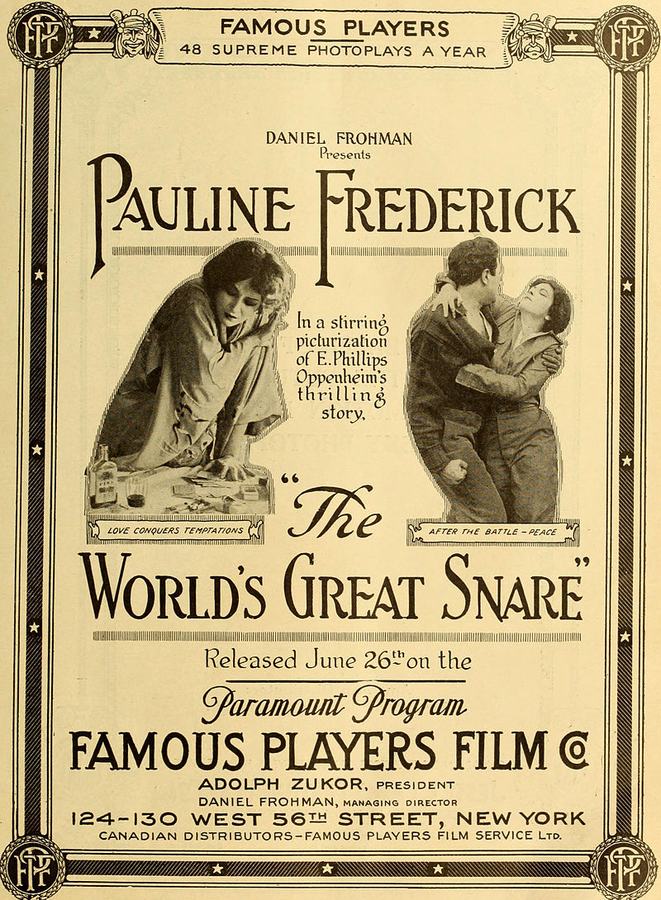
There’s an undeniable allure to the cinema of a bygone era, a silent whisper from the past that speaks volumes about human nature, societal anxieties, and the nascent artistry of a new medium. Among these echoes, The World's Great Snare emerges as a particularly fascinating artifact, a testament to the dramatic prowess of its lead, Pauline Frederick, and the intricate storytelling sensibilities of E. Phillips Oppenheim. To approach such a film is to embark on a journey, not just into a narrative, but into a historical moment, where the visual language was paramount, and the subtle gesture could convey a universe of emotion. This isn't just a movie; it's a window into the soul of early 20th-century melodrama and mystery, a genre that captivated millions and laid the groundwork for countless thrillers to follow.
From its very title, 'The World's Great Snare' promises a narrative steeped in peril and cunning. And indeed, it delivers. At its core, the film is a masterclass in building tension without the crutch of dialogue, relying instead on the expressive power of its performers and the meticulous framing of its scenes. Pauline Frederick, a titan of the silent screen, embodies Adrienne de Maubray with a captivating blend of fragility and steely resolve. Adrienne is no mere damsel in distress; she is a woman of formidable intellect, navigating a treacherous landscape where loyalty is a fleeting commodity and betrayal lurks behind every elegant facade. The film’s strength lies in its ability to immerse the viewer in her psychological torment, making her struggle palpable even across the chasm of a century. The intricate plot, undoubtedly a hallmark of Oppenheim's work, unfolds with a deliberate pace, each revelation a carefully placed piece in a grand, dangerous puzzle.
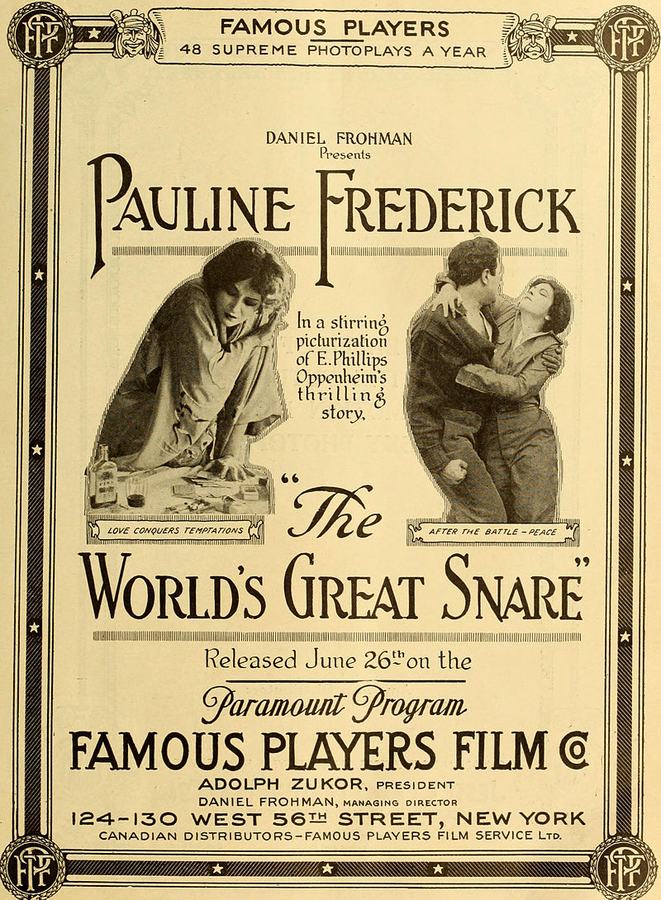
The narrative, as it unfurls, meticulously crafts a world where the shimmering surfaces of high society merely conceal the murky depths of international espionage. Adrienne, initially an unwitting pawn, finds herself caught in a web spun by a shadowy consortium, their tendrils reaching into the highest echelons of power. It’s a classic setup, yet executed with a freshness that transcends its age. The film’s brilliance lies in its portrayal of the 'snare' not just as a physical trap, but as a psychological labyrinth, where moral ambiguities are as dangerous as any physical threat. Adrienne's journey forces her to confront profound ethical dilemmas, to weigh love against duty, and survival against honor. It's a testament to Frederick's nuanced performance that these internal conflicts are communicated with such clarity, her eyes alone conveying volumes of unspoken anguish and determination. The visual storytelling, characteristic of the era, employs dramatic close-ups and stark contrasts to amplify the emotional stakes, drawing the audience deeper into Adrienne's increasingly perilous predicament.
Pauline Frederick’s portrayal of Adrienne de Maubray is nothing short of mesmerizing. Her presence commands the screen, a beacon of elegance amidst the unfolding chaos. Frederick, known for her ability to infuse her characters with a profound inner life, delivers a performance that transcends the limitations of the silent medium. She doesn't just act; she emotes with every fiber of her being, her gestures precise, her facial expressions a masterclass in conveying complex emotions. Observe, for instance, the subtle tightening of her jaw when confronted with a betrayal, or the flicker of hope in her eyes when a fleeting possibility of escape presents itself. It’s this meticulous attention to detail that elevates her performance from mere acting to genuine artistry. Her Adrienne is not simply a victim; she is a survivor, a woman whose intelligence and resilience are her greatest weapons in a world determined to break her.

Comparing Frederick's nuanced approach to some of her contemporaries, one might find parallels in the dramatic intensity seen in films like The Truth About Helen, where female protagonists often grappled with societal constraints and personal demons. However, Frederick’s unique blend of aristocratic bearing and raw emotional vulnerability sets her apart. Her characters frequently possessed a regal quality, even when facing dire circumstances, lending a certain gravitas to the melodramatic plots she often inhabited. In The World's Great Snare, this quality is essential; it makes Adrienne's descent into a world of spies and traitors all the more impactful, as if a queen has been dethroned and forced to fight for her very existence. The film truly becomes a vehicle for Frederick's extraordinary talent, showcasing her mastery of non-verbal communication, a skill that few could rival.
While Frederick undoubtedly dominates the screen, the supporting cast provides crucial anchors in this swirling sea of deception. Irving Cummings, as the charismatic yet morally ambiguous Count Vronsky, perfectly embodies the seductive danger that draws Adrienne into the 'snare.' His suave demeanor and piercing gaze hint at a hidden ruthlessness, creating a compelling antagonist whose charm is as perilous as his intentions. Cummings skillfully navigates the fine line between romantic lead and sinister manipulator, ensuring that Adrienne's initial attraction to him feels both believable and tragically misguided. His performance provides the necessary counterpoint to Frederick's integrity, highlighting the moral quagmire Adrienne finds herself in.
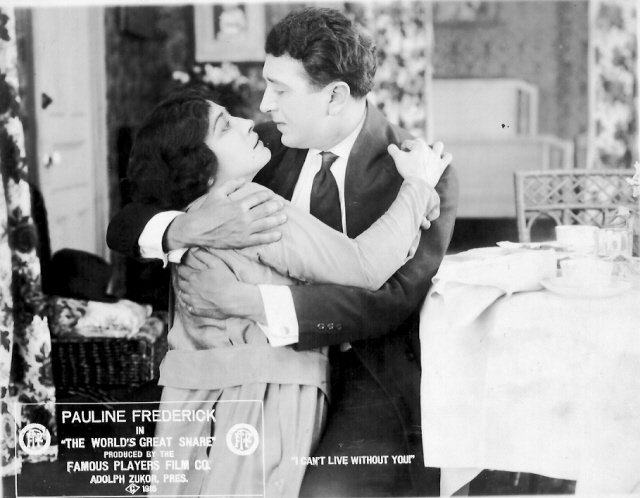
Bert Starkey, portraying the unyielding Detective Inspector Thorne, offers a stark contrast to Vronsky's fluidity. Thorne is the embodiment of law and order, a figure of uncompromising rectitude whose suspicion of Adrienne is both a source of tension and, ultimately, a potential path to her salvation. Starkey imbues Thorne with a quiet authority, his gaze unwavering, his pursuit relentless. The dynamic between Frederick's vulnerable yet resilient Adrienne, Cummings's captivating villain, and Starkey's steadfast detective forms the central dramatic triangle, each character pulling Adrienne in a different direction, amplifying her internal and external conflicts. Ferdinand Tidmarsh, Riley Hatch, and Frank Evans, though perhaps in less prominent roles, contribute to the film's rich tapestry, each adding a layer of authenticity to the world of espionage and intrigue. Their collective performances ensure that the narrative never feels thin, but rather a robust and believable depiction of a world teeming with hidden agendas.
The narrative framework of 'The World's Great Snare' bears the unmistakable imprint of E. Phillips Oppenheim, a master of the spy thriller and adventure novel. Oppenheim's stories were renowned for their intricate plots, international settings, and morally complex characters often caught in high-stakes political games. His influence is palpable throughout the film, from the gradual unveiling of the conspiracy to the constant sense of looming danger. The film successfully translates Oppenheim's literary style into a visual medium, maintaining the suspense and intellectual engagement that characterized his written work. One can see echoes of his narrative complexity in later espionage thrillers, both silent and sound. His ability to craft a world where trust is a luxury and deception is currency is perfectly suited for the silent film format, where visual cues and dramatic irony can be exploited to maximum effect.
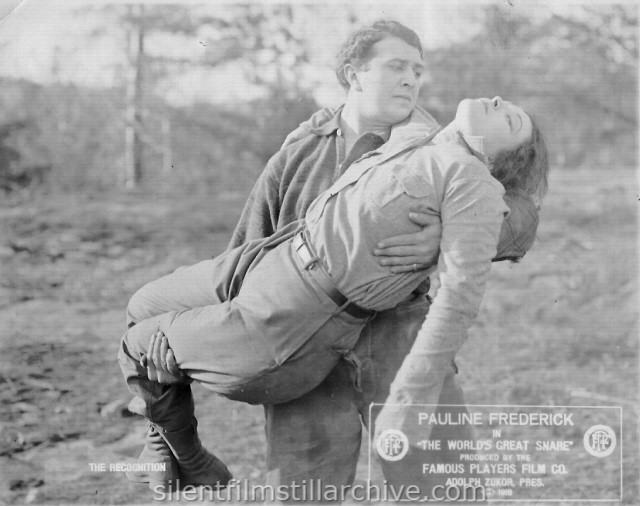
Oppenheim's novels frequently explored themes of identity, betrayal, and the fragile nature of peace in a rapidly changing world. These themes resonate deeply within The World's Great Snare, elevating it beyond a simple adventure tale. Adrienne's struggle is not merely against external forces but also an internal battle to maintain her sense of self amidst the relentless pressure to conform or succumb. This psychological depth is a hallmark of Oppenheim's more sophisticated works and is beautifully rendered here. The adaptation, while necessarily condensing a potentially sprawling narrative, manages to retain the essence of Oppenheim's intricate world-building, proving that a well-crafted story can transcend its original medium.
The directorial choices in 'The World's Great Snare' are a fascinating study in early cinematic language. The use of intertitles is judicious, never overwhelming the visual storytelling but rather augmenting it with crucial exposition or character dialogue. The cinematography, while perhaps lacking the elaborate tracking shots of later eras, effectively uses depth of field and dramatic lighting to create atmosphere. Shadows often play a significant role, obscuring faces or creating a sense of foreboding, visually reinforcing the film's central theme of hidden dangers and concealed truths. The visual motifs of entrapment—barred windows, enclosed spaces, and the metaphorical 'snare' itself—are subtly woven throughout the film, constantly reminding the viewer of Adrienne's precarious position.
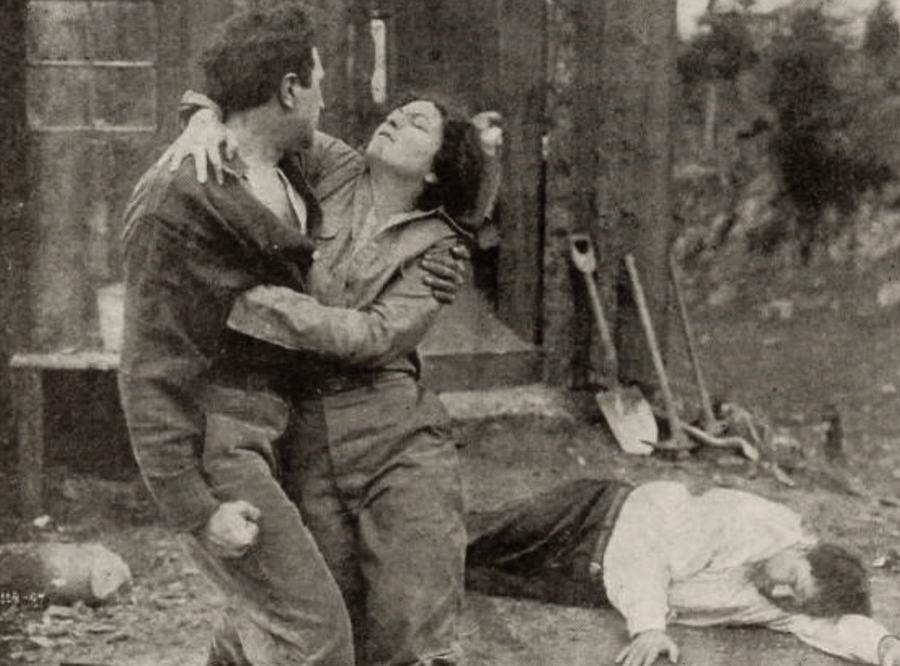
The film's thematic resonance extends beyond mere entertainment. It delves into the nature of power, the corruption it can breed, and the resilience of the human spirit in the face of overwhelming odds. Adrienne's journey from an unwitting participant to an active agent in her own liberation is a powerful testament to personal agency. This theme of a strong female protagonist navigating a perilous, male-dominated world finds echoes in other films of the era, though perhaps few with the sheer intensity and scale of the conspiracy depicted here. The moral ambiguity of the characters, particularly Vronsky, challenges simplistic notions of good versus evil, inviting the audience to consider the complex motivations that drive human actions. In this regard, it shares a certain thematic sophistication with films that explore the darker facets of human nature, such as The Witch, albeit through a very different genre lens.
To fully appreciate 'The World's Great Snare', one must place it within its historical context. The early 20th century was a period of immense global upheaval, with shifting alliances, nascent international organizations, and the lingering shadows of war. Oppenheim's stories, and by extension this film, tapped into the public's fascination with espionage and grand conspiracies, reflecting a real-world anxiety about hidden forces shaping destiny. The film's depiction of international intrigue, while dramatized, resonated with audiences who were acutely aware of the complex geopolitical landscape of their time. This grounding in contemporary anxieties gave the film an added layer of relevance and urgency, making its thrills all the more potent.
The lasting impact of 'The World's Great Snare' lies not only in its entertainment value but also in its contribution to the evolution of the thriller genre. It solidified Pauline Frederick's status as a leading dramatic actress capable of carrying complex narratives, and it demonstrated the power of silent film to convey intricate plots without relying on spoken dialogue. While films like From Dusk to Dawn or The Man Who Came Back explored different facets of suspense and return, 'The World's Great Snare' carved out a niche for the sophisticated, international spy thriller, paving the way for countless successors. It's a reminder that even in the absence of sound, cinema possessed a profound ability to transport, to thrill, and to provoke thought.
In conclusion, The World's Great Snare stands as a compelling testament to the golden age of silent cinema. It’s a film that demands attention, rewarding the viewer with a meticulously crafted plot, stellar performances, and a pervasive atmosphere of suspense. Pauline Frederick’s portrayal of Adrienne de Maubray is a masterclass in silent acting, her every gesture and expression conveying a depth of emotion that transcends the spoken word. The film skillfully leverages the narrative genius of E. Phillips Oppenheim, weaving a tale of international intrigue that remains relevant even today. Its exploration of themes such as betrayal, resilience, and the search for truth in a world of deception resonates with timeless power. For those willing to engage with its unique cinematic language, 'The World's Great Snare' offers a rich, immersive experience, a journey into a past where silent whispers spoke louder than any dialogue, and a single glance could unravel a world of secrets. It is, without doubt, a significant piece of cinematic history, deserving of renewed appreciation and study. Its 'snare' is not just for its characters, but for the audience, drawing us into its intricate web and holding us captive until the very last, dramatic frame.

IMDb 6.5
1931
Community
Log in to comment.