DbcultAccessing Vault...
Cult Review
Senior Film Conservator
Short answer: Only if you are a dedicated historian or a glutton for early Australian genre cinema. For the casual viewer, the pacing will feel like watching sap dry on a gum tree, but for the enthusiast, it is a fascinating artifact of a burgeoning national identity.
This film is for the viewer who appreciates the archival value of silent cinema and the documentation of lost industries. It is absolutely NOT for anyone looking for a fast-paced thriller or modern narrative sensibilities.
1) This film works because it captures a genuine, unvarnished look at the Australian bush that feels more like a documentary than a staged drama.
2) This film fails because its narrative structure is beholden to the most tired tropes of the 1920s, often stalling the momentum for unnecessary melodrama.
3) You should watch it if you want to see how early Australian filmmakers attempted to compete with Hollywood imports like The Vanishing American by leaning into their own local landscapes.
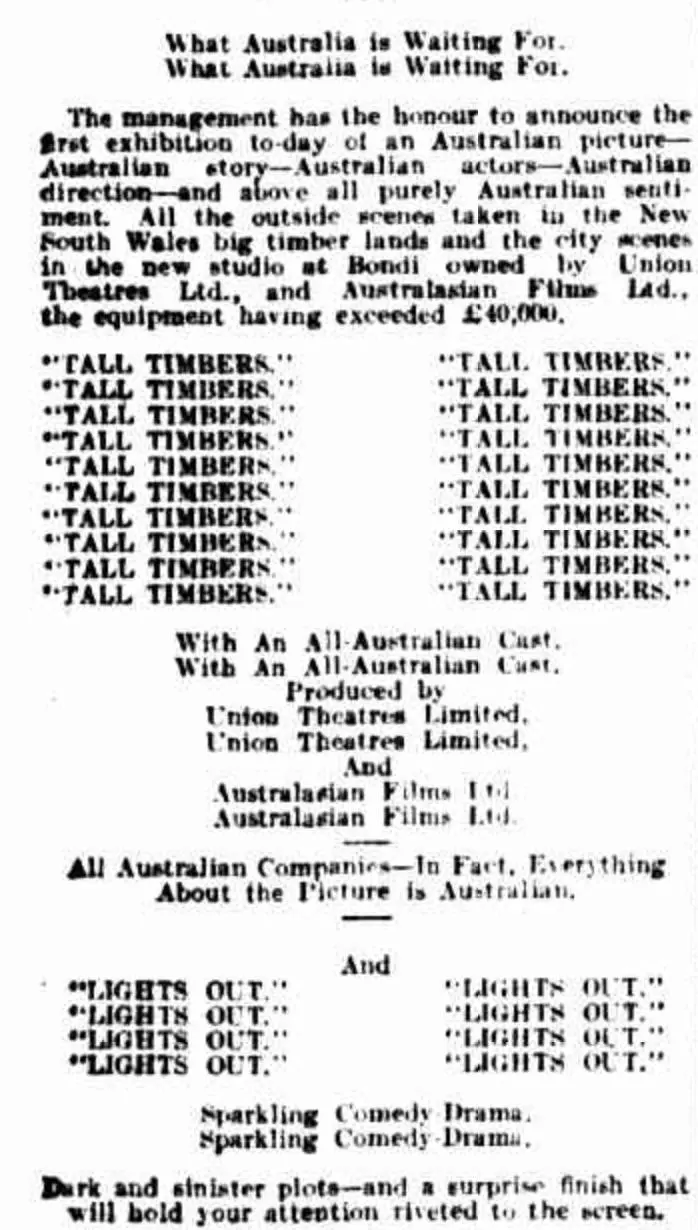
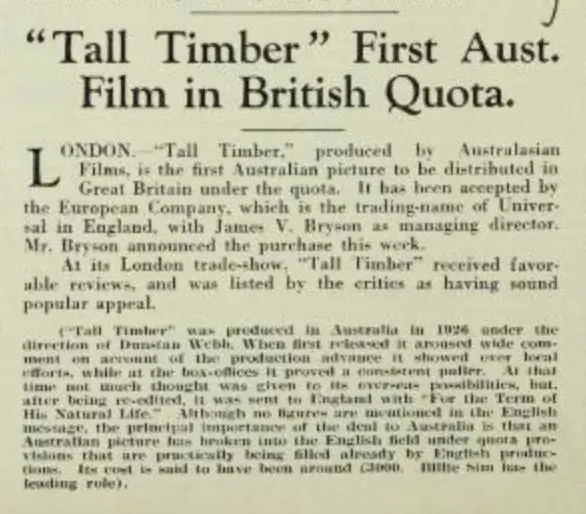
Tall Timber is a film that breathes through its location. Directed by Dunstan Webb, the movie doesn't just use the forest as a backdrop; it treats the timber industry as a living, breathing antagonist. In 1926, Australian cinema was struggling to find its voice amidst a flood of American and British imports. Webb’s answer was to go where the cameras were rarely taken: deep into the heart of the logging camps.
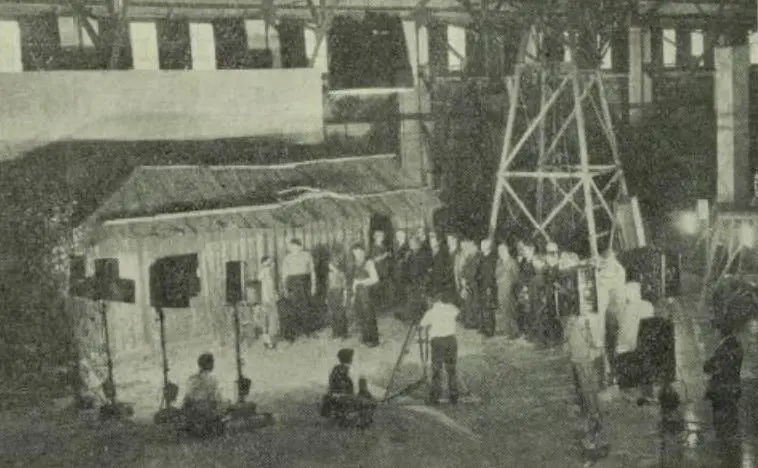
The cinematography, while limited by the technology of the time, manages to convey the sheer scale of the trees. There is a specific sequence involving the felling of a massive gum tree that feels genuinely dangerous. You can almost smell the sawdust and the sweat. Unlike the more stylized wilderness seen in The Land of Long Shadows, Tall Timber feels grounded in a reality that is uniquely Australian. It is rugged. It is dirty. It is honest.
Billie Sim carries a significant weight in this production. As the female lead, she is tasked with navigating a hyper-masculine environment. While her performance occasionally dips into the exaggerated pantomime common in silent films, there are moments of quiet resilience that stand out. She doesn't have the ethereal quality found in films like Faith; instead, she feels like a woman who actually belongs in the dirt and the heat.
Then there is 'Big' Bill Wilson. His physicality is the film's greatest asset. In the 1920s, audiences wanted heroes who looked like they could actually do the work they were portraying on screen. Wilson fits the bill perfectly. When he engages in the film's climactic physical struggle, it doesn't feel like a choreographed dance. It feels like a brawl. The logs move faster than the plot, but Wilson’s presence keeps the screen occupied.
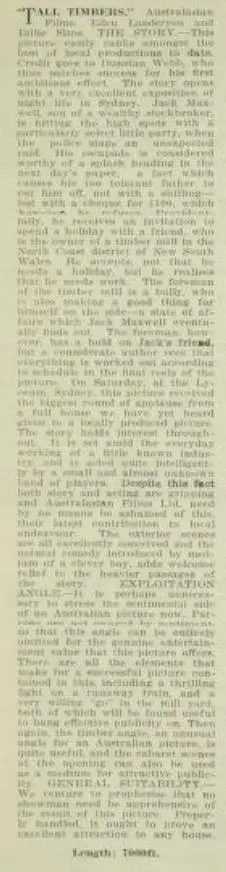
If we are being honest, the middle act of Tall Timber is a slog. The film suffers from a common ailment of the era: an over-reliance on title cards to explain emotional shifts that the actors should have been allowed to show. The plot, involving a rivalry and a somewhat predictable romance, often feels like it's getting in the way of the fascinating footage of the logging industry. It is a clunky but earnest attempt at storytelling.
There is an unconventional observation to be made here: the film is actually better when nothing is happening. The moments where the camera simply lingers on the machinery, the horses, and the men at work are far more compelling than the scripted drama. It’s a film that works best as a visual record. It works. But it’s flawed. The narrative gears grind loudly, much like the saws used in the film.
When placed alongside other films of the period, such as The Call of the Cumberlands, Tall Timber holds its own in terms of atmosphere but falls behind in terms of narrative cohesion. While American films were perfecting the art of the 'outdoor adventure,' Australian directors like Webb were still experimenting with how to translate the specific 'bush' identity to the screen. It lacks the polish of a Hollywood production, but it gains a certain authenticity that big-budget films often lose.
"Tall Timber is a testament to the sheer physical will of early Australian filmmakers who refused to be confined to a studio."
Pros:
Cons:
Tall Timber is a fascinating, if occasionally tedious, journey into the heart of the Australian wild. It doesn't have the narrative complexity of modern cinema, but it possesses a raw energy that is hard to ignore. It is a film of splinters and shadows. While it won't be topping anyone's 'must-watch' list for a Friday night, its importance to the history of Australian film cannot be overstated. It is a rugged piece of art that demands respect for its ambition, even when its execution falters. Watch it for the history, stay for the trees, and forgive the melodrama.
IMDb 4.7
1915
Community
Log in to comment.