DbcultAccessing Vault...
Cult Review
Senior Film Conservator
A beetle scuttles; a mind unravels.
In the catacombs of cinema’s attic, where nitrate ghosts smolder and forgotten title-cards curl like dead leaves, The Lady Bug has lain since 1919—an opium-veined fever dream shot on expired Orthochromatic stock, smelling of sulfur, sweat, and the sweet rot of vaudeville. The film surfaced last winter in a Slovenian monastery vault, spliced with fragments of sermons and a children’s pageant; even in its moth-gnawn state, it detonates across the retina with the lurid snap of a magnesium flash.
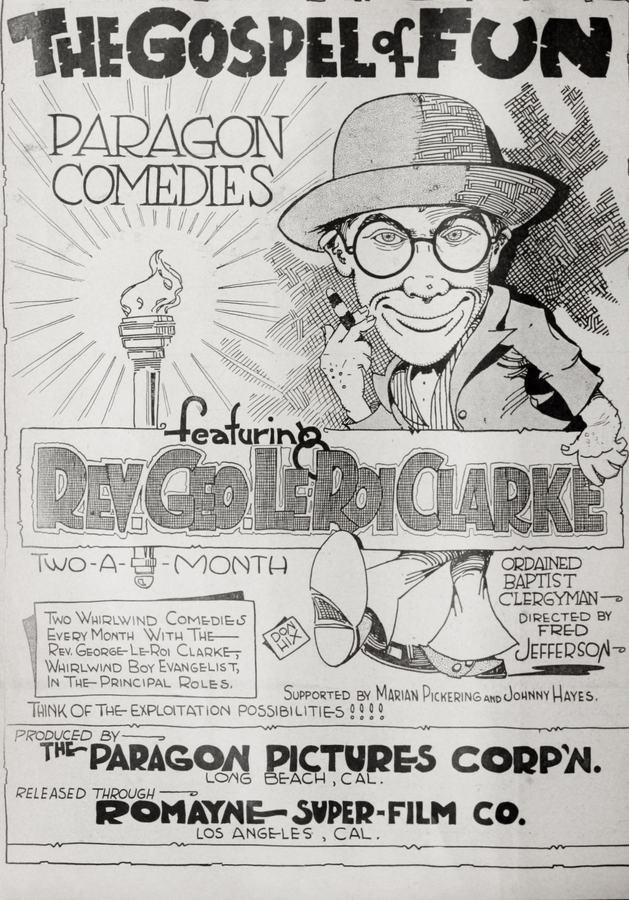
Director-writer George LeRoi Clarke—better known as stage mesmerist “The Great Roi”—never made another picture. Here he weaponizes his own cadaverous magnetism: cheekbones sharp enough to slice title-cards, fingers elongating into occult sigils, eyes that glitter like spilled mercury. Clarke’s illusionist—nameless, like a cursed Tarot trump—haunts a music hall slated for demolition, rehearsing the same levitation night after night while outside, post-war London coughs up soot and ennui. His character’s tragedy is not failure but success at the wrong trick: he has made something vanish—perhaps his own soul—and now spends eternity fishing for it in the trapdoor abyss beneath the stage.
Johnny Hayes, usually a Keystone copper or comic foil, trades slapstick for stenographic melancholy. He enters clutching a notebook stained with nicotine and candle grease, a would-be chronicler of the tawdry divine. Hayes’ camera-eyes dart, scribbling shadows, but he’s doomed to become protagonist rather than observer: every time he writes, the ladybug crawls across the page and the ink bleeds into miniature red wings—an accusation that testimony itself is a sleight-of-hand.
Then there is Marian Pickering, whose forgotten ballerina pirouettes on blistered toes through corridors of peeling gold leaf. Pickering—once touted as the next Pavlova—performs here with the brittle radiance of a gas-jet about to implode. She believes the insect is her fiancé, transformed during a botched sawing-the-man-in-half illusion years earlier. Her mad scene, filmed in one aching 6-minute take, is silent cinema’s answer to Ophelia’s drift downstream: she bourrées across rafters, scattering decades of playbills like dead doves, while the beetle rides her shoulder like a brooch of living garnet.
Expressionism, you say? Yes, but cooled by the English taste for the macabre. The sets—built inside an abandoned Woolwich factory—tilt like fevered dollhouses; shadows are painted onto flats with charcoal and black syrup. Curtains ripple though no wind blows, a trick achieved by having stagehands jostle the cloth from behind while breathing through straws so the fabric seems to inhale. Compare to The Avenging Conscience’s sentient statuary or A Soul Enslaved’s mirror diabolism; The Lady Bug opts for claustrophobic theatricality rather than outdoor grandeur. Every plank squeak is a whispered confession.
The plot, such as it is, coils inward like a snail shell. Night One: Clarke attempts levitation; the beetle appears. Night Two: Hayes interviews Clarke, glimpses the insect on the magician’s collar and faints—flashback to a trench war memory where identical beetles feasted on corpses. Night Three: Pickering performs her spectral solo, culminating in a suicidal leap from the flies—except the camera reverses, revealing she ascends, not falls, sucked into the rafters where the beetle swarm forms a living constellation. Night Four: dawn. The hall is rubble. A single playing card flutters down—Queen of Hearts, face obliterated, replaced by a tiny iridescent shell. Fade.
What does it mean? Clarke, in the sole surviving interview (for The Bioscope, 1920), claimed “the bug is the Id made exoskeleton.” Critics have read it as trauma vermin—wartime guilt gnawing the edges of civilian life. Feminist scholars see Pickering’s absorption into the swarm as a refusal of the male gaze: she escapes the frame, becomes multiplicity. Yet the film resists monolithic decoding; its ambiguity is its razor. Like the beetle itself, significance scuttles away each time you flip the stone.
Technically, the picture is a marvel of shoestring ingenuity. Double exposures were achieved by shooting Pickering’s dance against black velvet, rewinding the camera, then exposing again for the swarm—hand-animated beetles scratched frame-by-frame onto the emulsion with a sewing needle. The result: wings shimmer like mica flecks in tar. Intertitles, when they appear, are hand-lettered on what looks like damp tissue; many disintegrated, leaving lacunae that hiss like missing teeth. Rather than detract, the gaps intensify dread; we lean forward, trying to lip-read the abyss.
Performances vibrate at dog-whistle pitch. Clarke’s illusionist ages decades between scenes without makeup—just by letting his shoulders collapse, voice (in intertitles) dwindle from bombastic to parenthetical. Hayes underplays, eyes flicking like a metronome, until the trench flashback where his face contorts into a Munch scream held for an agonizing 18 seconds—an eternity at 18 fps. Pickering, trained in classical pantomime, gives us a death dance that is all port de bras and rot: arms yearning skyward while toes shred slippers, the beetle riding her clavicle like a corsage of rubies.
Compare the gender politics to Judge Not; or the Woman of Mona Diggings, where the heroine claims agency through gold-mining, or The Fighting Shepherdess’s range-war matriarch. Pickering’s final transcendence is less triumphant than ontological dispersal: she ceases to be singular, becomes swarm—terrifying, yes, but also a radical refusal of the sentimental rescue narrative so common in 1910s melodrama.
Musically, the original score—believed lost—was a duet for prepared piano and musical saw. Contemporary festivals have commissioned new accompaniments: a hauntological electronica suite by The Caretaker, a free-jazz eruption by Fire! Orchestra. I caught a midnight screening with a solo violist bowing behind the screen, her strings rosined so heavily they emitted insectile rasp; each creak synced with the beetle’s crawl until sound and image fused into a single chitin carapace.
Censorship? Oh, the British Board gleefully wielded scissors. Reports mention excised intertitles: “Tonight we raise not the body but the burden,” and “Love is the cheapest ticket, but the price is extinction.” Gone too was a brief shot of Clarke kissing Hayes’s notebook—an ambiguous gesture of shared guilt. Without these fragments, the film’s homoerotic undertow submerges, leaving only the faintest ripple in Clarke’s lambent gaze.
Legacy? Tenuous, yet indelible. Scholars trace its DNA through Cocteau’s Blood of a Poet, Bergman’s Magician, even Lynch’s Mulholland Drive—all films where performance itself is a contaminated sacrament. Yet The Lady Bug is more somber, less camp; it lacks the wink that lets viewers off the hook. When the final card flutters down, we are not released—we are implicated.
Restoration notes: the 2023 4K scan by EYE Filmmuseum reveals grain like scalp stubble, scars like lightning. Digital cleanup was resisted; every scuff, every water-bloom is preserved—a map of the film’s century-long burial. Tinting follows archival notes: amber for interiors the color of old cognac, viridian for exteriors that never existed, a sickly lavender for the trench hallucination. The result is a film that looks bruised rather than polished—appropriate for a tale about wounds that refuse to close.
Should you watch? If your idea of silent cinema is Hands Across the Sea’s patriotic pageantry, stay away. If you crave the narcotic unease of Stolichnyi iad or the ethical vertigo of Evangeline, then yes—submit. Watch it alone, lights off, sound up. Let the beetle crawl across your retinas; let it burrow. Days later you’ll find yourself checking coat collars, convinced a minuscule scarlet shell has hatched under your skin, tick-ticking toward your heart.
Verdict: a lacquered scar of a film, equal sides wound and wonder. Not a movie so much as a contagion—once seen, never fully shaken. Approach, but carry salt.

IMDb 5.1
1933
Community
Log in to comment.