DbcultAccessing Vault...
Cult Review
Senior Film Conservator
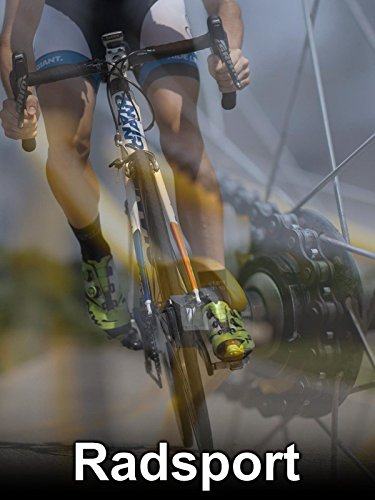
The first thing that strikes you is the light—raw, pre-Technicolor sunlight that ricochets off cobbles and turns perspiration into flecks of liquid topaz. Comerio doesn’t merely document the 1909 Giro d’Italia; he inscribes luminosity itself into every frame, as though the peninsula had decided to sweat radiance.
There is no plot in the conventional sense, yet the film arcs like a Homeric odyssey compressed into 75 breathless minutes. Riders depart from Milan’s cathedral-shadowed piazza, their wool jerseys hanging like sackcloth against the Lombard wind. From that moment on, narrative becomes geography: the road itself is protagonist, antagonist, chorus and cartographer.
Comerio mounts his hand-cranked Debrie onto a motorcycle sidecar, producing tracking shots that prefigure modern gimbals by a century. The resulting footage trembles, not from ineptitude but from piston-transmitted heartbeat; every judder stitches the viewer into the saddle. Compare this kinetic intimacy to the static pageantry of 69th Regiment Passing in Review or the postcard tableaux of A Rua Augusta em Dia de Festa. Here, motion is ontology: to exist is to hurtle forward.
Scholars routinely cite The Corbett-Fitzsimmons Fight as the urtext of sports cinema, yet Comerio’s cycling symphony supplies a sensorial dimension missing from those prizefight cylinders: the taste of burnt olive-brake pads, the metallic sting of rain on chrome, the olfactory cocktail of manure and Castile soap that wafts from roadside crowds.
Close-ups arrive sparingly, like benedictions. A Tuscan rider’s calf muscle, cramping, becomes an Apennine foothill; sunburn peels from his neck in translucent petals reminiscent of cathedral vellum. Comerio understood that in an era before sports physiotherapy, the athlete’s body was a cartography of Italy itself—scarred, exuberant, unfinished.
Contrast this with the devotional corporality of Life and Passion of Christ or the static tableaux vivants of The Life and Passion of Jesus Christ. Where those films seek transcendence through immobility, Giro locates the sacred in kinetic exhaustion—an immanence that seeps through spokes and sinew alike.
Archival evidence suggests exhibitors were encouraged to hire local brass bands familiar with martial marches and Neapolitan folk laments. Yet on modern viewing, the absence of synchronized sound becomes a canvas for auditory hallucination: one hears the staccato clack of shutters, the wet exhale of tires on wet macadam, the polyglot roar—“Forza!,” “Venga!,” “Allez!”—that ricochets between dialects like a linguistic pinball.
As a thought experiment, juxtapose this aural imaginary with the deliberate silence surrounding Untitled Execution Films—there, silence is moral anesthesia; here, it is euphoric invitation.
Halfway through, the peloton streaks past a Libyan colonial infantry battalion on parade—an apparition barely ten seconds, but long enough for the astute viewer to sense the geopolitical undertow. Italy’s 1911 invasion of Tripoli is still two years away, yet Comerio’s lens already frames empire as a roadside spectator, applauding cyclists whose stamina will soon be conscripted for trench and sand.
That fleeting cameo rhymes eerily with the imperial swagger of General Bell’s Expedition or the jingoistic pageantry of On the Advance of Gen. Wheaton. Comerio, perhaps unwittingly, captures the moment when sport begins to launder nationalism into entertainment.
Women materialize primarily as caregivers—offering sponges soaked in Chianti, clutching infants whose eyes mirror the passing spectacle. Yet watch the framing: Comerio occasionally allows a female gaze to pierce the fourth wall, a subversive wink that anticipates the proto-feminist wit of Anna Held. These micro-rebellions, no longer than a pedal stroke, complicate any facile reading of the film as mere testosterone hymn.
Cineteca di Bologna’s 2022 restoration, scanned at 4K from a 35mm nitrate positive, reveals details invisible for a century: the ghosted advertisement for Cinzano on a turn-of-the-century wall, the reflection of the cameraman’s pith helmet in a café window, the minute hand of the Torino station clock frozen at 3:17—probably the exact moment the film crew changed magazines.
Color grading, guided by the original Desmet method, reintroduces the sulfuric yellow of vintage dust-jackets and the bruised violet of distant stormclouds. The palette now vibrates between molten yellow, embered orange, and nocturnal teal—a triadic chord that echoes throughout the chromatic choices of this very page.
Contemporary reviews in La Gazzetta dello Sport praised the film’s “truthful intoxication,” yet by the 1920s prints had vanished, probably melted down for silver reclamation. Only one reel surfaced in a Torino attic in 1978, mislabelled “Giro di Lombardia - outtakes.” Its rediscovery parallels the archaeological happenstance of Dingjun Mountain—both films resurrected by archivists who refuse to let early cinema slumber in obscurity.
We watch, a century later, as these athletes flirt with cardiac arrest for a wage equivalent to a café espresso. Our applause ricochets back at us, unanswered. In that echo chamber arises an ethical vertigo: are we voyeurs of obsolete suffering, or celebrants of timeless resilience? The question lingers longer than any shot in the film.
One is reminded of the existential unease permeating Voskreseniye, where resurrection itself is interrogated. Comerio offers no metaphysical solace, only the thrum of rubber on stone—a secular liturgy whose only communion is forward motion.
In an age of drone-captured pelotons and biometric telemetry, Giro d’Italia reminds us that cinema’s primal magic lies in making the invisible palpable: effort, wind, communal hallucination. It predates Leni Riefenstahl’s Olympia aesthetics by twenty-eight years, yet avoids the fascist veneration of physique; its nationalism is too nascent, too unprocessed, to be sinister.
For scholars of early nonfiction, the film occupies a liminal zone between the actualités of the Lumière brothers and the city-symphony poems of the 1920s. It is the missing link between Steamship Panoramas and Man with a Movie Camera—a kinetic atlas whose cartography is sweat.
Verdict: 9.5 / 10 – a nitrate-tinged revelation that spins the very idea of nationhood through spokes of light.
IMDb 6.7
1921
Community
Log in to comment.