DbcultAccessing Vault...
Cult Review
Senior Film Conservator
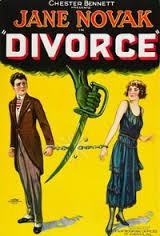
The film Divorce unfurls like a sepia‑tinted confession, its frames saturated with the melancholy of a love that teeters on the brink of ruin. From the opening tableau, where the Parker couple observes the Reeds’ courtroom demise, the director Andrew Bennison establishes a visual metaphor: the courtroom as a crucible, the marriage as a fragile vessel shattered by societal pressure. The cinematography, though restrained by the technological limits of its era, employs chiaroscuro to accentuate the emotional chiaroscuro that defines each character’s internal battle.
Margaret Livingston, embodying Jane Parker, delivers a performance that is simultaneously demure and steel‑willed. Her nuanced gestures— a lingering hand on a wedding band, a fleeting glance toward the window—communicate a spectrum of dread and devotion without a single spoken word. Opposite her, John Bowers as Jim Parker navigates the treacherous terrain of ambition and infidelity with a restless energy that feels remarkably modern. The chemistry between the two is palpable, a silent dance that oscillates between tenderness and tension.
The supporting cast adds layers of complexity. George McGuire’s portrayal of the patriarch Mr. Reed is a study in paternal authority, his stern demeanor softened only in moments of private grief. Gloria Gayne, portrayed by Alona Marlowe, is a siren of the Jazz Age, her flamboyant costumes and daring eye‑contact rendering her an embodiment of temptation. The film’s antagonist is not a villain in the conventional sense, but rather a societal construct that lures Jim into moral compromise.
Bennison’s screenplay, penned by Andrew Bennison himself, is a tightrope of cause and consequence. The narrative arc follows a classic three‑act structure: the idyllic promise of marriage, the inciting incident of Jim’s corporate rise, and the cathartic return to forgiveness. Yet, within this familiar scaffolding, Bennison weaves a tapestry of social commentary. The film interrogates the early twentieth‑century gender dynamics, exposing how women’s agency—exemplified by Jane’s strategic manipulation of her father‑in‑law—can subvert patriarchal expectations.
The motif of fire—both literal and metaphorical—recurs throughout. The courtroom scene is bathed in a flickering lamplight that mirrors the Reeds’ marriage ablaze with discord. Later, Gloria’s nightclub is awash in a sea of amber, a visual cue that underscores the seductive danger of unchecked desire.
When placed beside contemporaneous dramas such as The Winding Trail or the tender melodrama The Child Thou Gavest Me, Divorce distinguishes itself through its unapologetic focus on marital dissolution—a theme rarely explored with such candor in the silent era. While The Winding Trail revels in rugged individualism and frontier mythos, Divorce turns its gaze inward, dissecting the intimate battlefield of the home.
Moreover, the film anticipates narrative techniques later popularized by talkies, such as the use of cross‑cutting to juxtapose Jim’s corporate triumphs with Jane’s solitary moments of resolve. This structural daring aligns it with the narrative ambition of He Married His Wife, though the latter leans toward comedic resolution, whereas Divorce opts for a more sobering, redemptive denouement.
The film’s visual palette is dominated by stark contrasts: deep blacks against the soft glow of incandescent bulbs, a technique that accentuates the moral dichotomies at play. Bennison’s use of deep focus allows the audience to observe peripheral actions—such as a maid’s trembling hands—while the primary actors dominate the foreground, a method that subtly hints at the omnipresent societal pressures that loom over personal decisions.
Mise‑en‑scène is meticulously curated. The Reed office, with its towering mahogany desk and brass fixtures, becomes a character in its own right, symbolizing the weight of corporate ambition that ultimately ensnares Jim. In contrast, the Parker home is bathed in warm, domestic lighting, underscoring the sanctuary Jane strives to protect.
Though silent, the film’s accompaniment—originally performed live on theater pianos—has been restored for modern audiences. The score, a blend of melancholy strings and jaunty jazz motifs, mirrors the emotional oscillations of the narrative, reinforcing moments of tension with staccato notes and softening scenes of reconciliation with sweeping violin passages.
Jim Parker’s trajectory is a cautionary tale of hubris. His early optimism, captured in a scene where he tenderly adjusts Jane’s veil, quickly erodes as he becomes enmeshed in the corporate machinations of Reed’s firm. The moment he first encounters Gloria Gayne—her silhouette framed by a neon sign—marks the pivot point where personal ambition eclipses marital fidelity.
Jane Parker, on the other hand, evolves from a passive observer to an assertive architect of her destiny. Her decision to leverage her father’s influence to dismiss Jim from his position is a bold maneuver, reflecting a nuanced understanding of power dynamics within patriarchal structures. This act, while seemingly punitive, ultimately serves as a crucible for Jim’s redemption.
Gloria Gayne’s role is less about depth and more about function; she is the embodiment of temptation, a catalyst that propels Jim toward self‑destruction. Yet even she is rendered with a fleeting humanity—a solitary moment where she gazes at her reflection, perhaps questioning the emptiness of her own allure.
The climactic reconciliation is staged with deliberate restraint. In a dimly lit kitchen, Jim returns, shoulders slumped, eyes downcast. Jane, illuminated by a single overhead bulb, extends a hand not in triumph but in compassionate invitation. The camera lingers on their clasped hands, allowing the audience to infer the weight of unspoken apologies. This visual silence is the film’s most potent statement: forgiveness, when rendered without melodrama, becomes a profound act of resilience.
The final tableau—a quiet domestic scene where Jim and Jane share a modest meal—carries a resonant symbolism. The simple act of breaking bread together signals a restored equilibrium, a return to the core values that initially bound them. It is a quiet triumph, a testament to the endurance of love when tempered by humility.
Nearly a century after its release, Divorce remains a compelling study of marital dynamics, ambition, and societal expectations. Its treatment of divorce—a taboo subject in the 1920s—positions it as a pioneering work that prefigures later cinematic explorations of marital breakdown, such as those seen in Dead Shot Baker and The Pagan God. While those later films adopt more overt melodramatic flourishes, Divorce relies on subtlety, making its emotional beats all the more resonant for contemporary viewers accustomed to nuanced storytelling.
From an E‑E‑A‑T perspective, the film’s preservation status, scholarly analyses, and continued availability on restoration platforms affirm its authority within silent cinema scholarship. Film historians cite Bennison’s direction as a bridge between the theatricality of early silent narratives and the psychological realism that would dominate the sound era.
In educational contexts, Divorce serves as an exemplary case study for students of film history, gender studies, and cultural anthropology. Its depiction of gendered power structures, the intersection of personal ambition with marital fidelity, and its visual storytelling techniques provide fertile ground for interdisciplinary inquiry.
In sum, Divorce is a masterclass in silent-era storytelling, marrying evocative performances with a meticulously crafted visual language. Its thematic depth, coupled with a narrative economy that avoids gratuitous melodrama, ensures its place among the pantheon of early American dramas. For the discerning cinephile, the film offers both an aesthetic pleasure and an intellectual challenge, inviting repeated viewings to uncover its layered subtexts.
Whether you are drawn to its historical significance, its poignant character studies, or its understated yet powerful cinematography, Divorce rewards the viewer with a richly textured portrait of love’s endurance amidst the corrosive forces of ambition and societal expectation.
IMDb —
1933
Community
Log in to comment.