
DbcultAccessing Vault...
5.7/10
Senior Film Conservator
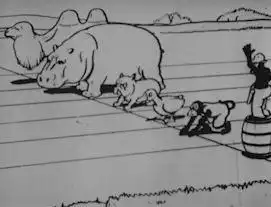
A definitive 5.7/10 rating for a film that redefined the boundaries of cult cinema. Dobutsu olympic taikai remains a cornerstone of transgressive art.
Alright, if you're into old-school animation, like, really old-school, then Yasuji Murata's Dobutsu olympic taikai is absolutely worth a peek. Anyone who loves seeing the roots of animation will dig it, and historians will find plenty to think about. But if you're expecting modern Disney or even early Looney Tunes, you're gonna be bored stiff. This one's for the animation historians and the very curious. 🕰️
It’s only a few minutes long, but those minutes pack a lot of charm. You get these simple, almost crude drawings of animals doing Olympic sports. There’s a little rabbit in a running race, all wobbly legs and determination, and you can practically feel it trying its hardest.
Then a big bear comes along for weightlifting, struggling with a log that looks far too heavy. His little grunts almost come through the screen! It’s not about perfect anatomy; it’s about the idea of movement and effort.
The whole thing just feels so… earnest. Like someone was just trying stuff out, seeing what worked with moving drawings. The flicker on the screen, that's just part of the experience, a reminder of how early this stuff is.
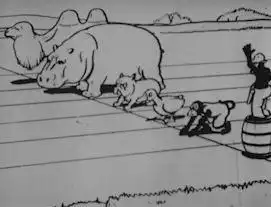
You can almost hear the projector clacking away. The lines are a bit rough, not super clean, but that’s part of its appeal. It’s handmade, definitely not digital. The backgrounds, when they even appear, are minimal, just enough to set a scene.
My favorite bit might be the swimming sequence. It's just a few strokes, but the way the water is drawn, it really looks like a little duck is splashing along. Not fancy, just effective. 🦆
It’s really fascinating to see how they conveyed action with so few frames. You realize how much storytelling can happen even without dialogue or complex plots. It’s a very pure form of animation.
This film is a wonderful little time capsule. It reminds you that animation didn't just appear fully formed; it started with folks like Murata experimenting, just putting one drawing after another. It’s a bit rough around the edges, sure, but that’s its magic. ✨