DbcultAccessing Vault...
7.2/10
Senior Film Conservator
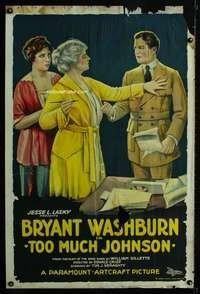
A definitive 7.2/10 rating for a film that redefined the boundaries of cult cinema. Too Much Johnson remains a cornerstone of transgressive art.
The Unseen Spectacle of 'Too Much Johnson': A Farce Beyond Fidelity
In the annals of cinematic history, certain films stand as enigmatic whispers, their narratives more legend than tangible experience. Such is the case with Too Much Johnson, a 1919 silent comedy that, even in its limited accessibility, promises a riotous journey through the labyrinthine corridors of marital deception and farcical misadventure. Directed by Donald Crisp and based on the popular 1894 play by William Gillette, this film encapsulates the effervescent spirit of early twentieth-century stage comedies, translating their rapid-fire wit and intricate plotting to the nascent language of the silver screen. Its very premise, a seemingly innocuous dalliance spiraling into an international imbroglio of mistaken identities, is a testament to the enduring appeal of human foibles and the comedic potential of secrets gone spectacularly awry. One cannot help but be drawn into the chaotic vortex that Augustus Billings so carelessly creates, a vortex that, by its conclusion, leaves a trail of bewildered lovers, vengeful husbands, and an unexpectedly wedded mother-in-law.
At its core, Too Much Johnson is a masterclass in the mechanics of farce. The plot unfurls with a precision that belies its inherent absurdity, each development logically (if comically) building upon the last. We are introduced to Augustus Billings, a man whose marital bonds appear more as suggestions than strictures. His initial act of infidelity with Mrs. Dathis aboard his former yacht sets the stage, but it is his adoption of the alias 'Johnson' and the ill-advised inscription on a photograph that truly ignites the fuse of the narrative bomb. This seemingly minor detail becomes the fulcrum upon which the entire edifice of the plot pivots, a recurring motif that transforms a simple deception into a widespread manhunt. The fragment of the torn photograph, revealing only 'curly black hair' and the damning 'Johnson,' becomes a symbol of the pervasive, yet elusive, nature of truth in a world governed by appearances. This kind of escalating chaos, where a small lie begets a monstrous one, is a hallmark of the genre, reminiscent of other period pieces that reveled in the unraveling of polite society's veneers.
The arrival of Mr. Dathis, the aggrieved husband, injects a potent dose of dramatic irony into the proceedings. His relentless pursuit of the 'curly-haired philanderer' sets a comedic ticking clock, ensuring that Billings' precarious position becomes increasingly untenable. This element of pursuit and evasion is a common trope in early cinema, often used to propel narratives forward with physical comedy and suspense. We see echoes of this in films like Shadows of Suspicion, where characters are often caught in webs of their own making, though perhaps with less overtly farcical outcomes. Billings' attempts to juggle his illicit affair with the demands of his domestic life, under the watchful, ever-suspicious eye of his mother-in-law, Mrs. Batterson, and his wife, are where the film truly shines in its comedic potential. The elaborate ruse of 'recently acquired oil properties' in Mexico serves as a brilliant device to transport the entire cast to a new, exotic locale, ripe for further complications and cultural misunderstandings.
The journey to Mexico marks a significant escalation in the film's comedic stakes. It is here that the true brilliance of the plot's construction becomes apparent, as the arrival of the *actual* Joseph Johnson—the very name Billings has appropriated—transforms a simple case of mistaken identity into a full-blown identity crisis. This is where the film transcends mere slapstick, delving into the more sophisticated humor of character confusion and situational irony. The fact that the real Johnson has purchased the very property Billings claimed to be visiting, and is aboard the same ship, pushes the boundaries of coincidence into the realm of delightful absurdity. This intricate weaving of fate and contrivance is a testament to the sophisticated plotting often found in the best silent comedies, which relied heavily on visual storytelling and meticulously constructed scenarios to convey humor without dialogue. The dynamics here might be compared to the intricate social dances observed in films like The Path of Happiness, albeit with a significantly more chaotic and less idyllic outcome.
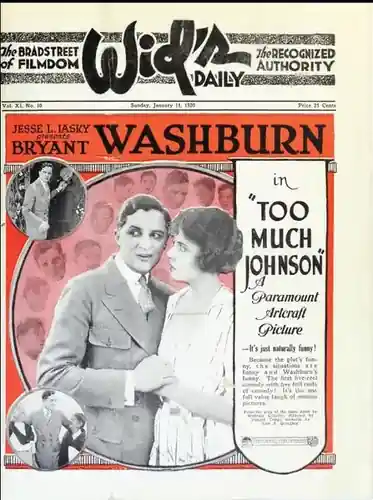
The ensemble cast, though operating within the silent film paradigm, likely brought their own unique interpretations to these archetypal characters. Lois Wilson, Elsa Lorimer, Gloria Hope, and Bryant Washburn, among others, would have relied on exaggerated expressions, precise physical comedy, and clear pantomime to convey the emotional turmoil and comedic timing inherent in the script. The silent era demanded a particular kind of performer, one capable of communicating complex emotions and rapid-fire reactions without the aid of spoken words. The success of a film like Too Much Johnson would have hinged on the actors' ability to make these farcical situations believable within their own comedic universe. Imagine the exasperation of Billings, the fury of Mr. Dathis, the bewildered innocence of the true Joseph Johnson, and the formidable presence of Mrs. Batterson, all conveyed through the nuanced art of silent acting.
The introduction of Francis Faddish and his daughter Leonora, the latter destined to be the bartered wife of Johnson, adds yet another layer of impending matrimonial chaos. This element of arranged marriage, or marriage under duress, was a common narrative device in the period, often used to create comedic tension or to highlight societal norms. The subsequent scene where the real Johnson, in a moment of accidental heroism or sheer confusion, knocks out the jealous Mr. Dathis, is a classic comedic beat. It's a swift, unexpected turn of events that momentarily resolves one conflict while simultaneously deepening the larger web of misunderstandings. This kind of physical comedy, often involving pratfalls and unexpected blows, was a staple of the era, bringing to mind the boisterous adventures seen in films like Tom Sawyer, where youthful exuberance often led to comical scrapes.
The climax of the film, where Johnson mistakes Billings' wife for his own bride-to-be, is the comedic crescendo. This is the ultimate payoff for all the preceding identity confusions, a moment of pure, unadulterated farce. Billings, ever the opportunistic scoundrel, seizes this moment to orchestrate his most audacious scheme yet: tricking the genuine Johnson into a declaration of marriage with his own meddlesome mother-in-law, Mrs. Batterson. This ingenious, albeit morally questionable, maneuver serves as Billings' ultimate escape from his domestic woes. The relief he experiences at being 'rid of the mother-in-law who interfered with his marital happiness' is palpable, a comedic resolution that neatly ties up the various threads of the plot while delivering a final, unexpected twist. This kind of darkly humorous resolution, where a character's problem is solved through another's misfortune, is a testament to the cynical charm often found in farcical comedies.
The thematic undercurrents of Too Much Johnson are rich and varied. Beyond the surface-level humor, the film subtly explores themes of marital discontent, the restrictive nature of societal expectations, and the lengths to which individuals will go to escape their perceived prisons. Billings' pursuit of an affair, while framed comically, speaks to a deeper dissatisfaction. The interference of Mrs. Batterson, while exaggerated for comedic effect, represents the societal pressures and familial obligations that often complicate personal desires. The chaotic world the characters inhabit, where identities are fluid and circumstances conspire against them, can be seen as a commentary on the unpredictable nature of life itself. In this sense, it shares a certain chaotic energy with films like Mutiny, where order gives way to disarray, albeit with significantly higher stakes in the latter.
From a technical perspective, a 1919 silent film would have relied on a distinct visual language. Intertitles would have provided essential dialogue and exposition, while the actors' physicality and facial expressions carried the emotional weight. The cinematography, while perhaps less sophisticated than later eras, would have focused on clear staging, dynamic compositions, and effective use of editing to maintain the rapid pace essential for farce. The transition from stage play to screen would have presented unique challenges and opportunities, allowing for greater visual spectacle and location changes than a static theatrical set. The use of a yacht, a ship, and Mexican locales would have offered a visually richer experience than its stage counterpart, showcasing the burgeoning capabilities of cinematic storytelling. This visual storytelling, free from the constraints of dialogue, often created a universal appeal, allowing films like The Eternal Grind or Nina, the Flower Girl to resonate with diverse audiences.
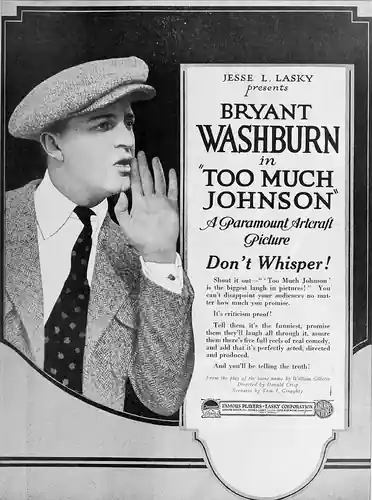
The enduring legacy of Too Much Johnson, even as a largely unseen work, lies in its representation of a popular theatrical form successfully adapted for the screen. It is a snapshot of an era when cinema was still finding its voice, experimenting with narrative structures and comedic timing. The film serves as a valuable historical document, offering insights into the popular entertainment of the time and the evolution of cinematic storytelling. Its intricate plot, memorable characters, and satisfyingly chaotic resolution speak to the timeless appeal of well-crafted comedy. While it may not possess the dramatic gravitas of films like Daughter of Destiny or the moral dilemmas of The Celebrated Stielow Case, its contribution to the comedic landscape of early cinema is undeniable.
Moreover, the film's playful subversion of societal norms, particularly regarding marriage and fidelity, places it within a tradition of comedic works that dared to poke fun at the conventions of the day. Billings' ultimate 'solution' to his mother-in-law problem, while extreme, is a darkly humorous comment on the often-stifling nature of family obligations. It’s a bold stroke of comedic genius that ensures the film concludes with a memorable, if morally ambiguous, triumph for its anti-hero. This daring approach to narrative resolution, where the protagonist achieves his goal through questionable means, can be seen in other films that challenge conventional morality, albeit in different genres. The film's ability to maintain a lighthearted tone amidst such shenanigans is a testament to its skillful writing and direction, allowing audiences to laugh at the predicaments without necessarily endorsing the actions.
In conclusion, Too Much Johnson stands as a vibrant, if elusive, example of early silent comedy. Its intricate plot, driven by a series of escalating deceptions and fortuitous coincidences, provides a blueprint for farcical storytelling that remains relevant today. The film's characters, though archetypal, are brought to life through the expressive art of silent acting, navigating a world where identity is fluid and chaos reigns supreme. It is a delightful reminder of a bygone era, a time when cinema was a new and exciting medium, capable of transporting audiences to worlds of grand adventure, romantic intrigue, and, in this case, uproarious laughter. Its legacy is not just in its plot, but in its demonstration of how early filmmakers skillfully adapted popular stage productions, leveraging the unique capabilities of the screen to enhance and expand upon theatrical storytelling. For those interested in the evolution of comedy and the silent film era, Too Much Johnson offers a fascinating, albeit rare, glimpse into a comedic gem that continues to spark curiosity and appreciation for its innovative spirit and timeless humor.
A Final Reflection on Farce and Fortune
The beauty of Too Much Johnson lies in its unapologetic embrace of the absurd. It doesn't shy away from outlandish plot points or conveniently timed coincidences; instead, it revels in them, using them as building blocks for its comedic edifice. The film understands that farce thrives on the unexpected, on the rapid succession of events that push characters to their breaking points, both emotionally and physically. Billings' journey, from a simple desire for illicit pleasure to an elaborate scheme involving international travel and identity theft, is a masterclass in how a small lie can balloon into an uncontrollable monster. The film's conclusion, where he cleverly manipulates another character into solving his domestic problem, is not just a comedic triumph but a testament to the ingenuity of a man desperate to maintain his freedom. It reminds us that sometimes, the most elaborate solutions arise from the simplest of desires, and that in the world of farce, anything is truly possible.
IMDb —
1933
Community
Log in to comment.