DbcultAccessing Vault...
3.9/10
Senior Film Conservator
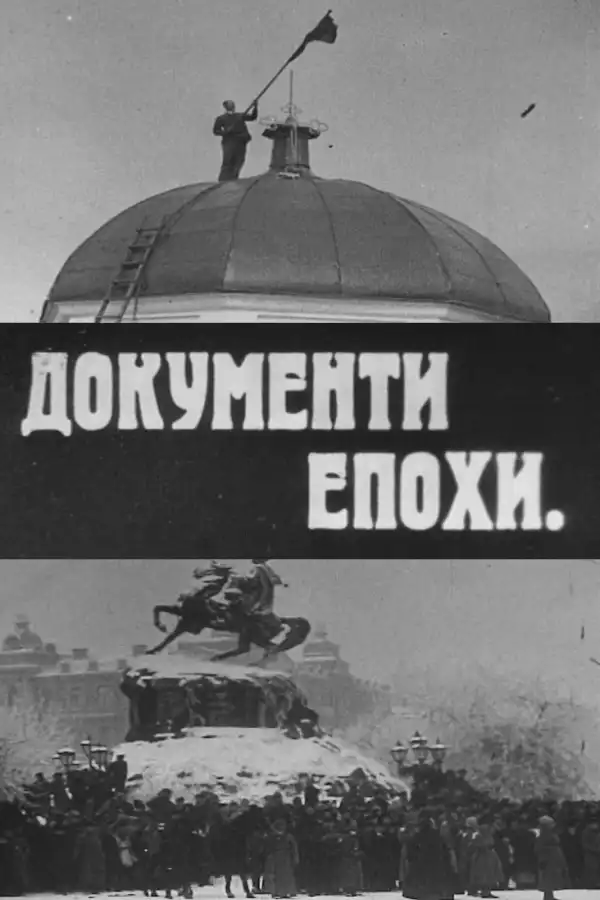
A definitive 3.9/10 rating for a film that redefined the boundaries of cult cinema. Dokumenty epokhy remains a cornerstone of transgressive art.
Watching Dokumenty epokhy feels less like watching a movie and more like staring through a cracked window into a past that rarely gets seen this way. If you're someone who loves digging into raw historical moments, even if they're a bit grainy and quiet, then yes, this is absolutely worth your time. But if you need a clear narrator holding your hand or lots of dramatic music, you'll probably bounce right off it. This is for the curious observer, not the casual viewer.
The film, really a collection of old reels, gives us these fleeting glances at the Ukrainian revolution's key players. We see Hermann von Eichhorn, a German commander, walking at the Kyiv railway station. He's just... *walking*, you know? No grand pronouncements, just a man in uniform, and you know what's coming for him later. It's unsettling, that quiet moment before the storm.
Then there's Pavlo Skoropadsky, the Hetman, at a table. It's a proper spread, looks like, with allies around him. You get this sense of power, but also a bit of a staged formality. Like they *knew* the camera was there, even if it was just a few folks with big lenses. Everyone's very proper, very still.
The image of Volodymyr Vynnychenko and Symon Petliura near St. Sophia's Cathedral, bundled up against the January frost, it just *sticks*. You can practically feel the cold, watching them. Two heavyweights, just standing there, almost waiting for something. A moment frozen in time, literally. You kinda wonder what they were talking about.
Muravyov's units moving through Kyiv... that's a different vibe entirely. A lot of men, just marching. It's not a parade; it's more like a surge. You feel the sheer weight of their presence, even in blurry black and white. It’s kinda overwhelming.
And then Christian Rakovsky, greeting Red Army soldiers in Kharkiv. Is it cheers? Is it weary acceptance? It's hard to tell from the silent footage, but you see the interaction, the sheer scale of the event. A lot of faces, all looking back at history. 🤔
Mykola Skrypnyk speaking from a rostrum. He's clearly passionate, even without sound. His gestures, the way he holds himself. To think he was pushing for Ukrainisation back in the 1920s... it just adds this layer to everything. You wish you could hear what he was saying. Really makes you think about those early struggles.
The quality is what it is, old film, often wobbly. But that's part of its charm, isn't it? It makes it feel real, less like a polished history lesson and more like stumbling upon forgotten evidence. 🎞️ It's not always pretty, but it's authentic.
Sometimes a shot holds just a bit too long on a street scene, or a crowd. You start to notice little things, like someone in the background craning their neck, or the way the dust settles on the road. Details that would be cut from a modern doc for sure.
It's not trying to tell a full story, not really. It just *shows* you bits and pieces. You gotta connect the dots yourself. And for some, that'll be frustrating. For others, it's the whole point. It respects your intelligence, kinda.
The people. You just watch their faces. The way they carry themselves. These weren't just names in books; they were real people, living through something huge. It makes you pause. And wonder what their day-to-day was like.
The editing is... well, it's not slick. It's more like someone just spliced together the best bits they could find. Which, for something this rare, is perfectly fine by me. It feels like a genuine archive effort, not a polished production. Just a unique historical document, really.
IMDb —
1917
Community
Log in to comment.