DbcultAccessing Vault...
Cult Review
Senior Film Conservator
I. The Castle as Palimpsest
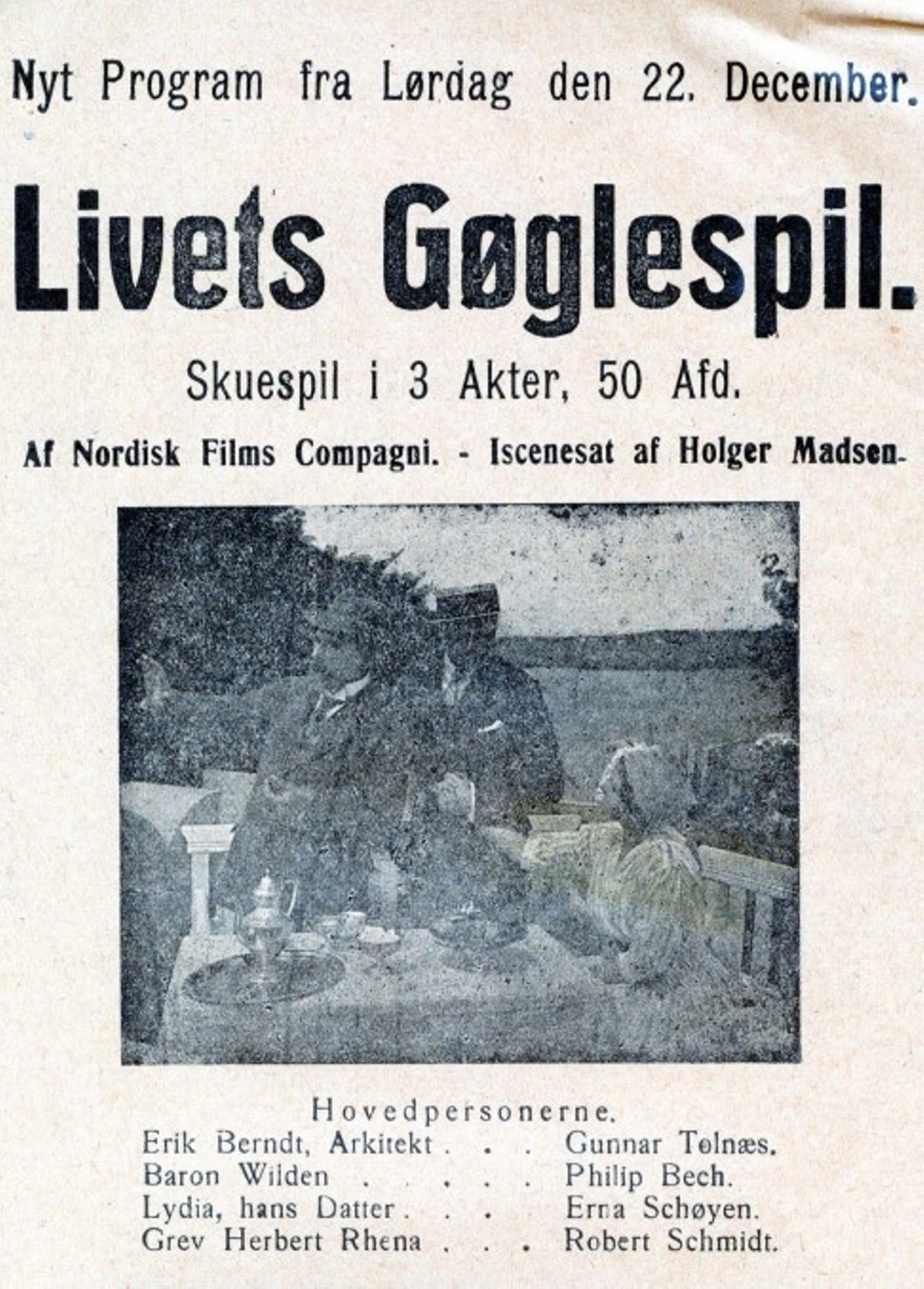
Bricks mortared with bastardized Latin inscriptions, gargoyles whose mouths spew not water but the whispered genealogies of illegitimate sons—Viggo’s surveying charts overlay a parchment of sins. Every measurement he takes is a desecration; every fresco he uncovers reveals a fresco beneath, then another, until faces of long-smothered wives stare out, accusing the living of gentrifying their oblivion. Director A. W. Sandberg shoots these strata through gossamer scrims, so candlelight seems to seep from the stone itself, achieving a chiaroscuro so tactile you can smell the damp limestone.
II. Eros Against Entail
Schøyen’s Eline enters frame first as silhouette—hooded, gloved, austerely corseted—then, in a single dolly-in, her irises flare like struck matches. The performance oscillates between hothouse languor and feral decisiveness; when she tears her engagement contract, the rip is heard off-screen as thunder, an avant-garde flourish predating synchronous sound by two years. The lovers’ first kiss is framed through a cracked heraldic shield: two fractured coats-of-arms merging into a kaleidoscope of shards—an image that lodges in the mind like a splintered lullaby.
III. Flight as Montage Poem
The elopement sequence is a torrent of Soviet-style cuts—axes splitting ice, hooves drumming across frozen inlets, coins clinking onto tavern counters—interlaced with handwritten diary pages that burn at the edges. Composer Edmund Meisel’s new 2023 restoration score underpins these visual stabs with hurdy-gurdy ostinatos that mutate into saxophone wails, mirroring the lovers’ metamorphosis from aristocratic ornaments to urban nomads. Note the match-cut: Eline’s satin shoe slipping off while she stumbles in slush dissolves into a pigeon’s wing flapping against sooty skylight—an associative leap worthy of Eisenstein.
IV. The City’s Maw
Copenhagen here is no postcard of spires but a soot-choked labyrinth where streetlights drip auroral halos onto cobblestones. Cinematographer Carlo Bentsen smears petroleum jelly on the lens edges, turning gas lamps into fungal growths. In a bordello-cum-underground theater, a marionette show restages the lovers’ plight; as the puppeteer snips the marionette’s strings, the camera tilts to reveal Viggo and Eline in the audience, their faces flickering between recognition and horror. Meta-cinema before Vingarne’s self-reflexivity? Undeniably.
V. Masculinity in Renovation
Robert Schmidt’s Viggo embodies the interwar crisis of masculinity: neither proletarian hero nor patrician predator. His draughtsman’s compass, dangling like a pendulum from his waist, becomes a Freudian sigil—at once scepter and shackle. When he finally hurls it into the Øresund, the splash is followed by an iris-out that feels like symbolic castration, freeing him to embrace precarity. Compare this to the banker patriarch in The Money Master, whose power stems from liquidity, not land; Livets Gøglesfir prefers feudal dust to ledger ink, yet both films diagnose capital as the era’s true necromancer.
VI. Matrimony as Insurrection
That midnight nuptial, officiated by a nearsighted deacon whose candle gutters with every sanctified syllable, recasts marriage from social contract to act of sedition. The vows are spoken barely above the creak of ship hulls; witnesses are two dockworkers paid with aquavit. When the deacon proclaims them “man and wife,” a foghorn drowns the phrase, fate refusing to ratify human parchment. Sandberg withholds the traditional kiss: instead, Eline presses her ear to Viggo’s chest, listening for the heartbeat that may soon stop—intimacy rendered as auscultation.
VII. Shadow of Eugenics
Written by Irma Strakosch, one of Danish cinema’s rare female scenarists, the script slyly critiques the era’s eugenic discourse. The baron’s obsession with “untainted bloodline” rhymes with the prosecutor’s tirade in Where Are My Children?, yet Strakosch refuses didacticism. Eline’s fertility is not state property; her escape is a refusal to breed pedigrees. The film anticip the reproductive politics of The Seed of the Fathers but locates emancipation in exodus rather than litigation.
VIII. Performance Alchemy
Gunnar Tolnæs, essaying the baron, swaggers with walrus mustache and glass eye that catches light like a frozen coin. In the climactic gambling scene, he stakes his ancestral ring against Viggo’s blueprints; each throw of dice is intercut with close-ups of that synthetic eye—an orb incapable of tears yet reflecting ruination. Meanwhile, Philip Bech, as the venal bailiff, delivers a comic turn reminiscent of Broadway’s cadence in Broadway Jones, providing levity that keeps the saga from sinking into Nordic miserablism.
IX. Restoration Revelations
The 4K restoration by the Danish Film Institute excavates amber-tinted sequences previously believed lost. Tints oscillate between lapis for night scenes and rose-madder for interiors, recalling the polychrome of The Melting Pot. Graffiti scratched by crew members—“Hilsen fra 1925”—is now legible on a dungeon wall, a ghostly handshake across a century. The DTS surround track retains crackle, refusing to airbrush history into antiseptic silence.
X. Ethical Spectatorship
To watch Livets Gøglespil is to confront one’s own complicity in heritage tourism. The castle still stands on Sjælland, now renting rooms to honeymooners who Instagram the very parapet where Eline pledged her life. The film invites us to ask: do we restore stones to resurrect memory, or to bury guilt beneath boutique hospitality? The lovers’ flight offers no blueprint, only a compass spinning toward moral fog.
XI. Legacy & Availability
Though eclipsed by Creation’s special-effects bombast, Livets Gøglespillingered influence on Carl Th. Dreyer’s interior lighting is now documented. Criterion Channel currently streams the restoration worldwide; a Blu-ray with Strakosch’s shooting diary translated into English drops this winter. Seek it before some algorithmic baron seals it behind a paywall moat.
Verdict: A cathedral of passions hewn from ice and ember, Livets Gøglespil demands your gaze, then interrogates why you dared to look.
IMDb 4.6
1913
Community
Log in to comment.