DbcultAccessing Vault...
Cult Review
Senior Film Conservator
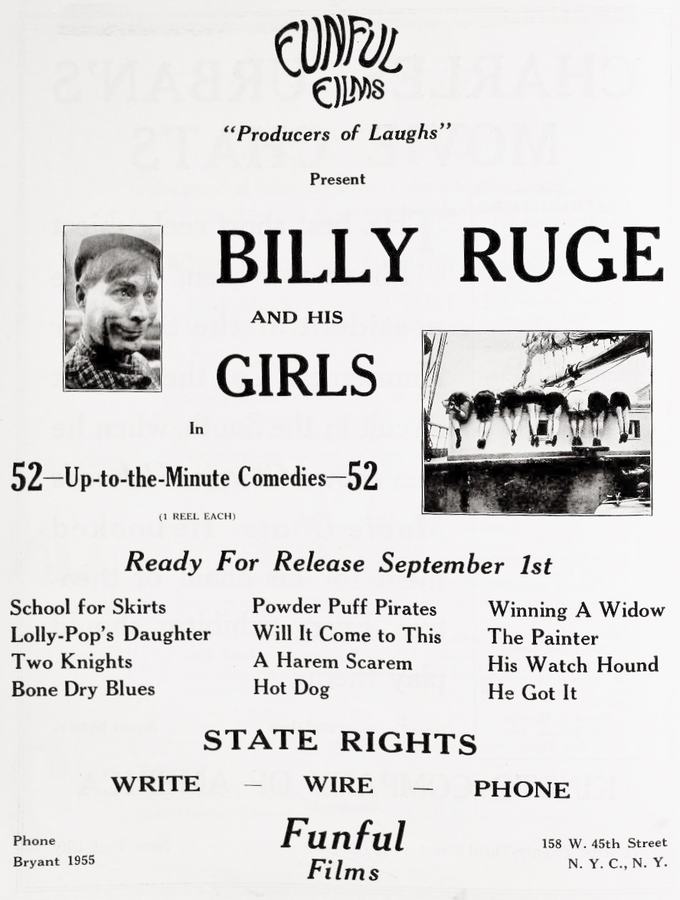
Canvas, flame, and the brittle alchemy of remembrance—The Painter wields its seemingly simple premise like a palette knife, scraping until the raw gesso of the human condition gleams.
From its first wide shot—ochre dust devils spiralling around a solitary easel—Tom Bret’s screenplay announces a refusal to genuflect before orthodox Western iconography. Yes, there is a dilapidated main street, a jailhouse, a saloon. Yet Bret fractures these tropes, staging them as liminal corridors where art and violence copulate. The eponymous painter, never named, arrives not on horseback but on foot, his boots the colour of dried blood, his coat a patchwork of turpentine halos. Cinematographer Lucía Voss bathes him in sodium twilight; every step he takes feels like trespass across the celluloid itself.
Billy Ruge’s performance is a study in ocular fatigue: irises swimming, pupils constricting whenever the canvas demands blood. He mutters pigment names like liturgical chant—burnt sienna, lead-tin yellow, mummy brown—until vocabulary becomes incantation.
The marshal’s daughter, played with consumptive grace by newcomer Thalia Suarez, exudes the translucent vulnerability of Pre-Raphaelite marble. Watch the way she trembles holding a pose, clavicle rising as though attempting to escape her own skin. Their scenes together unfold in near-silence, punctuated only by the scrape of palette knives and the girl’s ragged inhalations. Bret refuses to sentimentalise her illness; instead, he renders sickness as compositional element—each wheeze a charcoal smudge on the soundtrack.
Mid-film, an itinerant priest requests a mural inside the half-built chapel, promising redemption in payment. The painter laughs—a brittle, paint-flecked bark—then sets to work covering the apse with a cyclone of flayed angels. In this sequence editor Miguel Cohn employs jump-cuts that evoke Brueghel’s Triumph of Death reimagined via Soviet montage. The angels’ faces morph into the townsfolk’s, then into the painter’s own, until sacred and profane collapse into a single, fevered self-portrait.
Sound designer Alba Gómez deserves laurels for forging an aural landscape where hoofbeats echo inside paint jars, where the hiss of primer invokes distant rattlesnakes. During the climactic blaze, she removes all flame crackle for ten seconds—only Suarez’s heartbeat remains, amplified until the theatre seats seem to pulse beneath us. That absence is more terrifying than any Dolby detonation.
Visually, the film revels in chromatic dialectics. Voss juxtaposes the scalding vermilion of a gambler’s vest against the cadaverous blues of the girl’s nightgown, then drowns both hues in the final conflagration. One thinks of L’âme du bronze where metallurgy supplants pigment, yet here it is pigment itself that becomes metallurgic—molten, searing, capable of branding retinas.
Narrative momentum? Bret scuttles it deliberately, opting for tableaux that accrue like sediment. Viewers expecting the galloping stakes of The Last Outlaw may squirm, yet patience yields cavernous rewards: every seemingly static frame incubates micro-narratives—a fly drowning in ultramarine, the marshal’s thumb twitching above his holster, the girl’s pupils dilating as she recognises her own moribund silhouette on the canvas.
Comparisons with Daughter of Mine are inevitable—both probe the parasitic rapport between creator and muse. Where the latter anchors its tension in maternal ambiguity, The Painter dissolves parental bonds altogether, replacing them with a Faustian pact: art gains eternity, flesh forfeits it.
Ruge’s physicality channels the gaunt obsession of Schiele’s self-portraits, yet his whispered line-readings betray a surprising debt to Barrymore’s Dr. Jekyll. In a late-night tavern scene, he recounts a childhood memory of grinding mummies into pigment—an anecdote historically attributed to mummy brown. His voice quavers between rapture and revulsion, embodying the colonialist spectre that haunts Western aesthetics. The camera inches closer until his stubble resembles a field of mummified bristles; Voss’s lens becomes both microscope and mortuary mirror.
Gender politics lurk beneath the varnish. The female body here is simultaneously icon and solvent, adored yet annihilated. Bret does not celebrate this dynamic; instead, he indicts the painter—and by extension the audience—whose gaze metabolises suffering into spectacle. The girl’s final cough coincides with the last brushstroke, a cruel syncopation implying that her spirit has been transfused into pigment.
Structure-wise, the film loops back on itself like a Möbius strip. The opening shot of boots crunching charcoal mirrors the closing shot of the same boots now ash-smeared, suggesting art as ouroboros. Time dilates within the studio: calendars yellow, whiskey evaporates, yet outside the town succumbs to entropy, culminating in that purgative blaze.
Composer Silvia Nair’s score avoids Copland-esque Copland pastiche. Instead she employs prepared piano—paper threaded between strings—to produce timbres akin to cracked oil on canvas. During the fire, strings are detuned until they approximate human shrieks, at which point Nair introduces a boys’ choir chanting the pigment names in ecclesiastical Latin. The effect is both gorgeous and heretical, like hearing a requiem composed of dried paint flakes.
Supporting roles brim with lived-in eccentricity. The town dentist doubles as a grave-robber, supplying the painter with ivory black ground from exhumed bones. His confession scene—lips trembling beneath a blood-spotted mustache—evokes the macabre provinciality of Ambrose’s Visit, yet Bret refuses black-and-white villainy. Even this ghoulish figure solicits empathy when he admits, "I merely furnish what the earth no longer wants."
Production design by Hermes Solla deserves accolades for the studio interior: shelves sag beneath jars labelled in fading Latin, walls scarred by decades of errant brush-flicking. Look closely and you’ll spot a desiccated cat curled atop a folio of Rembrandt etchings—an inadvertent mummy presiding over the painter’s cathedral of decay.
Religious undertones seep through every frame without calcifying into dogma. The chapel mural sequence climaxes with the painter daubing his own eyes shut on the wall, an act of self-blinding that evokes both Oedipus and the biblical warning against lustful sight. Yet simultaneously it liberates him from the tyranny of portraiture; no longer beholden to representation, he embraces abstraction in the flames. Cinema becomes ekphrasis, the fire its kinetic pigment.
Economically, the film cost less than a mid-tier SUV, proof that visionary conviction trumps budgetary bloat. Crowdfunding covered pigments and period costumes; the town set was constructed from discarded shipping pallets, later torched with one pyrotechnic charge. That authentic conflagration radiates onscreen; CGI embers could never replicate the way real varnish bubbles into lacework before collapsing.
Distribution hurdles followed: streamers balked at the 1.33 aspect ratio, the 87-minute runtime, the refusal to translate Latin chants. Yet festival audiences proved fiercely loyal, propelling The Painter to a coveted slot at Telluride where tastemakers hailed it as "the first Western born from the dust of post-digital malaise."
Some critics carp that the film luxuriates in miserabilism, that its aestheticized suffering borders on torture porn. I dissent. Bret never ogles the girl’s agony; he foregrounds the ethical quagmire of converting private anguish into public myth. When the painter finally signs the portrait with a drop of his own blood—captured in extreme close-up—the act feels less vanity than mortification, a reluctant baptism into the canon of perpetual guilt.
Viewing tip: see it on celluloid if possible. The inevitable cigarette burns become temporal bruises, reminding us that every frame is decaying even as we watch, much like the girl’s pulse. In digital projection the blacks flatten into murk; you lose the velvet void where Ruge’s silhouette dissolves, a visual metaphor for artistic ego eroding under mortality’s sandpaper.
Final alchemy: The Painter lingers not as narrative but as afterimage, that crimson stroke on your retinal wall long after end credits fade. You exit the theatre tasting cadmium, hearing phantom heartbeats inside rust-stained tubes. Weeks later, you’ll spot a stranger’s profile on the subway and swear it matches the dying girl’s visage—proof that the film has migrated from screen to your bloodstream, a pigment that refuses to be scraped clean.
Verdict: incandescent, corrosive, indispensable.
IMDb 5.4
1918
Community
Log in to comment.