DbcultAccessing Vault...
Cult Review
Senior Film Conservator
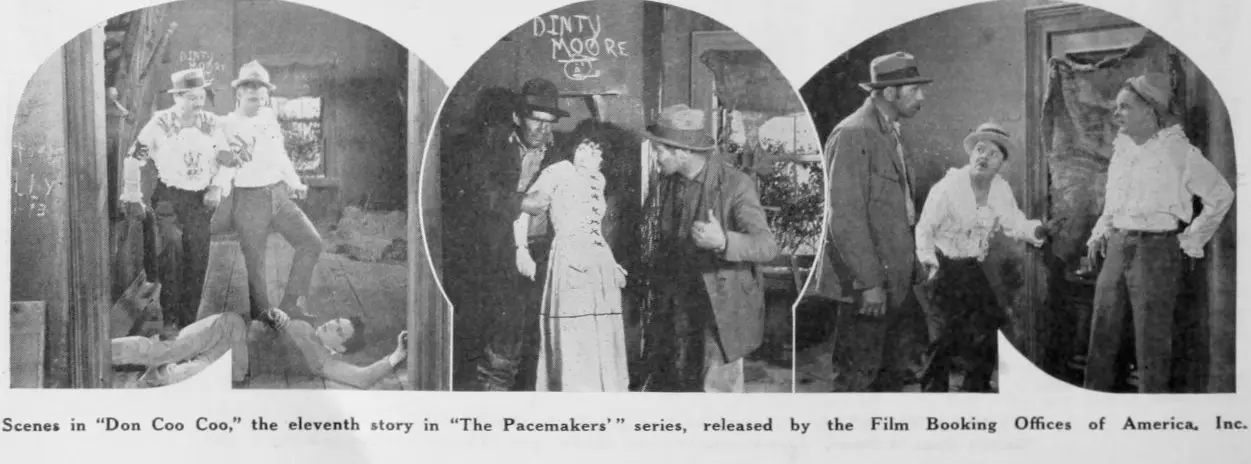
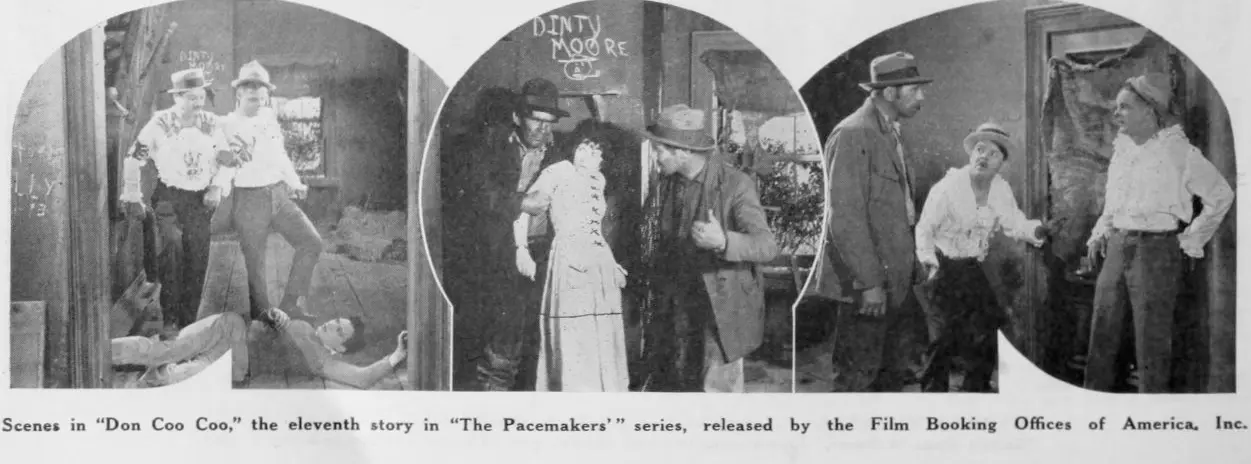
Is Don Coo Coo a hidden gem of the late silent era? Short answer: No, it is a frantic, loud, and occasionally exhausting relic that primarily serves as a time capsule for H.C. Witwer’s specific brand of blue-collar sports comedy.
This film is strictly for silent cinema completionists and historians of the 'Record Breakers' series. It is definitely not for modern viewers who require narrative logic or high-stakes emotional investment.
1) This film works because it captures the raw, kinetic energy of 1920s physical comedy without the pretension of higher-budget dramas of the time.
2) This film fails because the plot is virtually non-existent, serving only as a thin clothesline to hang repetitive gags and dated social archetypes.
3) You should watch it if you are a fan of George O’Hara’s athletic screen presence or if you want to see how H.C. Witwer’s short stories were translated into visual chaos.
H.C. Witwer was the king of the 'tough guy' short story in the 1920s. His writing was defined by a rhythmic, almost musical use of American slang that made his characters feel like they had just stepped off a dusty Brooklyn street corner. In Don Coo Coo, that energy is translated into a visual language that feels perpetually rushed. It is a film that doesn't just move; it vibrates.
The film relies heavily on the audience's familiarity with Witwer's other works, such as those seen in The Fighting American. If you aren't already tuned into the 'scrappy underdog' frequency, the first ten minutes will feel like a confusing blur of title cards and exaggerated gestures. The dialogue, though silent, is implied to be sharp and punchy, but without the benefit of Witwer’s actual prose, we are left with the broad physical interpretations of the cast.
Take, for instance, the opening sequence where the protagonist attempts to navigate a social gathering. The humor isn't found in the situation itself, but in the sheer speed at which George O'Hara moves through the frame. It is a performance of pure physicality. He doesn't walk; he lunges. He doesn't react; he recoils. It works. But it’s flawed.
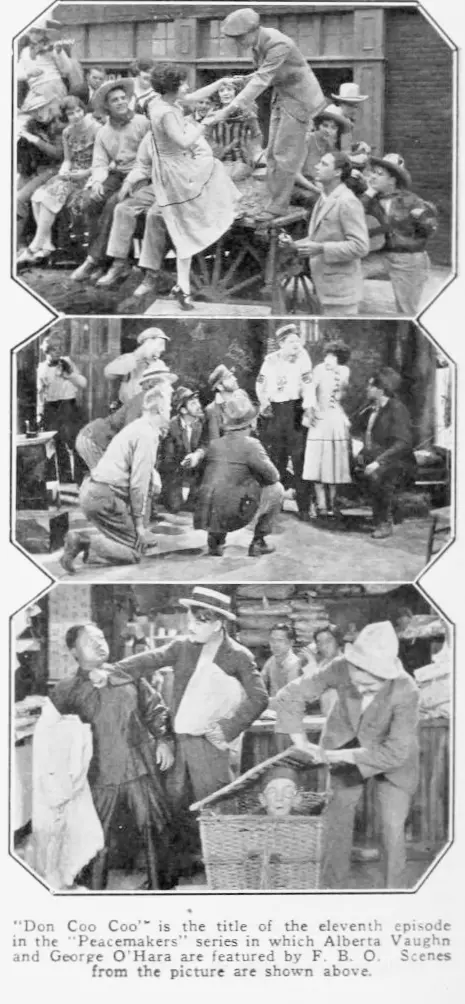
George O’Hara was a specialized talent. He wasn't a dramatic heavyweight like the actors in Forever, but he possessed a muscular grace that was perfect for the 'Record Breakers' series. In Don Coo Coo, O’Hara is essentially playing a version of himself—the lovable, slightly dim-witted athlete who finds himself in over his head. His performance is a masterclass in 'stunt-acting,' where the physical risk is the primary draw.
Alberta Vaughn, on the other hand, is the film's secret weapon. While many actresses of the era were relegated to being decorative prizes, Vaughn always brought a sense of agency and mischief to her roles. Her interactions with O’Hara provide the only moments of genuine warmth in an otherwise cold, slapstick environment. Compared to her work in The Ancient Highway, her role here is smaller, but her screen presence is undeniable.
The supporting cast, featuring Kit Guard and Al Cooke, operates as a single comedic unit. They are the friction that keeps the plot moving. Their job is to be hit, to fall, and to look ridiculous, and they perform these tasks with a professional selflessness that is rare in modern comedy. They don't seek the spotlight; they exist to make O’Hara look like a hero. It is a selfless, if repetitive, display of craft.
By 1928, the silent film was at its technical peak, just before the 'talkies' would arrive to ruin the visual fluidity of the medium. Don Coo Coo benefits from this maturity. The cinematography is crisp, and the editing is surprisingly modern. The way the camera tracks the action during the final athletic sequence is far more sophisticated than the static shots found in earlier works like My Hero!.
The pacing, however, is where the film struggles. It suffers from the 'short-film-stretched-to-feature' syndrome. There are moments where the gags go on for two or three beats too long. A scene involving a misunderstanding over a piece of sporting equipment starts funny, becomes tedious, and then eventually circles back to being funny again through sheer persistence. It’s a bold strategy, but it requires a patient viewer.
The tone is also a bit of a moving target. It shifts from broad slapstick to a surprisingly grounded sports drama in the final act. This lack of tonal consistency makes it hard to classify. Is it a parody? A sincere tribute to athletes? A romantic comedy? It tries to be all three and ends up being a slightly messy hybrid. It’s essentially a 20-minute exercise in controlled falling.
Question: Does Don Coo Coo offer anything to a modern audience?
Answer: Only as a historical curiosity. While the physical stunts are impressive, the narrative is too thin to sustain interest for anyone not already invested in silent-era tropes. It is a disposable artifact that highlights the transition of comedy from the stage to the screen.
Pros:
- Exceptional physical comedy from the lead trio.
- High production values for a late silent short.
- Alberta Vaughn’s charismatic and witty performance.
- Fast-paced editing that prevents total boredom.
Cons:
- The story is a collection of clichés.
- Some of the humor has aged poorly and feels mean-spirited.
- It lacks the emotional depth found in contemporaries like What's His Name.
- The 'Coo Coo' gimmick wears thin very quickly.
The slapstick in Don Coo Coo isn't the poetic, balletic style of Buster Keaton. Instead, it’s the rough-and-tumble, bruising style of the 'Fighting Blood' series. When George O'Hara takes a fall, you feel the impact. There is a scene involving a collision in a gymnasium that looks genuinely painful. This commitment to physical realism is what separates this film from more whimsical shorts like Day Dreams.
However, this realism also highlights the film's lack of imagination. Instead of using the medium to create impossible situations, it simply films men doing difficult things. It is impressive, but it isn't always 'cinematic.' It feels more like a recorded vaudeville act than a piece of film art. This is a common critique of H.C. Witwer adaptations; they are so focused on the 'toughness' of the characters that they forget to give them a world worth inhabiting.
Compare this to Speed Wild, which manages to balance its action with a more compelling sense of stakes. In Don Coo Coo, the stakes are always low. We know O’Hara will win, we know Vaughn will smile, and we know the villains will fall down. Without the tension of potential failure, the comedy becomes a mechanical exercise.
To understand Don Coo Coo, you have to understand the 'Record Breakers' series. This was a factory-line production designed to keep audiences coming back to the theater every week. It was the television of its day. In that context, the film is a success. It delivers exactly what the audience expected: O’Hara’s muscles, Vaughn’s eyes, and a few good laughs.
But viewed in isolation nearly a century later, the cracks are obvious. The film lacks the timelessness of Bab the Fixer or the raw intensity of The Tiger Woman. It is a product of its time, and it is content to stay there. There is no attempt to break new ground or challenge the audience’s expectations. It is comfortable, predictable, and ultimately forgettable.
"Don Coo Coo is the cinematic equivalent of a fast-food meal from 1928: it satisfied the hunger of the masses at the time, but it offers very little nutritional value for the modern palate."
Don Coo Coo is a loud, frantic, and ultimately hollow experience. While George O’Hara and Alberta Vaughn do their best to inject some life into the proceedings, they are hampered by a script that refuses to be anything more than a series of stunts. It is a fascinating look at the end of the silent era, but it is not a 'must-watch.' If you want to see O’Hara at his best, look elsewhere. If you want to see a film that perfectly encapsulates the 'Record Breakers' formula, this is it—for better or worse. It’s a 5/10 experience that feels like a 3/10 script elevated by a 7/10 cast. Proceed with caution and low expectations.
IMDb 8.1
1920
Community
Log in to comment.