DbcultAccessing Vault...
Cult Review
Senior Film Conservator
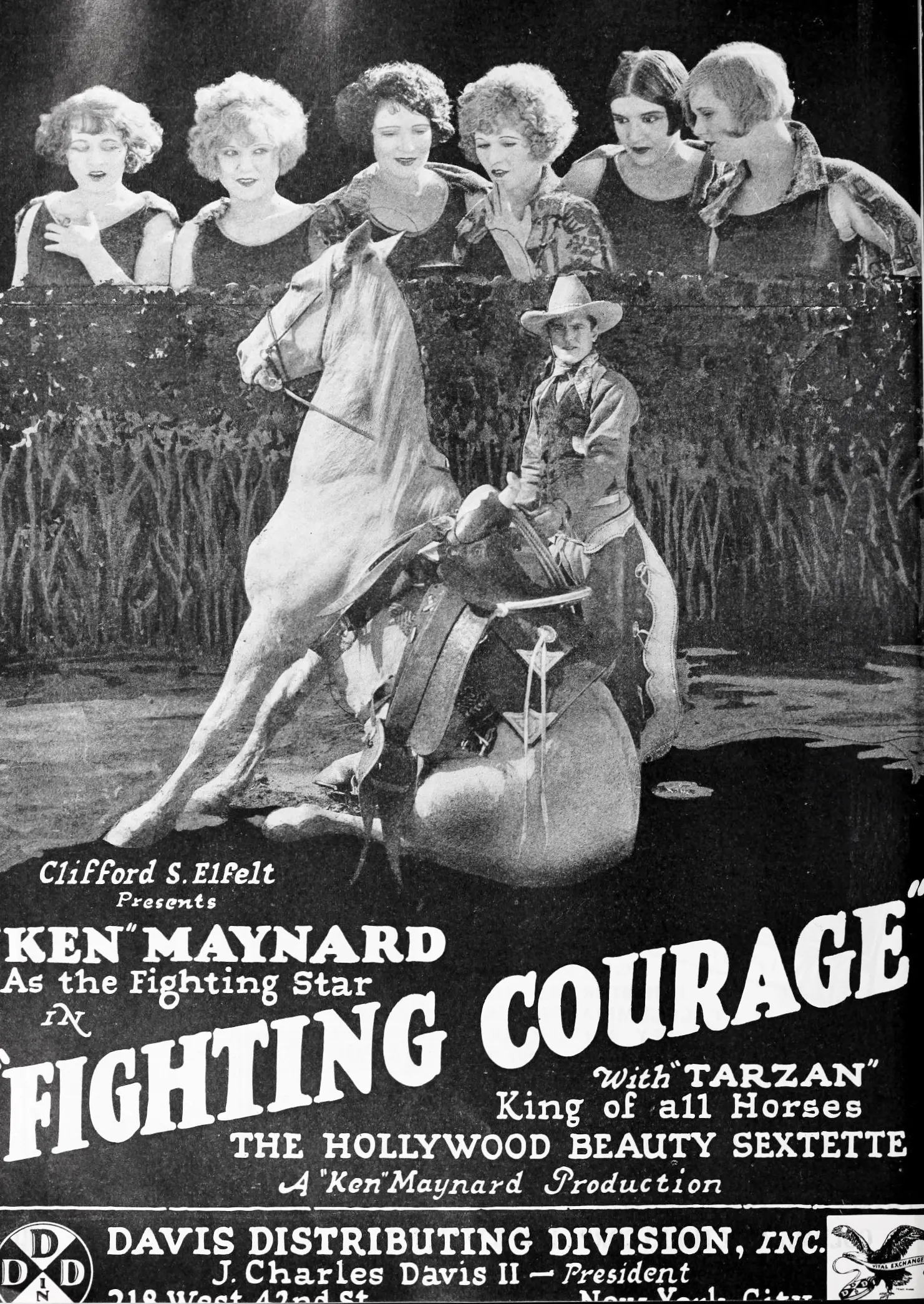
Is Fighting Courage worth watching today? Short answer: yes, but with significant caveats. This early Western, a relic from an era where silent films were giving way to talkies, delivers a surprisingly robust narrative, yet it’s undeniably a product of its time. It’s a film that will resonate deeply with classic film enthusiasts, particularly those with a fondness for the Western genre's formative years and a high tolerance for period-specific pacing and storytelling conventions. However, those accustomed to modern cinematic sensibilities – faster cuts, complex character arcs, and high-fidelity visuals – might find its charm elusive and its rhythm challenging to embrace.
It’s a fascinating snapshot of early Hollywood, showcasing how genre tropes were being established and refined. While it won't be for everyone, its historical significance and a few standout performances make it a worthwhile watch for the right audience.
The film plunges us into the world of Richard Kingsley, a young man from privilege, whose attempt to play the hero during a roadhouse raid inadvertently lands him in jail. This incident, an affront to his financier father's reputation, sets in motion a dramatic ultimatum: find a mine in Colorado or face disinheritance. It’s a classic setup for a hero’s journey, one that strips him of his comfort and forces him into the rugged, untamed West. The initial scenes in New York, while brief, quickly establish Richard's somewhat naive but well-meaning character, making his subsequent trials all the more impactful.
His journey west is fraught with peril and misfortune. A seemingly innocent encounter with a group of chorus girls leads to his pockets being picked by their unscrupulous manager, leaving him stranded and penniless. This moment of vulnerability is crucial; it’s the catalyst that forces Richard to truly confront the harsh realities of a world far removed from his opulent upbringing. He must rely on his wits and innate sense of justice, rather than his family's wealth.
The plot thickens with the introduction of Kinkaid, a bandit who has robbed Marjorie Crenshaw’s father. The coincidence of Richard encountering Kinkaid, and recognizing his father's stolen horse, is a delightful contrivance that drives the narrative forward. This exchange of the horse, coupled with a forced clothing swap, sets up the central conceit of mistaken identity – a trope that Fighting Courage leverages with surprising effectiveness.
Richard, now mistaken for the bandit, finds himself on the run from a posse, armed with Kinkaid's stolen money. His decision to altruistically distribute the funds, rather than keep them, immediately distinguishes him from the true villain. It reaffirms his inherent goodness, even as he navigates a chaotic situation he didn't create. The ensuing cat-and-mouse game, complicated by Kinkaid's attempts to seduce Marjorie, culminates in a series of dramatic confrontations and a satisfying resolution, where all misunderstandings are cleared, the mine is found, and love blossoms. It’s a neat package, characteristic of the era’s storytelling, but executed with a certain panache.
Let’s get straight to it.
This film works because... it masterfully employs the classic mistaken identity trope within a compelling Western framework, delivering a fast-paced, engaging narrative that keeps you invested in Richard's plight. Ken Maynard's charismatic presence is undeniable.
This film fails because... its pacing, while good for its era, can feel sluggish by modern standards, and some of the supporting performances lack the depth needed to truly elevate the dramatic stakes beyond simple archetypes.
You should watch it if... you appreciate early Westerns, enjoy a straightforward adventure with clear heroes and villains, and are curious about the evolution of cinematic storytelling, particularly the silent film era's transition.
The performances in Fighting Courage are, as expected for the era, a mix of broad theatrics and genuine screen presence. Ken Maynard, a true icon of the silent and early sound Westerns, carries the film with an effortless charm and physicality. His portrayal of Richard Kingsley is earnest and believable, making the audience root for his every move. Maynard’s ability to convey emotion through gesture and expression, a hallmark of silent film acting, is particularly evident in scenes where he’s mistaken for Kinkaid, his frustration and determination palpable without a single line of dialogue. His horsemanship, a given for a cowboy star, is also a highlight, adding an authentic layer to the action sequences.
However, I’d argue that Maynard's performance, while strong, sometimes overshadows the potential for deeper character development in others. He's the undeniable star, and the narrative often feels designed to showcase his talents, which isn't necessarily a flaw, but it does limit the scope for other actors to shine as brightly. For instance, in a similar vein to how Douglas Fairbanks dominated The Challenge Accepted, Maynard's sheer magnetism here often pulls focus.
The supporting cast, while solid, largely fulfills their archetypal roles. Nancy Zann as Marjorie Crenshaw provides a compelling damsel in distress who also demonstrates flashes of independence. Her reactions to Kinkaid’s advances and Richard’s heroism are genuinely portrayed, adding a necessary romantic element to the adventure. The chemistry between Zann and Maynard, while subtle by today's standards, is effective enough to sell the eventual romance. You truly believe her eventual affection for Dick.
One truly unconventional observation: the credit for an actor named 'Tarzan' is fascinating. In an era where animal actors often took on memorable names, or human actors adopted stage personas, this inclusion is a curious footnote. It makes one wonder if 'Tarzan' was a person, a particularly well-trained animal, or an early example of a meta-joke within the credits. It stands out, perhaps more than some of the human performances, simply for its peculiar nature. It's a small detail, but one that adds to the film's unique historical flavor.
The villain, Harry Woods as Kinkaid, is suitably menacing without ever becoming truly terrifying. He embodies the classic Western outlaw – opportunistic, cunning, and somewhat brutish. His interactions with both Richard and Marjorie are pivotal, driving much of the film's conflict and providing a clear antagonist against Maynard’s upright hero. The physical contrast between the two actors further amplifies their roles, making their confrontations feel more impactful.
The direction in Fighting Courage is competent and effective, particularly in its handling of action sequences and the vast Western landscapes. The director, whose name isn't provided in the prompt but whose vision is clear, understands the grammar of the silent film Western. The camera work, while not groundbreaking, serves the story well, often capturing the expansive beauty of the Colorado setting. There are wide shots that emphasize the isolation and grandeur of the frontier, a stark contrast to the cramped New York roadhouse scenes that open the film. This visual juxtaposition effectively underscores Richard's journey from urban confinement to open wilderness.
One specific example of effective direction is the sequence where Richard and Kinkaid exchange clothes. The staging of this moment, with its tension and forced compliance, is remarkably clear, even without dialogue. The director relies on close-ups of their faces and the swift, almost ritualistic nature of the clothing swap to convey the power dynamic and the immediate shift in Richard's predicament. It's a pivotal scene, executed with admirable precision.
Cinematography, while not pushing artistic boundaries like some of its European contemporaries such as The Vampires: The Poisoner, is consistently good. The lighting is functional, highlighting faces and actions without being overly dramatic. The outdoor shots, in particular, benefit from natural light, giving the film an authentic, sun-drenched feel. This contributes significantly to the immersive quality of the Western setting. The chase scenes, a staple of the genre, are well-staged and surprisingly dynamic, making good use of the natural terrain and the impressive horsemanship of the actors.
My debatable opinion here: while the cinematography is solid, it rarely transcends mere competency. It captures the action and setting, but it doesn't leave you with breathtaking images that linger long after the credits roll. It's a pragmatic approach, certainly fitting for the era and the genre, but one that feels more about storytelling efficiency than visual artistry. This isn't a film trying to redefine visual language; it's perfecting a proven formula.
The pacing of Fighting Courage is generally brisk for a film of its period, particularly once Richard embarks on his Western adventure. The initial setup in New York feels a little rushed, perhaps to quickly get our hero into the more exciting frontier setting. Once in Colorado, the narrative moves with a steady clip, alternating between moments of peril, character interaction, and thrilling chase sequences. There are no significant lulls, which is a testament to the efficient storytelling of the era. This allows the film to pack a considerable amount of plot into its runtime.
The tone is largely adventurous and heroic, tinged with moments of light comedy and genuine dramatic tension. The mistaken identity plot naturally lends itself to both humor and suspense, and the film navigates these shifts reasonably well. Richard’s altruistic distribution of the stolen funds, for instance, is a moment that injects a strong moral compass into the narrative, reinforcing the film’s underlying theme of inherent goodness triumphing over adversity. It works. But it’s flawed.
For example, the scene where Kinkaid attempts to seduce Marjorie is played with a certain degree of theatrical menace, but it never feels truly terrifying. This keeps the tone consistent with the adventure genre rather than veering into darker, more dramatic territory. It maintains a sense that our hero will ultimately prevail, which is comforting for audiences seeking a straightforward, feel-good narrative.
The film’s lasting impression is one of a charming, if uncomplicated, Western. It’s a reminder of a time when cinematic storytelling was more direct, relying on clear character motivations and easily digestible plots. It doesn't aim for the psychological depth of later Westerns, nor the epic scope of something like Around the World in 80 Days. Instead, it offers a focused, engaging adventure that holds up surprisingly well as a piece of historical entertainment.
Absolutely, for the right audience. Fighting Courage offers a compelling glimpse into early Western cinema, showcasing a skilled performance from Ken Maynard and a narrative that, despite its age, remains engaging. It's a valuable historical document and a fun, if unchallenging, watch for enthusiasts of classic film.
If you're looking for a film that feels authentic to its period, with clear heroes and villains and plenty of horseback action, you'll find much to enjoy. However, if you prefer modern narrative complexities, high production values, and rapid-fire dialogue, this might not be the film for you. It's a commitment to a different era of filmmaking, but one that rewards patience and an open mind.
Fighting Courage is more than just a historical curiosity; it’s a genuinely entertaining early Western that showcases the enduring appeal of its genre. While it won't redefine your cinematic palate, it offers a charming, action-packed narrative anchored by a compelling lead performance from Ken Maynard. It’s a testament to simple, effective storytelling. For those willing to step back in time, this film is a rewarding experience, a sturdy foundation upon which countless Westerns would later build. It’s not a masterpiece, but it certainly has courage.
IMDb 7
1932
Community
Log in to comment.