DbcultAccessing Vault...
Cult Review
Senior Film Conservator
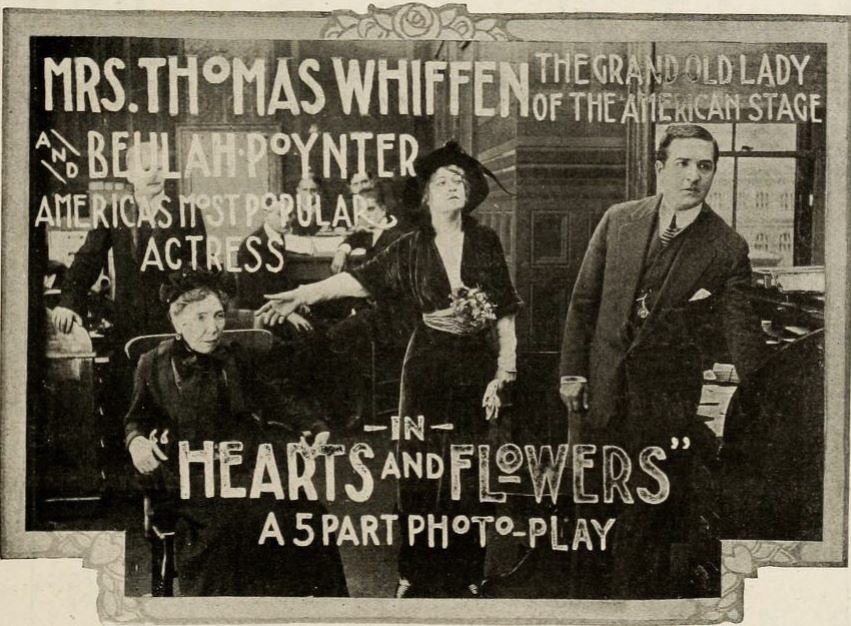
If the nickelodeon of 1915 could be likened to a kinetoscope parlor of volatile dreams, then Hearts and Flowers is the flickering ouroboros that devours its own sentiment before it calcifies into cliché. What begins as a bucolic courtship—sunlight dribbling through maize like molten topaz—mutates into a ledger of transgressions, each sin tallied against the wholesome wallpaper of maternal devotion.
Director Harold Shaw, mining the vein The Dishonored Medal once probed for martial shame, here interrogates the American parable of the self-made man. Tom’s trajectory—from furrow to frenzied trading floor—uncoils with the inevitability of Greek tragedy, yet the film refuses the cathartic scaffold Sophocles would erect. Guilt, not hubris, is the protagonist.
Cinematographer L. William O’Connell renders the homestead in high-key pastoral: wheat aureoles, barnwood umber, a horizon so wide it seems stitched by hand. Once Tom’s train belches into Pennsylvania Station, the palette lurches toward chiaroscuro—skyscrapers dagger the frame, ticker tape becomes vertiginous snow. The montage of Tom’s first stock windfall is a staccato hallucination: champagne cuvées, cufflinks glinting like guillotines, a woman’s ankle glimpsed through confetti. The intoxication is so tactile you can almost smell the wet ink of banknotes.
Compare this tonal whiplash to Strike’s factory infernos or An Odyssey of the North’s snowblind purgatory; Shaw weaponizes contrast not for social indictment but for intimate moral vertigo.
As Ma Landers, Beulah Poynter wears deprivation like a second skin. Note how her shoulders fold inward when she enters Tom’s skyscraper—an architectural cathedral that dwarfs her farm-worn silhouette. The performance is microcosmic: a tremor of the lip, a smoothing of apron that will never again be crisp. When she faints, the camera tilts—not downward in pity, but askew, as though the world itself has slipped off its axis.
The violet bouquet Elsa offers becomes a Eucharistic token: purple for penitence, fragrance for memory. In that moment, the film suspends time; the bouquet hovers between two palms like a fragile covenant.
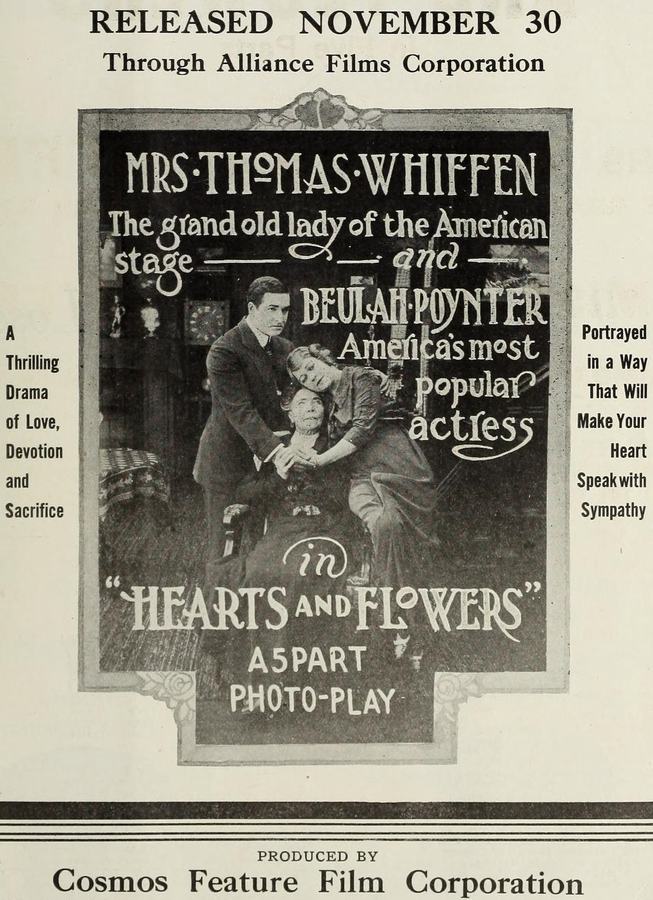
Played by society actress Juliette Moore (billed here as Juliet Moore), Elsa is no mere angel of mercy. Her first close-up—after Tom thwarts the pickpocket—registers a flicker of boredom evaporating into curiosity: here, finally, is a man who risks something other than a tuxedo. Later, when she purchases the farm, the deed transfer occurs off-screen; Shaw understands that true charity is camera-shy, that magnanimity divorced from spectacle is the only kind that matters.
Elsa’s arc rhymes with the heroines of La Belle Russe and Half Breed—women whose purses can redraw maps, yet whose hearts remain uncharted.
Tom’s plunge into speculation arrives with a dissolve that feels like a gasp: farm dusk bleeds into ticker tape. The brokerage set is a kaleidoscope of gesticulating clerks, their semaphore of buy/sell a danse macabre. When Tom loses the thousand dollars, Shaw withholds the crash itself; instead, we get the aftermath—an ink-blotted ledger, a trembling hand, the sound of silence where exultation once ricocheted.
This narrative ellipsis is savvier than any contemporary depiction of financial ruin; it understands that trauma is not the lightning but the thunder you hear minutes later when you realize the tree has split.
The skirmish that sends Walter over the cliff is staged in a single wide shot—no under-cranked mayhem, no stunt dummy visible. The restraint is unnerving; gravity itself becomes the antagonist. Walter’s disappearance haunts the remainder of the film like a half-remembered sin, an ellipsis in Tom’s moral ledger.
Compare to the deliberate carnage of The Battle of Shiloh or The Explosion of Fort B 2; here violence is accidental, and therefore unpurgeable.
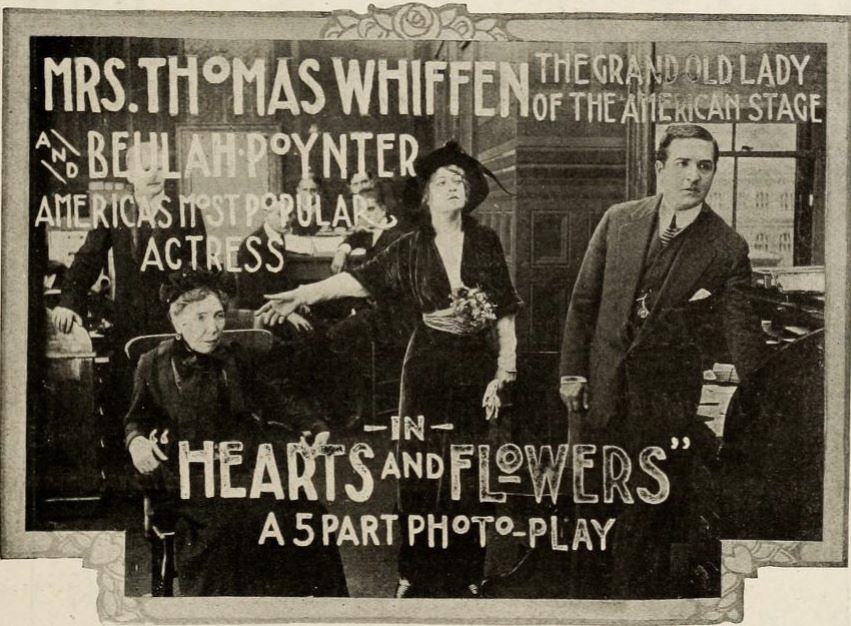
Tom’s refusal to acknowledge his mother in the marble vestibule is the story’s true precipice. Shaw blocks the scene so that Tom’s reflection in the polished brass doors fractures—a cubist confession. Later, Ma’s relocation to the tenement is shot through a fire-escape lattice, bars of shadow carving her face into a penal icon. The camera does not move; it watches like an unblaming god.
Elsa’s purchase of the farm is the film’s most radical gesture: a woman of leisure buying back the very soil a man squandered. The restitution is not Tom’s to perform; he is relegated to spectator at his own absolution. The final tableau—mother and son framed by a kitchen window as dawn ignites the fields—restores the pastoral palette, yet the yellow of wheat now reads as cautionary gilt.
The intertitles, penned by Poynter herself, eschew the purple bombast of era contemporaries. Sample: "Money whispers; love stammers." The brevity lands like a haiku bruise.
The recent 4K restoration by Film Preservation Associates pairs the picture with a newly commissioned score—piano, pump organ, and discreet field recordings of Kansas wind. Crescendos sync with Tom’s moral vertigo; silence pools whenever Ma Landers occupies the frame. The mix is mixed-down to mono, evoking the acoustic horizon of a 1915 opera house.
Place this film beside Rip Van Winkle’s narcoleptic nostalgia or The Old Curiosity Shop’s Victorian squalor, and you discern a uniquely American dialectic: the farm as Eden, the city as knowledge, the mortgage as original sin. Unlike Severo Torelli’s operatic religiosity, Shaw grounds transcendence in acreage, not altar.
Does the film lapse into melodrama? Sporadically—Elsa’s roses-and-violets benevolence feels pre-Cinderella. Yet the lapses are themselves historical footprints, reminding us that modern psychological realism was still germinating in 1915. What endures is the film’s interrogation of capital as moral solvent, its refusal to let restitution equate penance, its conviction that forgiveness—like crops—must be cultivated daily.
Hearts and Flowers is a silent roar against the mythology of the bootstrap. Nearly eleven decades after its premiere, its lament for filial ingratitude still vibrates like piano wire in an abandoned farmhouse—taut, humming, impossible to ignore.
For deeper dives into rural fatalism, see my essays on A Tale of the Australian Bush and Un día en Xochimilco.
IMDb 5.3
1930
Community
Log in to comment.