DbcultAccessing Vault...
5.6/10
Senior Film Conservator
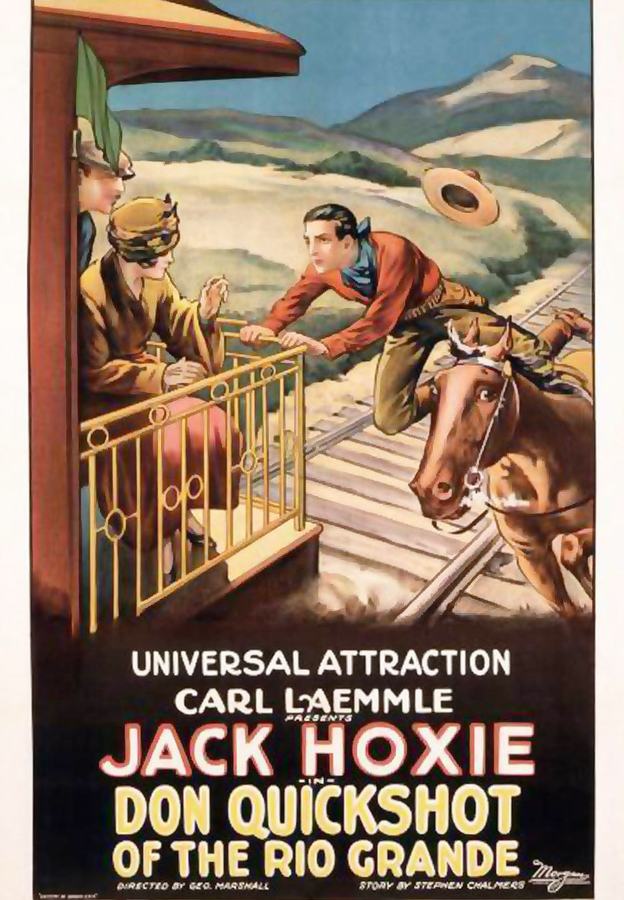
A definitive 5.6/10 rating for a film that redefined the boundaries of cult cinema. Don Quickshot of the Rio Grande remains a cornerstone of transgressive art.
In the annals of early Western cinema, where the dust of nascent storytelling often settled on familiar archetypes, a peculiar gem occasionally emerges, challenging the expected and infusing the genre with an unexpected intellectual flourish. Such is the case with Don Quickshot of the Rio Grande, a film that, even a century after its creation, resonates with an ambitious spirit, attempting to graft the grand, if delusional, romanticism of Cervantes onto the stark, unforgiving canvas of the American frontier. This isn't merely another tale of cowboys and outlaws; it's a fascinating study in character, consequence, and the enduring power of narrative to shape, or perhaps distort, individual destiny.
At its heart, Don Quickshot of the Rio Grande introduces us to "Pep" Pepper, portrayed with a compelling blend of naiveté and earnestness by Jack Hoxie. Pep is a figure seemingly plucked from a different era, a tender soul adrift in a tough world. His proclivity for daydreaming, a charming eccentricity in a less demanding environment, proves to be his undoing in the rigorous life of a ranch hand. Losing his job, a blow to his already fragile sense of belonging, propels him into a world of literary escapism. It is here, within the pages of Miguel de Cervantes' immortal masterpiece, Don Quixote de la Mancha, that Pep finds not just a story, but a calling. He doesn't merely read about the titular knight-errant; he internalizes his ethos, deciding to become a modern-day champion of justice, a beacon of chivalry in a land that largely understands only the law of the gun.
This premise, audacious for its time, immediately sets the film apart. It's an exploration of how idealism, when untempered by pragmatism, can lead to both heroic endeavors and catastrophic misunderstandings. Pep's transformation is less a conscious decision and more an immersion, a complete surrender to the romantic fantasy of a bygone age. He is not merely influenced by Don Quixote; he becomes him, projecting his literary ideals onto the grimy realities of the Rio Grande. This internal conflict, the clash between Pep's noble intentions and the harsh consequences of his actions, forms the bedrock of the narrative's dramatic tension.
The catalyst for Pep's grand adventure, ironically, is a moment of pure, misguided chivalry. Intervening in a raucous saloon brawl, a scene so archetypal of the Western genre, Pep's attempt to restore order backfires spectacularly. The saloon owner is killed, and in the ensuing chaos, the blame falls squarely on his shoulders. This pivotal incident immediately shifts the film's tone from whimsical romanticism to urgent pursuit. Pep is no longer just a man playing at being a knight; he is now a fugitive, a man wrongly accused, whose very freedom hinges on uncovering the truth. This narrative twist is reminiscent of classic chase films, where the protagonist must clear their name against insurmountable odds, a trope that has captivated audiences across decades, much like in The Eleventh Hour, where a similar urgency drives the plot.
His escape is not an act of cowardice, but a strategic retreat, a necessary step in his personal quest for vindication. The journey that follows is fraught with peril, forcing Pep to navigate treacherous landscapes and even more treacherous human intentions. His initial dream of righting wrongs takes on a far more personal and desperate hue. The abstract ideals of chivalry are now tested against the very real and immediate threats to his life and reputation. This transformation of motivation, from idealistic to existential, provides a compelling arc for the character, allowing Hoxie to explore a broader range of emotions than might be expected in a typical silent Western hero.
No Quixotic journey would be complete without a Dulcinea, and Don Quickshot of the Rio Grande delivers this crucial element in the character of Tulip, played by Elinor Field. Tulip is not merely a passive object of affection; she is the wealthy daughter of a powerful cattleman, a figure of standing whose abduction by a ruthless bandit gang adds another layer of urgency and personal stakes to Pep's quest. Her predicament transforms Pep's abstract ideals into a concrete mission: to rescue his lady love, a classic Western trope imbued with new meaning through the Quixotic lens. The blend of a high-stakes kidnapping with the hero's personal vindication creates a narrative tapestry rich with adventure and emotional resonance.
Elinor Field's portrayal of Tulip, while constrained by the conventions of silent film acting, manages to convey a sense of vulnerability and resilience. Her role as the kidnapped maiden is central to galvanizing Pep's resolve, providing him with a tangible dragon to slay. This plot point not only propels the narrative forward but also allows the film to explore themes of heroism, sacrifice, and the often-unforeseen consequences of noble intentions. The juxtaposition of a refined woman like Tulip against the rough, lawless elements of the bandit gang highlights the societal divides and dangers prevalent in the frontier setting. The emphasis on a woman's plight and the hero's response to it is a recurring motif in cinema, seen in films like A Woman's Woman, where female characters often navigate challenging circumstances, albeit with different thematic focuses.
Jack Hoxie, a prominent figure in silent Westerns, truly embodies Pep Pepper. His physicality, combined with a nuanced facial expressiveness, allows him to convey the character's internal struggle between his idealistic visions and the harsh realities of the Wild West. He carries the film with an earnest conviction, making Pep's sometimes absurd actions relatable and even endearing. His rapport with Scout the Horse, a common element in many Westerns, is particularly noteworthy, adding a layer of authenticity and camaraderie that audiences of the era cherished. Scout, in his own way, becomes Sancho Panza to Pep's Quixote, a steadfast if silent companion through thick and thin.
The supporting cast contributes significantly to the film's texture. Hank Bell and Ben Corbett, seasoned veterans of the genre, bring a grounded realism to their roles, often serving as foils to Pep's flights of fancy. William Steele and Harry Woods portray the villains with a palpable menace, providing credible antagonists for our hero. Robert McKenzie, Skeeter Bill Robbins, and Fred C. Jones round out the ensemble, each contributing to the vibrant, often chaotic, world of the Rio Grande. Their collective performances, guided by director George Hively, paint a vivid picture of a frontier populated by a diverse array of characters, from the noble to the nefarious. The ensemble's ability to convey character and emotion without dialogue is a testament to the craft of silent film acting, where gestures, expressions, and physical presence were paramount. This rich tapestry of characters, each playing a distinct role in the unfolding drama, elevates the film beyond a simple hero-versus-villain narrative.
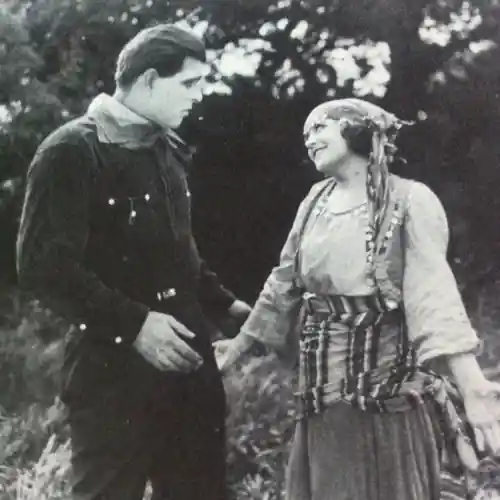
The ingenuity of Don Quickshot of the Rio Grande largely stems from the minds of its writers, Stephen Chalmers and George Hively. Their decision to transpose Cervantes' classic into a Western setting was a stroke of genius, offering a fresh perspective on both genres. The screenplay deftly balances moments of high action with character-driven drama, ensuring that Pep's internal journey remains as compelling as his external adventures. The pacing is robust, building momentum as Pep delves deeper into his quest for justice and the rescue of Tulip. This narrative ambition is notable, especially when considering other films of the era that often relied on more straightforward plotlines, such as Bag Filmens Kulisser, which focused on the behind-the-scenes drama, or The Yellow Traffic, a more direct social commentary.
George Hively, pulling double duty as both writer and director, demonstrates a keen understanding of the Western genre's visual language. His direction capitalizes on the expansive landscapes, using them to emphasize Pep's isolation and the vastness of his challenge. The action sequences are well-staged, particularly the climactic confrontations with the bandit gang, showcasing the dynamism inherent in silent film stunt work. Hively's ability to extract nuanced performances from his cast, especially in conveying the internal struggles of Pep, speaks volumes about his directorial skill. He manages to weave together the disparate threads of romance, action, and mistaken identity into a cohesive and engaging whole, proving that early cinema was capable of complex storytelling.
The central theme of Don Quickshot of the Rio Grande is undoubtedly the clash between idealism and realism. Pep's Quixotic worldview, while admirable in its intent, frequently puts him at odds with the brutal pragmatism of the frontier. Yet, it is precisely this idealism that fuels his courage and perseverance. The film implicitly asks whether such antiquated notions of chivalry have a place in a modernizing world, or if they are doomed to be shattered by harsh realities. The answer, as the film suggests, is complex: while blind adherence to fantasy can be dangerous, the spirit of selflessness and justice that underpins chivalry remains eternally valuable.
Another pervasive theme is the pursuit of justice. Pep's initial motivation to clear his name evolves into a broader commitment to righting wrongs, especially in the rescue of Tulip. This quest for justice, both personal and communal, is a timeless narrative element that resonates deeply with audiences. It's a theme explored in countless films, from stark dramas to thrillers. The film also touches upon the precarious position of women in the untamed West, where figures like Tulip are often vulnerable to the whims of outlaws, requiring a hero to intervene. This portrayal of female vulnerability and strength, albeit within the confines of the era's storytelling, can be fascinatingly contrasted with films like Your Girl and Mine: A Woman Suffrage Play, which directly addressed women's agency and societal roles.
The film's legacy lies in its innovative approach to genre blending. It demonstrates that even in the early days of cinema, filmmakers were willing to experiment with literary adaptations and infuse popular genres with deeper thematic content. While it may not be as widely known as some of its contemporaries, its unique premise and competent execution make it a significant entry in the history of the Western. It's a testament to the creative spirit of early Hollywood, where the boundless possibilities of the silver screen were still being discovered. The narrative's blend of adventure, romance, and mistaken identity gives it a charm that transcends its age, offering a window into the storytelling sensibilities of the 1920s.
As a silent film, Don Quickshot of the Rio Grande relies heavily on visual storytelling, intertitles, and the expressive power of its actors. The cinematography effectively captures the vastness of the Rio Grande landscapes, using wide shots to establish the setting and close-ups to convey emotion. The action sequences, particularly the horse chases and gunfights, are choreographed with a clear sense of movement and tension, a hallmark of well-executed silent Westerns. The use of natural light and rugged scenery adds to the film's authenticity, immersing the viewer in the frontier environment. The visual grammar of the film, while conventional for its time, remains effective in communicating the narrative's twists and turns.
The editing maintains a brisk pace, ensuring that the narrative never drags, even during moments of introspection for Pep. The cuts are often sharp and purposeful, driving the story forward from one dramatic beat to the next. The film's ability to convey complex emotions and plot points without spoken dialogue is a powerful reminder of the artistry inherent in silent cinema. Every gesture, every glance, every physical action carries significant weight, demanding a heightened level of engagement from both the actors and the audience. This visual eloquence is a stark contrast to modern film, yet its effectiveness is undeniable, a testament to the universal power of visual narrative.
Don Quickshot of the Rio Grande stands as a compelling and surprisingly sophisticated entry in the silent Western canon. It's more than just a tale of adventure; it's a thoughtful exploration of character, idealism, and the enduring human quest for justice and love. Jack Hoxie delivers a memorable performance, anchoring the film with his earnest portrayal of Pep Pepper, the cowboy who dared to dream like a knight. The narrative, penned by Chalmers and Hively, is inventive and well-paced, offering a fresh take on familiar tropes. While some aspects may feel dated to a modern audience, the film's core themes and the sheer audacity of its premise ensure its continued relevance.
For enthusiasts of classic cinema, especially those with an appreciation for the early Western and unique literary adaptations, Don Quickshot of the Rio Grande is an absolute must-see. It’s a film that not only entertains but also prompts reflection on the nature of heroism and the fine line between noble aspiration and delusional folly. It serves as an excellent example of how imaginative storytelling, even in the nascent days of film, could elevate a genre and offer audiences something truly distinctive. Its spirit of adventure and its romantic heart make it a timeless piece, deserving of a wider audience and continued study. It's a vivid reminder that the Wild West was not just a place of grit and guns, but also a fertile ground for dreams, however outlandish they might seem. A captivating journey into the heart of a cowboy's chivalrous delusion.
IMDb 4.8
1933
Community
Log in to comment.