DbcultAccessing Vault...
6.2/10
Senior Film Conservator
A definitive 6.2/10 rating for a film that redefined the boundaries of cult cinema. The Chimney Sweeps of the Valley of Aosta remains a cornerstone of transgressive art.
Giovanni Sabbatini’s 1914 phantasmagoria arrives like a frost-bitten love letter hurled from a crumbling parapet—its ink a blend of chimney soot and melted snow, its perfume a ghost of burnt pine and infant tears. The film, steeped in the chromatic gloom of nitrate, is less a narrative than a hypothermic hallucination: every frame quivers with the premonition that class is a glacier grinding love to powder.
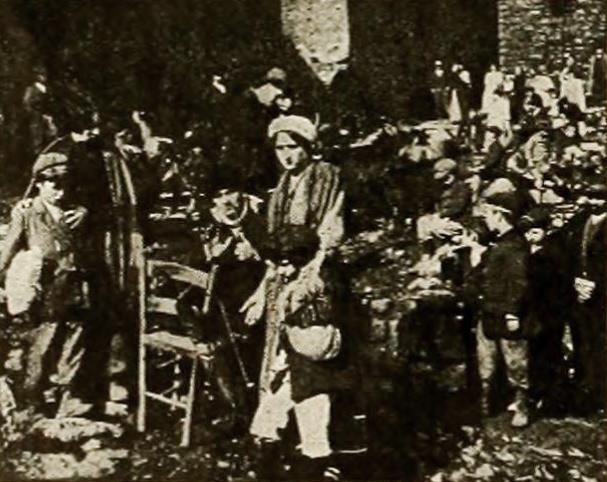
From the first iris-in on the pine-dark defiles of the Aosta Valley, cinematographer Alberto Grolli treats the Dolomites not as scenery but as a tribunal of limestone judges. The lens glides across vertiginous viaducts, past shrines where votive candles gutter like dying film-projector bulbs, until it discovers Count Frederick—garbed in a wolf-pelt collar that screams patrician entitlement—hunting chamois while truly hunting something more elusive: a feeling unscripted by heraldry.
Enter Lucy, portrayed by Laura Darville with the lambent vulnerability of a candle set too near an open window. Her first close-up—eyes reflecting the silver thaw—feels proto-Garbo in its refusal to plead for pity. She is no ingénue; she is weather incarnate, capable of nurturing and annihilating. When Frederick offers her a gloved hand, she hesitates, reading in that kid-leather palm the entire ledger of serfdom. Yet desire detonates, and the montage that follows—intercutting the rustle of petticoats against bark with the metallic click of a rifle safety—renders seduction as guerrilla warfare.
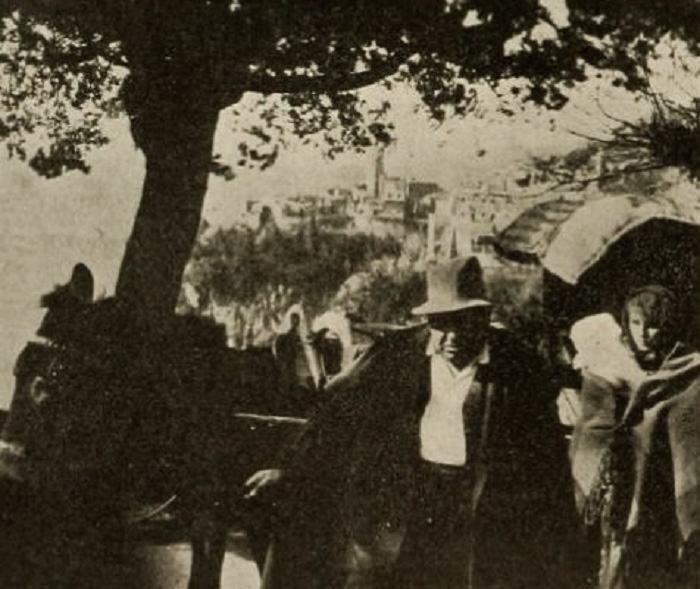
Sabbatini’s screenplay, economical as a peasant’s larder, still allows for baroque flourishes: a miniature of the Madonna is passed between lovers like a contraband reliquary; a single white edelweiss pinned to a waistcoat becomes a nuptial contract more binding than parchment. The aristocratic refusal—delivered by Giovanni Cimara’s patriarch with the flinty minimalism of a Roman bust—lands like an axe severing not merely a romance but time itself. We feel the calendar pages combust.
Most films would drown us in title cards; Sabbatini simply drops a black intertitle reading “VIII winters” and lets the projector’s mechanical clatter stand in for the crunch of snow crust beneath hunger. The transition is Brechtian avant la lettre: we supply the frostbite, the pantry echoing with mouse-scratch, the lullabies truncated by coughs that taste of iron. Lucy’s cradle is now a splintered crate; her child, Tony, has the collarbone architecture of a sparrow.
When the narrative relocates to Turin’s baroque soot, the film’s palette—hand-tinted amber and cyan—undergoes apocalyptic inversion: golden palazzos turn urine-yellow, while factory smoke rolls in Prussian billows. Gaspard, essayed by Tonino Giolino with a bowler hat too small for his skull, resembles a child-molesting Cheshire. His recruitment of boys is shot from a high diagonal, bodies arranged like checkers on a soot board, recalling Fantômas’s criminal tableaux yet steeped in verismo poverty.
Sabbatini stages the chimney ascent like a descent into Hades. The flue is a vertical coffin, bricks filmed in stomach-churning close-up so each soot vein resembles cerebral cortex. When Charles—Tony’s surrogate—suffocates, the camera lingers on his foot spasming against brick, a death rattle conveyed through a single vibrating bootlace. Intercutting this horror with Frederick’s carriage galloping across cobblestones creates dialectical montage worthy of Eisenstein, though predating him by seven years.
The film’s emotional mushroom cloud detonates when Frederick peels grime from Tony’s cheek and discovers his own patrician jawline. The moment is framed through a mirror streaked with lampblack—identity refracted through class filth. In a lesser melodrama we would expect fireworks; instead, Darville plays Lucy’s madness as somnambulistic lullaby, wandering the manor clutching a hearth brush, crooning to the chimney as if it were a wet-nurse. Her breakdown is scored by the creak of iron dampers, the aural equivalent of a mind splitting like frost-riven slate.
Yet Sabbatini refuses nihilism. The final reunion—Tony re-costumed as sweep, face re-smudged—becomes a perverse baptism: Lucy’s recognition restores not only sanity but the social order, albeit inverted. The Count relinquishes coronet; the patriarch, humanized by a grandson’s sooty fingerprints, bestows blessing. Love does not transcend class; it annihilates the category itself.
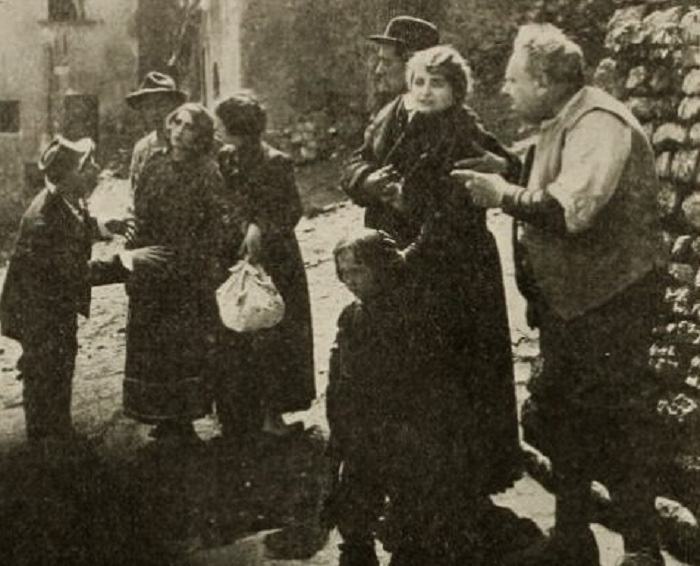
Visually, the film pilfers from Romantic painting—think Friedrich’s monk on a precipice—yet anticipates Italian Neorealism’s children stumbling through rubble. The repeated motif of hands—Lucy’s chafed palms, Frederick’s manicured gloves, Tony’s blistered fingers—creates a moral ledger written in epidermis. When the closing iris contracts on the reunited trio framed against a sunrise that looks suspiciously like a furnace mouth, we understand that happiness is merely the interval between one atrocity and the next.
Compared to contemporaneous tragedies like Tess of the D’Urbervilles, Sabbatini’s film is less moralistic sermon than class autopsy. Its pessimism is so unflinching that the tacked-on “happy ending” feels like a sarcastic jeer—an early instance of the audience being insulted with its own wish-fulfilment.
Darville’s Lucy is the revelation: she ages from dewy shepherdess to cadaverous madwoman without prosthetics, relying on ocular hollowness and a gait that gradually forgets gravity. Giolino’s Gaspard deserves a thesis—he plays predator with the bored efficiency of a tax collector, implying that exploitation is just another civic duty. The restoration by Cineteca di Bologna salvages tints whose blues once bled into fungus; now the cyan of Turin’s twilight stings like turpentine on a wound.
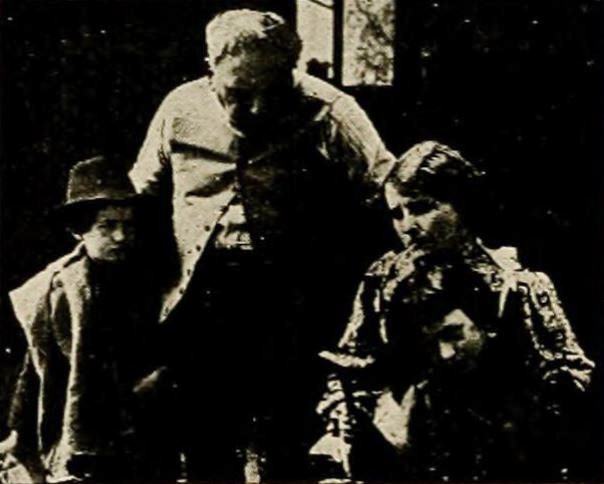
The score, recomposed by Marta Cascio for the 2022 Blu-ray, swaps syrupy strings for hurdy-gurdy and field-recorded Alpine wind, turning every sentimental beat into a memento mori. When Tony ascends the chimney, the soundtrack drops to sub-audible rumble—your diaphragm vibrates as if you too are inhaling soot.
Is the film proto-feminist? Lucy’s agency is mostly reactive, yet her madness weaponizes maternal grief into a wrecking ball against patriarchal masonry. Is it Marxist? The chimney is literally the means of production digesting children. Mostly it is a fever dream about how love, when forced through the sieve of class, emerges not as nectar but as tar.
Watch it not for historical footnote but for the scene where Lucy combs soot from Tony’s hair and the black flakes drift upward like reverse snow—an image so cruelly beautiful you will taste coal on your tongue for days. Sabbatini has gifted us a love story that smells of creosote and ends, not with a kiss, but with the lovers inhaling the carcinogenic dusk of their own burning world.
Community
Log in to comment.