DbcultAccessing Vault...
5.6/10
Senior Film Conservator
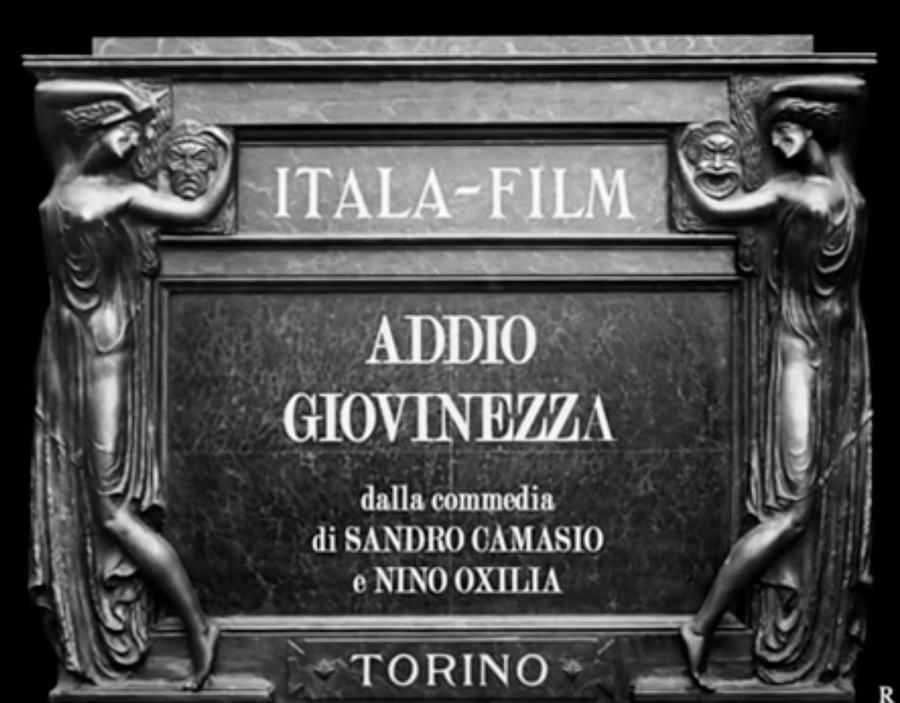
A definitive 5.6/10 rating for a film that redefined the boundaries of cult cinema. Addio giovinezza! remains a cornerstone of transgressive art.
Turin, 1915. Gas-lamps gutter. A law student trades one woman’s bed for another’s limousine—and discovers the bill always comes due.
Most silents promise nostalgia; Addio giovinezza! delivers exorcism. The film opens on a snow-soft blackout, the city’s famous Mole Antonelliana piercing the night like a hypodermic needle. Cinematographer Giuseppe W. Biondi (hired away from La vie de Bohème) floods the streets with chiaroscuro so merciless that every cobblestone seems wet with printer’s ink and blood. This is not postcard Turin but a fever chart: streetcars clanging like broken clocks, café tables littered with abandoned libretti, young men in capes quoting D’Annunzio while the future ticks toward mustard gas.
Mario—played by Arnold Kent, a Ukrainian émigré rechristened by marketers who thought his real surname too Semitic for Italian audiences—has the soft astonishment of someone who has never paid for his own ruin. When he first appears, he is framed through a frosted window, reading Carducci aloud to a roomful of pipesmokers who applaud the wrong line. The gesture establishes the film’s central gag: culture as party trick, literature as social currency about to be devalued overnight.
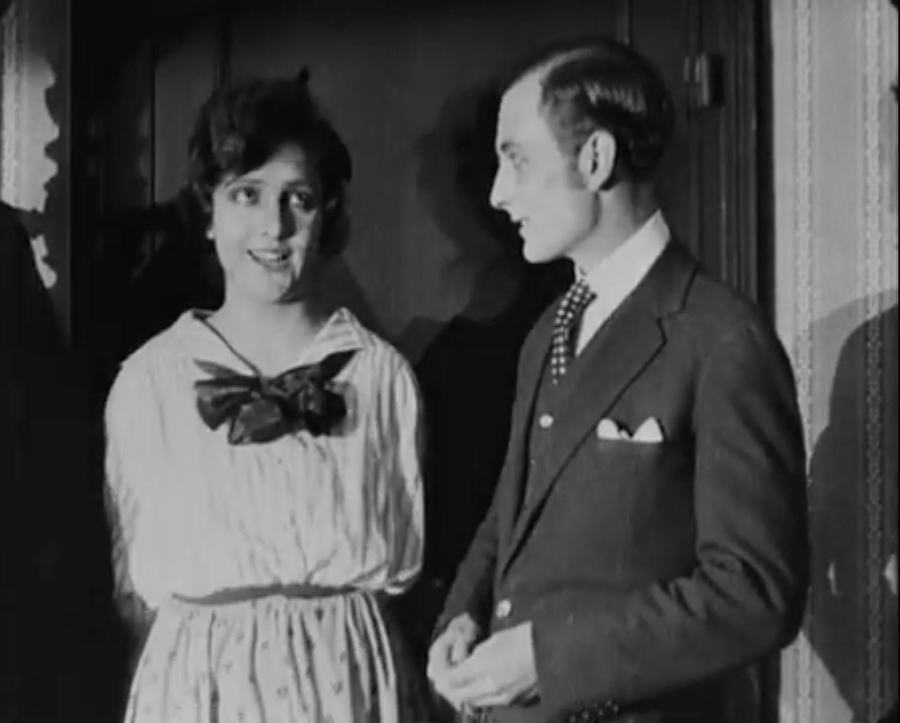
Enter Dorina (Maria Jacobini), fingers scarred from needlework, eyes preternaturally wide from squinting at seams. She is introduced in a swirl of ribbons that cascade like cheap fireflies across the screen. Jacobini, only nineteen during production, plays her with the hush of someone eavesdropping on her own heartbreak. Their courtship is a montage of stolen siestas: the Po river iced at the edges, a carousel horse abandoned for winter, a vial of her mother’s homemade rosolio passed between lips that still taste of alum. The sex is never shown—censors would have burned the negative—but Biondi lets the camera linger on Dorina’s thumb rubbing Mario’s cuff button, back and forth, until the gesture becomes more naked than nudity.
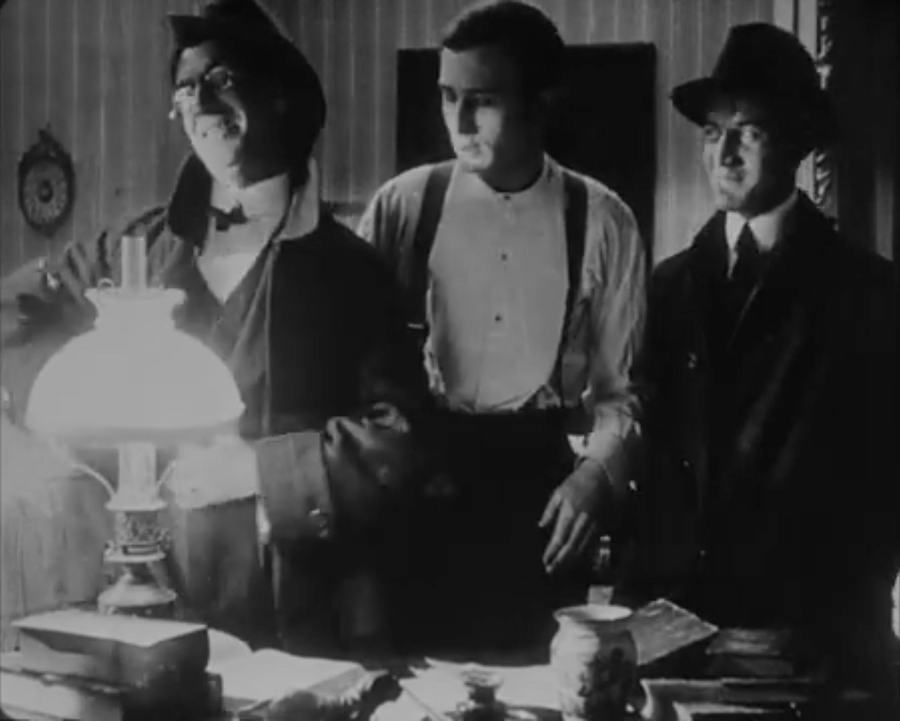
If Dorina is all texture, Elena—Helena Makowska in real life, Polish countess by marriage, vamp by vocation—is pure quotation. She glides out of her touring car in a sable coat so voluminous it could hide last year’s Balkan campaign. Her first line, addressed not to Mario but to his reflection in her compact mirror, is a masterpiece of predatory courtesy: “How exhausting it must be, signore, to owe tomorrow an apology for today.”
From here the film shifts into a delirious waltz of barter. Mario trades Dorina’s garret for Elena’s velveteen boudoir where the wallpaper exhales opium and the sheets are monogrammed in a language he cannot read. Each gift—a cigarette case filched from a dead uncle, a first edition of Parsifal with pages uncut—arrives like an installment plan on his soul. Genina stages these transactions in yawning long takes, the camera retreating until the lovers are marooned on a rug the color of dried Bordeaux, a miniature empire whose only law is appetite.
Word reaches Dorina on a Thursday, market day, while she is choosing goose feathers for a bridal hat she will never deliver. Jacobini’s face—filmed in chilling close-up—registers the news not with tears but with a blink that seems to crack the lens. She runs through alleyways that narrow like a throat, the intertitle card burning white on black: “Addio, Mario. Il treno delle stagioni passa una sola volta.” (“Farewell, Mario. The train of seasons passes only once.”)
What follows is the sequence that censors in Milan tried to excise: Dorina wading into the Po as the sky bruises to lavender, her hatbox floating open like a coffin for sparrows. The river, half-frozen, accepts her with bureaucratic coldness; the camera watches from the bridge, immobile, as though censorship itself had taken human form and decided to look away. The original tinting here was cobalt, but the surviving print has bleached to a pallor that makes the water resemble liquid newsprint—history literally fading before our eyes.
Mario’s comeuppance arrives off-screen. In the final reel he stands atop the university’s grand staircase while recruits parade below, singing a jaunty march that will soon be mangled by machine-gun fire. Elena has already discarded him for a cavalry officer whose medals clang like coins in a tin. Overhead, the bell tolls seventeen times—one for each month until Caporetto. The last image freeze-frames on Mario’s eyes, not pleading but accounting, as though adding columns of invisible debt. The iris-in is not the customary circle but a jagged keyhole, suggesting history itself has locked him out.
Arnold Kent never quite became a star; talkies revealed a Slavic rasp that dubbing couldn’t mask. Yet here his muteness is asset, every tentative half-smile a confession of fraudulence. Maria Jacobini, by contrast, rocketed to international fame, later marrying a count in real life and dying in 1944 during an Allied bombardment—a fate that retroactively baptizes her river scene with prophecy. Helena Makowska survives in stills more than screentime, but her languid predatoriness anticipates The Rattlesnake’s femme fatale by a full decade.
Nino Oxilia, killed in 1917 on the Trentino front, left behind diaries that read like storyboards: sketches of cafés, marginalia on the price of boots, a pressed violet labeled “Dorina’s last hat.” Co-writer Augusto Genina would go on to helm propaganda epics under Mussolini, but here he is still capable of irony, letting the rich speak in Latin mottos they mispronounce. The script’s genius lies in never moralizing: every character gets the rope they fashion, and the hangman is history itself.
Notice how the film’s budget shrinks along with Mario’s morality. Early scenes overflow with extras: tail-coated blusterers, organ-grinders, even a performing bear borrowed from The Politicians. By the finale, frames are half-empty, corridors echo, Elena’s mansion lit by a single chandelier bulb—war rationing creeping into mise-en-scène. The production could not afford snow for the river sequence; they used salt stolen from railway stores, and if you squint you can see crystals dissolving into the current like bankruptcies.
The 2022 Cineteca di Bologna restoration scanned the last surviving nitrate at 4K, recovering details once thought lost: the glint of Elena’s morphine vial, the frayed braid on Mario’s student cap. Tinting was recreated using chromatic notes found on the negative’s edge—cyan for dawn, amber for lamplight, sickly peach for Elena’s boudoir. The accompanying score, commissioned from Marco Dalpane, replaces the traditional trio with prepared piano and field recordings of contemporary Turin trams, merging eras until 1915 and 2023 share the same shivering track.
As of this writing, Addio giovinezza! streams on Criterion Channel with optional English subtitles that finally do justice to Oxilia’s florid intertitles. A Blu-ray from Il Cinema Ritrovato includes a 42-minute making-of and a booklet comparing the film to The Flame of Youth and Lucciola—all meditations on combustible adolescence.
There is a moment, mid-film, when Mario and Elena dance beneath paper lanterns that advertise a patent medicine for “tired blood.” The lanterns sag in the drizzle until the slogans bleed into illegibility—an accidental metaphor for every promise the 20th century made and broke. Addio giovinezza! is not merely a love triangle; it is an autopsy of the moment Europe discovered that progress could be a Ponzi scheme. Watch it at 3 a.m. when your own youth feels like a foreign country whose currency no longer spends. The farewell of the title is not Mario’s to Dorina, nor Elena’s to Mario—it is ours to the illusion that desire and conscience can coexist without one devouring the other.
—Review by Celluloid Scriptorium, updated June 2024
IMDb 6
1926
Community
Log in to comment.