DbcultAccessing Vault...
5.1/10
Senior Film Conservator
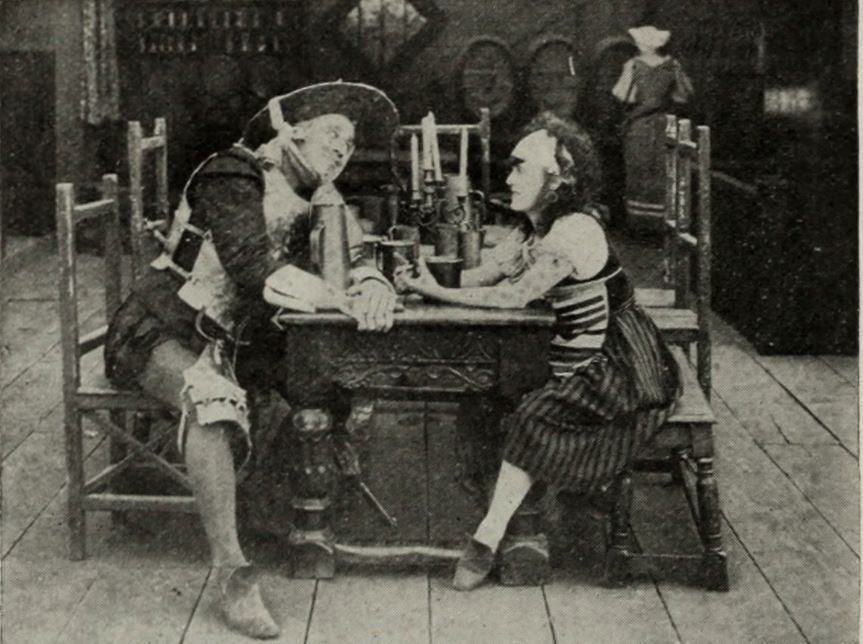
A definitive 5.1/10 rating for a film that redefined the boundaries of cult cinema. Don Quixote remains a cornerstone of transgressive art.
A canvas of cracked parchment and feverish light
Chester Withey’s 1915 Don Quixote arrives like a moth-eaten tapestry taken down from a forgotten wall: brittle, frayed at the edges, yet blazing with stubborn indigo and blood-orange threads that refuse to fade. Shot through with hand-tinted amber sunsets and aquamarine night-for-day exteriors, the film translates Cervantes’ labyrinthine tome into a breathless twelve-reel fever dream. Intertitles sprout like marginalia from a monk’s manuscript—arch, ironic, occasionally florid—while the camera, still learning the grammar of grief, lingers on silhouettes rather than psychology. What emerges is neither dusty homage nor slapstick caricature, but a palimpsest of idealism and wounds, a silent opera whose overture is the creak of saddle leather and whose finale is the soft thud of a body collapsing into straw.
The casting borderline communes with ghosts
George Walsh’s Don Quixote is all sinew and parchment skin, cheekbones sharp enough to cut delusion into reality. He plays the hidalgo as a man who has already half-vanished into his own fable, eyes flickering like faulty projector lamps between beatitude and terror. William H. Brown’s Sancho is earthier, a clay jug of pragmatism sloshing against the knight’s iron whims. Their rapport—captured in side-glances rather than words—anchors the narrative whenever the plot pirouettes into coincidence. Julia Faye’s Dorothea, often dismissed as mere collateral damage, actually supplies the film’s emotional piston: her single tear, beaded on a 35-millimetre eyelash, carries more weight than many an epic battle.
Windmills, yes, but watch the blades hesitate
Yes, the windmill sequence is here—arguably the most meme-ified moment in Western literature—yet Withey stages it like a slow-motion exorcism. The sails churn against a sulphur sky, their shadows striping the knight’s face until he becomes a barber-pole of conviction. When Rosinante charges, the camera drops to ground level, letting blades eclipse the sun so that for one heartbeat we, too, mistake machinery for demons. The subsequent hoist-and-hurl is executed with pulleys visible at frame’s edge, reminding viewers that illusion and mechanism share the same bones. It’s a Brechtian wink decades before Brecht, and it sells the punchline without stripping the pathos.
Narrative switchbacks worthy of a picaresque maze
Those arriving for a linear gallop will be bucked off early. The screenplay folds Cardenio’s and Dorothea’s subplots into the knight’s trajectory like origami cranes stuffed inside a suit of armour. One reel you’re inhaling prison dust on the galley road, the next you’re interrupting bridal veils in candle-flecked chapels. Rather than dilution, the strategy creates an echo-chamber of heartbreak: every thwarted romance refracts Quixote’s own impossible love for a world that insists on remaining prosaic. Editors intercut close-ups of shackles and wedding rings—both gleam with the same metallic sneer—so that freedom and wedlock become twin prisons depending on the angle of light.
Colour, or the politics of tinting conscience
While many 1910s prints were bathed in uniform sepia, surviving copies of this Don Quixote reveal a more anarchic palette. Night scenes swim in sea-blue chemistry, candle glows drip ochre, and the bullet-stabbed breastplate oozes crimson tint so saturated it nearly drips off the screen. The chromatic choices aren’t ornamental; they moralise. Blue signifies the realm of dream, yellow the humiliation of reality, and red the cost of crossing from one into the other. When the Don, gut-shot, staggers toward Dulcinea’s inn, the frame alternates between cobalt and vermilion until the two hues overlap into a bruised violet—a bruise being, after all, blood mingled with night.
Intertitles as marginal shrapnel
Text cards swagger across the screen in florilegium fashion, sometimes rhyming, sometimes archly mistranslating Spanish idioms. One card reads: "He imagined the inn a castle, the scullery maid a peerless dame—such is the alchemy of ink-starved eyes." The word alchemy, glowing in yellow type, becomes a thesis statement for the entire project. These linguistic embellishments risk purple bruising, yet they serve a strategic purpose: they remind viewers that the narrative we’re watching has already been digested by books, rumour, and oral retelling long before celluloid got to chew it. The film thus anticipates postmodern meta-fiction while still shackled to Victorian stage conventions.
Comparative ghosts in the same cinematic cemetery
Place this Quixote beside The Circus Man and you’ll spot a shared fascination with itinerant dreamers who mortgage dignity for a sliver of applause. Pair it with The Case of Becky and note how both films weaponise female virtue as plot ballast, though Don Quixote at least grants Dorothea the final gaze that measures the abyss between rescue and liberty. Meanwhile, the fatalistic romanticism here makes Madame de Thebes feel like a séance conducted in a velvet parlour—both films believe love is prophecy, but only Quixote rides out to challenge fate with a lance.
The final stable: a death scene stripped of trumpets
When the bullet-clamped knight collapses among feed-trough and hoof prints, Withey refuses a celestial halo. Instead, dust motes drift like disinterested cherubs, and the celebrating townsfolk overhead sound muffled, as if joy were something heard through several floors of earth. Sancho’s hand trembles as he closes the Don’s eyes—Brown lets the fingers linger a second too long, suggesting that even loyalty can’t believe its own futility. Dulciea’s sob is conveyed via a single intertitle: "They tried to staunch the wound, but how does one cauterise a cavity where dream and flesh overlap?" The question hangs, unanswered, while the screen fades to black, not as curtain but as soil.
Modern resonance: why this matters in the age of algorithmic reality
In 2024, when curated feeds manufacture personalised windmills for us to tilt at daily, Quixote’s calamity feels prophetic. The film warns that the moment you conflate narrative with necessity, blood must follow. Yet it also defends the right to dream, however cracked the lens. That defence is neither naive nor heroic; it’s tragic, expensive, and, per this print’s final blue-tinted breath, utterly human. Stream it if you can find a 2K restoration, but be prepared for the projector’s clack to sound like rosary beads counting down the seconds between hope and injury.
Technical footnote on surviving prints
Archivists at EYE Filmmuseum reconstructed the most complete version from a Dutch distribution negative and a French硝酸基 copy peppered with nitrate burns that resemble stigmata. The tinting schemes follow a 1916 censorship card discovered in Antwerp, proving that the surreal palette isn’t a latter-day affectation but wartime Europe’s attempt to colour-code morality. Runtime hovers around 105 minutes at 18 fps; any slower and the pathos congeals, any faster and the slapstick eclipses the sorrow.
Verdict: Should you ride out with this knight?
If your conception of silent cinema is Keystone chaos or Expressionist angles, this film offers a third register: chivalric verismo, tragicomic and unafraid to soil its armour with barnyard straw. It will not deliver the kinetic pratfalls of Liliomfi nor the Gothic murk of Der Hund von Baskerville. Instead, it occupies a liminal dusk where intention meets absurdity, where every good deed accrues compound interest in suffering. Watch it for the performances, for the colour experiments, for the way intertitles flirt with self-mockery, but mostly watch it to calibrate your own capacity for beautiful, ruinous belief. Just don’t expect to emerge unscathed; the lance here is splintered, but it still draws blood.
Where to witness the hallucination
As of this month, the EYE restoration tours arthouses in 4K DCP; check your local cinematheque. A 1080p Blu-ray from Kino Lorber is rumoured for autumn, complete with a new score by Joan A. Álvarez that replaces the customary Spanish guitar with glass harmonica shivers—an astute choice for a tale about beauty so transparent it slices. Until then, grainy bootlegs circulate in the digital back-alleys, but beware: watching Quixote die through compression artefacts is perhaps the most Quixotic punishment of all.
IMDb —
1920
Community
Log in to comment.