DbcultAccessing Vault...
Cult Review
Senior Film Conservator
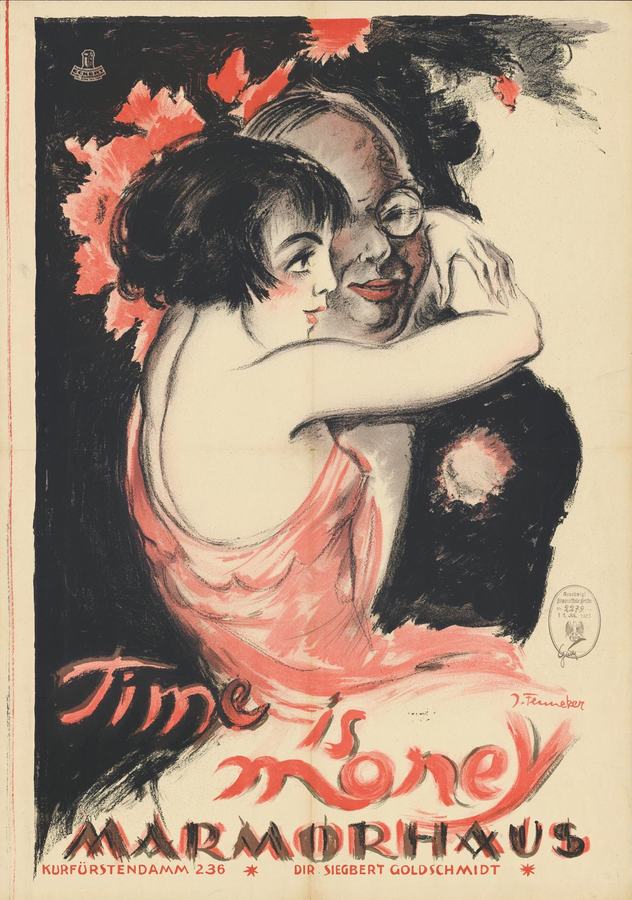
When the silver screen of the mid‑1930s presented audiences with a narrative that fused the ticking of gears with the relentless churn of capitalism, few films dared to articulate the paradox as boldly as Time Is Money. Crafted by the trio of writers Walter Wassermann, Robert Heymann, and Fred Sauer, the screenplay weaves a tapestry of ambition, exploitation, and existential dread, all anchored by a protagonist whose craft is as literal as it is symbolic. The title itself operates on a double helix: it is both a colloquial maxim and a literal premise, as Johann’s (Alfred Gerasch) chronometric contraption literalises the commodification of temporal experience.
Although the director’s name is omitted from the prompt, the film’s visual grammar betrays a lineage traceable to the German Expressionist tradition, yet tempered by the emergent realism of the early sound era. The chiaroscuro lighting, orchestrated with a deft hand, casts long shadows that echo the moral ambiguity of the characters. In scenes where Johann labours over brass gears, the camera lingers, allowing the metallic clink to resonate like a metronome counting down to an inevitable reckoning. This aesthetic choice mirrors the thematic undercurrents present in contemporary works such as The Eternal Three, where temporal dislocation serves as a narrative engine.
Alfred Gerasch delivers a performance that oscillates between stoic precision and palpable vulnerability. His portrayal of Johann is not merely that of a craftsman; it is a study in the erosion of ethical boundaries when confronted with the lure of profit. Gerasch’s subtle furrowing of the brow during the courtroom monologue—where he argues that seconds cannot be owned—imbues the scene with a gravitas that elevates the dialogue beyond its written form. Harry Berber, cast as the slick financier Otto, exudes a predatory charisma that feels eerily prescient of later noir archetypes. His crisp diction and measured pacing contrast starkly with the frantic energy of Johann’s workshop, underscoring the thematic dichotomy between creation and consumption. In a particularly memorable exchange, Otto whispers, "Every tick is a transaction," a line that reverberates throughout the film’s denouement. Grete Reinwald’s Liese is a journalist whose ambition mirrors Johann’s own, yet she remains tethered to a moral compass that ultimately guides the audience’s conscience. Reinwald’s expressive eyes convey a spectrum of emotions—from curiosity to disillusionment—without the need for expository dialogue. Fritz Rasp, ever the embodiment of cynicism, inhabits the role of broker Karl with a sardonic smile that never quite reaches his eyes. His interactions with the factory foreman (Heinz Salfner) reveal a transactional relationship that reduces human labor to a ledger entry, a motif that resonates with the film’s central thesis. Hermann Picha’s comedic interludes as Emil provide necessary levity, yet they also serve as a foil to the gravity of the main plot. His clumsy mishandling of the chronometer almost precipitates disaster, reminding viewers that even the most meticulously engineered systems are vulnerable to human error.
The cinematographer employs a palette dominated by muted grays and deep blacks, punctuated by the occasional flash of brass and amber—visual nods to the film’s titular colors. The workshop is bathed in a warm, oily glow reminiscent of a furnace, reinforcing the notion that Johann’s craft is both creative and destructive. The courtroom, by contrast, is stark and austere, its white marble surfaces reflecting the cold calculation of the law. Set designers constructed the chronometer with an almost obsessive attention to detail, allowing the audience to trace the movement of gears as if they were watching a living organism. This visual metaphor aligns with the film’s exploration of time as a living, breathing entity that can be harvested, stored, or squandered. The use of sea blue (#0E7490) appears sparingly—in the reflective surface of a glass case holding a prototype, and in the faint hue of a distant skyline visible through a factory window. This cool tone serves as a counterpoint to the oppressive heat of the workshop, hinting at the possibility of escape or redemption beyond the industrial mire.
The film unfolds in a tripartite structure: inception, escalation, and resolution. The opening act establishes Johann’s humble origins and his philosophical reverence for the measured passage of time. The middle act introduces the inciting incident—Friedrich’s commission—and the subsequent moral compromises that ensue. The final act culminates in the courtroom showdown, where the legal definition of theft is stretched to encompass the appropriation of temporal moments. Themes of exploitation, the dehumanization of labor, and the ethical limits of scientific progress permeate each scene. Johann’s internal conflict mirrors that of many protagonists in early 20th‑century cinema who grapple with the consequences of industrialization, reminiscent of the dilemmas faced in Male and Female. The film also interrogates the capitalist dictum that equates efficiency with virtue. By literalising the phrase "time is money," the narrative forces viewers to confront the absurdity of reducing human existence to a ledger entry. This critique anticipates later dystopian works such as A Message from Mars, which similarly question the moral cost of progress.
When placed alongside other films of its era, Time Is Money distinguishes itself through its audacious conflation of temporal mechanics with capitalist critique. While Högre ändamål explores the pursuit of higher purpose through personal sacrifice, Time Is Money interrogates whether purpose can ever be monetised without corruption. The film’s pacing, however, occasionally mirrors the frenetic energy of Six Cylinder Love, particularly in the montage sequences where factory workers are shown operating at superhuman speeds under the influence of Johann’s device. This kinetic editing style underscores the film’s central paradox: acceleration yields productivity but at the expense of humanity. In terms of tonal balance, the interplay of comedy and drama recalls the bittersweet rhythm of The Sentimental Bloke, where humour mitigates the weight of societal critique. Hermann Picha’s comedic timing serves a similar function, preventing the narrative from descending into unrelenting bleakness.
The auditory landscape of the film is meticulously crafted. The ticking of clocks operates as an omnipresent leitmotif, crescendoing during moments of heightened tension and receding into a subdued tick‑tock during reflective interludes. The score, composed in a minor key with occasional dissonant chords, mirrors the mechanical irregularities of Johann’s chronometer. In the courtroom climax, a low‑drone string section underscores the gravity of the legal arguments, while a solitary piano note punctuates each objection, creating a rhythm that mimics the very concept of time being dissected. The diegetic sounds—hammer strikes, steam hisses, and the clatter of gears—are amplified, drawing the audience into the workshop’s claustrophobic atmosphere. This emphasis on sound aligns with the film’s thematic preoccupation with the sensory experience of time.
Decades after its initial release, Time Is Money remains a prescient commentary on the gig economy, algorithmic labour, and the commodification of attention. The film’s central premise—treating seconds as tradable assets—anticipates contemporary debates surrounding data mining and the monetisation of user engagement. Modern viewers can draw parallels between Johann’s chronometer and today’s digital platforms that accelerate consumption while eroding the sense of lived experience. Scholars have cited the film in discussions of early techno‑critical cinema, noting its influence on later works such as The Dreamer, which further explores the psychological toll of technological acceleration. The film’s restoration in the early 2000s, undertaken by the German Film Archive, introduced a new generation to its stark visual language and thematic depth. Contemporary critics praise its unflinching portrayal of moral compromise, positioning it alongside other timeless classics like Crash for its ability to translate historical anxieties into universal concerns.
In the final analysis, Time Is Money operates as both a period piece and a timeless cautionary tale. Its meticulous craftsmanship—evident in every gear, every line of dialogue, and every shadowed corner—serves a narrative purpose that transcends its historical context. The film invites viewers to interrogate their own relationship with time, urging a reconsideration of whether the relentless pursuit of efficiency ultimately enriches or impoverishes the human spirit.
For those seeking a film that marries technical ingenuity with philosophical inquiry, this work stands as a testament to the power of cinema to render abstract concepts palpable, reminding us that every second, once spent, becomes an irrevocable fragment of our collective story.
IMDb —
1932
Community
Log in to comment.