DbcultAccessing Vault...
6.3/10
Senior Film Conservator
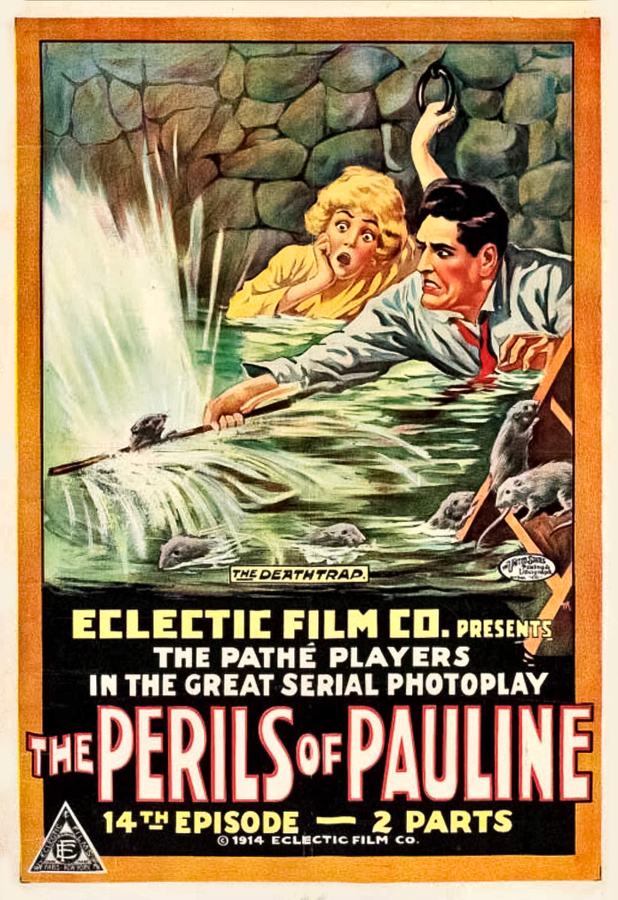
A definitive 6.3/10 rating for a film that redefined the boundaries of cult cinema. The Perils of Pauline remains a cornerstone of transgressive art.
Paris, spring 1914. Outside the Gaumont Palace, gendarmes hold back a tidal wave of bowler hats and feathered bonnets desperate for the next installment of a heroine who has already been tied to sawmill logs, dragged behind horses, and dangled from a burning balloon. Inside, the projector clatters like a Maxim gun: frame after frame, Pearl White—the girl with the bullet-proof grin—races toward another contrived oblivion. No one in the suffocating dark guesses they are witnessing the birth certificate of the cliffhanger, the DNA of every binge-watch yet to come.
The plot is a Möbius strip of inheritance anxiety: Pauline, orphaned heiress to a coal-baron’s fortune, must survive until her twenty-first birthday to claim the money. Her guardian, the velvet-voiced Koerner (Paul Panzer sporting a mustache like a switchblade), prefers her permanently deceased and the cash safely in his manicured claws. Each week he invents a new death—train wreck, shipwreck, balloon wreck—yet the girl ricochets back, bandaged but unbroken, eyes sparkling with the invincible optimism of America itself.
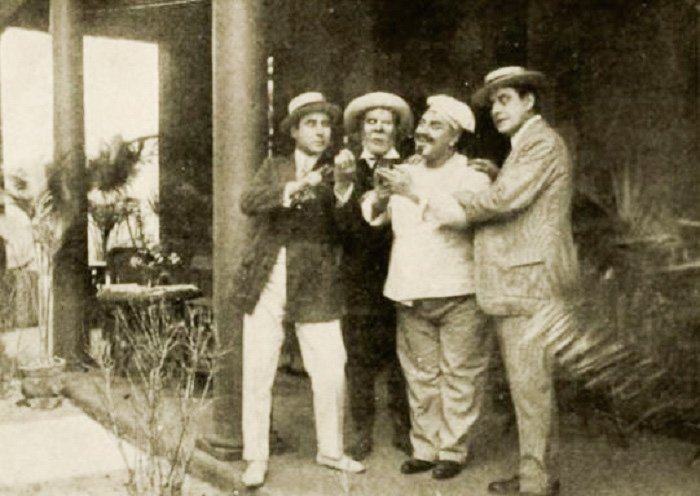
What makes the narrative percolate is its brazen circularity. The film never travels from A to B; it orbits around the next set-piece apocalypse. One episode ends with Pauline trapped inside a submarine sinking toward the Mariana Trench; the next begins with her already on deck, hair dry, semaphore-flag smile intact, never explaining the miracle, only promising the next. The missing logic is the point: continuity is a bourgeois luxury; sensation is the currency.
Director Louis Gasnier, a former cabaret magician, treats each twenty-minute reel like a music-hall illusion. He understands that rhythm, not resolution, hooks the crowd. Act I: domestic calm tinted sea-blue by anticipation. Act II: a sudden intrusion of yellow peril—literally, a sulfuric smoke bomb flooding the screen—heralding Koerner’s sabotage. Act III: a vertiginous chase filmed from a hot-air balloon, the camera tilting until the audience’s stomachs swing like pendulums. Cyanotype intertitles slap the spectator awake: “Will Pauline be ground into pâté by the midnight express?” The answer is always no, but the question is the narcotic.
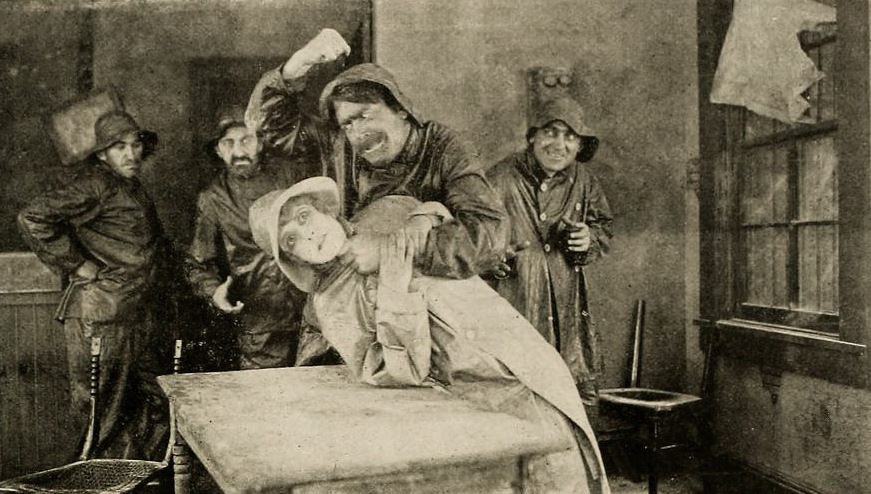
Forget Griffith’s moon-faced maidens; White arrives like an Art-Nouveau switchblade. She did most of her own stunts—leaping from rooftop to rooftop over New York’s East River, clinging to a biplane’s strut as it looped above the Hudson. The bruises were real; the public devoured them like communion wafers. Critics dismissed her as “the mechanical doll,” but watch the micro-movements: the fractional hesitation before she jumps, the half-smile that confesses both fear and delight. In those flickers she invents screen acting as bodily hieroglyphics, long before Method tears flooded close-ups.
Koerner is more than moustache-twirling cardboard. He embodies the voracious liquidity of early monopolies: a man who converts human destiny into ledger ink. Every time he adjusts his silk gloves the gesture whispers of corporate ledgers balancing bodies against dividends. The film’s true suspense is not whether Pauline will survive, but how long an economic system can sustain a parasite who refuses to let its host die. A century later, the resonance is chilling.
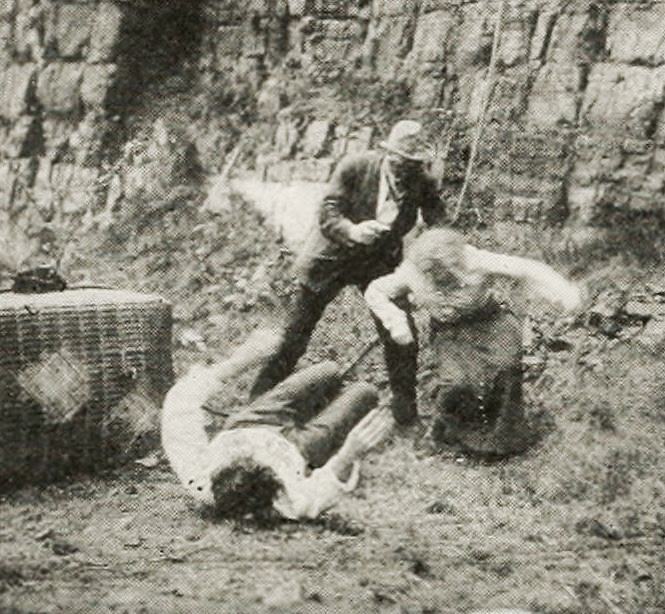
Yes, Pauline is perpetually imperilled, yet the camera fetishizes her agency. She pilots motorcars, swims across ice-choked rivers, engineers dynamite to collapse a mineshaft on her pursuers. Each peril is an alibi for public display of female prowess, smuggled inside the socially acceptable packaging of victimhood. The contradictions crackle: the serial simultaneously cages women inside the damsel trope and detonates the cage, sending shards across the aisles where stenographers and seamstresses cheer their mirrored defiance.
Pre-1914 cinema often posed actors like wax figures; Gasnier hurls them through space. Note the famous cliff-edge shot: camera placed on a perpendicular rock face, Pauline clinging by fingertips, river mist swirling like dry-ice opera. Depth is no longer painted backdrop but kinaesthetic vertigo. Critics compare the sequence to the alpine chase in Glacier National Park, yet where nature photography aestheticizes danger, Gasnier weaponizes it into narrative cocaine.
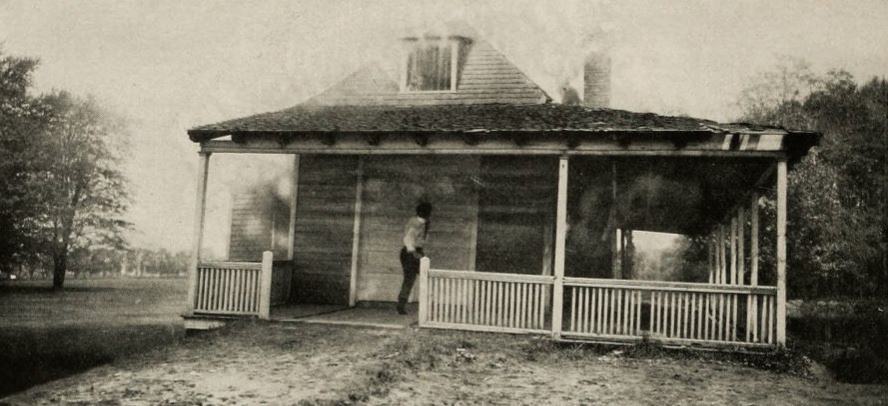
Episode seven ships Pauline to “the Orient,” a studio-built Morocco of cardboard minarets and silenced extras. The racism is as suffocating as incense, but the sequence inadvertently exposes the imperial anxiety that underwrites the entire fortune she is heir to: coal mines in Pennsylvania, railroads through Lakota land, textile mills in Manila. Each cliffhanger is a displacement of violence historically enacted upon colonized bodies. The film cannot speak this truth, yet its excesses seep through the sprocket holes, staining the celluloid.
Fast-forward to Spielberg’s conveyor-belt temple or Phoebe Waller-Bridge smirking at the camera—both inherit the DNA of Pauline’s ironic invulnerability. The MCU’s end-credit tease? Pure Gasnier. The binge-drop rhythm of Netflix? A 4K resurrection of the weekly cliff. Even the self-aware narrator who mocks her own peril owes a debt to White’s wink at the lens as she climbs another impossible ladder.

Only nine of the original twenty episodes survive in complete 35 mm form; the rest linger as blurry 9.5 mm Pathescopes, spliced with Dutch intertitles, vinegar syndrome nibbling the emulsion like moths on wedding lace. Yet each fragment testifies to cinema’s first brush with global addiction: children in Tokyo traded kites for lobby cards; suffragettes in Glasgow wore Pauline badges next to “Votes for Women” ribbons. The damage itself becomes palimpsest history—every scratch a scar from a century of breathless spectators.
Watch it today with a live quartet performing a new score—pizzicato strings mimicking train wheels, bass drum for hot-air balloon burners—and the room vibrates like a beehive. Without spoken words, the audience supplies their own interior monologue, a communal script more democratic than talkies ever allowed. In that lacuna, Pauline’s gasp becomes your gasp, her heartbeat syncs with the collective.
Is it art? The question feels prudish. The Perils of Pauline is the primal scream of mass entertainment, a locomotive that jumps track and ploughs straight into the museum. Its politics are retrograde, its pace anarchic, its poetry accidental—yet its kinetic electricity still jolts the spinal cord. To dismiss it as juvenile is to ignore how modernity itself is a serial cliffhanger, forever promising resolution next week, next season, next fiscal quarter.
So queue the restored 4K DCP, silence your phone, and let the 1914 projector rattle your 2020s skull. Count how many times you check the clock—then realize you’ve surrendered ninety minutes without a blink. That, comrades, is the peril of Pauline: she keeps killing you, and you keep resurrecting for more.
For contrast, see how later serials like What Happened to Mary softened the formula, or how European pathos reigned in Les Misérables. Yet none replicate the raw, nickel-plated adrenaline of Pauline’s first scream across the century.
IMDb —
1935
Community
Log in to comment.