DbcultAccessing Vault...
Cult Review
Senior Film Conservator
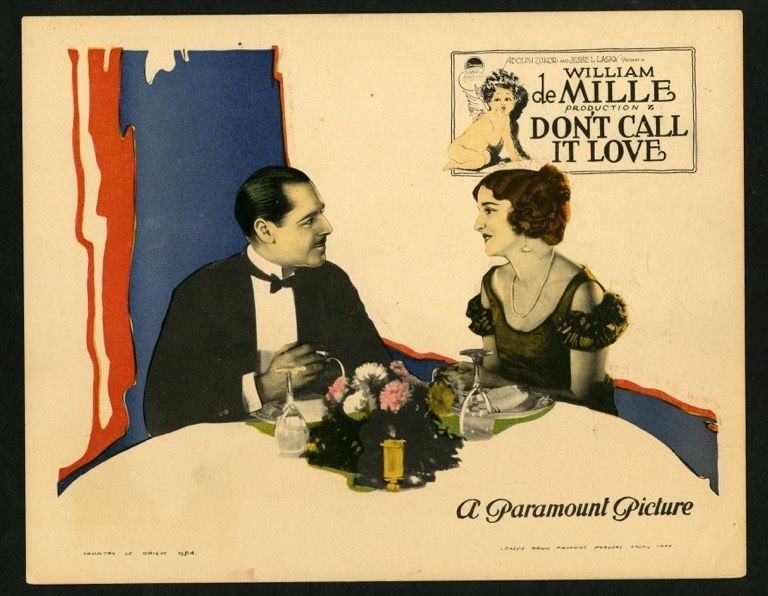
Stepping back into the hallowed, hushed halls of early 20th-century cinema, one often encounters narratives that, despite their sepia-toned antiquity and lack of spoken dialogue, resonate with an astonishingly contemporary force. Such is the case with Hubert Osborne’s 1921 drama, 'Don't Call It Love'. More than just a relic from the silent era, this film, penned by Julian Street, Clara Beranger, and Hubert Osborne himself, serves as a poignant mirror reflecting the eternal dance of human desire, deceit, and eventual, often painful, self-realization. It’s a story that, without uttering a single word, articulates volumes about the perilous distinction between fleeting infatuation and enduring affection, a theme as relevant today as it was a century ago.
The film plunges us headfirst into the tumultuous world of Richard Parrish, portrayed with a commendable blend of earnestness and susceptibility by the venerable Jack Holt. Parrish, initially depicted as a man of solid, if somewhat naive, convictions, is betrothed to Alice Meldrum, a character brought to life with understated grace by Agnes Ayres. Their love, presumably built on a foundation of shared understanding and mutual respect, appears unshakeable. However, this placid domesticity is irrevocably shattered by the tempestuous arrival of Rita Coventry, the eponymous 'prima donna,' embodied with magnetic, almost ethereal allure by Julia Faye. Faye, a frequent collaborator with Cecil B. DeMille, here crafts a character of such potent, manipulative charm that her every gesture, every sidelong glance, becomes a weapon in her arsenal of seduction. Coventry is not merely a woman; she is a force of nature, a glittering siren whose siren song is irresistible to Parrish's unsuspecting heart.
Coventry’s methods are not those of brute force but of subtle, intoxicating persuasion. She doesn't just charm Parrish; she utterly bewitches him, drawing him away from Alice with an ease that is both shocking and tragically believable. This initial act of betrayal, the shattering of a seemingly secure engagement, forms the dramatic core of the film's opening act. Parrish, blinded by Coventry's dazzling superficiality, abandons Alice, trading genuine affection for the ephemeral thrill of a prima donna's attention. It’s a classic cinematic trope, certainly, but one executed here with a nuanced understanding of human weakness. Holt’s portrayal of Parrish in this phase is particularly effective; his eyes, though silent, convey the intoxicating spell he’s under, a man utterly lost in the thrall of a woman who represents everything his previous life was not: exciting, glamorous, and utterly dangerous.
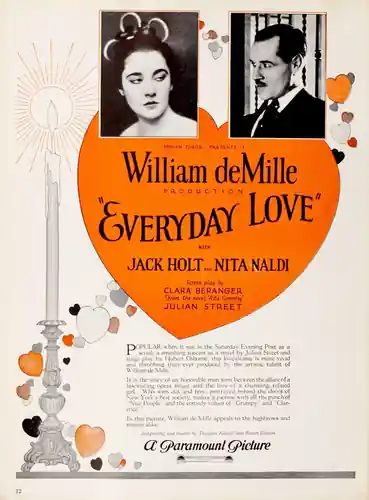
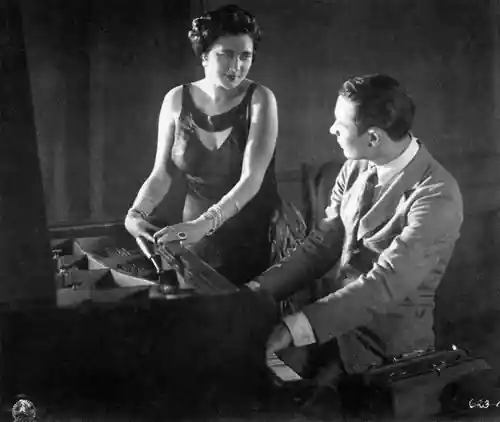
But, as the narrative artfully demonstrates, the flame of infatuation, however bright, often burns itself out with alarming speed. Rita Coventry, a connoisseur of fleeting pleasures, soon tires of Parrish. Her affections, as transient as a stage whisper, drift away, seeking new conquests to fuel her insatiable ego. This capricious nature is central to understanding Coventry; she is less interested in genuine connection and more in the act of captivating, the thrill of the chase, and the validation of her own undeniable charm. Her gaze then falls upon Patrick Delaney, a piano tuner with a hidden musical talent, played by Theodore Kosloff. Delaney, with his artistic sensibilities and perhaps a certain romantic mystique, becomes the next object of her fleeting fascination. This shift in Coventry’s attention is pivotal, exposing her true character not as a woman in love, but as a perpetual seeker of novelty, a collector of hearts, none of which she intends to keep.
Parrish, cast aside like a discarded costume, finds himself adrift, the glitter of Coventry's world having faded to reveal a hollow core. His grand illusion shattered, he begins the painful process of introspection, recognizing the profound error of his ways. His attempts to return to Alice are fraught with a compelling mix of shame and desperate hope. Agnes Ayres, as Alice, truly shines in this segment of the film. Her initial reaction, guided by the pragmatic wisdom of a girlfriend (a timeless source of sensible advice!), is one of understandable resistance. Alice's rebuff is not born of petty vindictiveness but of a hard-won sense of self-worth. She has been hurt, humiliated, and her journey from passive victim to a woman capable of setting boundaries is one of the film's most quietly powerful arcs. This moment of refusal is crucial; it establishes Alice not as a doormat awaiting her prodigal lover, but as an individual who has learned from her pain and demands respect.
The eventual reconciliation, where Alice agrees to become Parrish’s wife, is handled with a delicate touch. It’s not presented as a triumphant return to a fairytale ending, but rather as a cautious, mature decision. It suggests that their love, having been tested by fire, might now possess a deeper, more resilient quality. It speaks to the possibility of forgiveness, of growth, and of a love that transcends the initial blaze of passion to settle into something more profound and enduring. This resolution, while perhaps conforming to some societal expectations of the era, feels earned because of Alice's journey and Parrish's evident remorse. It's a testament to the power of a second chance, but one that comes with the understanding that lessons have been learned and trust must be rebuilt.
Thematically, 'Don't Call It Love' is a rich tapestry woven with threads of infatuation versus genuine affection. It meticulously dissects the destructive power of superficial allure, juxtaposing it against the quiet strength of loyalty and steadfastness. Rita Coventry embodies the intoxicating danger of pure, unadulterated charisma, a force that can sweep one off their feet but ultimately leaves them stranded. Her character, with her almost vampish quality, shares a spiritual kinship with other dangerous women of the silent screen. One might draw parallels to the captivating, destructive power seen in characters from films like Salome, where beauty and control become tools of manipulation, albeit in a far more mythological and dramatic context. Coventry, however, operates within the more realistic, if equally theatrical, confines of social drama.
Jack Holt’s Richard Parrish represents the archetypal man caught between two worlds: the comfort of the familiar and the allure of the exotic. His journey from infatuated fool to repentant suitor is a compelling study of character transformation. His performance, reliant entirely on physicality and facial expression, expertly conveys his internal turmoil. Agnes Ayres’ Alice, on the other hand, is the film's moral compass, demonstrating resilience and agency in an era where female characters were often relegated to more passive roles. Her decision to initially rebuff Parrish, then later accept him, highlights a nuanced understanding of a woman's emotional landscape, a complexity that elevates the film beyond mere melodrama. This arc of a woman finding her voice and asserting her worth can be seen as a precursor to narratives explored in films like What Every Woman Wants, where female protagonists grapple with societal expectations and personal desires.
The silent film era demanded a particular kind of artistry from its actors, and the cast of 'Don't Call It Love' rises to the challenge. Dialogue was absent, yet emotions had to be writ large enough for the back rows, subtle enough for close-ups. Julia Faye, as Rita Coventry, masterfully uses her eyes, her posture, and her expressive movements to convey a woman who is both captivating and utterly self-absorbed. Her performance is a masterclass in silent film villainy, a portrayal that avoids caricature to deliver a character who feels dangerously real. Jack Holt, with his strong jawline and earnest gaze, communicates Parrish's initial infatuation, his subsequent despair, and his eventual earnestness. Agnes Ayres, though perhaps less flamboyant, delivers a performance that anchors the film in genuine human emotion, making Alice’s pain and eventual forgiveness deeply palpable. The presence of Nita Naldi, a well-known vamp of the era, even in a potentially minor or uncredited role, further adds to the film's period authenticity and allure, hinting at the star power that could be packed into even supporting parts.
From a directorial standpoint, Hubert Osborne demonstrates a keen understanding of visual storytelling. The pacing of the film, the use of intertitles, and the framing of shots all contribute to a compelling narrative flow. The writers, Julian Street and Clara Beranger, alongside Osborne, crafted a scenario that, while adhering to certain melodramatic conventions, delved into universal themes with surprising depth. The film's ability to communicate complex emotional states without a single spoken word is a testament to the collaborative genius of silent era filmmaking, where every element—from costume design to a flicker of an eye—was meticulously orchestrated to convey meaning.
The narrative's exploration of a man's moral quandary, torn between the superficial glitter and true substance, echoes themes found in other silent dramas of the period. One might consider The Dark Star, another film where characters navigate treacherous emotional waters and the consequences of misguided desires. The journey of Richard Parrish, losing his moral compass and then attempting to find his way back, is a timeless narrative of repentance and the arduous path to redemption. Similarly, the dramatic tension between temptation and responsibility can be seen in films like East Lynne with Variations, where societal pressures and personal choices lead to profound emotional upheaval.
In conclusion, 'Don't Call It Love' is far more than a historical curiosity; it is a compelling piece of silent cinema that continues to resonate. Its exploration of the human heart, its susceptibility to fleeting glamour, and its capacity for both profound betrayal and enduring forgiveness, remains as potent today as it was in 1921. The film’s strength lies in its ability to articulate, through the silent artistry of its performers and the deft direction of its creators, the timeless truth that genuine love is not a whirlwind of infatuation but a steadfast commitment, forged in the crucible of shared experience and tested loyalty. It's a powerful reminder that sometimes, the most profound messages are conveyed not through thunderous dialogue, but through the quiet, expressive power of a glance, a gesture, or a tear. This film is a testament to the enduring power of silent storytelling, a valuable addition to any cinephile’s journey through the annals of early cinematic history.
IMDb 5.5
1931
Community
Log in to comment.