DbcultAccessing Vault...
6.8/10
Senior Film Conservator
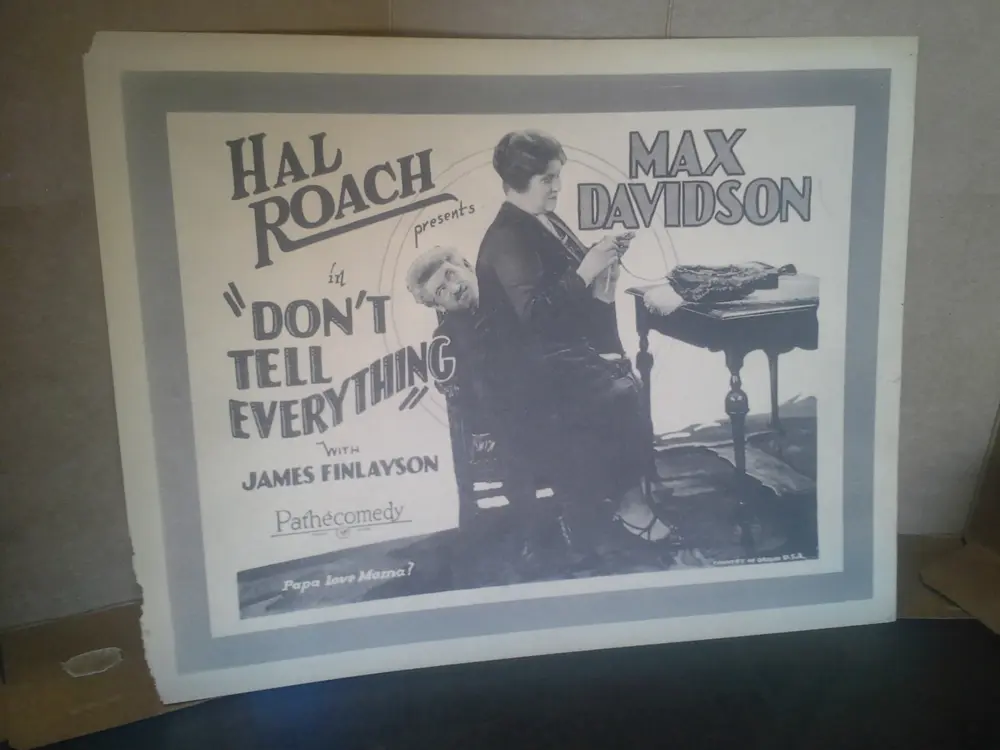
A definitive 6.8/10 rating for a film that redefined the boundaries of cult cinema. Don't Tell Everything remains a cornerstone of transgressive art.
Is 'Don't Tell Everything' (1927) worth your time today? The short answer is: yes, for certain cinephiles, but with significant caveats. This silent film, a product of the prolific Hal Roach studio, offers a fascinating, if sometimes frustrating, window into early slapstick and domestic drama, best suited for those with a deep appreciation for silent cinema's unique rhythm and historical context. It is decidedly not for viewers seeking modern comedic sensibilities, rapid-fire pacing, or straightforward narrative resolutions.
This film, while undeniably a period piece, holds a certain charm for its audacious premise and the way it juggles broad comedy with surprisingly poignant themes of neglect and deception. It's a film for those who enjoy dissecting the mechanics of early cinema, understanding its cultural footprint, and appreciating the raw talent of its performers. However, if you're easily bored by slower pacing, rely heavily on spoken dialogue for character development, or prefer your comedies without a side of existential dread, you might find its 20-minute runtime feels considerably longer.
Here’s a quick breakdown to help you decide:
This film works because: Its central premise of a son disguising himself as a maid to spy on his father's new, secret marriage is pure comedic gold, providing ample opportunity for physical gags and farcical situations. The performances, particularly from Max Davidson and Spec O'Donnell, capture the exaggerated yet effective acting style of the silent era, making their characters' plights surprisingly engaging.
This film fails because: Its comedic beats can feel dated and repetitive to a modern audience, with some gags overstaying their welcome. Furthermore, the underlying theme of paternal abandonment, while providing dramatic tension, sometimes clashes awkwardly with the broad slapstick, creating an uneven tonal experience that can be jarring.
You should watch it if: You are a student of silent film history, a fan of Max Davidson’s unique brand of ethnic humor, or someone who appreciates how early cinema grappled with complex family dynamics through a comedic lens. It’s also a good choice for those curious about the early works of writers Hal Roach and Leo McCarey.
The narrative thrust of 'Don't Tell Everything' (1927) is a tightly wound spring of social aspiration and familial betrayal. Max Davidson, as the eponymous Max, is a man driven by a singular, self-serving goal: upward mobility. When an invitation to a lavish party places him within striking distance of a wealthy widow, he sees not a woman, but a stepping stone. His son, Asher (Spec O'Donnell), a mischievous whirlwind of youthful exuberance, becomes less a child and more an inconvenient obstacle to this grand design. Max's swift, almost brutal, rejection of Asher at the party, culminating in a refusal to speak to him, sets a chilling precedent for the paternal neglect that follows.
Within a mere ten days, Max has secured his prize: marriage to the widow. But this new life is built on a foundation of sand – a deliberate omission of Asher's existence. The film then pivots, not just on Max's deception, but on Asher's profound sense of abandonment. It's a surprisingly dark undercurrent for a silent comedy. Asher's response is both childlike and remarkably cunning: he infiltrates his own former home, now his stepmother's domain, disguised as the new maid. This act of domestic espionage is initially played for broad laughs, with Asher's clumsy attempts at household chores providing classic silent film sight gags.
However, Asher's presence, an unwelcome ghost in the machine of Max's new life, begins to expose the inherent fragility of the situation. His bumbling observations and accidental discoveries sow seeds of suspicion, not just about Max's past, but about the stepmother herself. The plot cleverly escalates beyond a simple father-son misunderstanding, hinting at a reciprocal secret held by the widow. This dual layer of deception – Max's hidden son and the stepmother's undisclosed past – creates a precarious house of cards, constantly threatening to collapse under the weight of its own lies. It’s a compelling setup, far more intricate than many of its contemporaries, and it hints at the narrative sophistication that would eventually define the work of writers like Leo McCarey.
In silent cinema, the actor’s body and face are the primary instruments of storytelling. 'Don't Tell Everything' is a masterclass in this form, largely thanks to its central players. Max Davidson, a prolific character actor of the era, delivers a performance as Max that is both uproariously funny and subtly tragic. His expressions, from the predatory gleam in his eye when he spots the wealthy widow to the exasperated contortions of his face when Asher misbehaves, are meticulously crafted. There’s a particular scene at the party where Max’s initial pride in Asher swiftly turns to mortification, his smile freezing into a rictus of social anxiety, which perfectly encapsulates his character’s priorities.
Spec O'Donnell, as Asher, is the film's chaotic heart. While often typecast as the mischievous child, here he imbues Asher with a palpable sense of hurt that transcends mere comedic annoyance. His transformation into the maid is a triumph of physical comedy, from his awkward gait in oversized shoes to his futile attempts at dusting. Yet, beneath the slapstick, O'Donnell conveys a genuine longing for his father's affection. One could argue that Asher, despite his intended role as an irritant, is the film's most genuinely tragic figure, constantly seeking validation from a father too consumed by ambition.
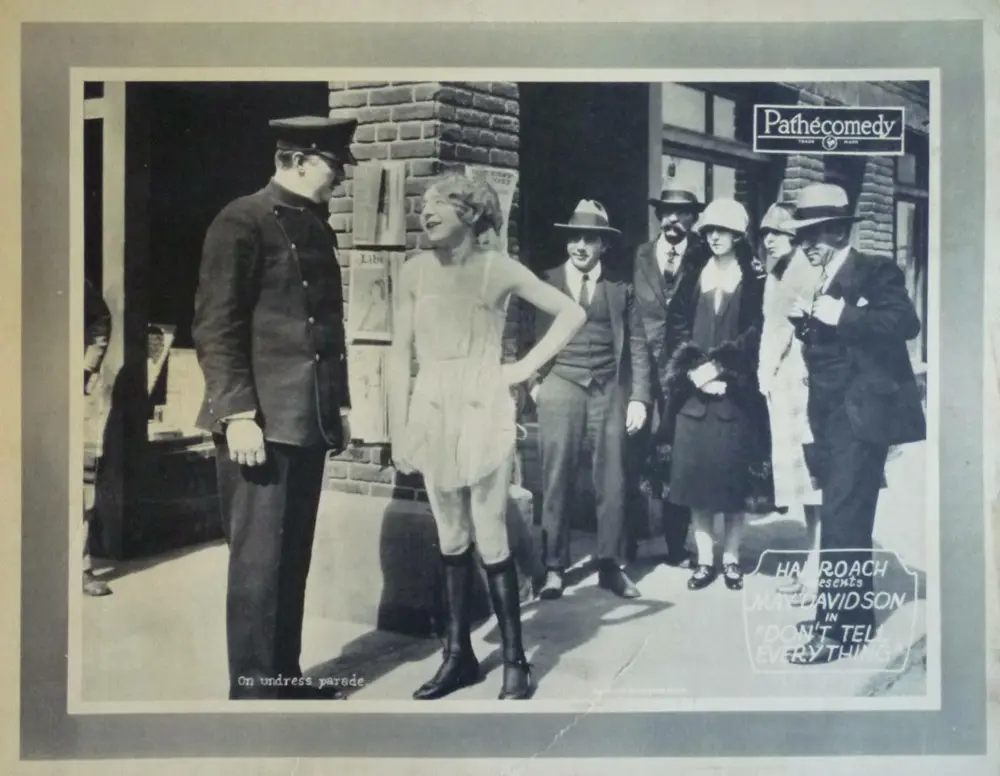
Lillian Elliott, as the wealthy widow, plays her role with a convincing blend of matronly charm and veiled mystery. Her reactions to Asher's antics as the maid are priceless, shifting from mild irritation to outright suspicion, a testament to her ability to convey complex emotions without dialogue. The supporting cast, including the inimitable James Finlayson in a brief but memorable appearance, further solidifies the film's comedic backbone. Finlayson, known for his exasperated stares and walrus mustache, brings his signature brand of bewildered authority to the periphery, adding a layer of familiar silent film charm. His comedic timing, even in a small role, is impeccable.
The directorial choices, though uncredited, bear the distinct stamp of the Hal Roach studio, known for its efficient storytelling and expert comedic timing. The film's pacing, while slower than modern audiences might expect, is deliberately constructed to build gags and allow the emotional beats to land. The initial setup of Max's social climb and swift marriage is brisk, almost transactional, highlighting his single-mindedness. The subsequent introduction of Asher as the disguised maid, however, shifts the pace, allowing for extended sequences of physical comedy and escalating mishaps.
The use of title cards is particularly effective, not just for conveying dialogue but for injecting comedic observations and narrative progression. There’s a clever interplay between the visual gags and the textual commentary that guides the audience through the escalating absurdity. For instance, a title card might set up Asher's next blunder, only for the visual payoff to exceed expectations. The film manages to maintain a delicate balance between its farcical elements and the underlying dramatic tension, a testament to the skilled craftsmanship of its creators, including writers Hal Roach and Leo McCarey, who would go on to shape much of early Hollywood comedy.
However, the film’s reliance on physical comedy, while standard for the era, occasionally feels more desperate than inspired. Some sequences, like Asher’s repeated attempts to clean or serve, stretch the comedic premise a bit thin. This is a common pitfall of many silent shorts, where the need to fill screen time sometimes outweighed narrative innovation. Yet, even in these moments, the sheer energy of the performers often carries the scene. The film's ability to transition from lighthearted pranks to the genuine suspense of the stepmother's secret is a subtle triumph of tonal control, even if it occasionally feels like two different films vying for attention.
The cinematography of 'Don't Tell Everything' is characteristic of 1920s studio productions – clean, functional, and designed to foreground the actors and their expressions. There are no grand, sweeping vistas or experimental camera angles; instead, the focus is on clear sightlines for the physical comedy and close-ups to capture the nuanced (or exaggerated) emotions of the characters. The lighting is straightforward, ensuring that every facial contortion and every clumsy movement is visible. This directness serves the comedic purpose well, allowing the audience to fully engage with the visual gags.
The tone of the film is where it becomes particularly interesting and, at times, surprisingly complex. It begins as a straightforward slapstick comedy, with Max's social climbing and Asher's disruptive antics setting a lighthearted, if chaotic, mood. However, as Asher's disguise progresses and the layers of deceit begin to peel back, a darker, more cynical tone emerges. The film inadvertently reveals the dark underbelly of the American Dream, where a man would abandon his child for social climbing. This blend of light and dark, while not always perfectly harmonized, gives the film a depth that elevates it beyond mere farce. The climax, with the dual secrets on the verge of exposure, creates a genuine sense of suspense, a shift in tone that is both unexpected and effective.
One striking visual element is the contrast between the opulence of the widow's home and the implied dinginess of Asher's prior existence. This visual shorthand reinforces the class distinctions and Max's motivation. The film relies heavily on visual gags, such as Asher's disastrous attempts at serving tea or his clumsy encounters with the household staff, which are choreographed with a precision typical of the era. The silent film's reliance on exaggerated gestures is fully embraced, making every raised eyebrow, every dropped tray, a significant narrative beat.
For the uninitiated, 'Don't Tell Everything' might feel like a relic, a dusty curio from a bygone era. Its humor is broad, its pacing deliberate, and its emotional beats are conveyed through a language of exaggerated expressions and intertitles. However, for those willing to engage with its particular rhythm, it offers a surprisingly rich experience. It’s a valuable piece of cinematic history, showcasing the talents of its cast and crew, particularly Max Davidson and Spec O'Donnell, who deliver performances that are both period-accurate and strangely enduring.
This film is a must-see for silent film enthusiasts, especially those interested in the evolution of domestic comedies and the early work of comedic giants like Hal Roach and Leo McCarey. It provides insight into the social anxieties of the 1920s, particularly around class and family. If you're looking for a quick, modern laugh, this isn't it. But if you're seeking a thoughtful, albeit flawed, exploration of human nature wrapped in a comedic package, then 'Don't Tell Everything' certainly merits a viewing. It's a film that asks us to look beyond the surface, much like Asher peering through his maid's disguise.
'Don't Tell Everything' is a fascinating, if imperfect, journey back to 1927. It's a film that tries to do a lot in its short runtime, blending classic silent-era slapstick with a surprisingly poignant narrative about paternal neglect and the secrets people keep to climb the social ladder. It works. But it’s flawed. Max Davidson’s portrayal of a man willing to sacrifice his son for wealth is compelling, and Spec O'Donnell's Asher, despite his mischievousness, elicits genuine sympathy. The film’s strength lies in its ability to hint at darker truths beneath its comedic façade, a testament to the early genius of writers like Leo McCarey, who would later contribute to films like The City.
While not a flawless 'masterpiece' – a term I aim to avoid for its overblown generality – it is a significant piece of cinematic history that offers more than just laughs. It’s a film that speaks to the enduring human desire for acceptance and the often-deceptive lengths people go to achieve it. For those with a love for silent cinema, or a keen interest in the evolution of comedic storytelling, 'Don't Tell Everything' is absolutely worth seeking out. It's a film that continues to resonate, not just for its gags, but for the uncomfortable truths it dares to expose about family, ambition, and the price of keeping secrets.
IMDb 6.4
1934
Community
Log in to comment.