DbcultAccessing Vault...
5/10
Senior Film Conservator
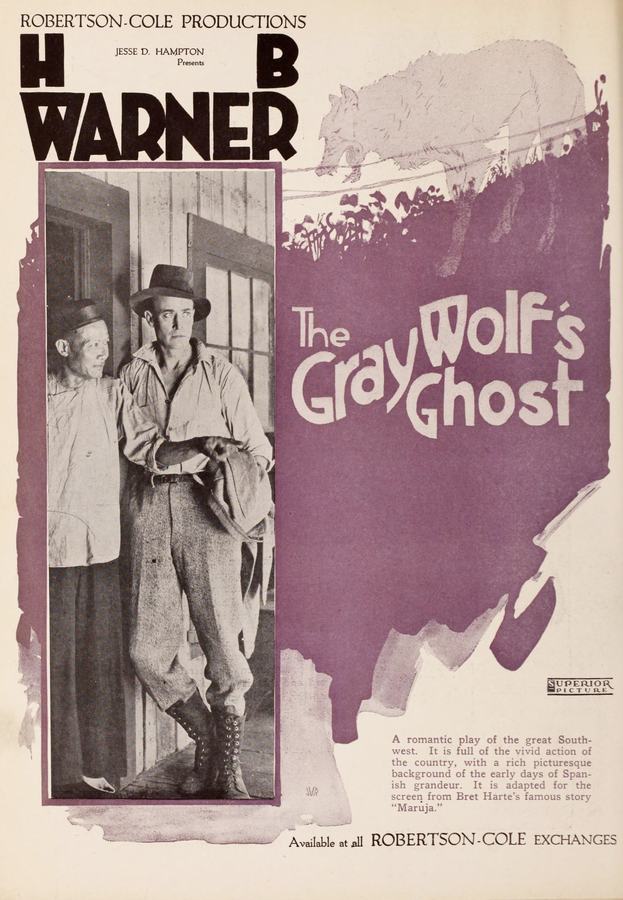
A definitive 5/10 rating for a film that redefined the boundaries of cult cinema. The Gray Wolf's Ghost remains a cornerstone of transgressive art.
Stepping back into the early cinematic landscape, one encounters a fascinating tapestry of storytelling, often more nuanced and daring than modern audiences might assume. Among these gems, "The Gray Wolf's Ghost" emerges not merely as a relic of its time but as a potent narrative, brimming with the raw energies of ambition, tradition, and the supernatural. Released in 1917, this silent Western, penned by the formidable duo of Bret Harte and Fred Myton, transcends the typical shoot-em-up to deliver a complex melodrama steeped in cultural conflict and moral ambiguity. It's a film that speaks volumes without uttering a single word, relying instead on the powerful visual language that defined the era, masterful performances, and a plot that twists and turns with the relentless pace of a runaway train.
At its core, "The Gray Wolf's Ghost" is a visceral exploration of progress clashing with heritage. The avarice of Dr. West, portrayed with chilling effectiveness by Edward Peil Sr., and his equally unscrupulous partner, Jim Prince (Lloyd Whitlock), sets the stage. These are men driven by the relentless pursuit of profit, envisioning a railroad carving a path through the pristine, sun-baked landscapes of Lower California. This iron artery, a symbol of burgeoning modernity and unchecked capitalism, represents a direct threat to the established order – specifically, the Spanish landowners who have cultivated and cherished this land for generations. Their antagonist is not merely a collective of nameless faces but a formidable, captivating figure: Dona Maria Saltonstall, brought to life with aristocratic grace and steely resolve by Marin Sais. Dona Maria is no shrinking violet; she understands the machinations of power and, with shrewd pragmatism, attempts to leverage her charm and intelligence, even resorting to flirtation with Dr. West, in a desperate bid to safeguard her ancestral property. Her efforts paint a portrait of a woman navigating a patriarchal world, employing every available tool to protect her people and their legacy. This dynamic struggle over land and resources echoes the central conflict in films like The Lure of Heart's Desire, where the expansion of industry often pitted powerful forces against those rooted in tradition.
But the conflict isn't purely economic or territorial; it is deeply spiritual and psychological. Enter Pereo, played by the intense Hector V. Sarno, a religious fanatic whose unwavering devotion to Dona Maria's family is matched only by his fervent belief in the ancient Curse of the Gray Wolf's Ghost. This chilling prophecy dictates that if a member of the Saltonstall lineage were to "mate with an alien"—a term loaded with xenophobic undertones, referring to outsiders, particularly the encroaching American settlers—both their fortune and their very lives would be irrevocably forfeited. Pereo's fanaticism is not a mere eccentricity; it is a driving force, a specter that hangs over every interaction, every potential union, threatening to unravel the delicate fabric of the community. His character adds a layer of mystical dread, transforming a land dispute into a battle against destiny itself. His zealotry, while rooted in protection, borders on the destructive, revealing the perilous tightrope walked by those consumed by unwavering belief. This blend of the pragmatic and the superstitious offers a fascinating parallel to films like Frate sole, which also delves into the powerful, sometimes destructive, grip of religious fervor, though in a more overtly spiritual context. Here, Pereo’s faith is entwined with a very specific, tangible threat to his community's purity and survival, highlighting the profound cultural anxieties of the time.
Just as the tensions between the speculators and landowners reach a fever pitch, a new, deeply personal vendetta enters the fray. Harry West, portrayed by the earnest H.B. Warner, arrives on the scene, a figure consumed by a righteous fury. He is Dr. West's estranged son, abandoned years ago, now returned to avenge the profound wrong done to his mother. This introduction immediately injects a powerful familial drama into the broader socio-economic conflict. The confrontation between father and son is stark and brutal. Dr. West, a man devoid of paternal affection, not only refuses to acknowledge Harry but publicly humiliates him, denouncing him as a blackmailer. This act of cruel dismissal serves as a catalyst, pushing the narrative into darker, more treacherous territory. The raw emotion conveyed by Warner, even in the absence of dialogue, speaks volumes about the depth of Harry's pain and his unwavering resolve for justice. His journey is one of both personal retribution and a quest for identity, seeking recognition from a father who denied him. This theme of a son seeking retribution for a wronged parent resonates with the timeless narratives found in many melodramas of the era, echoing the moral complexities often explored in films like The Masked Motive, where hidden identities and past injustices fuel dramatic revelations.
The narrative takes a sharp, irreversible turn with the sudden and shocking murder of Dr. West. In the ensuing chaos, Jim Prince, ever the opportunistic villain, sees his chance to seize the West fortune. He cunningly frames Harry for the crime, leveraging the public animosity between father and son. The film masterfully builds suspense as Harry finds himself ensnared in a web of circumstantial evidence, facing the grim prospect of a public hanging. The atmosphere of impending doom is palpable, a testament to the director's ability to create tension through visual cues and the expressive performances of the cast. The scene where Harry is about to be lynched is particularly harrowing, capturing the brutal, often lawless, nature of the frontier justice depicted in many Westerns. Here, the mob mentality, driven by suspicion and the thirst for vengeance, threatens to consume an innocent man, highlighting the precariousness of life and justice in the untamed West. The raw, visceral portrayal of this near-tragedy underscores the film's commitment to exploring the darker facets of human nature and societal breakdown.
However, it is at this very precipice of despair that "The Gray Wolf's Ghost" delivers its most breathtaking and pivotal moment. As the noose tightens around Harry's neck, a distant rumble grows into a deafening roar. Suddenly, the first train ever seen by these isolated communities thunders into view. This isn't just a plot device; it's a profound symbol. To the bewildered, awe-struck lynchers, and especially to the deeply superstitious Pereo, this mechanical marvel is nothing short of a divine apparition, an "iron god" descending from the heavens. The visual impact must have been extraordinary for audiences of the time, representing the inexorable march of progress literally crashing into a world steeped in tradition and fear. The train embodies not just technological advancement, but the disruptive, overwhelming force of industrialization, a new power that dwarfs human concerns and ancient beliefs, an unstoppable harbinger of a new era.
This dramatic entrance of the locomotive shatters Pereo's carefully constructed world of ancient curses and supernatural beliefs. Convinced that this powerful, noisy entity is a deity demanding truth, he breaks under the perceived divine pressure. In a moment of intense, almost tragic, religious ecstasy, Pereo confesses to the murder of Dr. West. His confession is a visceral, raw outpouring, a desperate attempt to appease the "god" he believes has arrived to mete out justice. His fervent cries, though silent to us, would have been amplified by his contorted expressions and frantic gestures, conveying the weight of his guilt and his sudden, overwhelming conviction. But his act of faith quickly turns to a horrifying demise. In a climactic, unforgettable sequence, Pereo, in his zealotry, attempts to lasso the locomotive, believing he can somehow control or commune with this new god. Instead, he is tragically dragged to his death, a powerful metaphor for the old world's inability to comprehend, let alone control, the relentless, unforgiving force of modernization. This stark, brutal end for Pereo is a defining moment, illustrating the destructive collision of ancient beliefs with the industrial age. The scene would have resonated deeply with audiences grappling with the rapid changes of the early 20th century, much like the anxieties explored in films such as Die Insel der Seligen, which often depicted the clash between idyllic pasts and encroaching realities, albeit through a different lens of societal transformation.
With Pereo's confession, the truth is laid bare, and Harry is exonerated. The film then moves towards a resolution that attempts to reconcile the various conflicts it has so skillfully woven. Harry, now free and vindicated, takes on the mantle of a hero. He restores a set of compromising letters to Dona Maria, documents that presumably held power over her and her family, perhaps revealing secrets or legal vulnerabilities. This act of integrity not only clears his name but also solidifies his character as one of honor and principle, demonstrating a profound respect for Dona Maria's family and their heritage. In a final, satisfying turn, Dona Maria, recognizing Harry's true worth and perhaps seeing a path to blending old and new, grants her consent for him to marry her daughter, Maruja (Violet Schram). This union symbolizes a potential bridge between the warring factions, a hopeful integration of the "alien" into the Saltonstall lineage, effectively nullifying the ancient curse through acceptance rather than rejection. It’s a resolution that, while perhaps a touch idealistic, offers a compelling vision of reconciliation, contrasting sharply with the bleak endings sometimes found in films like The Opium Runners where moral decay often triumphs, and instead champions the possibility of new beginnings forged from conflict.
The cast of "The Gray Wolf's Ghost" deserves significant commendation for their ability to convey such a complex narrative without the aid of spoken dialogue. Marin Sais as Dona Maria Saltonstall embodies strength and dignity, her expressions communicating volumes about her struggle and her resolve. Her subtle movements and intense gaze would have conveyed her political acumen and emotional depth. Edward Peil Sr.'s Dr. West is a memorable villain, his cold demeanor palpable even through the flickering silent film; one can imagine his sneering lip and dismissive gestures. H.B. Warner, as Harry, carries the film's emotional weight, his journey from vengeful son to honorable hero rendered with profound conviction, his expressions shifting from youthful anger to mature resolve. The supporting cast, including Rita Stanwood and Lurline Lyons, further enriches the narrative, each player contributing to the film's vibrant tapestry. Silent film acting required a unique set of skills, an emphasis on exaggerated yet precise gestures, facial expressions, and body language to articulate inner turmoil and external conflict. The performers here demonstrate a mastery of this art form, ensuring that no emotional beat is lost and that every character's motivations are clearly communicated through their physical presence.
From a thematic perspective, "The Gray Wolf's Ghost" is remarkably rich. It grapples with the timeless conflict between greed and tradition, depicting how unchecked ambition can devastate established communities. The railroad, while a symbol of progress, is initially presented as a destructive force, threatening to erase a way of life and imposing a new, often brutal, order. The film also explores the power of superstition versus modernity, most vividly personified in Pereo's tragic arc. His belief in the Gray Wolf's Ghost curse is a powerful counterpoint to the rational, industrial world West and Prince represent, embodying the spiritual resistance to material conquest. The narrative deftly navigates themes of justice, vengeance, and redemption, all set against the dramatic backdrop of the American West, a setting often used to explore nascent national identity and the clash of cultures. The film reflects the anxieties of a nation rapidly industrializing and expanding, often at the expense of indigenous or established populations. In this regard, it shares thematic resonance with other Westerns of the period, such as As the Sun Went Down, which similarly grappled with the moral ambiguities of frontier life and the often brutal pursuit of progress, showcasing the complex tapestry of American history.
The writing by Bret Harte and Fred Myton is particularly noteworthy. Harte, a celebrated figure in American literature known for his vivid depictions of the California Gold Rush and the American West, brings a certain literary gravitas to the plot. His understanding of character and setting, even when adapted for the screen, shines through, imbuing the narrative with a sense of authentic frontier life and the moral dilemmas faced by its inhabitants. Myton’s contribution likely ensured the narrative remained compelling and cinematic, translating Harte’s literary vision into a dynamic visual story that could be effectively conveyed through the unique medium of silent film. The intricate plotting, with its multiple layers of conflict, its dramatic reversals, and its ultimate resolution, is a testament to their combined storytelling prowess. It’s a narrative that keeps the audience engaged, constantly shifting expectations and delivering impactful revelations that resonate long after the final frame.
Visually, silent films often compensated for the lack of sound with innovative cinematography and elaborate set designs. While specific details on the visual execution of "The Gray Wolf's Ghost" might be scarce today, the very nature of its plot suggests sweeping landscapes and dramatic close-ups to capture the intensity of the performances. The contrast between the rugged natural beauty of California and the encroaching industrial symbols like the railroad would have been a powerful visual motif, emphasizing the scale of the conflict. The director's choices in framing and pacing would have been crucial in building the suspense leading up to Pereo’s confession and tragic end, utilizing techniques like cross-cutting to heighten tension during the lynching scene and the train's approach. The climax, with the train's dramatic arrival, would undoubtedly have been a spectacle, utilizing the full potential of early cinematic techniques to create a moment of awe and terror, a visual tour de force that would have imprinted itself on the minds of contemporary audiences.
In conclusion, "The Gray Wolf's Ghost" stands as a compelling example of early American cinema, a film that deftly weaves together elements of Western adventure, family melodrama, and supernatural intrigue. It is a testament to the power of silent storytelling, demonstrating how compelling narratives, strong characters, and impactful visual metaphors could captivate audiences long before the advent of synchronized sound. For those interested in the evolution of the Western genre, the complexities of early 20th-century American identity, or simply a well-crafted story of greed, justice, and the clash of worlds, this film offers a rich and rewarding experience. It reminds us that cinematic masterpieces are not solely defined by technological advancements but by the enduring power of human stories, told with passion and ingenuity. The ghost, perhaps, is not just of a wolf, but of a fading era, confronted by the unstoppable engine of change, leaving behind a legacy of dramatic storytelling that continues to resonate.
IMDb —
1918
Community
Log in to comment.