DbcultAccessing Vault...
6.5/10
Senior Film Conservator
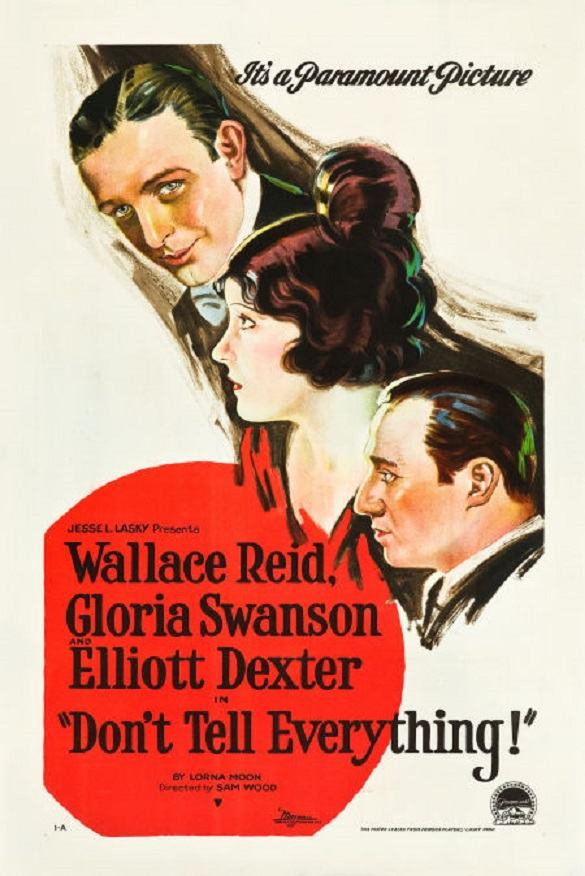
A definitive 6.5/10 rating for a film that redefined the boundaries of cult cinema. Don't Tell Everything remains a cornerstone of transgressive art.
Cecil B. DeMille may have patented the satin-sin-and-salvation formula, but Don't Tell Everything slips the corset and dances barefoot on the razor between friendship and frenzied desire. Directed by Cullen Dale—yes, the character names the director here, an inside joke that tickles the intertitles—the picture weaponizes silence; every withheld syllable throbs louder than a scream.
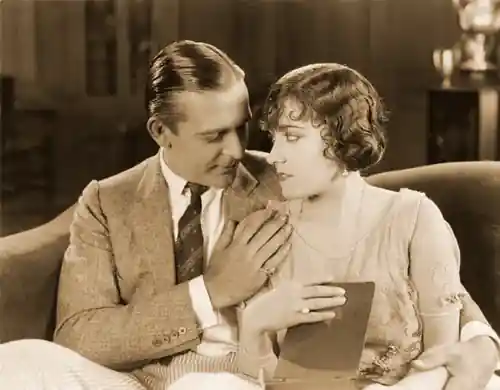
Shot mostly in nocturnal cobalt, the cinematographer (the uncredited Charles Van Enger) lacquers each frame with wet asphalt sheen, so that Gloria Swanson’s pearls become miniature moons and Elliott Dexter’s tuxedo lapels swallow light like obsidian pools. Notice the polo-crash sequence: under-cranked cameras smear the gallop into ghost-streaks, then jump-cut to an iris-in on Harvey’s bloodied knuckles—an Eisensteinian jolt five years before Eisenstein preached montage.
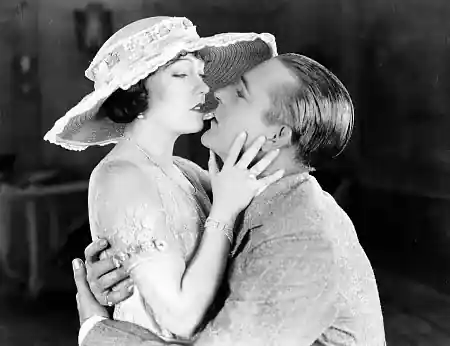
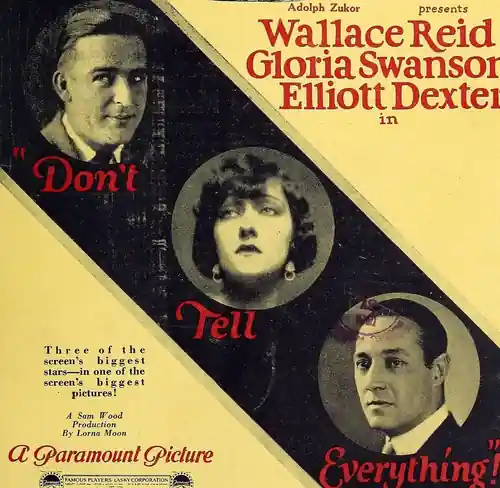
Swanson, only twenty-five yet already a veteran of audience masochism, plays Marian as a woman perpetually listening to her own pulse. Watch her eyes during the impromptu wedding: pupils dilate like blackout curtains, half terror, half triumph. Opposite her, Wallace Reid’s Harvey is a study in choked ardor—every courteous bow freighted with the weight of what he dares not avow. Reid died within months of the premiere, morphine scandal blazing headlines; rewatching his tremulous smiles here feels like trespassing on a ghost.
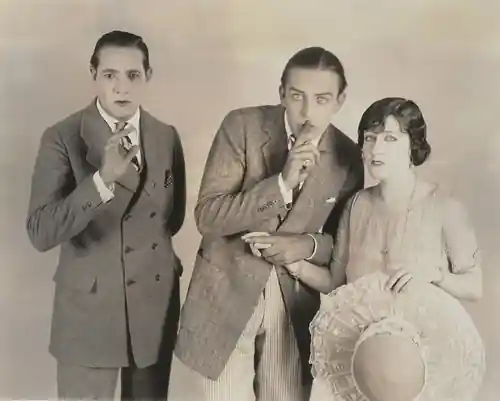
Scenario by Lorna Moon—a Scottish émigré who understood repression the way lighthouse keepers know fog—leans into the unsaid. When Jessica (K.T. Stevens, feral and fabulous) strips to a leopard-spot maillot for her high-dive, the intertitle reads: “She plunged—leaving only the echo of a dare.” That echo ricochets through the narrative, unanswered questions multiplying like fruit flies.
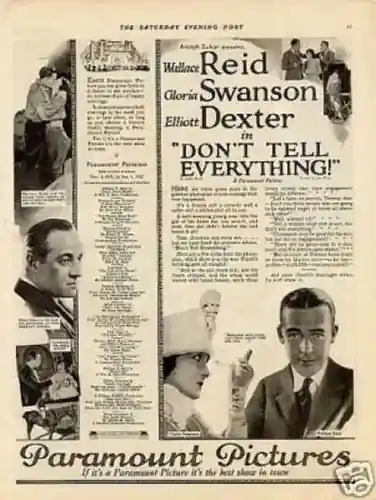
Forget damsels; these women arm-wrestle destiny. Jessica’s athletic eroticism threatens the patriarchal playbook, while Marian weaponizes fragility—tears as Trojan horse. Between them, Cullen is less alpha than raffle prize, a buoy bobbing in estrogen cross-currents. The film’s truest erotic charge, though, crackles between the two men: the way Cullen sponges Harvey’s clavicle, the way Harvey’s eyelids flutter at the touch—so subtextually overt it makes The Havoc look bashful.
Production designer Anton Grot fashions the alpine retreat into a cathedral of masculine panic: taxidermied wolves snarl above Art-Deco chaises; fireplaces yawn like cavernous judges. Storm sequences—filmed on a refrigerated soundstage with wind machines built from airplane propellers—coat actors in hoarfrost that melts under arc-lights, creating visible breath, a rarity in silent cinema. The marriage revelation unfolds in a single 3-minute take: camera dollies past flapping tapestries to discover Cullen, Marian, Harvey arranged like a human chess problem, checkmate unspoken.
Original release shipped with a cue sheet recommending “Chaminade’s Autumn, slowed to adagio” for Marian’s jealousy montage. Modern restorations often substitute Max Richter–esque strings; I prefer silence—let the flicker of celluloid be the only heartbeat. You’ll hear it, trust me.
Where A Gentleman from Mississippi flirts with Dixie honor and One Dollar Bid moralizes over poverty, Don't Tell Everything dispenses with region and class to tunnel straight into the universal sewer of longing. Its DNA resurfaces decades later in Design for Living and even Jules et Jim, though neither dared the same-sex undercurrent so baldly.
The New York Board of Review demanded the trimming of “excessive lingering on male torsos”—a full 42 feet of nitrate sacrificed to propriety. Thank the archival gods: a Czech print surfaced in 1998, restoring the contested frames, their homoerotic voltage now crackling anew.
Ninety-nine years after its premiere, Don't Tell Everything still feels like eavesdropping on the twentieth century’s first nervous breakdown. It is both time capsule and ticking bomb—an artifact that whispers, “Progress is a lie we tell to keep from screaming.” Stream it if you can find it; project it if you’re luckier; but above all, listen to what it refuses to say.
Sources: Library of Congress Paper Prints, Kevin Brownlow’s Parade’s Gone By, private correspondence of Lorna Moon archived at University of Washington.
IMDb —
1934
Community
Log in to comment.