DbcultAccessing Vault...
Cult Review
Senior Film Conservator
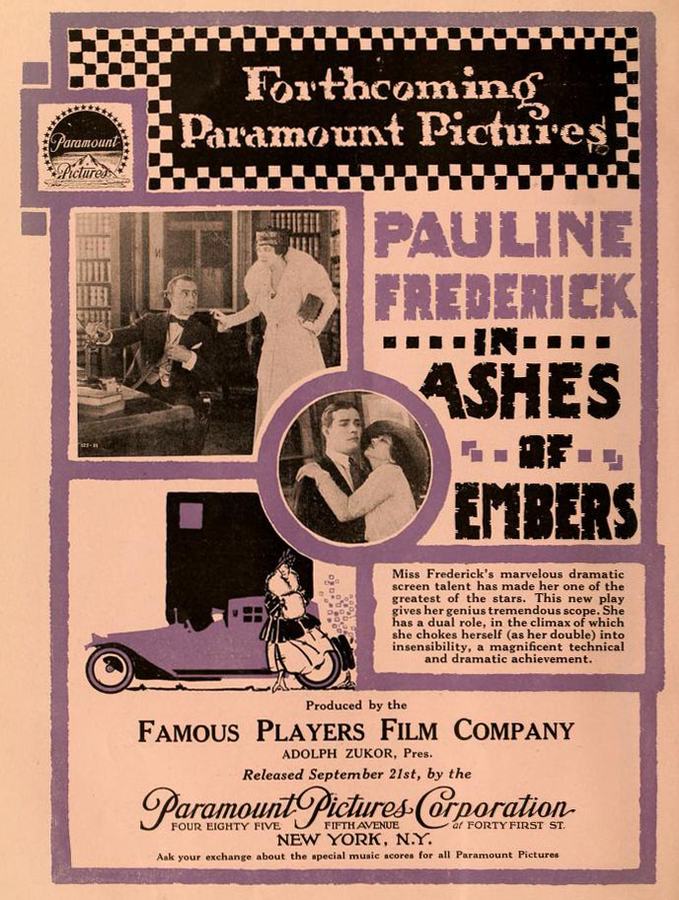
Stepping back into the cinematic annals of 1916, we encounter Ashes of Embers, a silent film that, despite its vintage, resonates with a timeless, almost mythic, exploration of human nature. This isn't merely a period piece; it's a profound character study, a morality play draped in the opulent and often unforgiving tapestry of early 20th-century society. It delves deep into the treacherous currents of deceit, the crushing weight of false accusation, and the incandescent power of self-sacrifice, all while painting a vivid portrait of an era grappling with its own rapidly evolving moral landscape. Penned by the collaborative efforts of John B. Clymer, Charles Logue, and Forrest Halsey, the narrative unfurls with a relentless dramatic momentum that keeps the viewer utterly engrossed, even a century removed from its original release.
At the narrative's poisoned core lies Laura Ward, portrayed with a chilling self-possession by Pauline Frederick. Frederick, a luminary of the silent screen, imbues Laura with a captivating, almost magnetic, villainy. Her Laura is not merely selfish; she is predatory, a woman whose every action is meticulously calculated for personal gain, irrespective of the collateral damage. The film opens with her audacious theft of a substantial sum, an act of such brazen disregard that it immediately establishes her as a formidable, if reprehensible, force. The subsequent framing of her innocent twin, Agnes, is a masterstroke of villainy, a betrayal so profound it echoes through the entire film. This initial act sets in motion a cascade of consequences that ensnare everyone in her orbit, most tragically Agnes. Frederick's performance, relying solely on gesture, expression, and the occasional intertitle, communicates a complex internal landscape of ambition and amorality that is both horrifying and mesmerizing. Her eyes, often narrowed in cunning, convey volumes about the calculating mind behind the beautiful façade.

In stark contrast to Laura's perfidy stands Agnes, her twin, brought to life with poignant vulnerability and quiet strength by Maggie Fisher. Fisher's Agnes is the embodiment of suffering innocence, a lamb led to the slaughter by her own flesh and blood. Her unjust imprisonment is a visceral punch, highlighting the arbitrary cruelty of fate and the devastating ripple effects of one person's malice. Yet, Agnes is not merely a victim; she is a survivor, her spirit unbowed by the indignity of her incarceration. Her emergence from prison, marked by a quiet dignity, sets the stage for her most profound act of selflessness: agreeing to pose as Richard Leigh's mistress to salvage her sister's marriage. This decision, a testament to an almost saintly capacity for forgiveness and sacrifice, elevates Agnes beyond mere character; she becomes a symbol of enduring goodness. Her journey, in many ways, mirrors the redemptive arc seen in other powerful dramas of the era, such as A Woman's Triumph, where female protagonists navigate immense personal trials with resilience and moral fortitude. Fisher's subtle yet powerful performance ensures that Agnes's emotional journey feels authentic and deeply moving, making her eventual happiness feel genuinely earned.
Earle Foxe's portrayal of Richard Leigh is equally compelling, capturing the tragic descent of a talented architect into the abyss of alcoholism and despair. Richard is a man haunted by his own weaknesses, easily swayed by Laura's manipulative charm, yet possessing an underlying decency that Agnes ultimately unearths. His initial abandonment by Laura for the elderly millionaire William Benedict (Frank Losee, who plays the cuckolded husband with a quiet dignity that belies his eventual explosive rage) only deepens his spiral. The rekindling of his affair with Laura is less about passion and more about a destructive cycle of dependency. It is Agnes's presence, her unwavering belief in his potential, and her unconditional love that pulls him back from the brink. This regeneration arc is a central pillar of the film, showcasing the transformative power of genuine affection and moral guidance. It's a narrative thread that could be drawn in comparison to the spiritual and moral awakenings explored in films like The Christian, where characters find salvation through faith and the influence of righteous individuals. Foxe masterfully conveys Richard's struggle, his moments of weakness, and his eventual earnest striving for sobriety, making his redemption feel hard-won and believable.
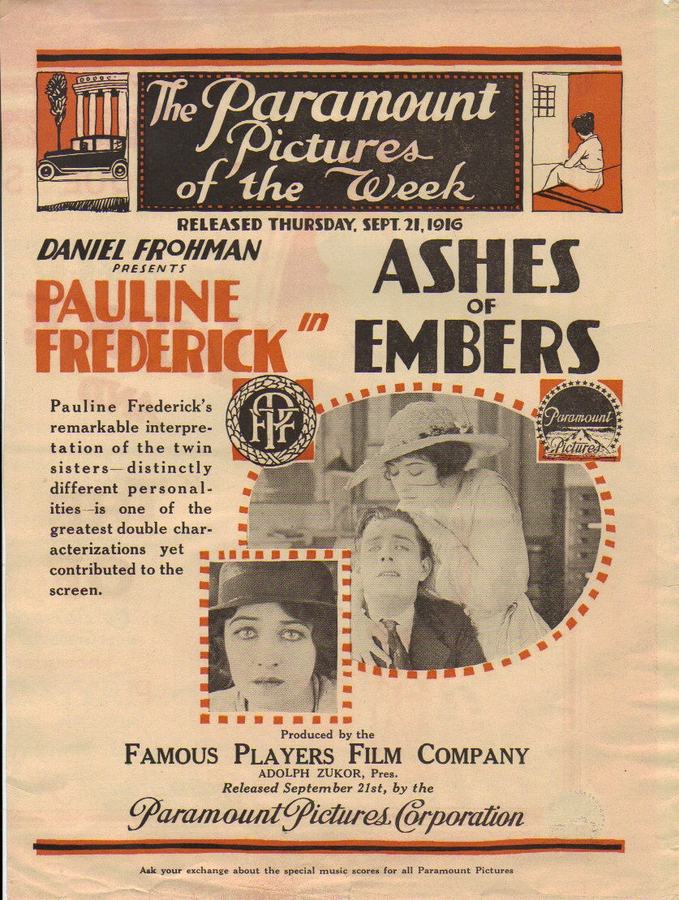
The intricate web of relationships in Ashes of Embers is a marvel of dramatic construction. Laura's marriage to William Benedict, a figure of stability and wealth, is a calculated maneuver, a gilded cage she quickly yearns to escape. Her renewed affair with Richard, though reckless, is almost inevitable, a testament to her inability to resist immediate gratification and her inherent disregard for marital vows. The moment a detective catches them together is a pivotal turning point, forcing Agnes into her sacrificial role. The dramatic tension here is palpable, a silent crescendo building towards the inevitable collapse of Laura's carefully constructed world. The film expertly uses close-ups and intertitles to convey the internal turmoil of the characters, particularly Agnes's agonizing decision and Richard's shame. This narrative complexity, where moral choices have far-reaching and often devastating consequences, echoes the intricate legal and ethical dilemmas explored in films like The Final Judgment, where character actions are weighed heavily in the scales of fate.
Just as Agnes and Richard begin to forge a life together, a fragile haven built on trust and mutual respect, Laura reappears, a venomous serpent slithering back into their Eden. Her return is a catalyst for the film's tragic climax, a stark reminder that some evils are not easily vanquished. Agnes's discovery of Richard, once again succumbing to drink and entangled in Laura's embrace, is heart-wrenching. It represents the ultimate test of her forgiveness and the fragility of Richard's hard-won sobriety. The scene is imbued with a sense of crushing disappointment and renewed betrayal, expertly conveyed through Fisher's anguished expressions and Foxe's portrayal of remorse and weakness. This moment is a powerful commentary on the enduring allure of destructive habits and relationships, and how easily past demons can resurface to haunt the present. The writers, Clymer, Logue, and Halsey, demonstrate a keen understanding of human fallibility, refusing to offer an overly simplistic happy ending until the very last frames.
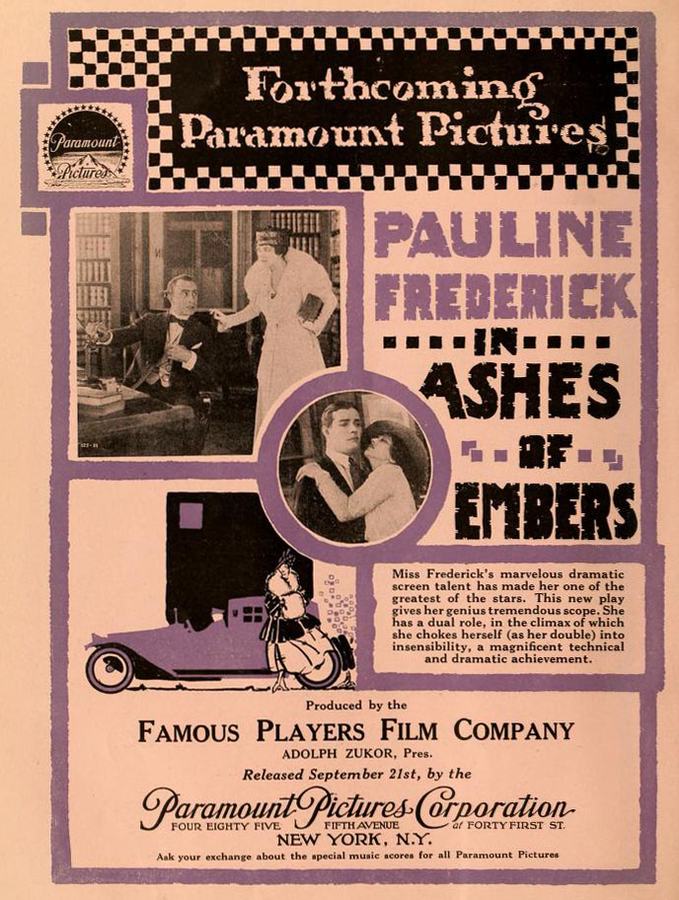
The film's denouement is a searing testament to the destructive power of jealousy and rage. William Benedict, the millionaire husband, driven to the brink by his wife's blatant infidelity and deceit, takes matters into his own hands, shooting and killing Laura. This act, while shocking, feels tragically inevitable, the culmination of Laura's relentless path of destruction. Frank Losee's portrayal of William, initially reserved and composed, explodes in a moment of raw, primal fury, making his violent act understandable, if not justifiable. This tragic end for Laura serves as a stark moral reckoning, a brutal consequence for a life lived without empathy or conscience. It positions Ashes of Embers alongside other crime dramas of the era, such as The Criminal, in its unflinching portrayal of justice, or lack thereof, in a flawed world. Yet, the film doesn't end on this note of despair. Agnes, despite the renewed pain and the fresh trauma, extends her forgiveness to Richard, taking him home. This final act of grace is profoundly moving, solidifying Agnes's character as one of immense moral fortitude and boundless love. It is a powerful statement about the redemptive capacity of the human heart, capable of choosing compassion even in the face of profound hurt.
The enduring power of Ashes of Embers lies not only in its compelling narrative but also in the masterful performances of its cast. Pauline Frederick's Laura is a tour de force of calculated malevolence, a performance that remains etched in the memory long after the credits roll. Maggie Fisher's Agnes, conversely, provides the film's moral compass, her quiet strength and capacity for love shining brightly against the darkness. Earle Foxe's Richard, caught between his demons and his desire for redemption, is a nuanced portrayal of human frailty. Even supporting players like J. Herbert Frank and Jay Wilson contribute to the film's rich tapestry, their presence adding depth and authenticity to the unfolding drama. The craftsmanship typical of early silent cinema is evident throughout: the expressive intertitles, the dramatic lighting, and the often theatrical yet deeply felt acting styles. These elements combine to create an immersive experience that transcends the limitations of its medium, proving that powerful storytelling needs no spoken word to convey profound emotion. The film’s pacing, while deliberate by modern standards, allows for a deep emotional engagement with the characters’ plights, building tension with a slow-burn intensity that culminates in its explosive final act.
What truly elevates Ashes of Embers beyond a mere historical curiosity is its unflinching exploration of universal themes. The struggle between good and evil, selfishness and altruism, betrayal and forgiveness—these are not confined to any single era. The film forces us to confront uncomfortable questions about justice, the nature of identity (especially through the twin motif), and the transformative power of love. It reminds us that even in the darkest corners of human experience, a flicker of hope, a chance for redemption, can persist. The moral ambiguities, particularly surrounding William's act and Agnes's forgiveness, prevent the narrative from becoming simplistic, instead offering a complex, almost philosophical, meditation on human morality. This depth of thematic exploration ensures its continued relevance, inviting contemporary audiences to reflect on the enduring nature of these ethical quandaries. The film, in essence, becomes a mirror reflecting the enduring complexities of the human condition, a testament to the power of cinema to explore the grandest narratives of our inner lives.
Ashes of Embers is more than just a relic from the early days of cinema; it is a vibrant, emotionally charged drama that speaks volumes without uttering a single word. Its intricate plot, compelling characters, and profound exploration of human morality make it a standout example of silent film artistry. For those willing to immerse themselves in its unique language, the rewards are immense. It is a film that challenges, moves, and ultimately, inspires, leaving an indelible mark on the viewer. The performances, especially from Frederick and Fisher, are captivating, embodying the raw emotions of their characters with an intensity that transcends time. This is a film that deserves to be rediscovered, studied, and appreciated for its timeless narrative and its masterful execution. It proves that even from the 'ashes' of a bygone era, cinematic 'embers' can still burn brightly, illuminating the enduring truths of the human spirit. A truly remarkable cinematic experience that echoes the dramatic intensity found in classics that explore similar themes of moral reckoning and societal judgment, leaving audiences contemplating its profound messages long after the final frame.
IMDb 7.4
1927
Community
Log in to comment.