DbcultAccessing Vault...
Cult Review
Senior Film Conservator
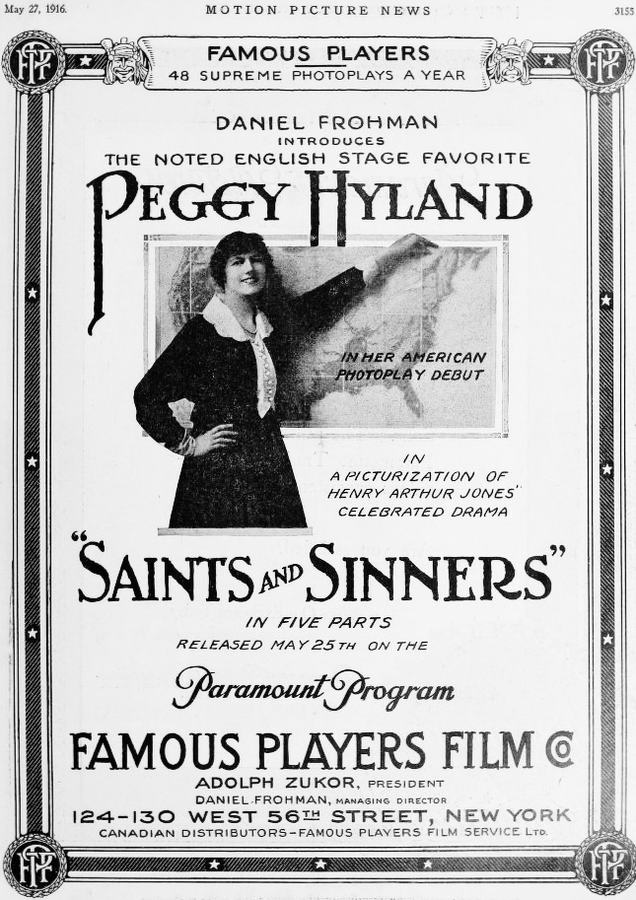
Step into the sepia-toned world of early 20th-century cinema, where moral quandaries and the crushing weight of societal expectations often served as the bedrock for compelling narratives. Hugh Ford's 1916 adaptation of Henry Arthur Jones's play, Saints and Sinners, emerges from this era not merely as a relic, but as a surprisingly potent exploration of human fallibility, redemption, and the transformative power of crisis. It’s a film that, despite its age, resonates with an enduring relevance, peeling back the layers of a community’s rigid moral code to reveal the fragile humanity beneath.
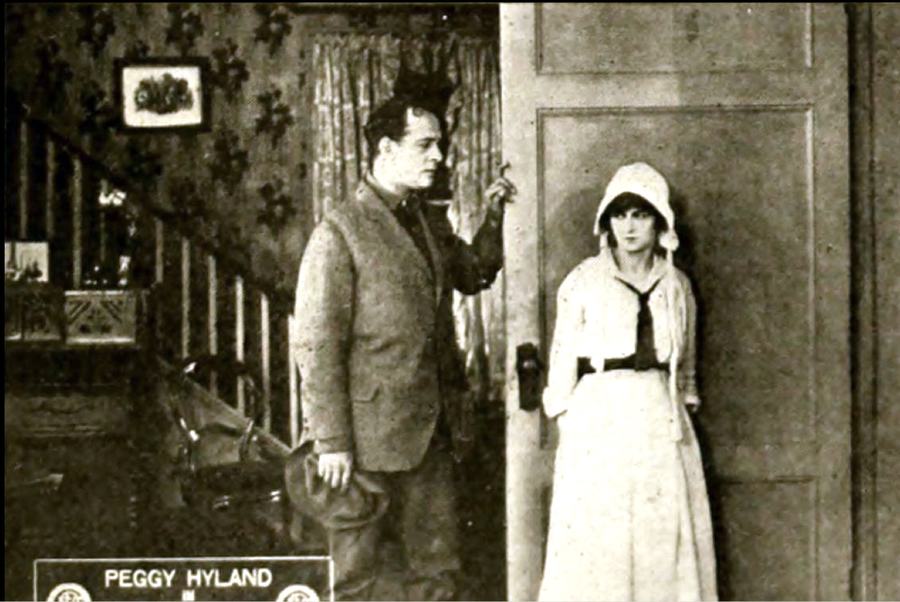
The narrative unfurls in a quaint, ostensibly idyllic setting, where the very fabric of life is interwoven with the strictures of religious doctrine and social propriety. Here, we encounter Letty, portrayed with a delicate blend of innocence and burgeoning worldliness by Peggy Hyland, the cherished daughter of a respected minister, whose very existence seems to embody the virtues of her upbringing. Her world is one of decorum and expectation, a delicate ecosystem easily disrupted by external forces. Into this carefully constructed reality steps Captain Fanshawe, a character brought to life with a chillingly suave menace by Horace Newman. Fanshawe is the quintessential cad, a man whose charm is but a thin veneer for his manipulative intentions, a stark contrast to the earnest and utterly devoted George, played by William Lampe, whose love for Letty is as transparent as it is unwavering. George represents the steadfast, moral anchor, a pillar of the community whose affections are pure and honorable, yet often overlooked in the face of more immediate, illicit excitement.
The central conflict ignites with Fanshawe’s insidious deception. He ensnares Letty in a web of lies, luring her away from her sheltered existence for an overnight trip to the bustling, anonymous city. The implications of this transgression, in an age where a woman’s reputation was her most valuable asset, are immediate and catastrophic. This single act of imprudence, however innocent Letty’s true intentions might have been, irrevocably tarnishes her standing. The societal judgment is swift and unforgiving, a public shaming that extends beyond Letty herself, engulfing her venerable father, played by Clarence Handyside, in a profound and inescapable disgrace. The minister, a man dedicated to upholding moral rectitude, finds himself forced to resign from his sacred position, his authority undermined by the perceived sin of his daughter. It is a moment of profound tragedy, illustrating the brutal efficacy of societal condemnation, a theme echoed in other dramas of the period where reputation was paramount, such as Her Father's Gold, where familial honor is similarly jeopardized by perceived transgressions.
In the wake of this public humiliation, George, ever the paragon of virtue, steps forward with an offer of marriage, a selfless act designed to restore Letty’s shattered reputation and provide her with a shield against the community’s scorn. This gesture, however noble, is met with Letty’s profound shame. The weight of her perceived sin is too great, a burden she feels she cannot impose upon George or his unblemished name. Consequently, Letty and her father retreat from the judgmental gaze of their former community, seeking solace and anonymity in a remote, secluded cottage. This self-imposed exile is a poignant depiction of atonement, a desperate attempt to cleanse themselves of the stain of scandal, reminiscent of the ostracization faced by characters in films like A Marked Man, where past deeds cast long, inescapable shadows.
Just as their lives settle into a somber rhythm of isolation and quiet penance, fate intervenes with a devastating and indiscriminate force: a scarlet-fever epidemic descends upon the region. This virulent outbreak acts as a powerful narrative catalyst, a true game-changer that strips away the superficialities of social standing and moral judgment, revealing the raw, unvarnished essence of humanity. The epidemic cares not for reputation, for past sins, or for social standing; it touches everyone, indiscriminately. This calamitous event forces characters to confront their deepest fears, to set aside petty grievances, and to rediscover compassion. It is in the face of widespread suffering and the looming specter of death that the true character of individuals is tested and often transformed. Such a dramatic external force, reshaping destinies, brings to mind the profound personal and spiritual upheavals explored in films like Revelation, where crises often lead to profound self-discovery and a re-evaluation of one's place in the world.
The film masterfully employs this epidemic as a crucible, forging new paths for its characters. The immediate threat to life and community compels a shift in perspective. Old prejudices begin to crumble, replaced by an urgent need for solidarity and mutual support. The once-judgmental community is forced to re-evaluate its rigid moral compass, confronted by a crisis that renders past transgressions seemingly trivial in the face of imminent mortality. This shift allows for the possibility of forgiveness, both for Letty and for the community itself, which must now contend with its own capacity for mercy. The narrative arc, moving from rigid judgment to reluctant empathy and finally to a form of collective redemption, is a testament to the power of adversity in shaping human character.
The performances in Saints and Sinners, typical of the silent era, rely heavily on expressive physicality and exaggerated facial expressions, yet manage to convey a surprising depth of emotion. Peggy Hyland’s Letty is particularly compelling, her journey from naive girl to disgraced woman and then to a figure of quiet strength being the emotional core of the film. Her shame is palpable, her sorrow genuine, making her eventual path towards redemption all the more earned. William Lampe, as George, embodies unwavering loyalty and quiet heroism. His devotion is a constant, steady flame against the storm of scandal, offering a moral counterpoint to the transient allure of Horace Newman’s Captain Fanshawe. Newman, for his part, crafts a villain whose charm is as dangerous as his duplicity, a believable antagonist whose actions set the entire tragic chain of events in motion. The supporting cast, including Albert Tavernier as the sympathetic Dr. Masters and Clarence Handyside as the beleaguered minister, lends gravitas and authenticity to the small-town setting, each contributing to the rich tapestry of the community’s moral landscape.
Hugh Ford's direction, while adhering to the cinematic conventions of the period, demonstrates a keen understanding of dramatic pacing and visual storytelling. The shifts between the tranquil, judgmental village and the chaotic, impersonal city effectively underscore the contrast between reputation and anonymity, a dichotomy also explored in films like Limousine Life, which often contrasted urban decadence with rural simplicity. Ford uses the silent film medium to its full potential, allowing the actors’ nuanced expressions and gestures to carry the emotional weight, complemented by intertitles that succinctly advance the plot and reveal inner thoughts. The adaptation of Henry Arthur Jones's play by Ford himself is noteworthy; Jones was a prominent playwright of the late 19th and early 20th centuries, known for his social dramas. The transition from stage to screen, while simplifying some of the play's more intricate dialogue-driven nuances, retains the core thematic strength and emotional resonance, making the story accessible to a broader cinematic audience.
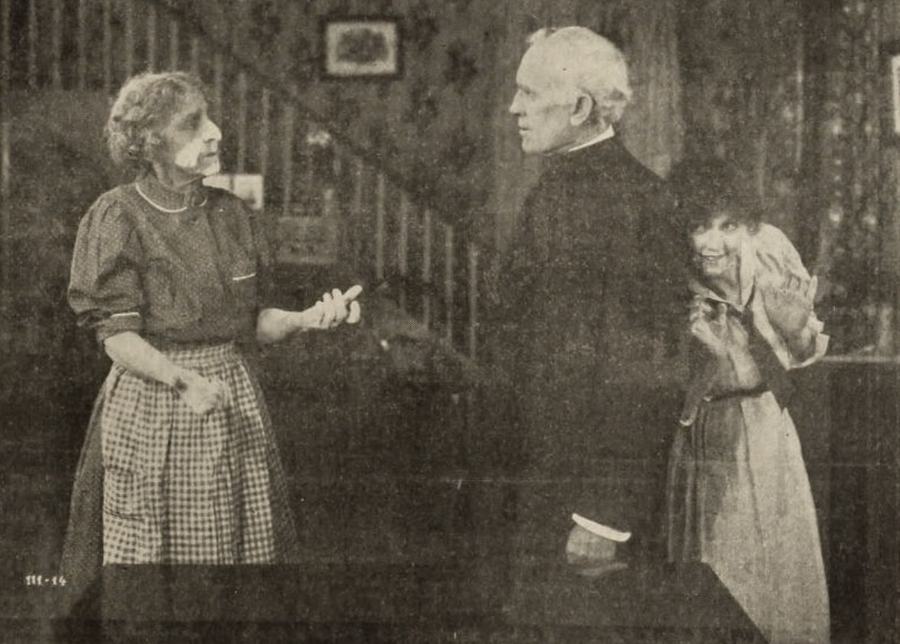
Beyond the immediate narrative, Saints and Sinners serves as a fascinating cultural artifact, offering a window into the prevailing moral codes and anxieties of its time. The film’s preoccupation with reputation, social ostracization, and the redemptive power of suffering speaks volumes about the societal values of the early 20th century. It explores the idea that true morality is not merely about adhering to a set of rigid rules, but about empathy, forgiveness, and the capacity for change. The film also subtly critiques the hypocrisy inherent in a society quick to condemn but slow to understand or forgive, a theme that resonates with other moral dramas of the era. The portrayal of the minister’s downfall, for instance, highlights the intense pressure on public figures to maintain an impeccable façade, a scrutiny that could be devastating, as seen in the public’s fascination with figures in films like Das Abenteuer eines Journalisten.
The film’s exploration of love, sacrifice, and the possibility of a second chance is particularly moving. George’s unwavering love for Letty, despite her public disgrace, is a powerful testament to the enduring nature of true affection. His willingness to overlook societal judgment and offer solace and stability stands in stark contrast to Fanshawe's opportunistic betrayal. This theme of steadfast love in the face of adversity is a timeless one, explored across various cinematic landscapes, but here it is given a particularly poignant treatment within the confines of a strict moral framework. The narrative suggests that genuine love possesses a redemptive quality, capable of healing wounds that society deems incurable. The idea of a marriage not born of romantic idealism but of practical necessity and an attempt at social repair echoes the complex marital dynamics explored in films like The Wife He Bought, where societal pressures often dictated unions.
Ultimately, Saints and Sinners transcends its seemingly straightforward moralistic premise to deliver a surprisingly nuanced message about human resilience and compassion. The scarlet-fever epidemic, initially a force of destruction, ironically becomes the catalyst for communal healing and individual growth. It forces the characters, and by extension, the audience, to re-evaluate what truly matters when faced with the fragility of life. This profound shift in perspective, where suffering leads to spiritual awakening, aligns with the deeper explorations of faith and humanity found in works such as God, Man and the Devil, where characters grapple with profound moral and existential choices. The film does not shy away from depicting the harsh consequences of social transgression, yet it ultimately champions the virtues of forgiveness and understanding. It’s a compelling argument for looking beyond the surface, for recognizing the inherent worth in individuals, regardless of their past mistakes.
In conclusion, Saints and Sinners is far more than a simple morality play; it is a rich, layered drama that uses its period setting to explore universal themes of love, loss, shame, and ultimately, the profound human capacity for redemption. Its narrative, though rooted in the social mores of its time, still resonates with contemporary audiences, reminding us of the enduring power of empathy and the often-unforeseen ways in which adversity can lead to transformation. For aficionados of classic cinema and those interested in the evolution of dramatic storytelling, this film offers a valuable and deeply moving experience, a testament to the fact that even in an era of silent pictures, stories could speak volumes about the human condition. It’s a film that asks us to consider who the true 'saints' and 'sinners' truly are, and whether, in the face of genuine hardship, those labels can ever truly define us.

IMDb 5.7
1936
Community
Log in to comment.