DbcultAccessing Vault...
6/10
Senior Film Conservator
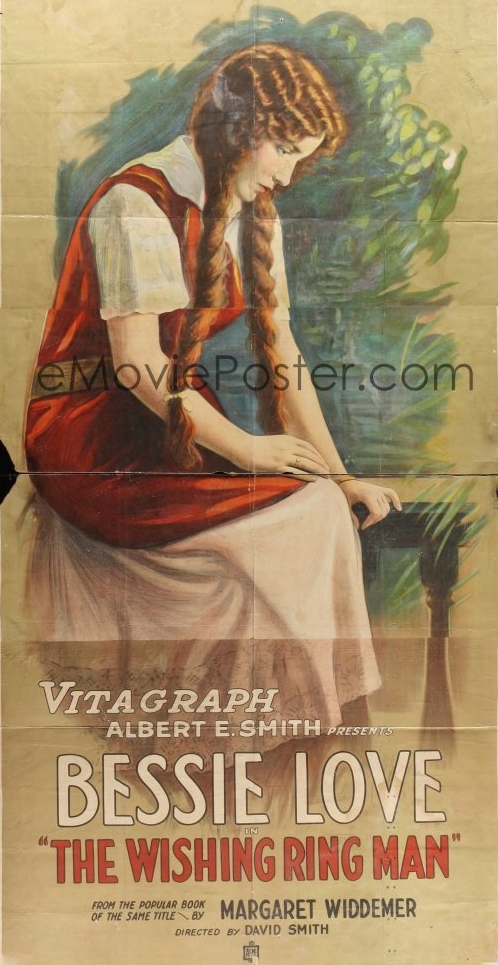
A definitive 6/10 rating for a film that redefined the boundaries of cult cinema. The Wishing Ring Man remains a cornerstone of transgressive art.
The cinematic landscape of 1919 was a crucible of evolving social mores and burgeoning visual grammar, and few films encapsulate this tension as vividly as The Wishing Ring Man. At its core, the film is a fascinating exploration of the 'child-woman' archetype, a trope that resonated deeply within the silent era's fascination with innocence and its subsequent corruption or maturation. Directed with a keen eye for domestic claustrophobia, the film introduces us to Joy Havenith, portrayed by the luminous Bessie Love, whose performance transcends the potentially saccharine material to deliver something far more nuanced and psychologically resonant.
Joy’s existence is a peculiar form of emotional vampirism. Her grandfather, a man whose artistic sensibilities are rooted in a stagnant past, treats her not as a sentient being with emerging adult desires, but as a static muse. By forcing her into the garb of a child, he effectively attempts to halt time, preserving her in a state of arrested development to satisfy the metrics of his sentimental verse. This theme of aestheticized entrapment invites a compelling comparison to the Dickensian struggles found in Oliver Twist, though where Oliver faces the brutality of the streets, Joy faces the suffocating velvet of the Victorian parlor. The pigtails and short dresses are not merely costumes; they are the bars of a cage built from rhyme and meter.
When Johnny Hewitt (Truman Van Dyke) enters the frame, he represents more than a romantic interest; he is the personification of agency. His moniker, the 'wishing ring man,' suggests a fairy-tale intervention, yet the film cleverly grounds this in a more modern psychological framework. He doesn't give her a magical object; he gives her the permission to want. This shift from passive observation to active longing is the engine that drives the plot forward, pushing Joy toward a desperate, albeit creative, deception.
The central conflict arises from Joy’s fabrication of an engagement to the very man she admires from afar, without realizing his dual identity. This narrative device of the 'accidental truth' provides a rich ground for dramatic irony, reminiscent of the intricate plot machinations seen in Seven Keys to Baldpate. However, while *Baldpate* leans into the thriller genre, *The Wishing Ring Man* remains firmly rooted in the comedy of manners and the melodrama of the heart. The deception is born of necessity—a survival tactic against the stifling patriarchal control of her grandparents.
The city, glimpsed through the invitation of the visiting couple, serves as a beacon of modernity. In 1919, the urban center was often portrayed as a site of both liberation and peril, a duality explored in contemporary works like Stranded. For Joy, the city represents the only space where she can shed the pigtails and inhabit her nineteen years with dignity. The tension between the pastoral prison of her home and the sophisticated, if chaotic, promise of the city is rendered through sharp contrasts in set design and lighting.
Bessie Love’s portrayal is a masterclass in silent film acting. She manages to convey the absurdity of her situation with a touch of pathos that prevents the film from descending into mere farce. Her interactions with the portrait of Aunt Lucilla—a silent confidante—serve as the film’s emotional anchor. In these moments, Love strips away the 'child' persona, revealing a woman burdened by the weight of her own potential. This duality of the 'child-adult' was a hallmark of the era, frequently seen in the works of Mary Pickford, most notably in Little Lord Fauntleroy, though Love imbues Joy with a more grounded, less stylized vulnerability.
The arrival of Gale Maddox (Claire Du Brey), John’s actual fiancée, introduces the necessary friction of the 'other woman.' Du Brey plays the role with a sophisticated coldness that highlights Joy’s perceived inadequacy. Gale is the product of the city—polished, cynical, and socially adept. Joy, by contrast, is a creature of the garden, making her foray into the high-stakes world of urban engagements all the more precarious. The film doesn't shy away from the moral ambiguity of John’s decision to play along with the ruse, a theme that echoes the domestic dilemmas in Should a Husband Forgive?, albeit with a lighter touch.
Technically, the film utilizes the standard visual vocabulary of the late 1910s, but with an effective emphasis on spatial dynamics. The Havenith estate is often shot with a sense of depth that emphasizes Joy’s isolation within its large, ornate rooms. The use of the portrait as a recurring motif provides a visual link between the past Joy is forced to represent and the future she hopes to claim. The framing of the 'wishing ring' scenes in the garden utilizes soft, naturalistic lighting that contrasts with the more structured, often harsh lighting of the city interiors.
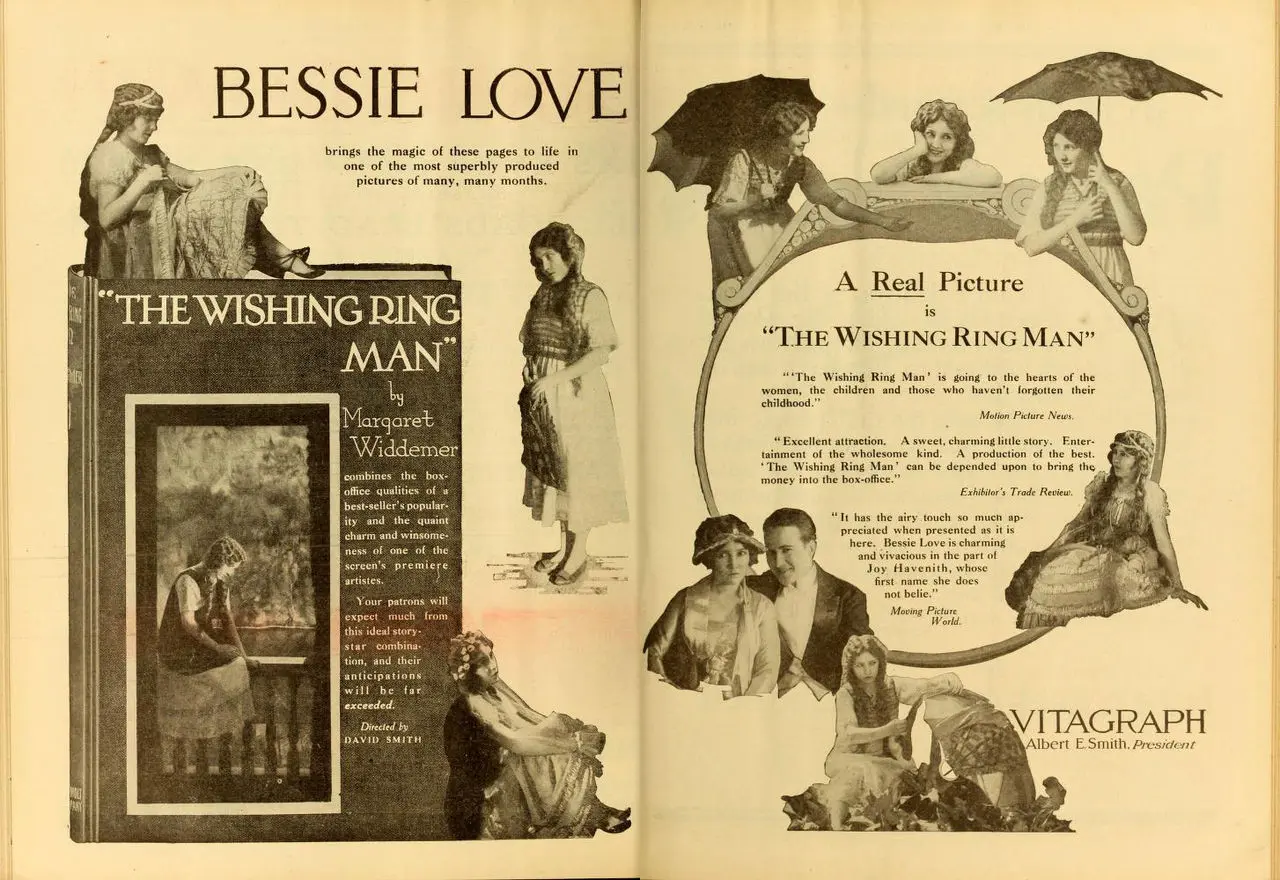
The film’s pacing is deliberate, allowing the psychological weight of the lie to fester. As wedding presents arrive and bridesmaids are fitted, the atmosphere shifts from whimsical to claustrophobic. The visual storytelling excels here; we see Joy literally shrinking amidst the preparations for a life she believes is built on a foundation of sand. This sense of impending doom in a domestic setting is a precursor to the more intense psychological dramas of the 1920s, such as Tangled Fates or the haunting imagery of Pest in Florenz.
While *The Wishing Ring Man* is often categorized as a light romance, it harbors a darker undercurrent regarding the commodification of youth. The grandfather’s use of Joy as a poetic subject is not unlike the exploitation of talent seen in Molly of the Follies, though the medium here is poetry rather than the stage. The film asks: at what point does 'sentimental' cross the line into 'destructive'? Joy’s rebellion is not just against her grandfather, but against the very concept of being an object of someone else's art.
The resolution, while adhering to the expected tropes of the genre, feels earned because of the emotional groundwork laid in the first act. John’s realization of his love for Joy is not a sudden epiphany but the culmination of a month-long observation of her character. He sees the woman behind the pigtails, the strength behind the 'wishing.' In this regard, the film shares a thematic DNA with The Great Love, where true affection is forged through the crucible of shared deception and eventual honesty.
The supporting cast provides a solid framework for Love’s performance. Willis Marks as the grandfather is appropriately oblivious, his character serving as a critique of a certain type of Victorian sentimentality that refused to acknowledge the changing world. J. Frank Glendon and Jean Hathaway as the city couple represent the bridge between Joy’s two worlds, their presence acting as the catalyst for the film's second-act complications. The film also touches upon the themes of memory and identity, much like The Man Who Forgot, though here the 'forgetting' is a deliberate act of shedding a false persona.
In the broader context of silent cinema, *The Wishing Ring Man* stands as a testament to the power of the intimate drama. It doesn't rely on the grand spectacles of an epic or the slapstick of a comedy like Cooks and Crooks or Sleuths and Slickers. Instead, it finds its strength in the subtle shifts of expression and the quiet moments of reflection. It is a film that understands the power of a look, the weight of a silence, and the profound impact of a single, desperate wish.
The film’s exploration of the 'wishing ring' motif also subtly engages with the era's interest in the mystical and the subconscious, themes more overtly explored in European imports like Il Fauno or the Italian drama La forza della coscienza. In Joy’s world, the 'wishing ring' is a psychological tool for empowerment, a way to navigate a world that seeks to keep her small and silent. It is a proto-feminist narrative disguised as a whimsical romance.
As we watch Joy return to the portrait of Aunt Lucilla in the final act, we see a woman who has finally integrated her past and her future. The deception has been stripped away, leaving only the truth of her desires. John’s confession of love is not just a romantic gesture; it is an acknowledgment of her as a full, complex adult. The 'wishing ring man' has fulfilled his promise, not through magic, but through the recognition of Joy’s inherent worth. It is a satisfying conclusion to a film that, over a century later, still speaks to the universal desire to be seen for who we truly are, rather than the costumes we are forced to wear.
The Wishing Ring Man remains a vital piece of silent cinema history, a delicate balance of humor and heart that showcases Bessie Love at the height of her powers. It is a reminder of the era's ability to tackle complex themes of identity and agency with a deceptive simplicity that belies its sophisticated emotional intelligence. Whether viewed as a romantic fable or a critique of patriarchal control, the film continues to enchant and provoke, much like the 'wishing ring' itself.
IMDb 6.6
1926
Community
Log in to comment.