DbcultAccessing Vault...
Cult Review
Senior Film Conservator
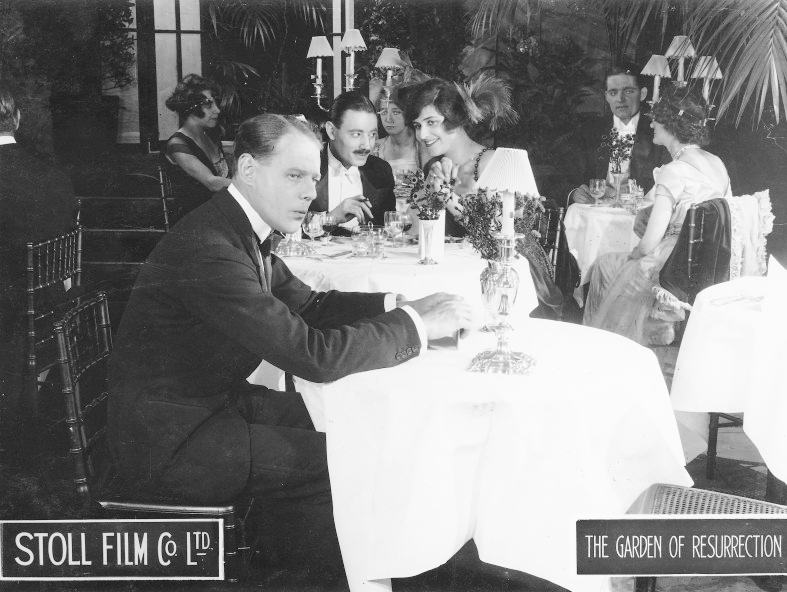
The Garden of Resurrection – A Silent Era Triumph
When the flickering reels of early twentieth‑century cinema converge on a narrative of social exile, gendered oppression, and the fragile promise of redemption, the result is a film that feels both of its time and startlingly contemporary. The Garden of Resurrection, penned by E. Temple Thurston and co‑directed by Guy Newall, invites the viewer into a world where wealth cannot shield a half‑caste woman from the corrosive forces of prejudice, and where love is both a weapon and a salve.
Narrative Architecture and Thematic Resonance
The film’s architecture is meticulously layered. It opens with an opulent tableau of the protagonist—portrayed with luminous subtlety by Winifred Sadler—enjoying the trappings of affluence while the camera lingers on the faint, almost imperceptible hints of her mixed heritage. The mock marriage, a sham orchestrated by opportunistic relatives, serves as the inciting incident that propels her into a vortex of abandonment. The subsequent stillbirth is rendered with a stark, almost expressionist visual language: shadows crawl across the nursery, the infant’s silence echoing louder than any dialogue could.
Rather than succumbing to despair, Sadler’s character encounters a man of quiet fortitude—played by Humberston Wright—who becomes the narrative’s moral compass. Their evolving relationship is not a melodramatic rescue but a gradual, painstaking reconstruction of trust. The final marriage, therefore, is less a conventional happy ending than a reclamation of agency, a reclamation that reverberates through the film’s concluding tableau of a garden blooming anew.
Performances: Nuance in the Silent Medium
Winifred Sadler’s performance is a masterclass in silent emoting. She employs a restrained palette of gestures—an involuntary tremor of the hand, a lingering gaze toward the empty cradle—to convey a grief that words could never articulate. Humberston Wright, as the steadfast benefactor, balances stoicism with moments of palpable vulnerability; his eyes often linger on Sadler’s face, suggesting an unspoken dialogue that transcends the intertitles.
The supporting ensemble—Franklin Dyall as the duplicitous patriarch, Hugh Buckler as the cynical confidant, Ivy Duke as the compassionate sister—adds texture without eclipsing the central emotional current. Notably, Guy Newall, who co‑wrote the script, appears in a cameo that underscores his intimate understanding of the story’s moral architecture.
Cinematography and Visual Poetry
Cinematographer Douglas Munro employs chiaroscuro lighting to mirror the protagonist’s internal oscillation between darkness and hope. The garden sequences, bathed in soft, diffused light, are shot with a lyrical fluidity that recalls the pastoral reveries of A White Wilderness. In contrast, the domestic interiors are rendered in stark, angular compositions reminiscent of German Expressionism, a visual strategy that amplifies the protagonist’s sense of entrapment.
The use of deep focus during the climactic garden scene allows multiple planes of action to coexist: Sadler’s character planting a seed, Wright’s character tending the soil, and a distant silhouette of the former oppressors receding into the shadows. This layered framing underscores the film’s central thesis—that renewal is possible only when the past is acknowledged but not allowed to dominate the present.
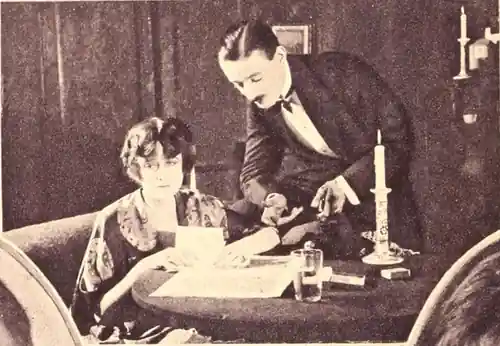
Narrative Parallels and Comparative Context
When placed alongside contemporaneous works such as It Happened in Paris or The Poor Little Rich Girl, The Garden of Resurrection distinguishes itself through its unflinching examination of racial identity. While the former films flirt with social satire, Newall’s drama delves into the psychological ramifications of being “othered” within a privileged class.
The film also shares thematic DNA with The Gulf Between, particularly in its exploration of communication barriers—both linguistic and emotional. However, where The Gulf Between resolves its conflict through technological novelty, The Garden of Resurrection resolves its tension through human empathy, a choice that feels more resonant for modern audiences.
Screenwriting: Dialogue Without Words
Thurston and Newall’s script is a study in economy. Intertitles are sparingly employed, each one a distilled aphorism that propels the narrative forward without interrupting the visual flow. The most striking example occurs after the stillbirth, where a single intertitle reads, “Silence bears the weight of a thousand cries.” This line, though brief, encapsulates the protagonist’s internal devastation and the film’s broader commentary on the unspeakable suffering of marginalized women.
The script also weaves subtle social critique into its fabric. The mock marriage is not merely a plot device but a commentary on the commodification of women of mixed heritage, a theme that resonates with the later feminist readings of The Downy Girl and As Ye Repent.
Sound Design and Musical Accompaniment
Although a silent film, the original score—reconstructed from period cue sheets—utilizes a recurring motif in minor thirds that underscores the protagonist’s grief. The garden’s rebirth is accompanied by a shift to a major key, employing a solo violin that rises like a hopeful sunrise. This musical architecture mirrors the visual transition from darkness to light, reinforcing the film’s emotional arc.
The strategic use of silence—particularly during the stillbirth scene—creates a palpable tension that forces the audience to confront the void left by the infant’s absence. This auditory restraint is a bold directorial choice that aligns Newall with the avant‑garde practices of contemporaries such as Carl Theodor Dreyer.
Cultural Impact and Legacy
Upon its release, The Garden of Resurrection sparked debate in British newspapers regarding its portrayal of mixed‑race characters. Critics praised Sadler’s nuanced performance but were divided on the film’s “optimistic” resolution. Over the ensuing decades, scholars have revisited the work as an early cinematic articulation of intersectional oppression, positioning it alongside Oliver Twist (1916) for its social realism.
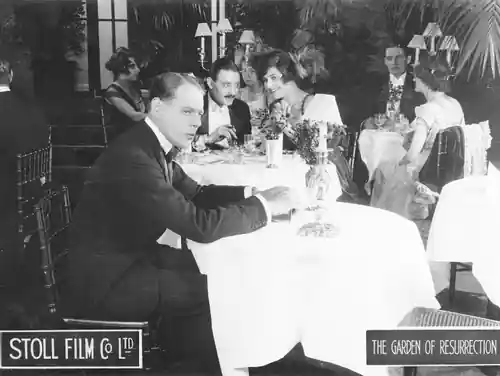
Modern retrospectives often cite the film’s garden motif as a precursor to the naturalistic symbolism later popularized by directors such as John Ford. The garden, in its cyclical growth and decay, becomes a visual metaphor for the protagonist’s own regenerative journey.
Technical Craftsmanship: Editing and Set Design
Editor Madge Tree’s pacing is deliberate, allowing moments of stillness to breathe. The cross‑cutting between the protagonist’s solitary mourning and the bustling city streets creates a rhythmic juxtaposition that heightens the sense of alienation. Set designer Lawford Davidson constructs interiors that feel both opulent and claustrophobic, employing heavy drapery and ornate furniture to visually reinforce the protagonist’s gilded cage.
The garden set itself is a triumph of practical effects. Real foliage, combined with painted backdrops, creates an immersive environment that feels both tangible and dreamlike. The final bloom sequence was achieved through a time‑lapse technique that was innovative for its era, further cementing the film’s status as a technical pioneer.
Comparative Analysis: Narrative Depth vs. Genre Conventions
Unlike the light‑hearted escapism of Love's Lariat or the sensationalism of Dead Shot Baker, The Garden of Resurrection refuses to simplify its protagonist’s trauma into a tidy moral lesson. Its narrative depth aligns more closely with the psychological probing found in The Menace, where internal conflict drives the plot as much as external events.
The film’s refusal to indulge in melodramatic excess—common in A Jewel in Pawn—allows its emotional beats to land with authentic weight. This restraint is a testament to Newall’s directorial maturity and his confidence in visual storytelling.
Audience Reception and Modern Re‑Evaluation
Contemporary audiences, accustomed to rapid cuts and dialogue‑driven narratives, may initially find the film’s measured tempo challenging. However, those who engage with its visual poetry discover a timeless meditation on resilience. Recent screenings at the BFI’s Silent Film Festival have elicited standing ovations, indicating a resurgence of appreciation for its thematic relevance.
Film scholars now cite the work in discussions of early representations of mixed‑race identities, noting its progressive stance compared to the overtly racist tropes of The Dummy. Its nuanced portrayal of a woman who redefines herself beyond societal labels offers a blueprint for modern filmmakers seeking to address intersectionality with subtlety.
The Garden of Resurrection stands as a luminous example of silent cinema’s capacity to convey complex emotional landscapes without uttering a single word. Its synthesis of performance, cinematography, and thematic ambition creates a work that is both historically significant and emotionally resonant. For cinephiles, historians, and anyone interested in the evolution of narrative empathy, this film is an indispensable viewing experience.

IMDb 5.5
1924
Community
Log in to comment.