DbcultAccessing Vault...
Cult Review
Senior Film Conservator
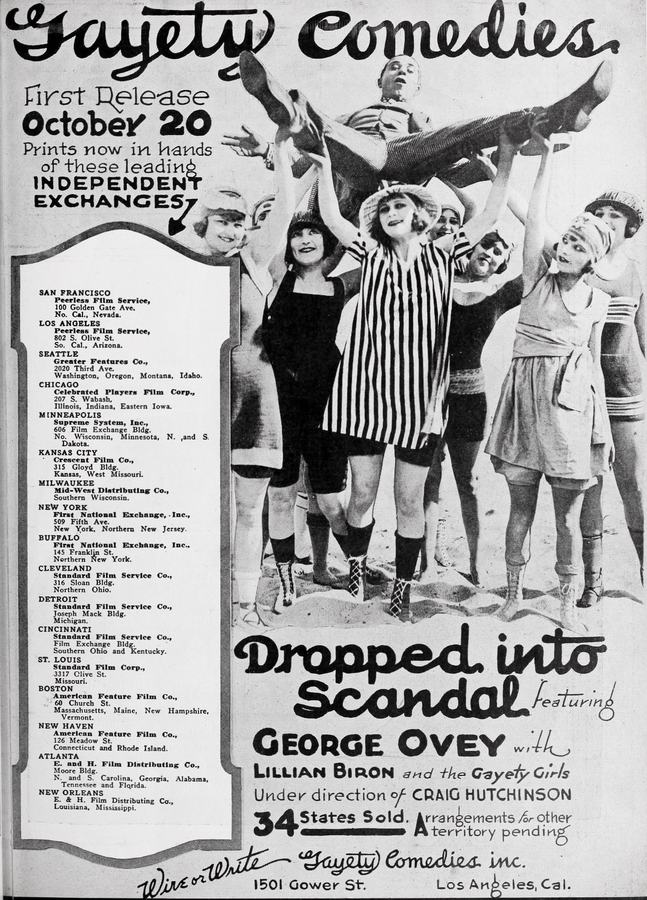
The year 1917 remains a fascinating temporal pocket in the evolution of American cinema, a period where the short-form comedy was transitioning from primitive gag-reels into sophisticated narratives of social observation. At the heart of this metamorphosis stood George Ovey, a performer whose elastic physicality and 'Funny Face' persona offered a distinct alternative to the more celebrated contemporaries of his era. In Dropped Into Scandal, Ovey collaborates with director Craig Hutchinson to craft a frantic, twenty-minute descent into the perils of perceived infidelity. This isn't merely a romp; it is a claustrophobic study of social anxiety, where the protagonist is haunted by the specter of a jealous husband's wrath.
Unlike the sweeping historical tragedies found in works like Rainha Depois de Morta Inês de Castro, Hutchinson’s film operates on a microcosmic scale. The stakes are ostensibly low—a bruised ego, a potential black eye—yet the execution imbues every frame with a sense of impending doom. The narrative engine is fueled by George’s flirtatious nature, a character flaw that serves as the catalyst for a series of spatial coincidences. When he is warned to stay away from a young bride, the film effectively sets a countdown timer. The audience knows the collision is inevitable, and much of the pleasure derived from the viewing experience lies in the inventive ways the script forces these two characters back into the same orbit.
What distinguishes Dropped Into Scandal from its peers is the precision of its blocking. In the silent era, the frame was a proscenium, and Hutchinson utilizes every inch of it. The film shares a certain kinetic DNA with Niniche, another piece that leans heavily on the absurdity of domestic entanglements. However, while some comedies of the period relied on broad, exaggerated gestures to convey plot, Ovey employs a more nuanced form of pantomime. His reactions are not just big; they are rhythmic. There is a musicality to the way he navigates a room, ducking behind furniture or freezing in a moment of sheer terror when a door handle begins to turn.
The casting of Lillian Biron provides the perfect foil to Ovey’s high-energy antics. Biron possesses a screen presence that is both ethereal and grounded, allowing her to play the 'innocent' party without appearing passive. The chemistry between the two is predicated on a shared sense of panic. As the husband looms like a dark cloud over their interactions, the film touches on themes of surveillance and the fragility of public image—themes that were surprisingly prevalent in 1917, perhaps reflecting the broader social tensions of a world at war. We see similar explorations of masculine jealousy and the 'other' in The Other Man, but where that film might lean into melodrama, Hutchinson stays firmly rooted in the comedic.
Technically, the film is a testament to the efficiency of the 'Cub' comedies. The cinematography, while functional, manages to capture the frantic pace of the chases without losing the clarity of the action. This is a crucial distinction. In many early silents, such as the more experimental Aziade, the camera can feel detached or overly static. Here, the camera feels like an active participant in George’s misfortune. It lingers just long enough on a discarded hat or a partially open door to alert the audience to the next looming disaster. This level of visual foreshadowing is a hallmark of Craig Hutchinson’s writing, which favors setup and payoff over random chaos.
"In the realm of the silent short, the greatest sin is a lack of momentum. 'Dropped Into Scandal' avoids this by treating every scene as a pressure cooker, where the steam is the protagonist's own libido and the lid is the social contract of 1917."
When comparing this work to the suspense-laden Fantomas: The Mysterious Finger Print, one notices a shared obsession with evidence. In *Fantomas*, the evidence is a clue to a crime; in *Dropped Into Scandal*, the evidence is a clue to a perceived moral transgression. George is constantly 'caught' in positions that, while innocent in context, are damning in appearance. This irony is the film's strongest asset. It subverts the audience's expectations by making the protagonist both the victim of his own reputation and the victim of pure, unadulterated bad luck.
To truly appreciate the nuances of this film, one must look at the landscape of the time. The 1910s were a decade of immense variety. We had the rural grit of The Land of Long Shadows and the supernatural intrigue of The Ghost Breaker. Amidst these heavy-hitters, the George Ovey shorts provided a necessary levity. They were the 'fast food' of cinema—designed for quick consumption but crafted with a level of skill that is often overlooked by modern critics who prioritize feature-length epics like The Mill on the Floss.
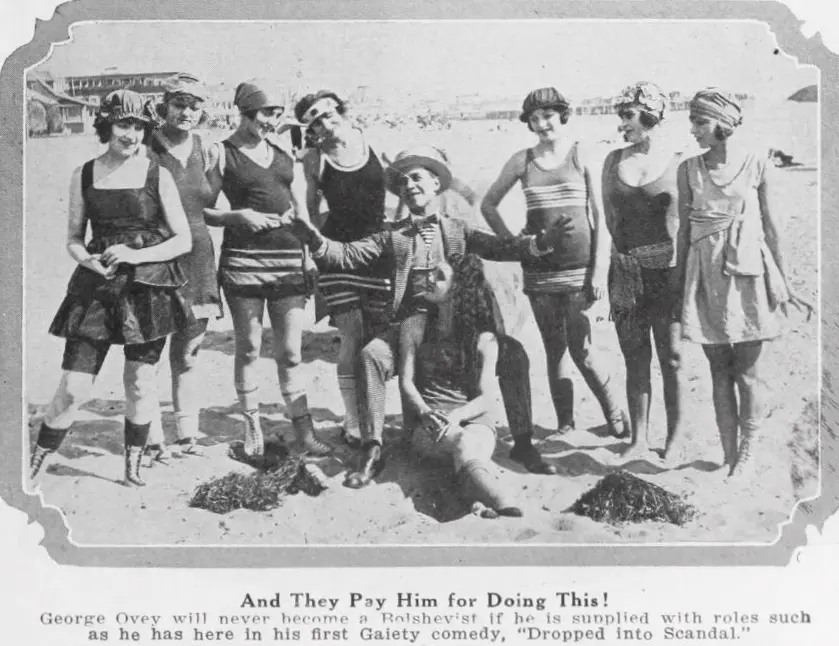
There is a fascinating parallel to be drawn between Ovey's character and the protagonist of Denny from Ireland. Both characters are outsiders navigating a world with rigid rules they don't quite understand or respect. While Denny uses his heritage as a shield, George uses his charm—and when that fails, his legs. The athleticism required for these roles is immense. One particular sequence in Dropped Into Scandal involves George navigating a series of vertical obstacles that would make a modern parkour enthusiast blush. It is this commitment to physical risk that elevates the film from a mere comedy of manners to a genuine spectacle.
Craig Hutchinson’s direction is often characterized by a relentless forward motion. He doesn't allow the audience time to question the logic of why George doesn't simply leave the house. Instead, he traps us in the logic of the nightmare. This is a technique also seen in the more dramatic The Gates of Doom, where characters are hemmed in by fate. In George’s case, fate is a jealous husband with a very loud voice and a very short fuse. The contrast between the domestic setting and the high-stakes chase creates a surreal atmosphere that is almost avant-garde in its intensity.
The film also serves as an interesting point of comparison for The Mayor of Filbert, which deals with small-town politics and reputation. In both films, the protagonist's standing in the community is under constant threat. However, where the Mayor must navigate political minefields, George must navigate literal ones. Every rug is a potential tripwire; every curtain a hiding spot that will eventually be pulled back. The relentless nature of the 'scandal' in the title is what gives the film its edge. It is not just one scandal, but a compounding series of them, each more ridiculous than the last.
Reflecting on Dropped Into Scandal over a century later, one is struck by how little human nature has changed. We are still obsessed with the 'hot take' and the quick judgment. George Ovey’s performance captures that universal fear of being misunderstood, of having our innocent actions twisted by a cynical observer. The film’s resolution—or lack thereof—reinforces the idea that once a scandal starts, it has a life of its own. It is a sentiment echoed in the melancholy of En hjemløs Fugl, though expressed here through the lens of a custard pie rather than a weeping willow.
In the broader context of 1917, where films like The Unbroken Promise or Help Wanted were exploring the virtues of labor and loyalty, Dropped Into Scandal was a subversive breath of fresh air. it didn't care about virtue; it cared about survival. It didn't want to teach a lesson; it wanted to provoke a guffaw. And yet, in its depiction of the frantic, sweating George, it captures a truth about the human condition that more 'serious' films often miss. It is the truth of the 'Modern Mother Goose' (a nod to A Modern Mother Goose)—that life is a series of nonsensical rhymes and unexpected falls, and the only sane response is to keep moving.
Ultimately, this film is a vibrant artifact of a lost world. It reminds us that comedy is not just about jokes; it's about the geometry of the human body in space. George Ovey may not have the name recognition of a Chaplin or a Keaton, but in Dropped Into Scandal, he proves he was a master of the craft. For those willing to look past the grain and the flicker, there is a sharp, cynical, and utterly hilarious heart beating inside this twenty-minute short. It is a scandal worth being dropped into.
Final Verdict: An Essential Slice of 1910s Slapstick.
IMDb 5.4
1929
Community
Log in to comment.