DbcultAccessing Vault...
Cult Review
Senior Film Conservator
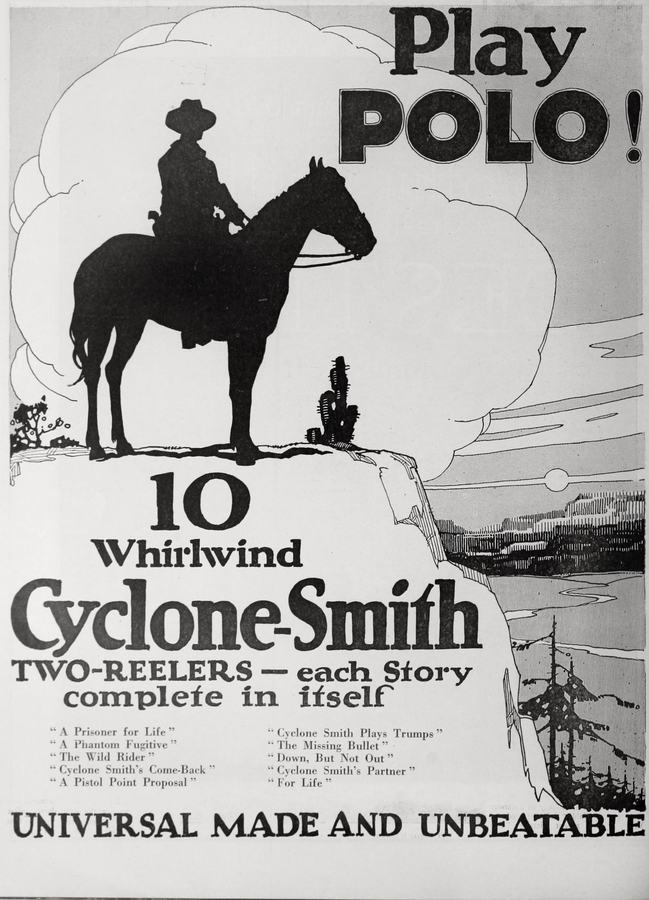
Stepping into the flickering grandeur of the silent era, one occasionally stumbles upon a cinematic artifact that, despite its age, resonates with an astonishing contemporary relevance. Such is the case with 'Down But Not Out,' a film that, even a century after its creation, speaks volumes about the human spirit's capacity for endurance. This isn't just a motion picture; it's a visceral experience, a testament to the raw power of visual storytelling, propelled by a narrative that feels both timeless and urgently immediate. The film, a masterclass in silent drama, plunges us into a world where stakes are impossibly high, and the protagonist's will is the only currency of survival.
The narrative itself, a gripping saga of grit and determination, centers on Eleanor "Ellie" Vance, brought to life with an electrifying authenticity by the inimitable Helen Gibson. Gibson, a name synonymous with fearless stunt work and a rare breed of cinematic athleticism, transcends mere performance here; she embodies Ellie with every fiber of her being. The story opens on the precipice of ruin for Ellie's beloved "Golden Spur" ranch, a sprawling testament to her family's legacy, now teetering on the brink of collapse after her father’s sudden passing. The weight of tradition, of familial expectation, rests heavily on her young shoulders, yet she refuses to buckle. This initial setup immediately establishes a profound sense of empathy, drawing the viewer into Ellie’s plight with an almost magnetic force. Her struggle isn't abstract; it's tangible, etched onto her expressive face and conveyed through her every deliberate movement.
Opposing Ellie's stoic resolve is the malevolent force of Silas Croft, a land baron whose avarice knows no bounds, portrayed with a chilling, almost serpentine menace by Charles Brinley. Brinley's performance is a study in understated villainy, his every glare and subtle gesture radiating a predatory hunger. He doesn't need theatrical monologues; his presence alone is enough to convey a profound sense of threat. Croft's design to acquire the Golden Spur is not merely a business transaction; it's a personal crusade, fueled by the whispered promise of a hidden gold lode, a secret Ellie's father had carefully guarded. This element injects a thrilling layer of mystery and urgency into the unfolding drama. Croft's chief enforcer, "Bulldog" Benson, brought to life by the imposing Eddie Polo, serves as the heavy, a blunt instrument of intimidation. Polo, with his imposing physique, provides a visceral counterpoint to Gibson’s agile grace, creating a palpable sense of physical danger that permeates the film.
What truly elevates 'Down But Not Out' beyond a conventional melodrama is its relentless pace and the ingenious deployment of action sequences. Helen Gibson, a pioneer in cinematic stunt work, is given ample opportunity to showcase her unparalleled talents. The film doesn't shy away from showcasing her extraordinary horsemanship, her daring leaps, and her unflinching courage in the face of peril. These are not mere embellishments; they are integral to Ellie's character, demonstrating her resourcefulness and fighting spirit. One particular sequence, involving a desperate race against time to decipher her father's cryptic journal while evading Croft's increasingly aggressive sabotages – including a chilling scene where her prize horses are imperiled – stands out for its masterful blend of suspense and visceral excitement. It's a sequence that could easily hold its own against any modern action film, a testament to the timeless appeal of well-executed physical storytelling.
The film's exploration of themes is particularly rich. At its core, 'Down But Not Out' is a profound meditation on resilience. Ellie Vance is the embodiment of this theme, a woman who, despite being pushed to the very brink of despair, refuses to yield. Her journey is one of self-discovery, of finding an inner strength she perhaps didn't know she possessed. It’s a powerful narrative about standing firm against injustice, about protecting one’s heritage, and about the unwavering belief in one’s own capabilities. This resonates deeply, offering a timeless message of hope and perseverance that transcends the specific period or setting of the film. It's a universal struggle, rendered with an intimate and compelling focus.
Visually, the film is a triumph of silent era craftsmanship. The cinematography captures the rugged beauty and unforgiving vastness of the American West with breathtaking scope. Sweeping vistas serve as a dramatic backdrop to Ellie's personal struggles, emphasizing the isolation and the immense challenges she faces. The use of shadow and light, a hallmark of silent film artistry, is employed with expert precision to heighten tension and underscore emotional states. Close-ups on the actors’ faces, particularly Gibson’s, are used to convey a torrent of unspoken emotions – fear, determination, sorrow, triumph – allowing the audience to forge a deep, empathetic connection without the need for dialogue. The editing, crisp and dynamic, maintains a brisk pace, ensuring that the audience remains captivated from the opening frames to the climactic resolution.
Comparing 'Down But Not Out' to other cinematic works of its time, one can discern its unique strengths. While films like The Hand of Peril also explored themes of danger and suspense, 'Down But Not Out' distinguishes itself through its grounded, intensely personal struggle and its central, incredibly active female protagonist. It lacks the broader, more intricate mystery of The Great Bradley Mystery, opting instead for a more direct, emotionally charged confrontation. Helen Gibson's portrayal of Ellie Vance evokes a similar spirit of female resilience seen in films like Common Clay, though with a distinctly more physical and action-oriented dimension. Where The Parisian Tigress might explore the complexities of urban female power, Gibson's character embodies a raw, untamed strength forged in the crucible of the frontier.
The climactic sequence, a breathtaking cross-country chase culminating in a perilous confrontation within the treacherous canyons, is a masterclass in silent film action. Here, Gibson’s legendary stunt prowess is unleashed in full force, as Ellie navigates impossible terrain, outwitting her pursuers with a combination of sheer bravery and unparalleled skill. The tension is almost unbearable, the stakes acutely felt. This isn’t just a chase; it’s a desperate dance with destiny, a final, fervent plea for survival and justice. The resolution, when it arrives, is deeply satisfying, not merely because the antagonist is defeated, but because Ellie's triumph feels earned, a testament to her unyielding will. It’s a moment that elicits genuine applause, a collective sigh of relief from an audience deeply invested in her fate.
The collaborative efforts of writers Jacques Jaccard and George Hively are evident in the taut, well-structured narrative. They crafted a story that, while adhering to many tropes of the Western and adventure genres, infused it with a palpable human core. Their understanding of silent film mechanics – how to convey complex emotions and plot points through action, visual cues, and character reactions – is exemplary. The result is a screenplay that trusts its audience to interpret, to feel, rather than to simply be told. This minimalist approach, ironically, creates a richer, more immersive experience. The film also benefits from the focused direction, which never allows the spectacle to overshadow the emotional journey of its protagonist. Every frame, every sequence, serves the larger purpose of advancing Ellie's struggle and celebrating her ultimate victory.
Indeed, 'Down But Not Out' stands as a powerful reminder of the enduring power of silent cinema. It’s a film that utilizes the unique strengths of the medium to their fullest extent, proving that narrative depth and thrilling action are not contingent upon spoken dialogue. It's a film that compels you to lean forward, to interpret every glance, every gesture, every movement. The absence of sound forces a heightened sensory engagement, making the visual language all the more potent. The raw emotion, the breathtaking stunts, the compelling performances – all combine to create a cinematic experience that transcends its historical context and remains profoundly moving today. This film, much like its protagonist, refuses to be forgotten, carving out its own indelible mark in the annals of film history.
In an era that sometimes feels oversaturated with dialogue-heavy narratives, there’s a refreshing purity to 'Down But Not Out.' It strips away the unnecessary, focusing instead on the universal language of human experience: struggle, hope, fear, and triumph. Helen Gibson's performance is a beacon, a shining example of what a truly dedicated and talented actor can achieve, even without uttering a single word. Her portrayal of Ellie Vance is a masterclass in physical acting, conveying volumes with a subtle shift of expression or a determined set of her jaw. Charles Brinley, as the antagonist, perfectly balances her intensity, crafting a villain who is both menacing and believable. Eddie Polo, while perhaps less nuanced, provides the necessary brute force that elevates the stakes of Ellie's physical confrontations.
The film's legacy, though perhaps not as widely celebrated as some of its contemporaries, is undeniable for those who delve into the rich tapestry of silent film. It serves as a vital historical document, showcasing the incredible talent of artists who pioneered the very language of cinema. It's a film that deserves rediscovery, a cinematic gem that, like a hidden lode, reveals its true value upon closer inspection. For fans of early cinema, for those who appreciate a strong female lead, or for anyone who simply enjoys a well-told story of triumph over adversity, 'Down But Not Out' is an absolute must-watch. It reminds us that sometimes, the most profound stories are told not with words, but with the raw, unfiltered emotion of human endeavor, captured forever in the mesmerizing dance of light and shadow on screen.
The sheer physicality of Helen Gibson's role also draws parallels to the burgeoning action heroines of later decades, positioning her as a proto-feminist icon in a genre often dominated by male figures. Her ability to execute her own stunts not only adds an unparalleled layer of authenticity to the action but also imbues Ellie Vance with a fierce independence that was revolutionary for its time. This isn't a damsel in distress waiting for rescue; this is a woman taking her destiny into her own hands, fighting tooth and nail for what she believes in. It's a portrayal that still inspires, demonstrating that courage and strength know no gender. The film, therefore, is not merely entertainment; it's a statement, a bold declaration of female agency that resonates powerfully even today. The echoes of her performance can be felt in the determined heroines who would follow, cementing Gibson’s place as a trailblazer.
In conclusion, or perhaps more accurately, as a final reflection, 'Down But Not Out' is far more than a period piece. It is a vibrant, pulsating piece of cinematic art that speaks to the timeless human condition. Its themes of perseverance, justice, and the fight against overwhelming odds are as relevant now as they were a century ago. The film’s masterful storytelling, combined with the magnetic performances of its cast and the brilliant direction, ensures its place as a compelling and unforgettable viewing experience. It's a powerful reminder that sometimes, being 'down' is merely a prelude to showing the world just how 'not out' you truly are. It’s a film that lingers in the mind, prompting reflection on one’s own capacity for resilience, a true triumph of the moving image.
IMDb 6.5
1934
Community
Log in to comment.