DbcultAccessing Vault...
Cult Review
Senior Film Conservator
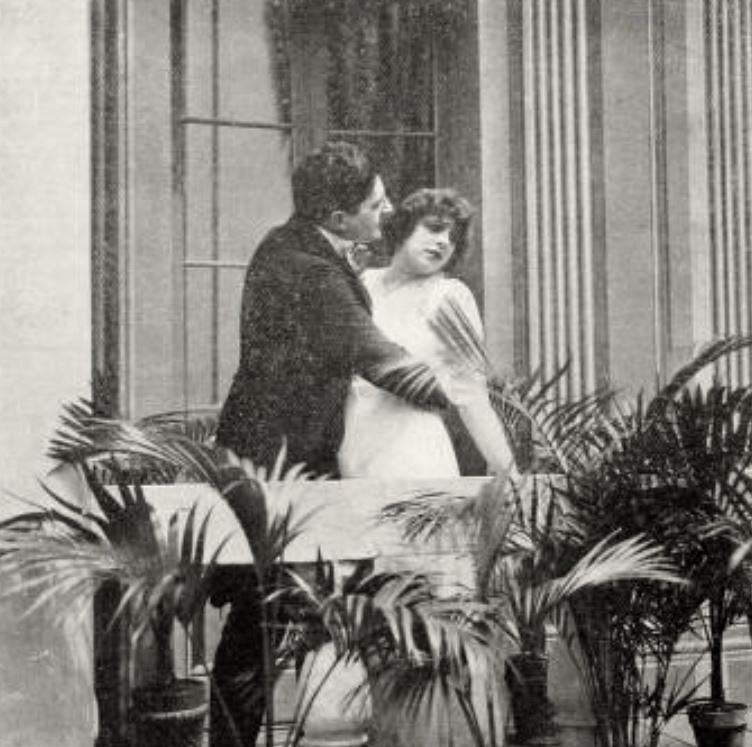
In the nascent years of the silver screen, few narratives captured the precarious nature of social navigation as poignantly as The Victory of Virtue (1915). This film, a striking artifact of the silent era, presents a tableau of moral fragility that resonates with a haunting contemporary relevance. At its center is Penelope Brantford, portrayed with a delicate, almost ethereal vulnerability by Marie Yould. Penelope is the quintessential 'tabula rasa'—a young woman whose father has shielded her from the jagged edges of the world with such fervor that she lacks the psychological armor necessary for survival in the burgeoning metropolitan landscape.
The film’s opening movements establish a pastoral sense of security, a stark contrast to the urban sophistication that will eventually threaten to consume our protagonist. Penelope is the 'idol' of her father’s heart, a phrase that suggests not just love, but a form of domestic worship that prevents the object of affection from ever truly maturing. Unlike the more proactive heroines found in contemporary works like Mistress Nell, Penelope is a creature of reaction, a willow bending to the winds of external influence.
Enter Langdon Grier, played by Cecil Owen with a chillingly effective 'wicked fascination.' Grier is not a cartoonish villain; he is something far more dangerous: a man of wealth and taste. In the lexicon of 1915 cinema, wealth was often a shorthand for moral decay, yet Grier’s characterization adds layers of complexity. He represents the 'Griers' of the world—men who utilize their social standing as a lure. His courtship of Penelope is a masterclass in psychological manipulation, utilizing the sensory overload of the capital city to bypass her nascent defenses.
The film excels in its depiction of the 'trappings' of romance. The daily delivery of flowers and the grandiosity of the Army and Navy Ball at the White House are not merely plot points; they are the tools of a predator. While a film like Playing Dead might lean into the comedic possibilities of social artifice, The Victory of Virtue treats these interactions with a somber, almost liturgical gravity. The White House ball, in particular, serves as a visual high point, capturing a sense of national prestige that Grier weaponizes to dazzle the unsophisticated Penelope.
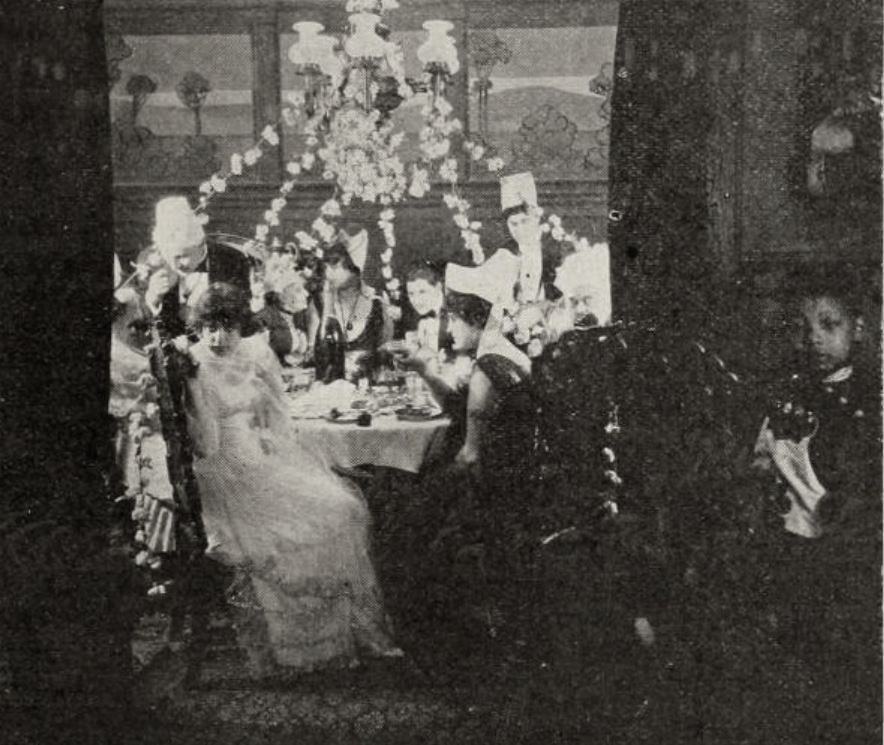
The narrative fulcrum of the film is the 'Bohemian dinner' held at Grier’s private apartments. In the context of the early 20th century, 'Bohemianism' was often coded as a space of moral laxity and intellectual subversion. For Penelope, attending this dinner without her father’s sanction is her first true act of rebellion, and it is here that the film’s visual language shifts from the bright, open spaces of the capital to the claustrophobic, 'subdued excitement' of Grier’s den. This scene is a triumph of art direction, using low-key lighting and dense composition to mirror the moral fog descending upon the characters.
The dinner is a feast of the senses—good wine, sharp wit, and the underlying current of Grier’s artful designs. It is a moment of profound tension that rivals the high-stakes drama found in At Bay. As the wine flows, the film explores the thinning veil between social grace and primal instinct. Penelope is out of her depth, a lamb invited to a feast where she is the intended main course. The 'panorama' that follows this climax is described in the original promotional materials as 'incomparably beautiful,' and indeed, the cinematography takes on a transcendental quality as it depicts the fallout of this encounter.
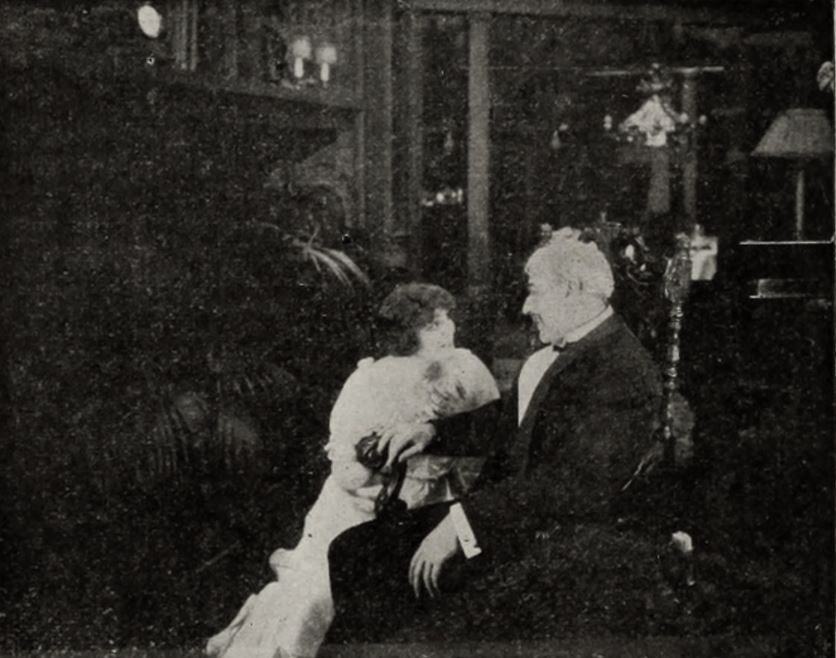
"Right wins because that is the nature of right." This central thesis of the film might seem simplistic to the modern viewer, but within the framework of 1915, it was a radical assertion of the cosmic order. The film argues that suffering is not merely a byproduct of life, but a necessary refinement process. To appreciate the 'Victory,' one must first endure the 'Pain.' This philosophical stance elevates the film above mere melodrama, aligning it more closely with the existential weight of The Mystery of Edwin Drood than with standard romantic fare.
The performances by the supporting cast, including J.H. Gilmour and Gerda Holmes, provide a sturdy foundation for this moral play. The writing by Penelope Knapp is remarkably tight, avoiding the rambling digressions common in other films of the period like Sonka zolotaya ruchka. Knapp understands that the true conflict is internal; it is the battle for Penelope’s soul, fought on the battlefield of her own impressionable heart.
When we look at The Victory of Virtue alongside its contemporaries, its unique flavor becomes even more apparent. While The Little Dutch Girl explores innocence through a lens of folk-tale simplicity, Virtue places that innocence in the crosshairs of modern predatory wealth. There is a grit here that is absent from Ihre Hoheit, and a psychological depth that surpasses the spectacle-driven Over Niagara Falls.
Even when compared to the historical grandeur of Tsar Ivan Vasilevich Groznyy, this film holds its own by focusing on the 'grandeur' of the human spirit. It shares a thematic kinship with Her Triumph and Divorced, yet it avoids the cynical pitfalls of the latter by maintaining a steadfast belief in the ultimate efficacy of goodness. It is a film that demands to be seen not just as a piece of history, but as a living, breathing exploration of the human condition.
Technically, the film is a marvel of its time. The 'series of incomparably beautiful scenes' mentioned in the plot summary is no hyperbole. The director (often uncredited in these early productions but likely working under the aegis of the era's great studios) utilizes the camera to create a sense of scale. Whether it is the sweeping vistas of the capital or the intimate, tension-filled close-ups during the Bohemian dinner, the visual storytelling is top-tier. The use of light to differentiate between the 'shielded' world of the Brantford estate and the 'wicked' world of Grier’s apartments is a precursor to the noir aesthetics that would emerge decades later.
The pacing of the film is particularly noteworthy. It begins with a leisurely, almost languid exploration of Penelope’s life, allowing the audience to become fully invested in her innocence. As Grier enters the frame, the 'tempo' increases, mirroring Penelope’s own racing heart. By the time we reach the final act, the film 'hurries on,' creating a sense of inevitable momentum that carries the viewer toward the moral resolution. This structural integrity is something often missing from early features like Old Dutch or Zigeuneren Raphael.
The Victory of Virtue serves as a potent reminder that the themes of early cinema—innocence, temptation, and redemption—are universal. While the social mores of 1915 might seem antiquated, the underlying struggle of a person trying to maintain their integrity in a world designed to erode it is timeless. The film doesn't just present a story; it presents a lesson, one as 'profound as nature itself.'
In the end, Penelope’s victory is not just over Langdon Grier, but over her own naivety. She emerges from the fire not just unscathed, but forged. This is the true 'Victory of Virtue'—not the avoidance of conflict, but the triumph through it. As the final frames fade, one is left with a sense of profound satisfaction. This is cinema at its most didactic and its most beautiful, a rare combination that makes it a must-watch for any serious student of film history. It stands tall alongside classics like The Lady of Lyons; or, Love and Pride, proving that even in the silent era, the voice of virtue was loud, clear, and utterly compelling.
Reviewer's Note: For those interested in the evolution of the predatory male figure in cinema, compare Langdon Grier's sophisticated villainy to the more overt criminality in Frank Gardiner, the King of the Road. The contrast is illuminating.
IMDb 6.6
1926
Community
Log in to comment.