DbcultAccessing Vault...
Cult Review
Senior Film Conservator
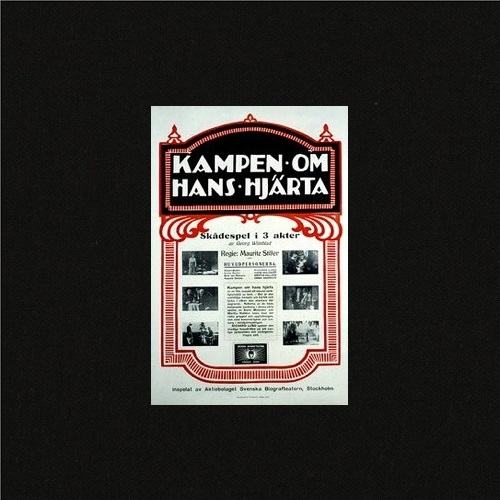
Mauritz Stiller's "Kampen om hans hjärta" (The Battle for His Heart), a cinematic gem from a bygone era, resurfaces not merely as a historical curiosity but as a profoundly resonant exploration of human desire, societal constraint, and the labyrinthine complexities of the heart. To view this film through a contemporary lens is to appreciate the enduring power of its narrative and the nuanced performances that transcend the limitations of silent cinema. It is a work that, even a century hence, speaks with remarkable clarity about the eternal struggle between passion and prudence, allure and loyalty.
The film introduces us to Anders Berg, portrayed with a compelling blend of ambition and vulnerability by Erik Stocklassa. He is an architect on the cusp of a promising career, his life seemingly mapped out with Ingrid Lindgren (Emma Dietrichs), a woman whose quiet grace and unwavering moral compass represent the very bedrock of respectable society. Their engagement is a testament to stability, mutual respect, and the promise of a future built on shared values. Dietrichs imbues Ingrid with a stoic strength, a silent suffering that is palpable even without spoken dialogue, making her character far more than a mere archetype of virtue.
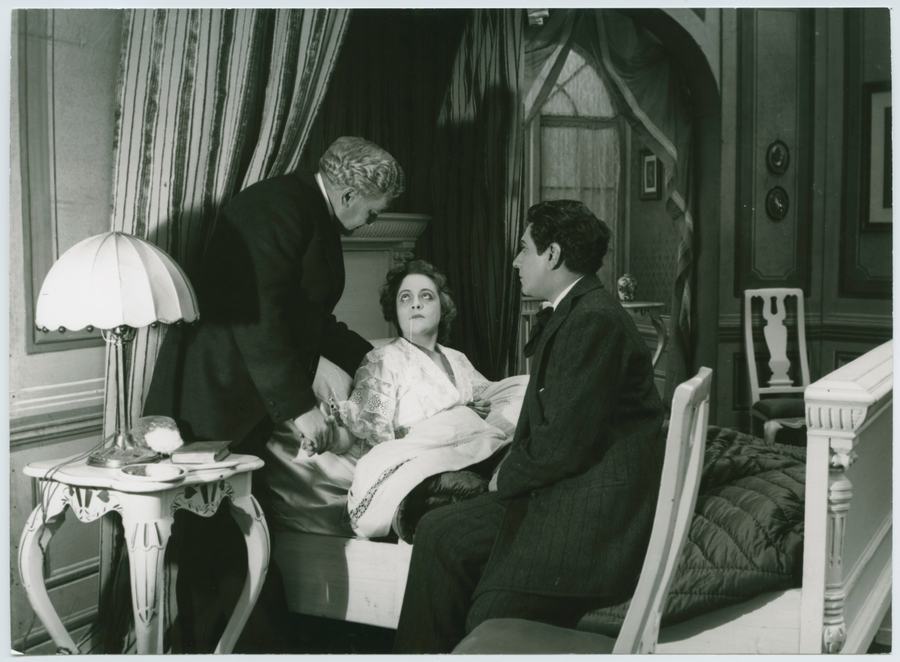
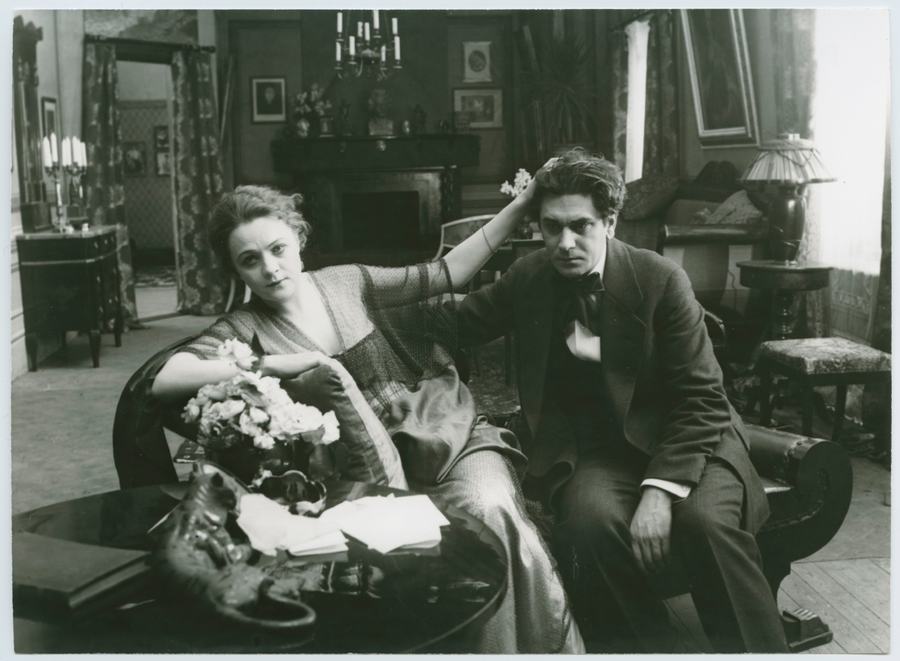
However, this carefully constructed world is shattered by the arrival of Helena Dahl, brought to vivid, electrifying life by Märta Halldén. Helena is the antithesis of Ingrid – a free spirit, a captivating dancer whose bohemian lifestyle and uninhibited passion challenge every convention Anders holds dear. Halldén's performance is a masterclass in silent allure, her every gesture, every flicker of the eye, conveying a magnetic force that is both irresistible and, ultimately, perilous. She is a whirlwind of vibrant energy, a siren whose song promises exhilarating freedom but also potential ruin. The film brilliantly uses this dichotomy to illustrate the internal "battle" within Anders, a struggle for his very soul, caught between the intoxicating pull of spontaneous desire and the enduring comfort of steadfast love.
Stiller, a director renowned for his psychological acuity, masterfully orchestrates this emotional maelstrom. The tension is not merely external; it is Anders's internal conflict that truly drives the narrative forward. We witness his agonizing oscillation, his moments of weakness and resolve, all conveyed through Stocklassa's expressive physicality and the poignant intertitles. Richard Lund and Karin Molander, as Ingrid's parents, offer a grounding presence, their concern and quiet dignity serving as a poignant backdrop to the unfolding drama, underscoring the societal pressures and expectations that weigh heavily on Anders's choices.
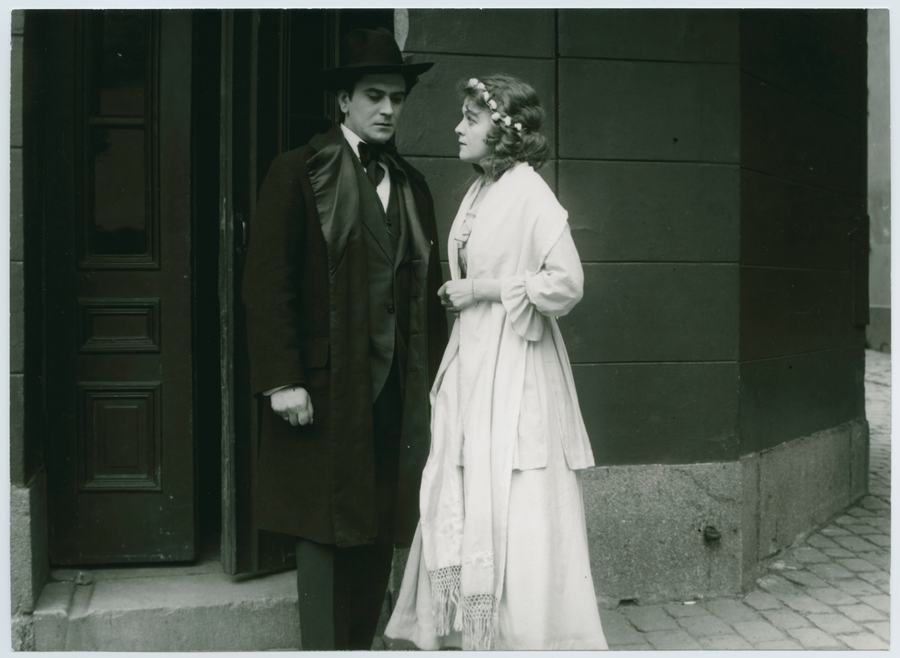
Mauritz Stiller, working alongside Georg Wiinblad on the screenplay, demonstrates a profound understanding of human nature, crafting a story that is both deeply personal and universally relatable. His direction is characterized by a sophisticated visual language that elevates the melodrama beyond mere sentimentality. Stiller employs long takes and carefully composed frames to allow emotions to simmer and unfold, drawing the audience into the characters' inner worlds. The use of close-ups, particularly in moments of intense emotionality, is judicious and impactful, allowing the audience to read the subtle nuances of despair, longing, and resolve on the actors' faces.
The film's exploration of love is far from simplistic. It delves into the different facets of affection: the comforting, enduring love represented by Ingrid; the passionate, consuming, yet potentially destructive love embodied by Helena. Anders's journey becomes a meditation on the nature of happiness and fulfillment – is it found in the exhilarating heights of fleeting passion or the steadfast depths of quiet devotion? This thematic richness is what elevates "Kampen om hans hjärta" beyond a typical romantic drama of its era, aligning it with more complex psychological studies like Dr. Rameau in its exploration of internal conflict.
Stiller's keen eye for setting and atmosphere also contributes significantly to the film's impact. The contrast between the respectable, perhaps somewhat stifling, environment of Ingrid's world and the vibrant, uninhibited spaces Helena inhabits is not merely incidental; it is integral to the narrative's symbolic power. The urban backdrop, with its burgeoning modernity, serves as a silent witness to these deeply personal struggles, reflecting the changing social mores of the time. The film captures the essence of a society grappling with tradition and emerging freedoms, a tension beautifully mirrored in Anders's personal dilemma.
The ensemble cast delivers performances that are nothing short of remarkable, especially considering the constraints of the silent medium. Emma Dietrichs, as Ingrid, exudes a quiet dignity that anchors the film. Her portrayal of a woman deeply in love, yet capable of immense self-sacrifice, is profoundly moving. Her tears are not histrionic; they are the silent, internal cries of a heart breaking, rendered with an authenticity that resonates. One cannot help but feel the weight of her unspoken sorrow and the unwavering strength of her character.
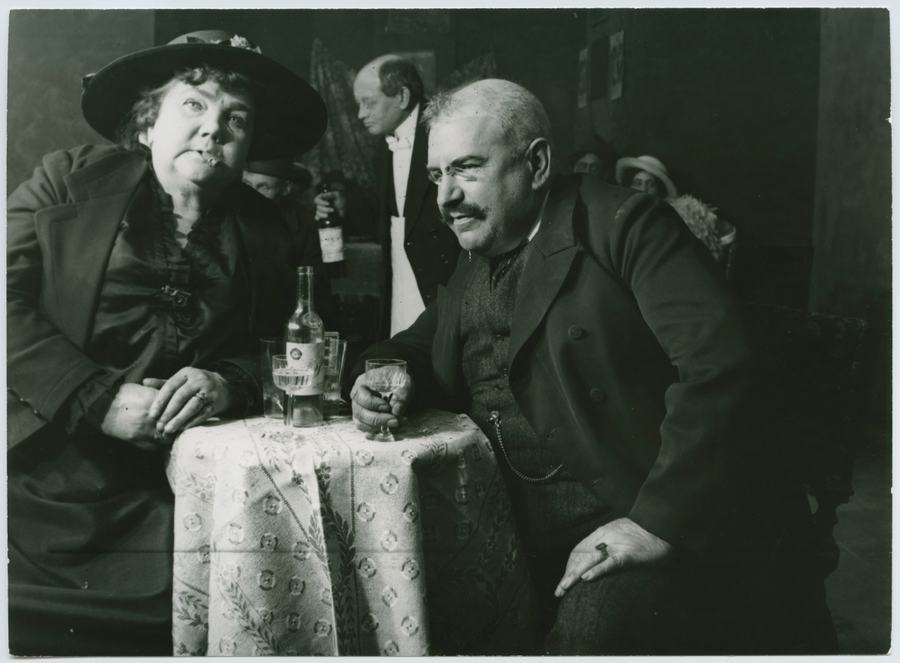
Conversely, Märta Halldén's Helena is a force of nature. She is vivacious, unpredictable, and utterly captivating. Halldén uses her entire body to convey Helena's spirited nature, her movements as a dancer translating seamlessly into her dramatic performance. Her eyes sparkle with mischievous allure one moment and flash with possessive jealousy the next. She embodies the dangerous charm that can lead one astray, a performance that recalls the intoxicating power of Svengali over Trilby in Trilby, albeit with a different dynamic. Helena is not merely a temptress; she is a complex woman driven by her own desires, albeit with little regard for the collateral damage.
At the center of this emotional maelstrom is Erik Stocklassa as Anders. His performance is a masterclass in portraying internal conflict. He physically embodies the struggle, his posture, his hesitant gestures, and his expressive face conveying a man torn between two powerful forces. Stocklassa manages to make Anders sympathetic, even in his moments of weakness, allowing the audience to understand the profound dilemma he faces. His portrayal avoids caricature, presenting a man who is flawed, human, and utterly relatable in his indecision.
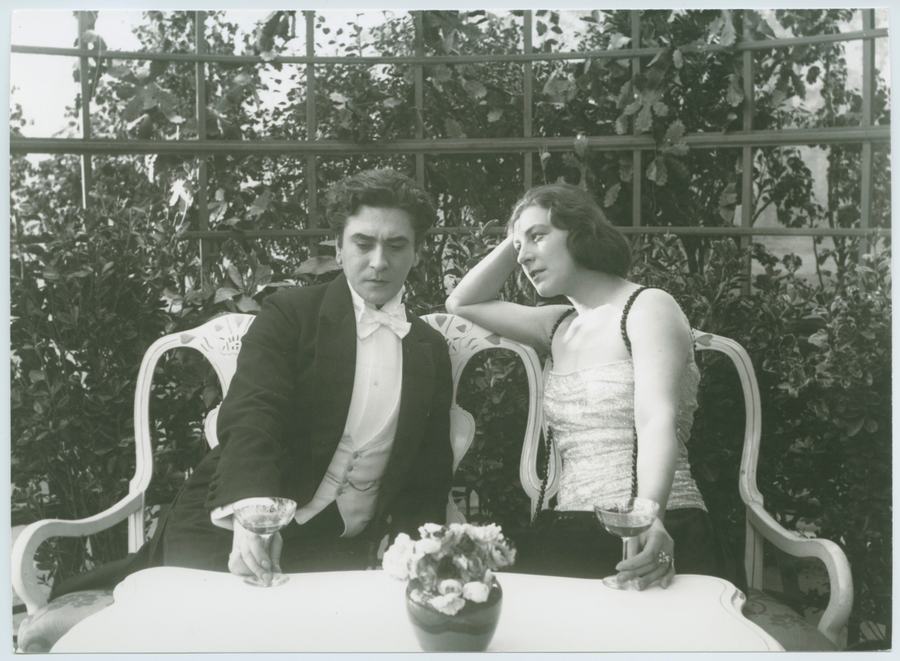
The supporting turns by Richard Lund and Karin Molander as Ingrid's parents provide essential gravitas and a sense of the societal stakes. Their performances, though more understated, contribute significantly to the film's emotional landscape, particularly in their quiet concern for their daughter's happiness and the family's honor.
The cinematography of "Kampen om hans hjärta" is a testament to the sophistication of early Swedish cinema. The lighting is often dramatic, enhancing the mood and highlighting the emotional states of the characters. Stiller and his cinematographers understood the power of light and shadow to convey psychological depth, a technique that would become a hallmark of later European cinema. The visual storytelling is so potent that one often forgets the absence of spoken dialogue, a true mark of masterful silent filmmaking. The film's aesthetic qualities are reminiscent of other Nordic dramas of the period, such as Det blaa vidunder, which similarly used visual flair to elevate emotional narratives.
Stiller's innovative use of editing also deserves commendation. The pacing is deliberate, allowing the audience to absorb the emotional weight of each scene, yet it never drags. There's a rhythm to the film that propels the narrative forward, building tension effectively towards its inevitable climax. This careful balance between contemplative moments and dramatic surges showcases a directorial maturity far ahead of its time.
In comparing "Kampen om hans hjärta" to other films of the era, one might draw parallels with the moral quandaries explored in The Other's Sins or the societal commentary found in Was She Justified? However, Stiller's film distinguishes itself through its psychological depth and the sheer artistry of its characterizations. It avoids easy moralizing, instead presenting a nuanced portrayal of human fallibility and the complex nature of choice. While it lacks the fantastical elements of something like Das Phantom der Oper, its drama is no less intense, rooted as it is in the very real conflicts of the human heart.
The climax of "Kampen om hans hjärta" is not a simple resolution but a profound statement on the consequences of choice. Anders's final decision, whatever it may be, is fraught with the weight of shattered dreams and altered destinies. Stiller ensures that the audience feels the profound impact of this choice, not just for Anders, but for Ingrid and Helena as well. The film refrains from offering simplistic answers, instead inviting viewers to ponder the true cost of passion versus the quiet strength of enduring love.
This film is a testament to the fact that compelling storytelling and profound emotional resonance are not beholden to sound or color. It stands as a powerful reminder of the artistic heights achieved during the silent era, showcasing Stiller's visionary direction and the remarkable talent of his cast. "Kampen om hans hjärta" is more than just a historical artifact; it is a timeless drama that continues to speak to the universal human experience of love, temptation, and the perpetual battle for one's own heart. It is a work that deserves to be rediscovered and celebrated, offering rich insights into the emotional landscapes of early cinema and the enduring power of a well-told story. Its legacy lies in its ability to strip away the superficial and expose the raw, beating heart of human experience, proving that the most profound battles are often fought within.

IMDb 6.3
1919
Community
Log in to comment.