DbcultAccessing Vault...
Cult Review
Senior Film Conservator
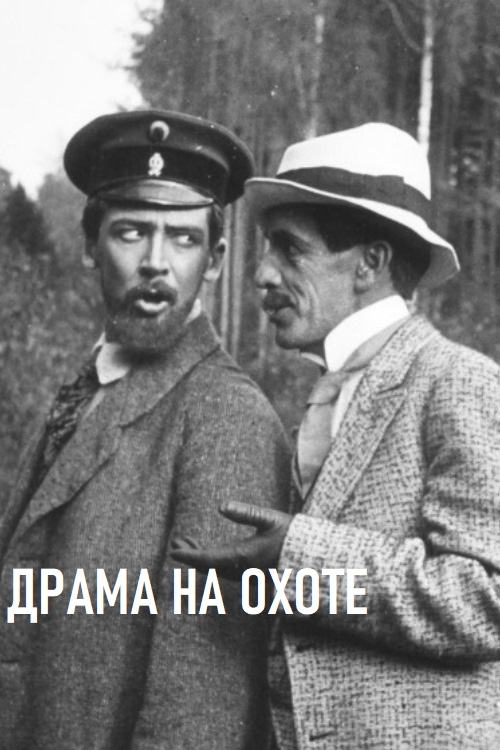
Anton Chekhov’s “The Shooting Party” stands as a formidable literary achievement, a novel that meticulously dissects the moral decay and psychological complexities of 19th-century Russian provincial society. Its cinematic adaptation, "Drama na okhote" (often translated as "Drama at the Hunt" or "A Drama on the Hunt"), directed by Cheslav Sabinsky, endeavors to translate this intricate narrative to the screen, presenting a challenging yet ultimately rewarding experience for viewers. The film, like its source material, is not merely a whodunit; it's a profound exploration of human frailty, obsession, and the insidious nature of an unreliable narrator. Sabinsky, alongside Chekhov himself as a credited writer, embarks on a journey to capture the essence of a world teetering on the precipice of moral collapse, where passion intertwines with deceit, and justice remains an elusive concept.
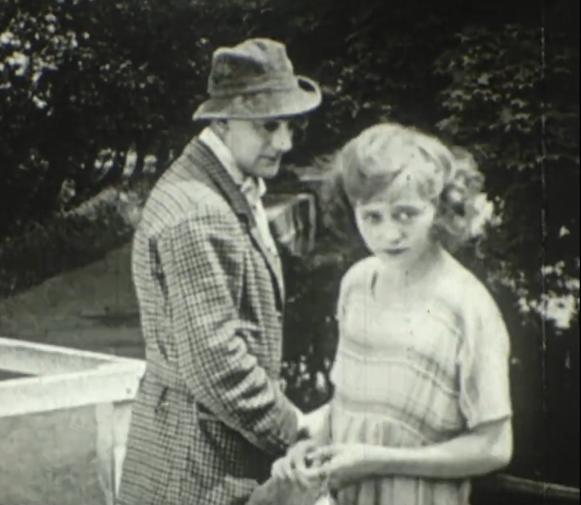
At the core of "Drama na okhote" lies the unsettling confession of Ivan Petrovich Kamyshev, portrayed with a chilling blend of charm and duplicity by Arsenii Bibikov. Kamyshev, an examining magistrate, presents his manuscript—a purported account of a sensational murder—to a publisher, setting the stage for a narrative steeped in ambiguity. The victim is Olga Skvortsova, a forester's daughter, whose captivating beauty becomes both her blessing and her curse. She marries Urbenin, the aging, alcoholic estate manager, played by Pyotr Baksheyev, a union born more of desperation and societal expectation than genuine affection. This marriage, however, merely serves as a catalyst for the escalating drama, drawing the predatory attentions of Count Karneyev, a wealthy landowner, and indeed, Kamyshev himself. The film masterfully portrays Olga's unenviable position, trapped between men who view her as little more than an object of desire or a means to an end. Natalya Belyovtseva imbues Olga with a poignant vulnerability and a flicker of defiance, making her tragic trajectory all the more heart-wrenching.
The narrative unfurls with a deliberate, almost languid pace, characteristic of Chekhov, allowing the audience to become deeply immersed in the suffocating atmosphere of the provincial estate. Each character, from the main players to the seemingly minor figures like Nikolai Panov’s portrayal of a local official, contributes to the intricate tapestry of suspicion and moral compromise. As the murder investigation commences, Kamyshev, the very individual recounting the tale, positions himself at the center of the inquiry, ostensibly seeking justice, but subtly manipulating perceptions. This narrative device, where the narrator is also a key suspect or deeply implicated party, echoes the structural brilliance seen in works like The Mystery of Edwin Drood, where ambiguity surrounding the protagonist's role fuels much of the suspense. Sabinsky’s direction ensures that this inherent tension is palpable throughout, never allowing the audience to fully trust Kamyshev's account.
The success of any Chekhov adaptation hinges significantly on the caliber of its performances, and "Drama na okhote" largely delivers. Arsenii Bibikov's Kamyshev is a tour de force, embodying the seductive yet dangerous charm of a man who believes himself above conventional morality. His performance is nuanced, revealing glimpses of genuine torment beneath a veneer of cynical detachment. He is the ultimate unreliable narrator, his every gesture and utterance imbued with a carefully constructed ambiguity that keeps the audience perpetually off balance. This portrayal is crucial, as Kamyshev is not merely an observer but a participant, his desires inextricably linked to Olga's tragic fate. One might draw parallels to the morally ambiguous protagonists found in films such as Under False Colors, where appearances and hidden motives drive the narrative.
Natalya Belyovtseva, as Olga, is equally compelling. Her portrayal captures the complex duality of a woman who is simultaneously a victim of circumstance and a figure capable of wielding her own agency, albeit within severely constrained societal boundaries. She navigates the treacherous affections of the men around her with a blend of naiveté, ambition, and ultimately, despair. Her transformation throughout the film, from a vivacious young woman to a haunted figure, is subtly rendered, making her ultimate demise all the more impactful. Pyotr Baksheyev’s Urbenin, the cuckolded and pitiable husband, adds another layer of tragic realism. His quiet suffering and eventual descent into alcoholism are portrayed with a raw authenticity that evokes genuine sympathy, even as his flaws are laid bare. The ensemble, including Nikolai Panov, works cohesively to create a believable, if morally compromised, world, each actor contributing to the dense psychological atmosphere that defines Chekhov's work.
"Drama na okhote" is steeped in themes that remain profoundly relevant. The most prominent is arguably the corrosive power of unbridled passion and desire, particularly when intertwined with social hierarchy and entitlement. The men in Olga’s life, from the Count to Kamyshev, view her through the lens of their own desires, rarely acknowledging her as a sentient being with her own aspirations. This objectification is a central critique of the patriarchal society depicted, highlighting how women's lives were often dictated by the whims and statuses of men. This theme resonates with other period dramas that critique societal constraints and the roles of women, such as Petticoats and Politics, though Chekhov's approach is often more darkly cynical.
Deceit and hypocrisy are also woven throughout the narrative. Kamyshev’s entire "confession" is a masterpiece of self-serving manipulation, a testament to how easily truth can be twisted and obscured, particularly by those in positions of authority. The film exposes the moral rot beneath the polite veneer of high society, where reputation often triumphs over genuine justice. This echoes the dark undercurrents found in psychological thrillers like Behind Closed Doors, where secrets fester and ultimately explode. The hunting motif itself, present in the original title and central to the film’s atmosphere, serves as a powerful metaphor for the predatory nature of the characters, particularly Kamyshev, who hunts not just game, but human souls and truths.
Furthermore, Chekhov's characteristic critique of the idle, decadent aristocracy and the plight of the working class is subtly yet powerfully conveyed. Urbenin's alcoholism and Olga's desperate attempts to ascend the social ladder highlight the stark realities of life outside the privileged circles. The film, through its visual storytelling, underscores the vast chasm between the opulent yet morally bankrupt lives of the landowners and the struggles of those dependent on them. This social commentary, while not overtly didactic, is deeply embedded in the characters' motivations and their ultimate fates, a hallmark of Chekhov's enduring genius.
Cheslav Sabinsky's direction is commendable for its fidelity to the mood and tone of Chekhov's novel. Adapting a work so rich in internal monologue and psychological nuance is a formidable task, but Sabinsky largely succeeds in translating these elements into visual storytelling. The cinematography, while perhaps dated by modern standards, effectively captures the melancholic beauty of the Russian countryside and the claustrophobic grandeur of the estates. The use of natural light and carefully composed shots enhances the atmospheric tension, creating a sense of impending doom that permeates the narrative. The film understands that much of Chekhov's power lies in what is left unsaid, in the unspoken desires and resentments that simmer beneath the surface.
One of the primary challenges in adapting "The Shooting Party" is maintaining the intricate balance of Kamyshev’s unreliable narration. In print, Chekhov uses the first-person perspective to brilliant effect, allowing the reader to directly experience Kamyshev’s skewed perception and self-serving justifications. Sabinsky tackles this by having Bibikov’s Kamyshev frequently address the "publisher" (and by extension, the audience), his expressions and tone conveying a sense of calculated performance rather than genuine remorse. This directorial choice helps to preserve the novel’s unique narrative structure and its central psychological puzzle. The film doesn't shy away from the moral ambiguity, instead leaning into it, forcing the audience to become active interpreters rather than passive recipients of a straightforward plot. This technique can be compared to the narrative intricacies of Face Value, where perception and truth are constantly at odds.
The pacing, while deliberate, never feels entirely slow. Instead, it allows the psychological tension to build organically, much like a slowly tightening noose. The moments of dramatic intensity are interspersed with scenes of mundane provincial life, highlighting the stark contrast between the external calm and the internal turmoil of the characters. This rhythm is essential for a Chekhovian drama, preventing it from devolving into mere melodrama and instead elevating it to a profound character study. The film's ability to maintain this delicate balance is a testament to Sabinsky's understanding of his source material.
"Drama na okhote" stands as a significant early adaptation of a major literary work, showcasing the potential of cinema to translate complex narratives. While it may not possess the stylistic flourishes of later cinematic periods, its strength lies in its faithful yet interpretive approach to Chekhov’s vision. The film serves as a valuable historical document, offering insight into early Russian filmmaking and the challenges faced by directors in bringing literary giants to the screen. Its themes of moral corruption, the destructive nature of obsession, and the elusive pursuit of truth are timeless, ensuring its continued resonance.
In an era where psychological thrillers and intricate character studies continue to captivate audiences, "Drama na okhote" offers a foundational example of such storytelling. Its exploration of human culpability and the subjective nature of reality places it alongside other compelling dramas of its time, such as The Zone of Death or even the more allegorical The Hawk in terms of exploring darker human impulses. The film, much like Chekhov’s original novel, forces us to confront uncomfortable truths about ourselves and society, questioning the narratives we construct to justify our actions. It’s a testament to the enduring power of Chekhov’s storytelling that even in a nascent cinematic form, its profound impact remains undiminished.
The film’s portrayal of the social stratification and moral ambiguities of its setting offers a stark mirror to contemporary issues, reminding us that the human condition, with its inherent flaws and complexities, remains largely unchanged across centuries. The way individuals navigate power, desire, and the consequences of their choices is a universal narrative, and "Drama na okhote" presents this with a chilling clarity. Its examination of a justice system potentially compromised by personal biases and societal pressures is also remarkably prescient. One can draw parallels to the complexities of truth-seeking in films like An Innocent Magdalene, where societal judgment often overshadows factual evidence.
Ultimately, "Drama na okhote" is more than just a period piece; it is a timeless psychological drama that delves into the darker recesses of the human heart. It challenges viewers to look beyond the surface, to question motives, and to grapple with the uncomfortable truth that sometimes, the most dangerous lies are the ones we tell ourselves. The film, through its compelling performances and thoughtful direction, ensures that Chekhov’s intricate web of passion, murder, and moral decay continues to captivate and provoke, solidifying its place as a significant adaptation in the annals of classic cinema. For those who appreciate rich character studies and narratives that demand active engagement, this cinematic rendition of Chekhov’s masterpiece is an essential viewing experience, a journey into the moral wilderness that leaves a lasting impression.
The intricate dance between the perceived innocence of characters and their underlying venality is a recurring motif that Sabinsky handles with deftness. The film’s ability to sustain an atmosphere of unease, even in moments of apparent calm, is a testament to its careful construction. The audience is constantly invited to interrogate Kamyshev’s intentions, to discern the truth from his carefully curated version of events. This active participation required from the viewer elevates the experience beyond passive consumption, transforming it into a genuine intellectual engagement with the material. Such narrative complexity is a rare treat, reminiscent of the layered storytelling in films like The Wildcat or The Mischief Maker, which also play with audience expectations and perceptions of character morality.
The film also subtly touches upon the corrosive effects of idleness and boredom on the provincial gentry, a recurring theme in Chekhov's broader oeuvre. These characters, with their abundant leisure and lack of meaningful purpose, often turn to illicit affairs, gossip, and petty cruelties to fill the void. This societal critique is not just incidental; it forms the very bedrock upon which the drama unfolds. The "shooting party" itself becomes less about the hunt for game and more about the hunt for diversion, for scandal, for anything to break the monotony of their existence. This psychological underpinning adds considerable weight to the plot, making the characters' actions understandable, if not excusable. Films like Der Erbe von 'Het Steen' or The Cup of Life, while different in plot, share a similar preoccupation with the inner lives and moral struggles of individuals grappling with their circumstances.
The nuanced portrayal of relationships—the strained marriage of Olga and Urbenin, the illicit affair with Kamyshev, the casual dalliance with the Count—reflects a society grappling with changing moral codes and the inescapable pressures of class. The film does not offer easy answers or clear-cut villains; instead, it presents a tableau of flawed individuals caught in a tragic web of their own making. This moral relativism, a hallmark of Chekhov, is meticulously preserved in Sabinsky's adaptation, ensuring that the audience is left with a lingering sense of unease and a profound appreciation for the complexities of human nature. The final revelation, when it comes, is less a moment of triumphant justice and more a stark reminder of the devastating consequences of unchecked desires and deceit, a narrative echo found in many compelling dramas of its time, including The Ninety and Nine and At the Mercy of Men, though Chekhov’s version retains a unique psychological depth.
In conclusion, "Drama na okhote" is a compelling and historically significant adaptation that manages to capture much of the psychological intensity and moral ambiguity of Chekhov’s original work. It is a film that rewards patient viewing, offering a rich tapestry of human emotions, societal critique, and a gripping mystery that transcends its period setting. For aficionados of classic literature brought to life on screen, and for those who appreciate cinema that delves deep into the human psyche, this adaptation of "The Shooting Party" remains an essential and thought-provoking experience. Its enduring power lies not just in its plot, but in its profound commentary on the eternal drama of human desire, deception, and the elusive nature of truth.
IMDb 6.6
1920
Community
Log in to comment.