DbcultAccessing Vault...
6.4/10
Senior Film Conservator
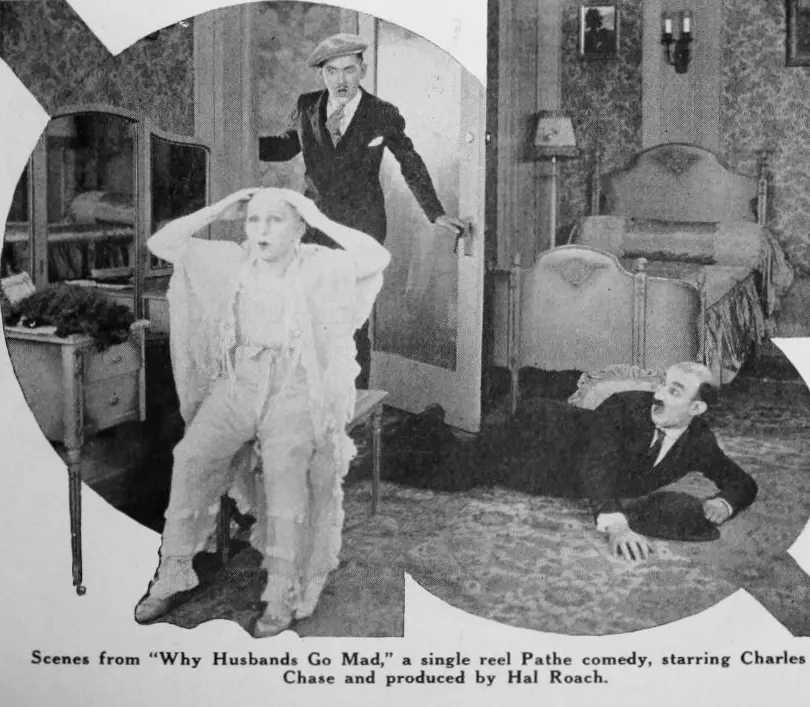
A definitive 6.4/10 rating for a film that redefined the boundaries of cult cinema. Why Husbands Go Mad remains a cornerstone of transgressive art.
The year 1924 was a watershed moment for the grammar of visual humor, and Why Husbands Go Mad stands as a testament to the sophisticated simplicity that Hal Roach’s studio perfected. While the era is often dominated by the monolithic shadows of Keaton and Chaplin, Charley Chase offered a distinct, perhaps more relatable, brand of 'nervous' comedy. He wasn't a tramp or a stone-faced stoic; he was the white-collar striver whose anxieties were as sharp as the creases in his trousers. In this short, we witness a surgical deconstruction of marital trust, fueled by the most dangerous weapon in a silent comedian's arsenal: a misunderstanding.
The film’s brilliance lies in its pacing. It begins with a gesture of affection—the purchase of a bulldog—which, through the lens of Charley’s insecurity, is transmuted into a harbinger of betrayal. This thematic obsession with the 'secret life' of women was a recurring trope in the 1920s, often explored with more gravity in films like The Price of Her Soul. However, Chase and his writers pivot away from melodrama toward a frantic, almost surrealist exploration of panic. The key becomes a MacGuffin of the highest order, a small piece of metal that unlocks a reservoir of repressed madness.
As Charley storms through the house, his movements are choreographed with a rhythmic intensity that mirrors the jazz-age energy of the decade. Unlike the sprawling landscapes seen in Canyon of the Fools, the comedy here is claustrophobic. The house is a pressure cooker. Every time Charley approaches the locked door, the camera captures his hesitation and his subsequent explosive resolve. It is a masterclass in the 'slow burn' technique that would later define the career of his co-star, the legendary James Finlayson.
One cannot discuss this film without acknowledging James Finlayson. His presence provides a perfect foil to Chase’s lithe, manic energy. Finlayson, with his trademark squint and double-take, represents the external world’s confusion at Charley’s internal collapse. While films like Sleepy Sam, the Sleuth leaned into the detective genre's tropes, *Why Husbands Go Mad* subverts the idea of the amateur detective. Charley is a terrible sleuth because he has already decided on the verdict before gathering the evidence. He is the architect of his own misery, a theme that resonates even in modern psychological thrillers, albeit with fewer pratfalls.
"The silent screen didn't need words to convey the disintegration of a man's sanity; it only needed a locked door and a misplaced sense of pride."
The supporting cast, including Beth Darlington, plays the 'straight' roles with a necessary groundedness. Darlington’s character isn't a femme fatale from a dark drama like Lucciola or the tragic figures in Tess of the D'Urbervilles; she is merely a wife trying to do something kind. The irony is thick and delicious: the more she tries to keep the secret (the dog), the more she confirms Charley's delusions. It is a classic comedy of errors that avoids the didacticism found in social message films like Damaged Goods.
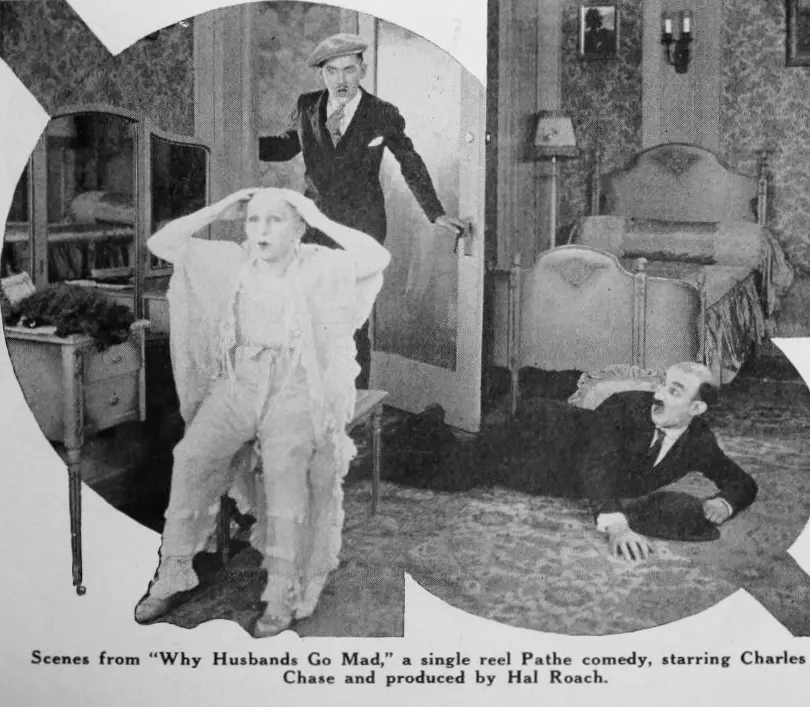
Technically, the film utilizes the restricted space of the domestic interior to create a sense of mounting hysteria. The use of depth of field, though primitive by modern standards, effectively positions Charley in the foreground, his face a contorted mask of doubt, while the 'mysterious' door looms in the background. This visual storytelling is far more effective than the heavy-handed intertitles often found in contemporary dramas like Die Verführten.
The physical comedy is not merely about falling down; it is about the *interruption* of dignity. When Charley 'storms about,' he isn't just moving; he is vibrating with a kinetic need to prove his own victimhood. This is a recurring motif in Chase’s work, where the protagonist often becomes the primary obstacle to his own happiness. We see shades of this in other high-speed comedies like Double Speed, though Chase brings a more intimate, psychological edge to the chaos.
When comparing *Why Husbands Go Mad* to other films of the era, such as the surreal Capitan Groog and Other Strange Creatures, one notices a shift from the fantastical to the mundane. While Groog deals with literal monsters, Chase deals with the monsters of the mind. The tension is comparable to the atmospheric dread in The Tiger or the maritime suspense of Havsgamar, but it is released through the safety valve of laughter rather than tragedy.
Even when compared to the Western-themed The Ranch Romeo, which also deals with romantic rivalry, Chase’s film feels more modern. It anticipates the suburban neurosis that would become a staple of American sitcoms decades later. The 'puzzle' of the plot is not unlike the intricate narrative structures in El rompecabezas de Juanillo, where the audience is invited to piece together the truth while the protagonist remains blissfully, hilariously ignorant.
The final reveal—that the 'rival' is a bulldog—is a stroke of genius that serves two purposes. First, it provides a visceral laugh as Charley’s aggressive posturing collapses into absurdity. Second, it highlights the ridiculousness of his jealousy. The bulldog, indifferent to the human drama it has caused, is the ultimate silent observer. This ending is far more satisfying than the forced resolutions of many early shorts, such as the somewhat disjointed Thrills or the peril-focused Flirting with Terror.
In the final analysis, Why Husbands Go Mad is a seminal work that showcases Charley Chase at the height of his powers. It is a film that understands that the funniest things in life are often the things we take most seriously. It doesn't just mock Charley; it mocks the very institution of the 'suspicious husband,' turning a potentially dark domestic drama into a light, effervescent piece of celluloid history. For anyone interested in the evolution of the sitcom or the mechanics of physical comedy, this film is not just a curiosity; it is essential viewing. It proves that while styles of dress and social mores may change, the ability of a human being to drive themselves absolutely insane over nothing is truly timeless.
© 1924 Hal Roach Studios | Reviewed by The Cinephile's Journal
IMDb 6.8
1932
Community
Log in to comment.