DbcultAccessing Vault...
Cult Review
Senior Film Conservator
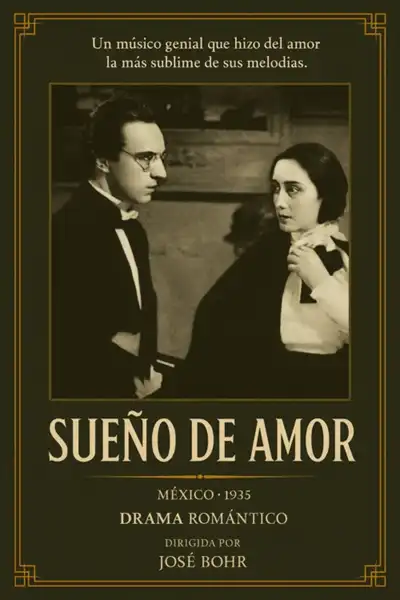
Alright, so, 'Dreams of Love.' Is it worth digging up today? 🤔 Well, if you’re someone who genuinely enjoys films from a certain era, say, when grand pianos were practically supporting characters and every glance held the weight of a thousand unspoken words, then yes. This is for the *romantics* who appreciate a slower pace and aren’t afraid of a little earnest cheese. For everyone else, especially if you need your films snappy and ironic, you’ll probably find yourself reaching for the fast-forward button.
The film centers on Manuel Buendía, a pianist whose life seems to be one long, dramatic concerto. His performances, especially by the actual pianist Claudio Arrau, are **the heart of the movie**. You can really tell Arrau *feels* the music; it's more than just playing notes.
Lorena Martínez plays a pivotal role, her character often caught in the crosscurrents of Buendía’s turbulent artistic soul. There’s a scene early on where she just *looks* at him from across a crowded room. It lasts a good ten seconds, maybe more. You can almost feel the movie trying to convince you this moment matters, and for a split second, it really does.
Then there are these moments, particularly with Consuelo Frank, where the dialogue feels… **thick**. Like, every line is meant to be etched into stone. It’s not bad acting, not really. It’s just a style that modern ears might find a bit much. You get a lot of pronouncements about fate and destiny. 🙄
The pacing is definitely deliberate. There are long, lingering shots on faces, on shadows, on a piano keyboard. It gives you time to really soak things in, or, if you're not in the mood, to check your phone. But honestly, when the music swells, especially during one of Arrau’s performances, it’s easy to get swept up. It's a reminder of how powerful music can be in film.
I found myself wondering about the choices in set design. Some rooms look incredibly opulent, almost like a stage play, with heavy curtains and ornate furniture. Others feel a little sparse, like they ran out of budget for the background extras. The crowd scenes, for example, have this oddly empty feeling, like half the extras wandered off for coffee.
One specific reaction shot from Josefina Escobedo's character lingers so long it almost becomes funny. She’s reacting to some bad news, and the camera just *holds* on her face. You can see her cycling through about three different levels of despair. It's a bit much, but also, kind of endearing in its earnestness.
The film touches on themes of artistic struggle and the sacrifices love demands. It’s not exactly subtle about it. Buendía’s passion for music often collides with his personal life, creating these big, dramatic explosions. You know, the kind where someone dramatically leaves a room and slams a door, but then *pauses* just outside the door, hoping to be called back. Classic stuff.
Sometimes, the emotion feels *so* manufactured, you almost roll your eyes. But then, there’s a quiet moment, maybe a close-up of Manuel Buendía’s hands on the piano, and suddenly, you're back in. It's a strange balance the film strikes.
It’s not a film that will change your life, or even redefine the genre. But it’s a peek into a different cinematic language, a different way of telling a love story. It’s **earnest**, often **over-the-top**, and sometimes, genuinely **moving**. If you go in expecting a quiet, contemplative piece, you might be surprised by how much *feeling* is poured into every scene. It's a film that definitely has its heart on its sleeve, for better or worse. 💖

IMDb —
1916
Community
Log in to comment.