DbcultAccessing Vault...
Cult Review
Senior Film Conservator
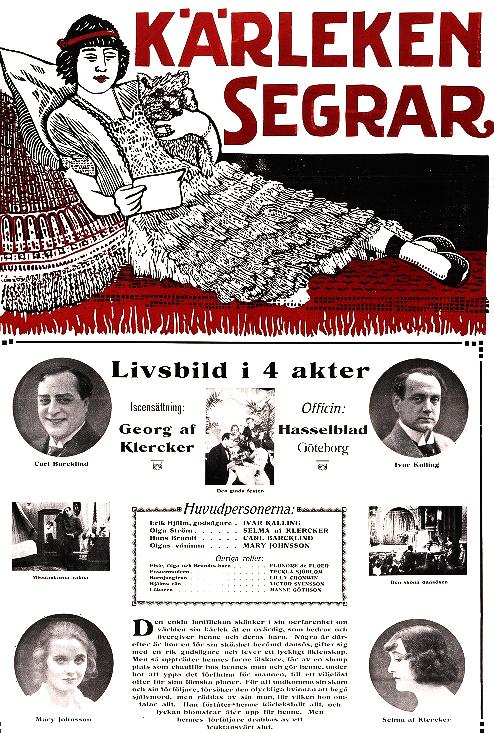
There's a particular kind of melancholy that clings to silent films, a spectral quality that allows their narratives to resonate across the decades with an almost ghostly intensity. Georg af Klercker's 1916 Swedish drama, Kärleken segrar – 'Love Triumphs' – is precisely one such cinematic artifact. Its very title, imbued with a bitter irony given the harrowing journey of its protagonist, Olga Ström, serves as a testament to the complex, often devastating, interplay of human emotion and societal expectation that defined the early 20th century. To merely describe its plot as a simple tale of seduction and abandonment would be to strip it of its profound emotional architecture and its surprisingly nuanced portrayal of a woman grappling with the consequences of a love that proved anything but triumphant.
At its core, Kärleken segrar plunges us into the world of Olga Ström, a farm girl whose existence, we can surmise, is one of relative simplicity and perhaps a certain pastoral innocence. This is a world where virtue and reputation hold immense weight, especially for a young woman. Her encounter with Hans Brandt, played by the often brooding Ivar Kalling, is the catalyst that sets her world ablaze. Brandt, likely a man of higher social standing or urban sophistication, represents a departure from her familiar rural landscape. His charm, his promises, his very presence, must have seemed like a thrilling, perhaps dangerous, new horizon. The film, even through its silent medium, manages to convey the intoxicating allure Brandt possesses, an allure that, tragically, proves to be merely a facade for a far more self-serving agenda.
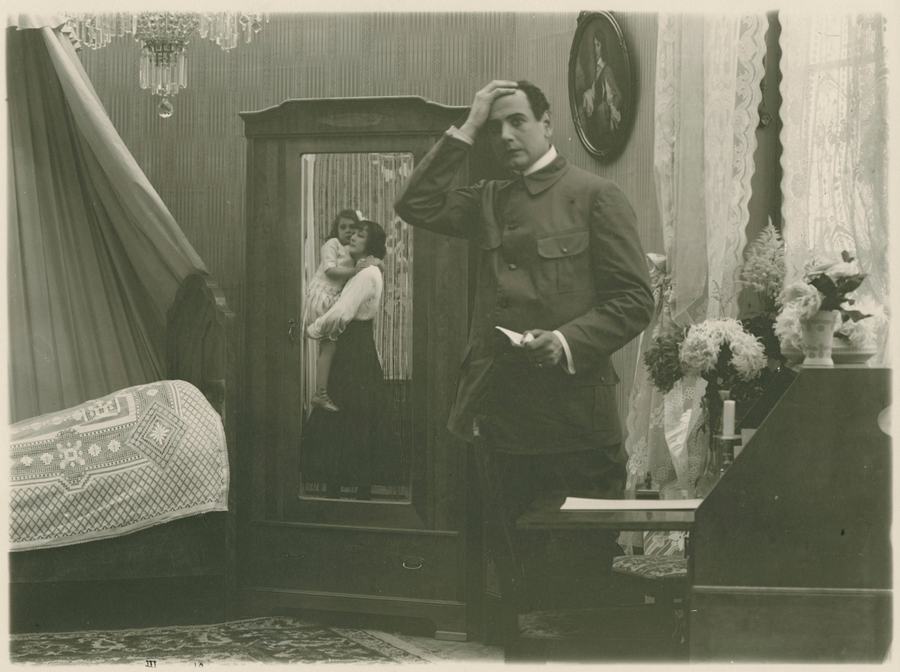
What unfolds is a classic, yet no less devastating, narrative of betrayal. Olga, portrayed with heartbreaking vulnerability and nascent strength by Anna Löfström, falls deeply for Brandt. Their intimacy, a moment of profound connection, results in a pregnancy – a development that, for Olga, solidifies their bond, transforming a romantic entanglement into a sacred, life-altering commitment. For Brandt, however, it is merely an inconvenience, a tie he is unwilling to honor. His subsequent abandonment of Olga is not just a personal slight; it is a societal death sentence for her. In an era where a woman's honor was inextricably linked to her marital status and the legitimacy of her children, Olga's plight is one of profound isolation and shame. The film, through its stark visuals and Löfström's expressive performance, forces us to confront the brutal realities faced by women in similar circumstances, a theme also explored with stark realism in films like A Child of the Paris Streets or the more melodramatic Camille, albeit with different resolutions.
Georg af Klercker, a prolific and often underrated director of the Swedish silent era, demonstrates a keen understanding of human psychology and social dynamics. His direction is not overtly theatrical, but rather relies on a subtle build-up of tension and emotional weight. He allows the camera to linger on the faces of his actors, particularly Löfström's, capturing the subtle shifts from hopeful anticipation to crushing despair. This measured approach ensures that the melodrama never descends into mere histrionics, but maintains a grounded, visceral impact. Af Klercker's filmography, which includes a remarkable output in a relatively short period, often grappled with themes of social injustice and personal struggle, making Kärleken segrar a quintessential example of his directorial vision.
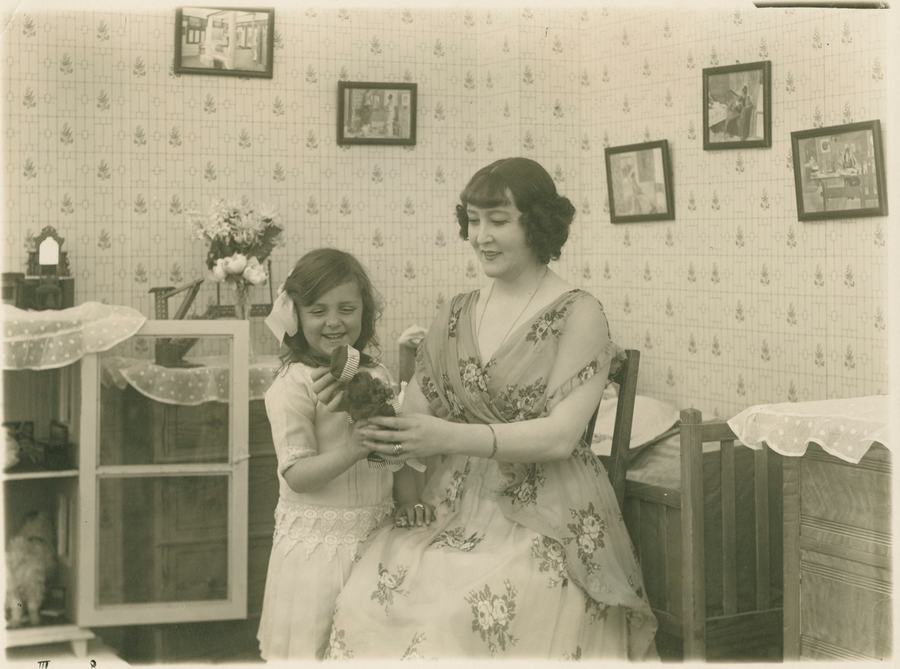
Anna Löfström's portrayal of Olga Ström is undoubtedly the film's beating heart. Without the benefit of spoken dialogue, her ability to convey Olga's journey – from innocent farm girl to heartbroken, abandoned mother – is nothing short of masterful. Her eyes, her posture, the subtle gestures of her hands; every movement is imbued with meaning, communicating volumes of unspoken anguish and burgeoning resilience. One can almost feel the weight of societal judgment pressing down upon her, her shame palpable, yet never entirely overwhelming her spirit. It’s a performance that stands shoulder to shoulder with the compelling female leads in other contemporary dramas of societal constraint, such as those found in A Woman's Way or even the more overtly dramatic The World's Great Snare.
Ivar Kalling as Hans Brandt, while not necessarily eliciting sympathy, delivers a convincing performance of a man consumed by his own self-interest. His charm is superficial, his remorse, if any, fleeting. The contrast between his carefree demeanor and Olga's deepening despair is stark, a visual representation of the gendered double standards of the era. The supporting cast, including Tekla Sjöblom, Carl Barcklind, Artur Rolén, Manne Göthson, Siri Lundin, Lilly Cronwin, Mary Johnson, Selma Wiklund af Klercker, and Eleonor de Floer, contribute to the film's rich tapestry, each adding a layer to the social fabric against which Olga's drama unfolds. Their reactions, whether of scorn, pity, or indifference, further amplify the isolating experience of the fallen woman.
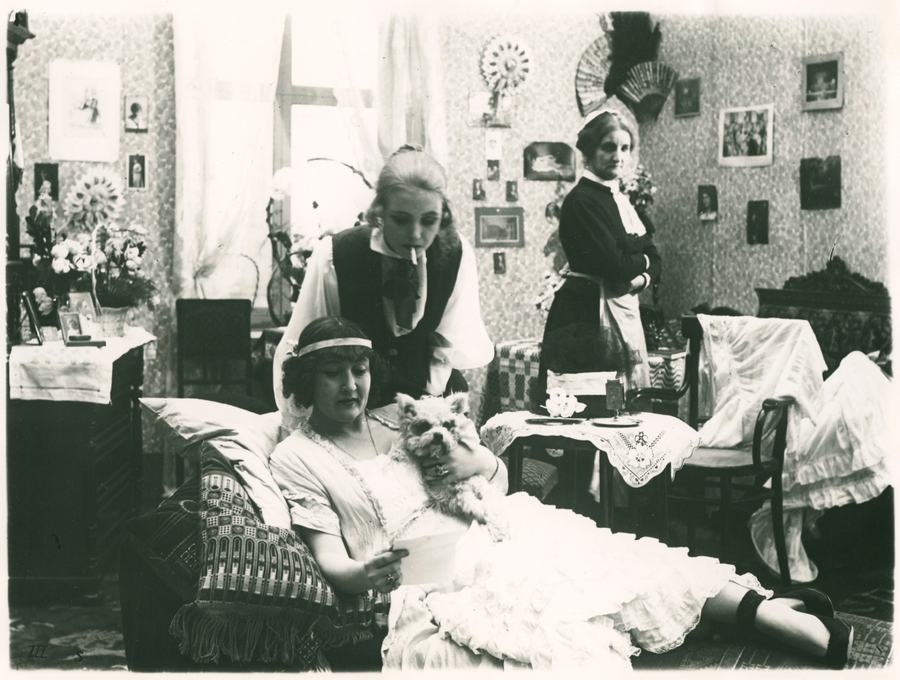
While Kärleken segrar could easily be dismissed as a mere melodrama, it possesses a surprising depth in its exploration of themes that remain relevant today. It scrutinizes the destructive power of societal hypocrisy, the vulnerability of women in patriarchal structures, and the enduring strength of the human spirit in the face of adversity. The title itself, 'Love Triumphs,' becomes a thematic question rather than a statement. Does love truly triumph when it leaves such devastation in its wake? Or does the triumph lie in Olga's eventual ability to navigate her circumstances, to find a path forward despite the profound injustice she has suffered? This ambiguity is one of the film's most compelling qualities, forcing the viewer to grapple with its implications long after the final frame.
The film also provides a fascinating glimpse into Swedish society during the nascent years of its golden age of cinema. Georg af Klercker, often overshadowed by contemporaries like Victor Sjöström and Mauritz Stiller (whose Vingarne offers a different but equally compelling look at complex human relationships), was a director who understood the power of visual storytelling to comment on social conditions. His ability to evoke empathy for his characters, even those in dire straits, is a hallmark of his craft. He crafts a world that feels lived-in, even if only glimpsed through the lens of a silent camera, making Olga's suffering feel acutely real.
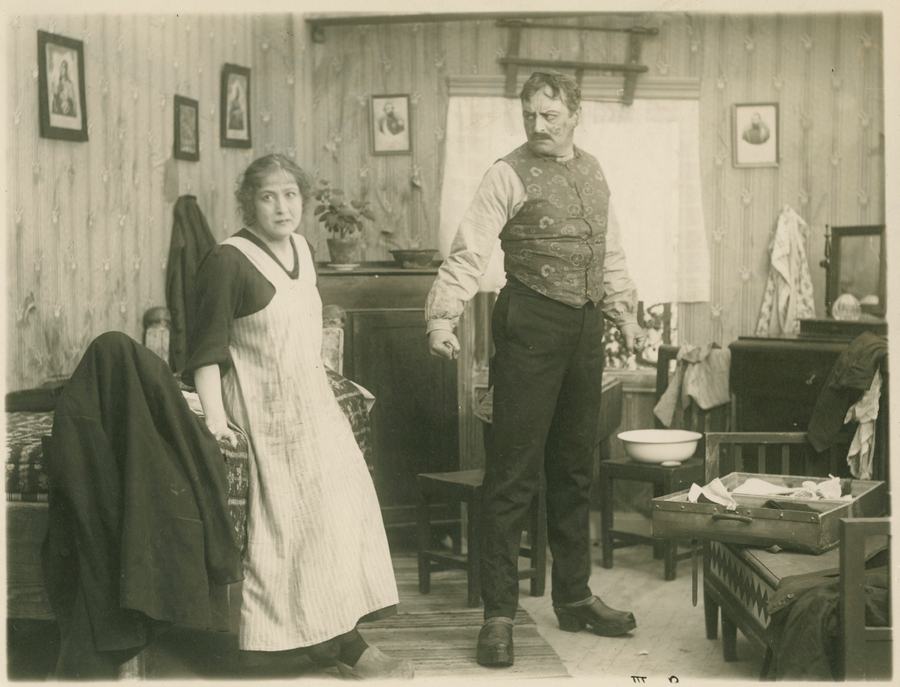
Placing Kärleken segrar within the broader context of silent cinema reveals its quiet significance. It belongs to a tradition of films that sought to depict the struggles of the common person, often with a focus on moral dilemmas and societal pressures. While it might not possess the grand scale or revolutionary techniques of some of its more famous peers, its intimate focus and raw emotional honesty make it a powerful viewing experience. It echoes the sentiment found in other films that explore personal integrity amidst challenging circumstances, such as His Vindication or even the more lighthearted but still morally charged The Perfect '36'.
The visual language of the film, while adhering to the conventions of its time, is effective in conveying the narrative. The use of intertitles is sparing but impactful, allowing the performances and the visual storytelling to carry the bulk of the emotional weight. Af Klercker’s choice of settings, moving from the idyllic countryside to potentially more unforgiving urban environments (or at least less sympathetic social circles), subtly underscores Olga’s increasing isolation and vulnerability. The film does not shy away from the harsh realities of her situation, yet it also hints at an underlying current of human resilience, suggesting that even in the darkest moments, there is a possibility for a different kind of triumph – one of survival, dignity, and perhaps, eventually, self-acceptance.
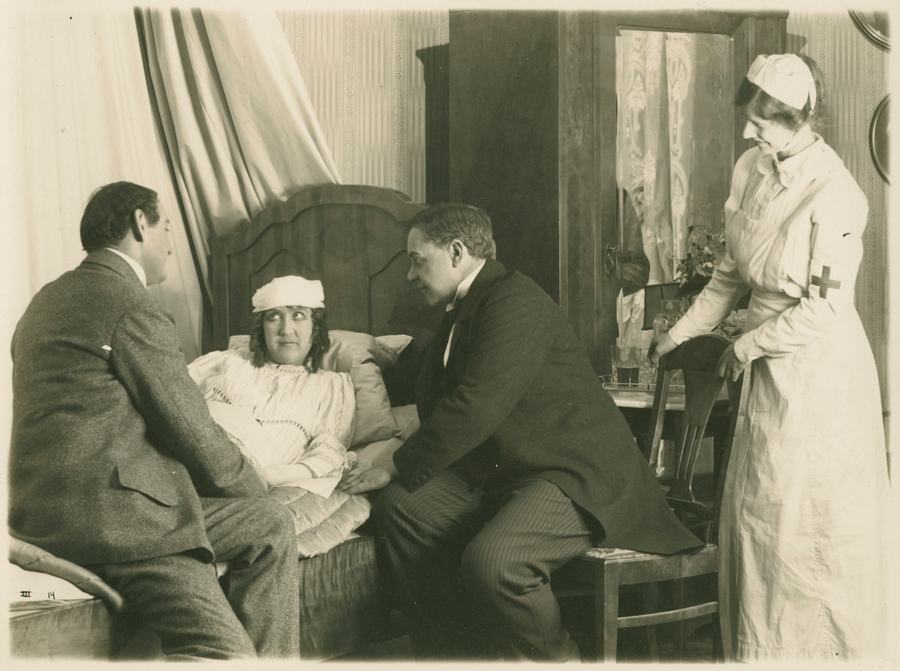
What ultimately resonates about Kärleken segrar is its profound humanity. It's a film that asks difficult questions about accountability, compassion, and the true cost of societal judgment. It's a reminder that 'love' can be a double-edged sword, capable of both profound joy and unimaginable pain. But perhaps, in the end, the title isn't entirely ironic. Perhaps 'love triumphs' not in the conventional sense of a happy ending, but in Olga's capacity to endure, to protect her child, and to find a way to live beyond the shadow of her betrayal. Her journey, though fraught with sorrow, becomes a testament to the indomitable spirit, a quiet victory in the face of overwhelming odds. It's a film that deserves to be rediscovered, studied, and appreciated for its timeless portrayal of a woman's struggle against a world that often refuses to forgive, and for the understated brilliance of Georg af Klercker and his dedicated cast.
In an era brimming with cinematic innovation, Kärleken segrar stands as a quiet, powerful testament to the enduring power of narrative. It's not a spectacle in the vein of some contemporaneous epics, nor does it strive for the avant-garde experimentation of others. Instead, it offers a deeply personal, emotionally charged story, meticulously crafted to draw the viewer into Olga's world. The performances, particularly Anna Löfström's, transcend the limitations of the silent medium, communicating a raw, unfiltered humanity that is both captivating and heartbreaking. This film, a valuable piece of Swedish cinematic heritage, continues to speak to the universal themes of love, loss, and resilience, proving that some stories, even without a single spoken word, truly do conquer the test of time.

IMDb 5.6
1926
Community
Log in to comment.