DbcultAccessing Vault...
Cult Review
Senior Film Conservator
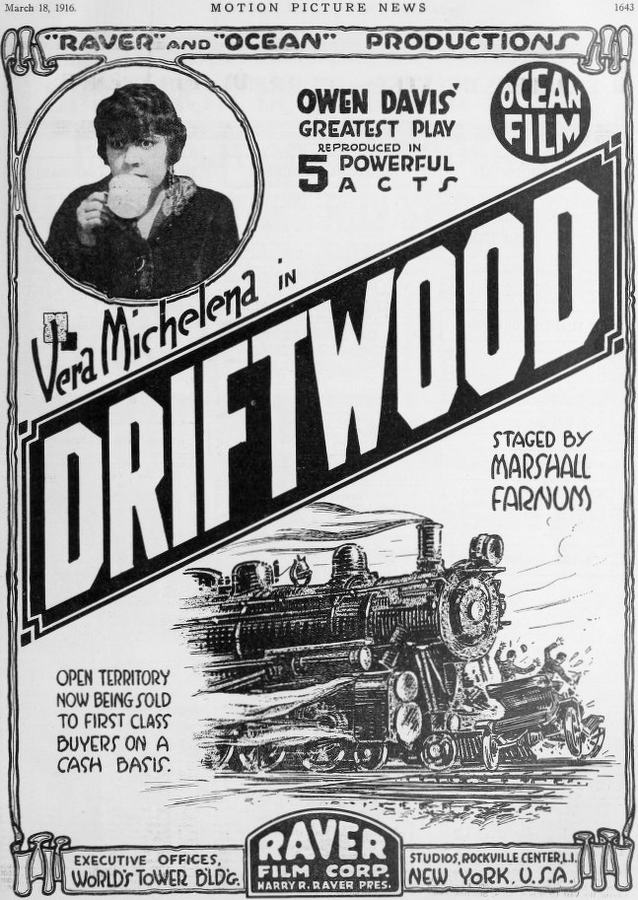
In the annals of early cinematic melodrama, few narratives weave a tapestry of such intricate emotional distress and moral quandaries as Driftwood. This silent-era gem, with its labyrinthine plot of thwarted love, mistaken identities, and the crushing weight of societal expectation, stands as a testament to the era's fascination with human frailty and the dramatic machinations of fate. As a critic, one is compelled to dissect the very threads of its narrative, revealing not merely a plot summary, but a profound exploration of the human condition under duress.
At the heart of this sprawling drama is Helen Warner, a figure destined for a life far removed from simple pastoral bliss. Her clandestine romance with Lawrence Grove, scion of a formidable contracting dynasty, sets in motion a chain of events that will irrevocably alter her trajectory. Their secret journey to the city, intended to culminate in a quiet marital union, is steeped in an almost palpable sense of foreboding. Lawrence, in a move that proves tragically ill-timed, attempts to placate his imperious father, a man clearly unswayed by the prospect of his son's union with Helen. This pivotal confrontation, unfolding within the confines of a speeding automobile, rapidly escalates into a calamitous accident. The image of the stalled racer, caught defenseless on a railroad track, struck by an oncoming train, is a powerful metaphor for the sudden, arbitrary forces that can derail even the most carefully laid plans. Both Grove senior and junior are left grievously injured, their lives hanging precariously in the balance, a cruel twist of fate that leaves Helen utterly isolated and vulnerable.
Helen’s subsequent ordeal is painted with strokes of profound despair. Left waiting in the desolate anonymity of a hotel room, hours stretching into an agonizing night, her hope transmutes into a bitter certainty: Lawrence has forsaken her. This profound sense of abandonment, coupled with the crushing shame of a proposed elopement gone awry, compels her to make a drastic choice. Unable to face the judgment of her rural community, she sheds her former identity, adopting an assumed name and immersing herself in the relentless churn of urban employment. Her journey through a succession of menial positions, each a step further away from her former self, echoes the struggles seen in films like The Eternal Grind, where women are often forced into difficult circumstances by societal pressures and economic necessity. Meanwhile, Lawrence, emerging from two days of unconsciousness, embarks on a desperate, yet ultimately fruitless, search for his lost fiancée. His grief, a palpable burden, eventually drives him to seek solace and purpose in the remote landscapes of Canada, a two-year exile that only deepens the chasm between them. The narrative expertly crafts a scenario where miscommunication, rather than malice, becomes the primary antagonist, a theme often explored in the melodramas of the era.
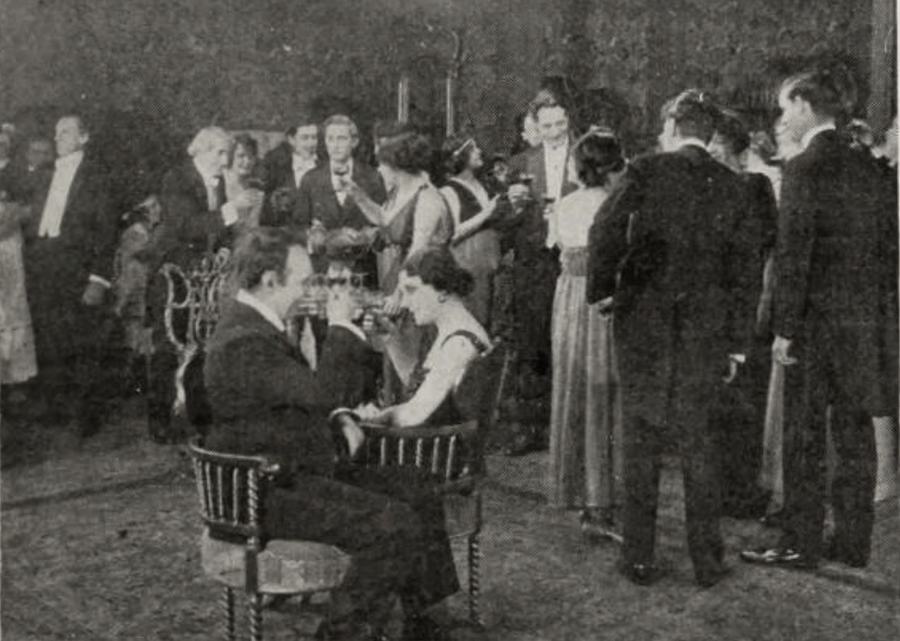
Helen's path eventually leads her to the office of James Wayne, a distinguished city lawyer, where she secures a position as his stenographer. This new chapter, however, is far from a fresh start. The death of her mother and the subsequent relocation of her sister, Alice, to the city with their aunt, lay the groundwork for a devastating convergence of lives. Alice, innocent and unburdened by Helen’s past, meets and marries Wayne, unknowingly drawing her sister into a dangerously complicated web. This twist is the dramatic core of Driftwood, a stroke of narrative genius that elevates the personal tragedy to a Shakespearean level of irony and impending doom. Wayne, a man of apparent respectability, soon succumbs to Helen’s quiet beauty, proposing an arrangement that would cast her not as his wife, but as his "companion and pal" – a euphemism for a morally ambiguous relationship that Helen, in a moment of profound weakness and vulnerability, ultimately accepts. Her struggle here mirrors the moral dilemmas faced by characters in films like The Scarlet Woman, grappling with societal judgment and personal desire.
Two years dissipate, and Lawrence Grove returns from his Canadian sojourn, his heart still heavy with the memory of Helen. In a cruel twist of fate, he seeks the legal expertise of none other than James Wayne, his father's trusted counsel, to aid in his relentless quest to locate Helen Warner. The scene where Lawrence, detailing his separation and presenting Helen’s photograph, inadvertently reveals the object of his undying devotion to Wayne, is pregnant with dramatic tension. The lawyer’s dawning realization – that the woman he has wronged, the woman who serves as his mistress, is the very Helen Warner sought by his client – is a moment of chilling recognition. Wayne, a master manipulator, quickly contrives an excuse, instructing Lawrence to dictate the description of the missing woman to his stenographer. This forced encounter, orchestrated by the very man who holds Helen captive in a moral quagmire, is a masterclass in dramatic irony. Helen and Lawrence, reunited under such fraught circumstances, confront a past that is both cherished and irrevocably tainted. Lawrence, his love undimmed, implores her to marry him immediately. But Helen, burdened by her perceived unworthiness and the suffocating secret of her entanglement with Wayne, refuses, confessing that another man has entered her life. Lawrence’s subsequent explosion of rage, his vow to kill the unknown interloper, underscores the raw, passionate intensity typical of early cinematic heroes, a fury reminiscent of the dramatic pronouncements in The Juggernaut.
The narrative hurtles towards its electrifying climax. Helen, retreating from Wayne's employ, finds temporary refuge with his managing clerk, Simpson. In a final, desperate act of communication, she writes to Alice, imploring her sister to take her away, unaware that Alice has already returned to the city. This letter, intercepted and read to Alice in New York, sets in motion the final, agonizing confrontation. Alice arrives at Simpson's home, simultaneously with Wayne, who, with an audacious display of self-preservation, attempts to persuade Helen to marry Lawrence. It is in this crucible of converging desires and deceit that Helen learns the devastating truth: James Wayne, her illicit lover, is her sister's husband. This revelation shatters her world, transforming her dilemma from personal shame to a devastating betrayal of family. Alice, now privy to some, though perhaps not all, of the truth, escorts Helen home, where Lawrence awaits, his pleas for marriage renewed.
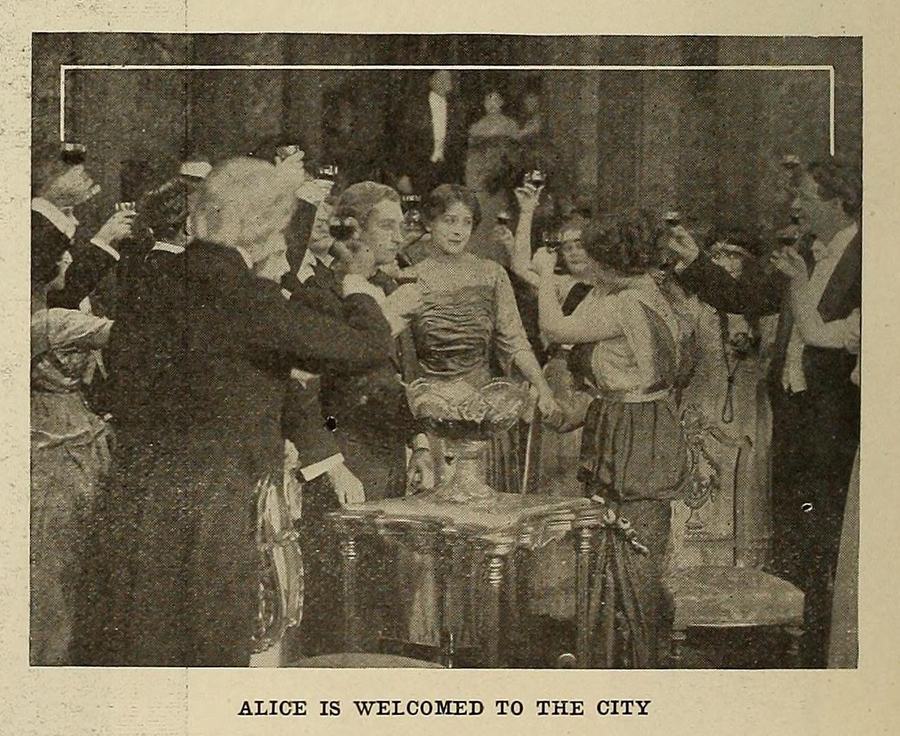
The final scene within the Wayne household is a breathtaking study in moral blackmail. Wayne, now fully exposed and desperate to protect his own reputation and Alice's unwitting innocence, employs the ultimate coercive tactic. He urges Helen to accept Lawrence, and then, in a chilling act of manipulation, declares his knowledge of the "other man's" identity. Placing a gun on the table before Lawrence, he implicitly dares the enraged suitor to act, knowing full well the violent potential simmering within him. This theatrical gesture, designed to force Helen's hand, highlights the ruthless pragmatism of a man cornered. Helen, confronted with the monumental implications of her choice – the potential ruin of her sister's life, the destruction of Wayne, and Lawrence's descent into violent crime – makes a decision born not purely of desire, but of immense self-sacrifice. She still loves Lawrence, but her refusal stemmed from a profound sense of unworthiness. Now, to avert a multi-faceted catastrophe, she consents. Her decision, a poignant blend of lingering affection and agonizing pragmatism, ensures the survival of multiple fragile realities, even as it leaves an indelible mark on her own soul. This grand gesture of self-abnegation is a hallmark of the era's dramatic sensibilities, reminiscent of the profound sacrifices depicted in works like The Toll of Mammon.
Driftwood, though perhaps a lost film to modern audiences, clearly possesses a narrative richness that speaks to timeless human struggles. The film delves deeply into the themes of fate versus free will, with Helen's life repeatedly buffeted by forces beyond her control – the train accident, Lawrence’s disappearance, Wayne’s machinations. Her choices, while seemingly her own, are often made under immense duress, blurring the lines between agency and circumstance. This exploration of the individual caught in the relentless currents of destiny is a recurring motif in early cinema, where the dramatic potential of such predicaments was fully exploited.
Moreover, the film is a fascinating study of moral compromise. Helen's initial decision to live under an assumed name, her reluctant acceptance of Wayne's offer, and her ultimate, coerced marriage to Lawrence, all highlight the difficult ethical terrain she navigates. She is not a villain, but a woman trapped by convention, circumstance, and her own sense of shame. Wayne, on the other hand, embodies a more deliberate form of moral corruption, using his position and knowledge to manipulate those around him for his own ends. The film, through these characters, implicitly critiques the restrictive social mores of the early 20th century, where a woman's reputation could be irrevocably tarnished by perceived impropriety, forcing desperate measures. This moral complexity makes Driftwood resonate beyond its melodramatic trappings, inviting deeper reflection on the societal pressures that shape individual lives.
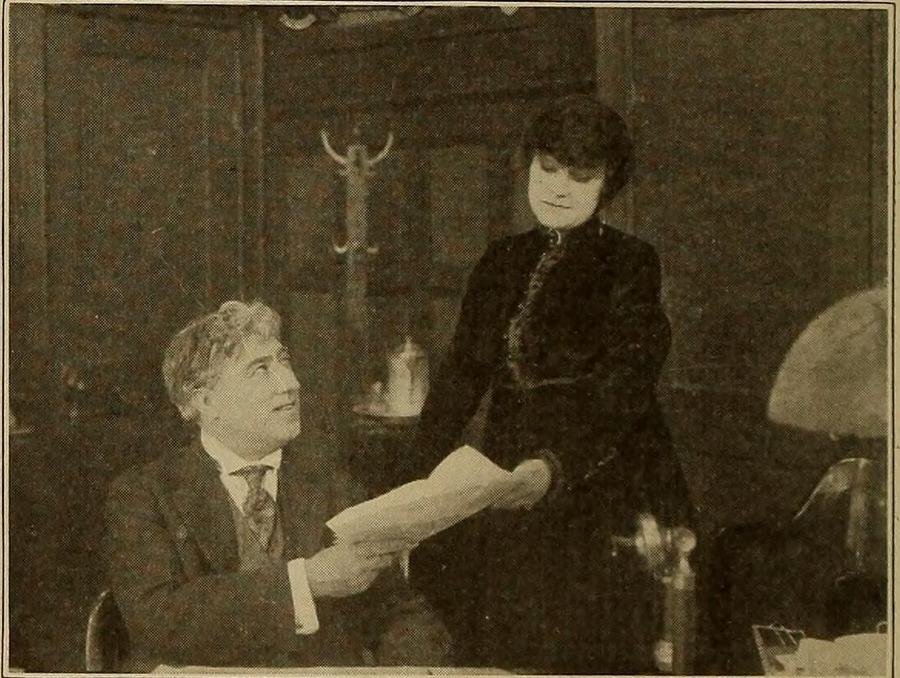
While the visual experience of Driftwood remains elusive, one can surmise the profound impact of its cast. Vera Michelena, in the pivotal role of Helen Warner, would have been tasked with conveying a vast spectrum of emotion without the benefit of spoken dialogue. Her performance would have relied heavily on subtle gestures, expressive facial movements, and a profound understanding of Helen’s psychological journey from naive lover to a woman scarred by life's cruelties. The dramatic arc demands a performer capable of portraying both vulnerability and a quiet strength, a resilience born of perpetual adversity. Her silent anguish, her moments of weakness, and her final, resolute sacrifice would have been the emotional anchors of the film, likely drawing comparisons to the nuanced portrayals seen in contemporary works like Little Lady Eileen.
Clarissa Selwynne, as Alice, would have needed to embody an innocent counterpoint to Helen's increasingly complex existence, her eventual realization of Wayne’s duplicity providing its own dramatic weight. Leslie Stowe, as James Wayne, would have undoubtedly painted a portrait of a man outwardly respectable but inwardly corrupt, his charm masking a ruthless, self-serving nature. His ability to convey manipulative cunning through silent acting would have been crucial to the film's tension. David McCauley, as Lawrence Grove, would have been challenged to portray a passionate, yet tragically impulsive, hero whose love for Helen drives him to both despair and violent threats. The director, working with writers Owen Davis and Anthony Paul Kelly, would have had to meticulously stage these intricate character interactions, using camera angles, close-ups, and judicious intertitles to convey the dense narrative and emotional nuances. The pacing, crucial for a melodrama of this scope, would have needed to build slowly, allowing the layers of deception and despair to accumulate before the explosive climax.
Even in its absence, the narrative of Driftwood remains a potent example of the storytelling prowess of early cinema. It demonstrates a sophisticated understanding of dramatic structure, character motivation, and thematic depth, proving that silent films were far from simplistic. Its intricate plot, which manages to weave together a secret engagement, a catastrophic accident, mistaken identity, a clandestine affair, a shocking familial revelation, and a climactic moral blackmail, is a testament to the creativity of its writers. The film serves as a fascinating historical artifact, offering insight into the popular entertainment and moral anxieties of its time.
The sheer emotional intensity and the complex web of relationships presented in Driftwood would have captivated audiences of its era, much like other gripping narratives such as Across the Pacific or The Man from Oregon, which explored dramatic personal journeys. It’s a narrative that speaks to the enduring power of love, the corrosive nature of deceit, and the profound sacrifices individuals are often forced to make in the face of overwhelming circumstance. While we may no longer be able to experience Vera Michelena's heart-rending portrayal or the director's visual artistry, the story of Helen Warner, caught in the relentless currents of fate, continues to resonate, a poignant reminder of cinema's power to explore the depths of the human heart, even when lost to the sands of time. Its intricate convolutions and high emotional stakes certainly put it in conversation with the more elaborate narrative structures of its day, holding its own against films that explored similar themes of moral reckoning and societal pressure. The film's title itself, Driftwood, perfectly encapsulates Helen's journey – a soul cast adrift by the relentless tides of fate, searching for an anchor in a tumultuous world.
The final resolution, while providing a conventional 'happy' ending in the form of marriage, is steeped in an almost tragic pragmatism. Helen's consent is not a joyous embrace of destiny, but a calculated, agonizing choice to avert greater catastrophe. This nuanced conclusion elevates Driftwood beyond simple melodrama, hinting at the bittersweet realities that often underlie even the most romanticized narratives. It is a powerful reminder that sometimes, love, duty, and survival are inextricably tangled, demanding sacrifices that leave an indelible mark on the soul.
IMDb —
1930
Community
Log in to comment.