DbcultAccessing Vault...
Cult Review
Senior Film Conservator
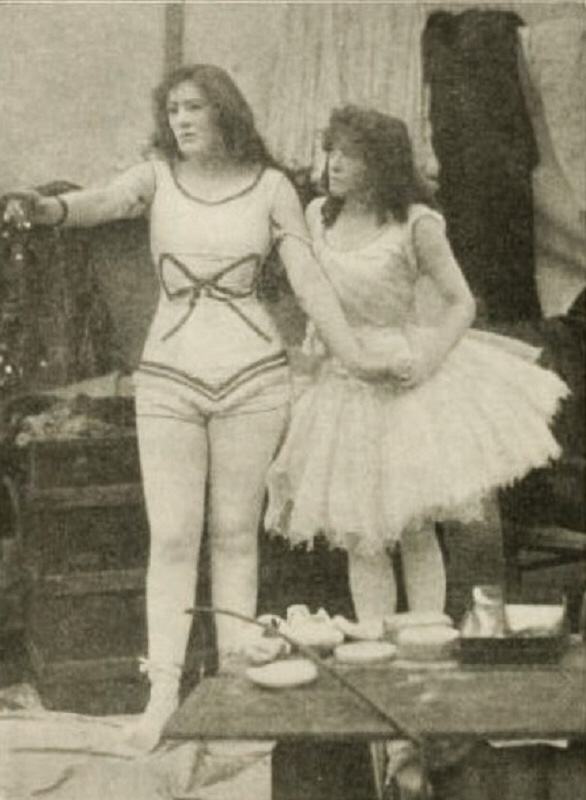
The first time we see Margaret Morris she is framed against a mahogany banister that gleams like a freshly minted coin, her silhouette corseted into an S-curve of anticipatory rebellion. Cecil Spooner—star, scenarist, sorceress—lets the camera linger just long enough for us to register the tremor in her gloved fingers: an heiress discovering that her own pulse can outbid her father’s vault. One cut later Bob Wilson cartwheels into the town square on a slack wire no wider than a moralist’s smile, the circus calliope hacking out a tune that sounds suspiciously like freedom. Their reunion is staged in a single iris shot that contracts until the universe is reduced to two pairs of eyes swapping childhood memories for adult hunger. In that tightening circle you can already sense the vortex of class, cash, and catastrophe waiting to swallow them.
Spooner’s screenplay—published contemporaneously in Motion Picture Story Magazine—reads like a Jacobean play left to curl at the edges in a medicine-show trunk. Every act ends with a door slamming on someone’s future: the elopement that slams on Margaret’s dowry; the storm that slams on Margaret herself; the jail door that slams on Prinsey’s clown-shoed feet. Yet the most violent slam is the eighteen-year ellipsis that lands like a gavel between reels, turning the baby Nell into a daredevil amazon who can balance on a cantering thoroughbred while flirting with gravity and the morality of small-town boys. The film’s real acrobatics are temporal: how deftly it vaults over the tedious arithmetic of years without losing emotional momentum.
Compare this leap to the more stately fade-outs in Lion of Venice or the biblical pageantry of The Life of Our Saviour; Spooner prefers the circus method—flash powder and a drumroll—because she trusts melodrama the way lion tamers trust a chair: it keeps the beast of sentiment pacing in predictable circles.
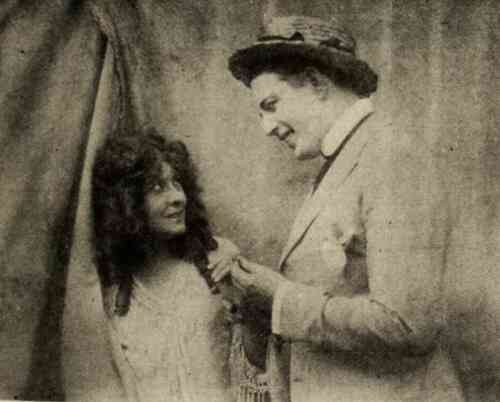
Philip Lee, velvet-gloved viper, gets the film’s most Expressionist close-up: half-face lit by lantern, half swallowed by tent-shadow, the split visible like a moral crack in a Renaissance portrait. When he offers Margaret three thousand dollars to waive her birthright, the intertitle burns white-on-black with a sneer so tactile you expect the words themselves to bruise. Spooner understood that villains in 1911 needed to be not merely cruel but aesthetically cruel—cruelty as a brand of elegance, like the scalpel-clean gloves of Detective Brown or the satanic tailoring in A Modern Mephisto.
The storm sequence—often lost in duped prints—survives here in a tinted nitrate miracle: indigo lightning forks across the frame while tent canvas billows like the petticoats of a panicked giantess. Margaret’s death is not some delicate swoon; a pole the circumference of a ship’s mast fells her, the impact rendered by a jump-cut so abrupt it feels like an ethical verdict delivered by nature itself. In the aftermath, Prinsey’s greasepaint runs into his collar, turning the clown’s grin into a melted kabuki mask. Spooner lets the camera rest on this liquefied face for four full seconds—an eternity in 1911—imploring us to ask who the real performer is when the greasepaint is indistinguishable from grief.
Eighteen narrative years compress into a single dissolve, and suddenly we are in the brash dawn of a new America: bobbed hair, Model-T hubcaps, moral loopholes wide enough to drive a circus wagon through. Nell—now incarnated by Spooner herself in a performance that toggles between muscular grace and coltish bewilderment—wears spangled tights that catch the klieg lights like fish scales. Her first appearance on the spiral ramp is shot from the vantage of the bleachers: we see her ascend through a forest of male gazes, each pair of eyes a proprietary citation. The sequence anticipates the kinetic voyeurism of Atop of the World in Motion yet retains the chaste moral algebra of Victorian spectacle: the body may dazzle, but it must ultimately signify virtue waiting to be redeemed.
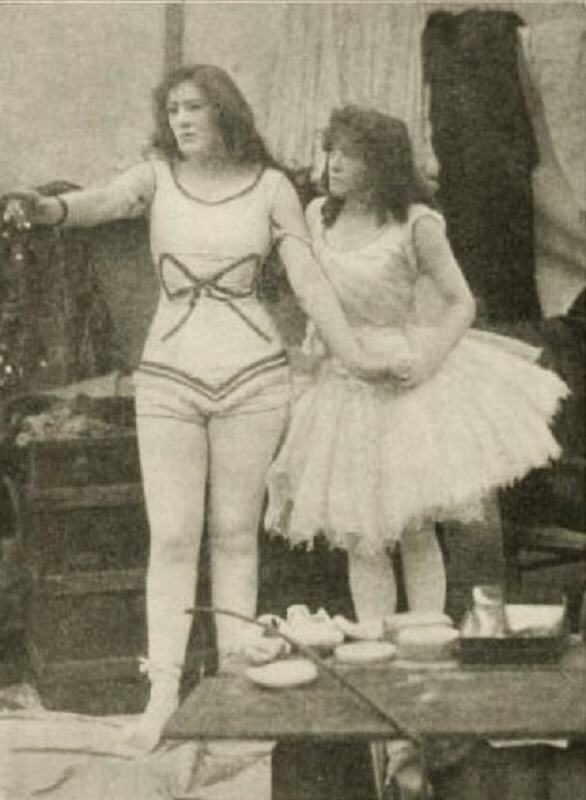
Philip’s reentry—top-hatted, flush with municipal clout—stirs the film’s central moral sludge. He has transmuted inheritance into political muscle, the way alchemists once tried to turn lead into gold, only here the reverse occurs: gold buys him the right to behave like base metal. When he threatens Marie with arrest for blackmail, the intertitle quivers with legal menace: “The law, my dear, is a lapdog that eats from my hand.” The line is delivered in a medium-shot that frames his cane like a scepter, yet Spooner undercuts the bravado by letting Marie’s child toddle into foreground focus—a living reminder that every threat eventually meets its match in flesh it cannot disown.
The barn sequence—shot on location in Westchester County—glows with tungsten warmth against the chill of moral entropy. Prinsey and Nell, exiles from the only family they’ve known, bed down in hay that seems to exhale the scent of livestock and sanctuary alike. Spooner overlays the scene with double-exposed memories: a ghostly projection of Margaret rocking baby Nell superimposed over the present, as though the past itself were trying to swaddle its progeny. It’s a technique reminiscent of the spectral overlays in Rebecca the Jewess, yet here the phantasm is not vengeance but maternal continuity—history insisting on its right to chaperone the future.
Ned Tracey’s crisis of faith—finding Nell cradling Marie’s child—deploys the oldest of misread tropes, yet Spooner revitalises it through spatial irony: the cradle sits beneath a wall calendar advertising “Uneeda Biscuits—The Crisp of Clean Living,” a sly nod to the commodification of virtue. Ned’s retreat is filmed in a single dolly-out that physically widens the gulf between lovers, the camera itself seeming to take Ned’s side of moral haste. The moment crystallises the film’s obsession with documents—birth certificates, marriage lines, property deeds—as brittle paper gods that can either damn or redeem depending on who holds the ink.
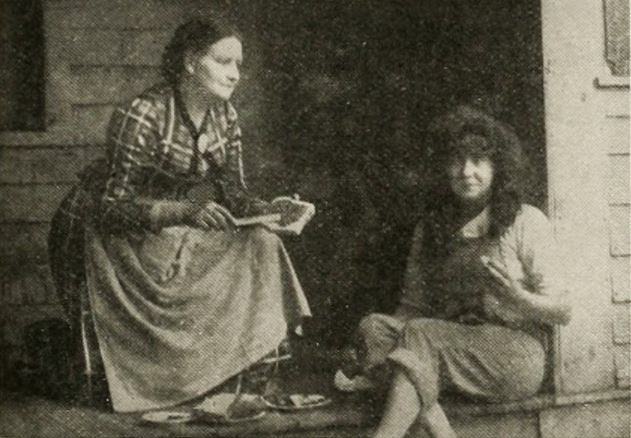
When Marie at last reappears—costumed like a Valkyrie who has swapped her spear for a circus ticket—she carries the marriage ledger as though it were a shield hammered from her own crucible years. The confrontation in Philip’s drawing room is blocked like a chess problem: Marie advancing diagonally across Persian rugs, Philip retreating toward a mantel clock whose tick has the gall to keep perfect time. The ledger’s pages are shot in insert close-up, the signatures wavering like EKGs of long-ago hearts. Philip’s defeat is not physical but architectural: the room itself seems to shrink, wainscoting pressing inward until his power is reduced to the dimensions of a paper rectangle.
The climactic recognition scene—Nell ushered into Banker Morris’s walnut-lined study—echoes the reconciliation in Little Lord Fauntleroy yet inverts its emotional temperature: the patriarch must bend the knee to a granddaughter whose palms still reek of rosin and horse liniment. Spooner shoots Morris’s first glimpse of Nell through a mirror, doubling the image so that bloodline confronts itself like a Möbius strip. The banker’s cracked whisper—“She has her mother’s eyes, but the glint is circus fire”—acknowledges not only lineage but transformation: wealth now has sawdust in its veins.
Nell’s wedding to Ned is staged inside the refurbished big top, canvas newly white as absolution. The ring is presented on the tip of Prinsey’s slapstick—a nod to the clown’s role as holy fool—while the trapeze net below serves as both safety and chuppah. Spooner ends on a high-angle shot that slowly irises into the shape of a heart, yet even this confection is tempered: outside the tent, caravans are already being hitched, the itinerant life rolling onward. The image suggests that while justice has been served, the carnival of human folly remains perpetual, always packing up, always arriving somewhere new.
Viewed today, Nell of the Circus operates as a palimpsest: beneath its nickelodeon melodrama we glimpse pre-Code anxieties about women’s autonomy, class mobility, and the paper-thin membrane separating respectability from ruin. Spooner’s dual role as auteur and star prefigures the hyphenate power moves of later trailblazers, while her willingness to let the camera linger on female grief feels almost transgressive in an era when plots reset like clockwork every ten minutes. The film lacks the Orientalist bombast of Salambo or the Grand Guignol excess of The Reign of Terror, yet its domestic circus—portable, fragile, cyclical—proves the perfect amphitheater for America’s oldest tightrope act: the gamble between what we inherit and what we dare to invent.
Restored prints occasionally suffer from emulsion scratches that flicker like summer lightning, but even these blemishes feel appropriate: scars on the hide of a story that knows every performance leaves a mark. Watch it once for the stunt riding—Spooner did her own, refusing a male double—then watch again for the quieter acrobatics of a woman negotiating the narrow beam between property and personhood. Either way, the net is gone; the fall is real; the applause, when it comes, sounds suspiciously like the heartbeat of a country still learning to balance on its own wobbling wire.
IMDb 6.6
1935
Community
Log in to comment.