DbcultAccessing Vault...
5.7/10
Senior Film Conservator
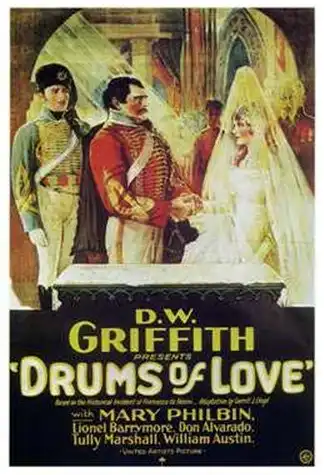
A definitive 5.7/10 rating for a film that redefined the boundaries of cult cinema. Drums of Love remains a cornerstone of transgressive art.
If you are looking for the innovative, world-shaking D.W. Griffith of the mid-1910s, you won’t find him in Drums of Love. However, if you are a fan of late-silent era maximalism—where the sets are massive, the makeup is thick, and the emotions are dialed up to a permanent eleven—this film is a fascinating, if flawed, curiosity. It is worth watching today primarily for Lionel Barrymore’s transformative performance and as a case study in how a legendary director tried (and partially failed) to adapt to the sophisticated visual language of the late 1920s.
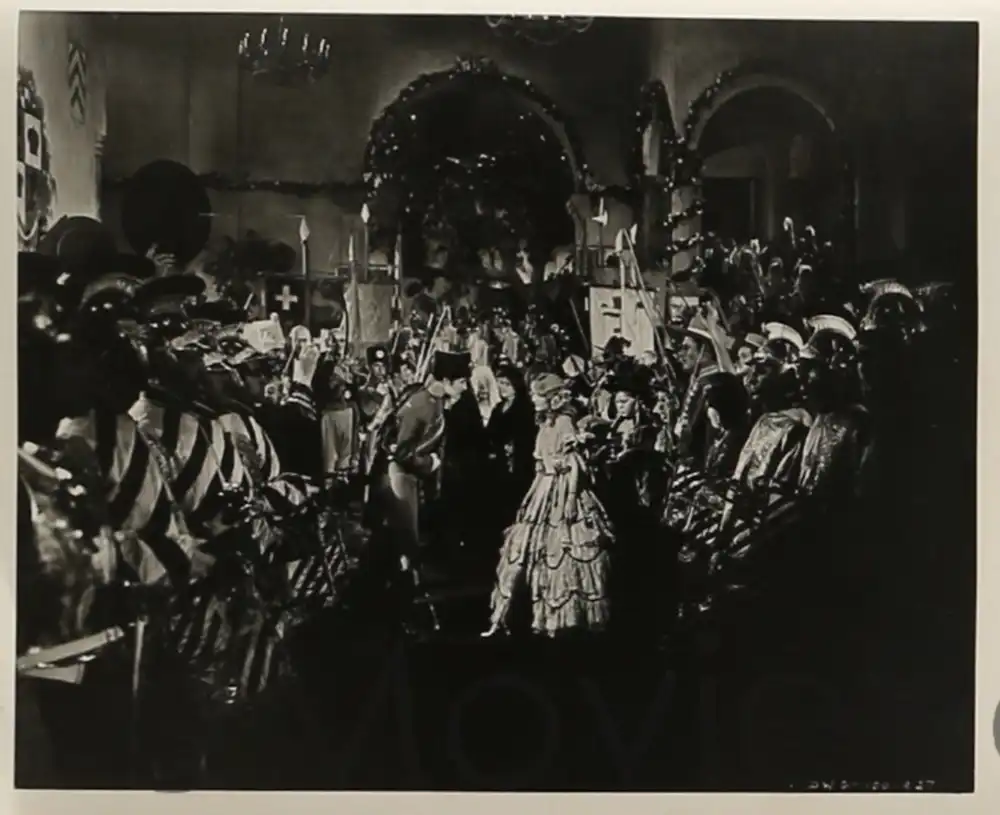
Modern viewers will likely find the pacing frustrating. It is a film that lingers far too long on longing glances and slow-motion heartbreak. However, for those who appreciate the "Beauty and the Beast" trope stripped of its fairy-tale magic and replaced with grim, Shakespearean inevitability, there is a dark pull to the narrative that keeps it from being entirely dismissible.
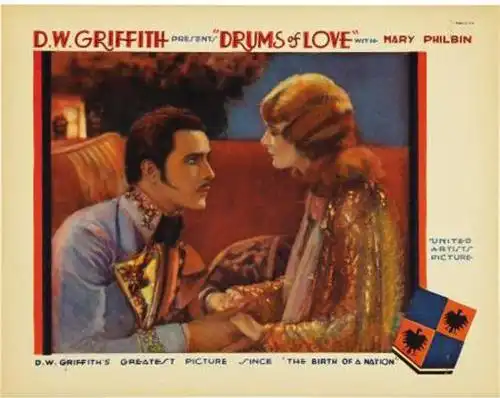
The film lives and dies on the shoulders of Lionel Barrymore. Playing the Duke Cathos, Barrymore is buried under a prosthetic hump and a wild, unkempt beard that makes him look more like a mountain than a monarch. What makes his performance work is the restraint he shows in his physical movements. When he approaches Mary Philbin’s Emanuella, he doesn't play a monster; he plays a man painfully aware of his own ugliness. There is a specific, heartbreaking moment early on where he tries to adjust his heavy cloak to hide his deformity while talking to her, a small piece of human business that feels much more modern than the rest of the film’s theatricality.
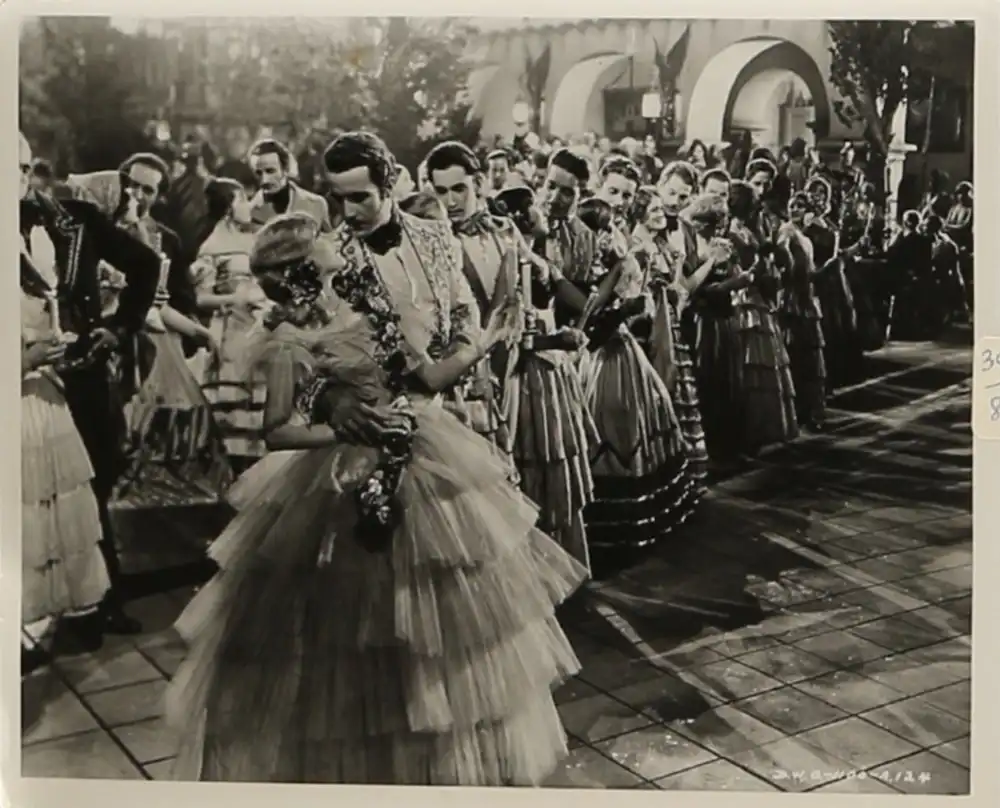
Opposite him, Mary Philbin is... fine. Fresh off her success in The Phantom of the Opera, she is once again the object of a "monstrous" man’s affection. Unfortunately, Griffith directs her to be perpetually wide-eyed and trembling. She spends a significant portion of the runtime clutching her throat or leaning against stone walls in various states of distress. It’s a very old-fashioned style of acting that feels dated even by 1928 standards, especially when compared to the more naturalistic work being done in European films like Fièvre around the same period.
The most effective element of the film isn't the romance, but the malice. Tully Marshall plays Bopi, the Duke’s jester, and he is genuinely unsettling. Marshall has a face like a dried-out apple, and Griffith uses him as a recurring visual motif of doom. There is a fantastic shot where Bopi is reflected in a polished tabletop, watching the lovers from across the room. He doesn't have many title cards, but his constant presence in the background of scenes—peering through curtains or lurking in the shadows of the stone corridors—creates a sense of claustrophobia that the central romance lacks.
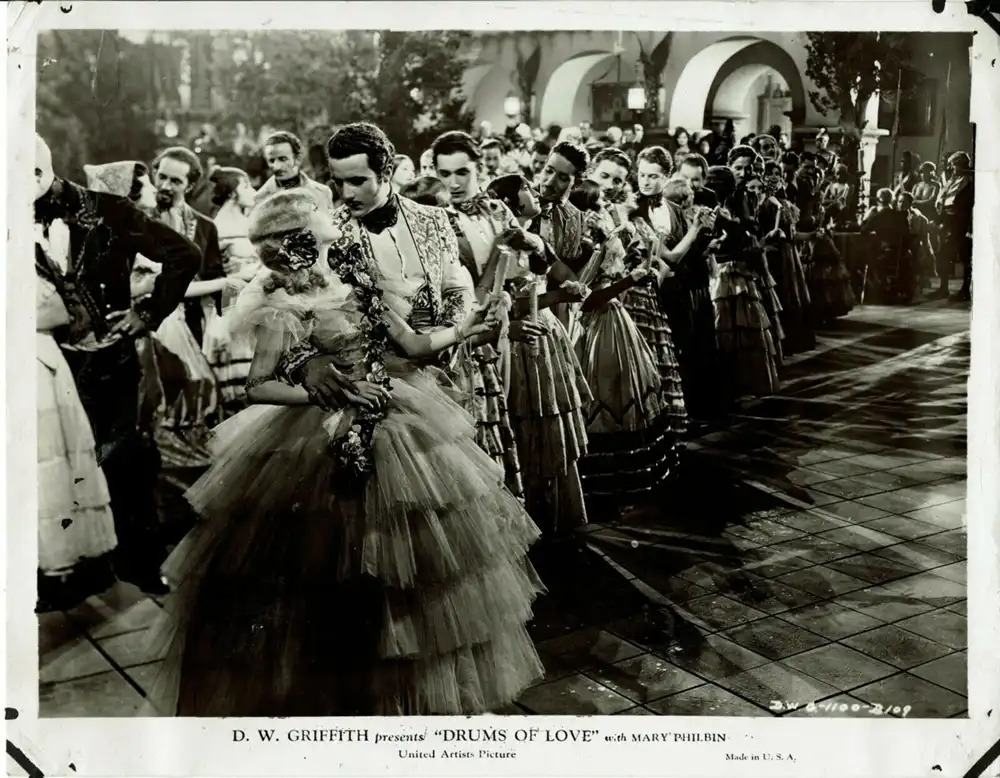
Don Alvarado, as the "handsome" brother Leonardo, is unfortunately the weakest link. He is essentially a mannequin in a military uniform. While he is meant to represent the irresistible pull of physical perfection, he lacks the charisma to make us understand why Emanuella would risk her life for him. When they are together, the chemistry is purely superficial; they look like two people posing for a Victorian postcard rather than two people consumed by an illicit passion.
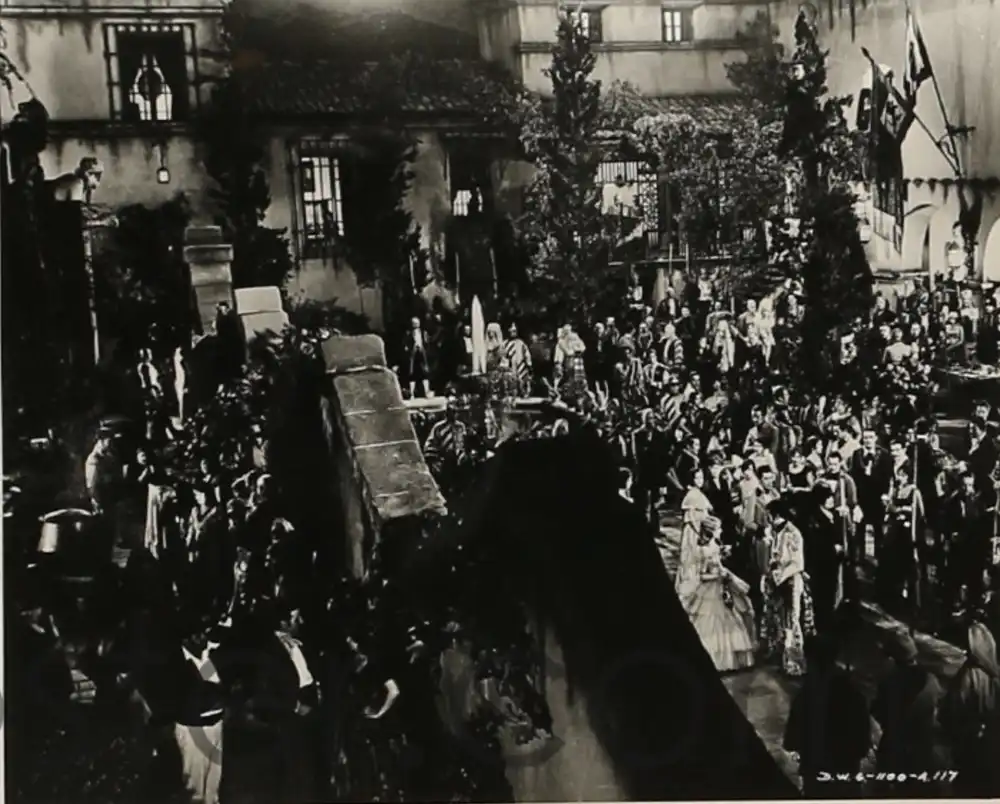
Visually, Griffith is clearly trying to compete with the German Expressionists. The castle sets are cavernous, filled with deep shadows and high-contrast lighting that occasionally suggests a horror movie rather than a romantic tragedy. The wedding sequence is a highlight, with the camera capturing the scale of the cathedral and the crushing weight of the ceremony. You can feel the coldness of the stone.
However, the editing rhythm is where Drums of Love stumbles. Griffith was the master of cross-cutting, but here he seems to have lost his sense of timing. Scenes of the lovers staring at each other in the garden go on for minutes without any narrative progression. There are multiple sequences where a character enters a room, walks to a window, sighs, walks back, and sits down—all of which could have been trimmed by half. It feels as though Griffith was trying to stretch a simple anecdote into an epic, and the thinness of the plot starts to show by the hour mark.
It is worth noting that Drums of Love famously had two endings filmed: a tragic one and a "happy" one forced by the studio. If you watch the version that survives today, you are likely seeing the tragic conclusion, which is far superior. It leans into the operatic nature of the story. The final confrontation between the two brothers is staged with a surprising amount of brutality for the era. The way Barrymore’s Duke reacts to the betrayal—not with immediate rage, but with a slow, crumbling realization—is the highlight of the entire movie.
Drums of Love is a heavy, ornate piece of cinema that feels like an artifact even for 1928. It lacks the technical spark of Griffith’s early work, but it possesses a certain grim dignity thanks to Barrymore and Marshall. If you can stomach the slow pace and the exaggerated pantomime of the heroine, there is a powerful story here about the cruelty of physical appearance and the inevitability of betrayal. It’s not a masterpiece, but it’s a solid, somber drama that deserves a look from anyone interested in the final gasps of the silent era.
IMDb —
1935
Community
Log in to comment.