DbcultAccessing Vault...
6.2/10
Senior Film Conservator
A definitive 6.2/10 rating for a film that redefined the boundaries of cult cinema. The Night Court remains a cornerstone of transgressive art.
Is The Night Court a relic worth unearthing for modern audiences? Short answer: Yes, but only if you approach it as a historical artifact rather than a traditional movie.
This film is for the archival obsessive who craves a window into pre-Code vaudeville; it is not for anyone looking for a polished narrative or nuanced character development.
The Night Court is a fascinating, if clunky, experiment from the dawn of the sound era. Directed by Ronald R. Rondell and written by the prolific Murray Roth, the film is less of a cohesive story and more of a filmed variety show. The premise is simple to the point of absurdity: a nightclub is raided, and the performers are forced to do their routines for a judge to prove they aren't 'indecent.' It is a narrative conceit that would never fly today, but in 1927, it was the perfect vehicle for the Vitaphone process.
What makes this short film so jarring is the tonal whiplash between the 'serious' setting of a courtroom and the high-energy, often ridiculous performances. Unlike The Chorus Girl's Romance, which attempts to ground its stage elements in a recognizable reality, The Night Court leans into the surreal. The courtroom isn't a place of justice; it’s a theater where the judge acts as the ultimate critic. It is loud, crude, and utterly essential for the film historian.
The film lacks the dramatic weight of something like Ten Dollars or Ten Days, but it makes up for it with sheer, unadulterated chaos. There is a sense that the actors are shouting their lines not for dramatic effect, but to ensure the primitive microphones hidden on set actually pick up their voices. This results in a performance style that feels alien to modern ears—stilted, declamatory, and perpetually 'on.'
The primary reason to revisit The Night Court today is William Demarest. Long before he became the cantankerous Uncle Charley on My Three Sons or a staple of the Sturges ensemble, Demarest was a vaudeville veteran. Here, his comedic timing is already evident, even if it’s buried under the technical limitations of the era. He moves with a physical confidence that the rest of the cast lacks. While others seem terrified of the camera, Demarest treats it like an old friend.
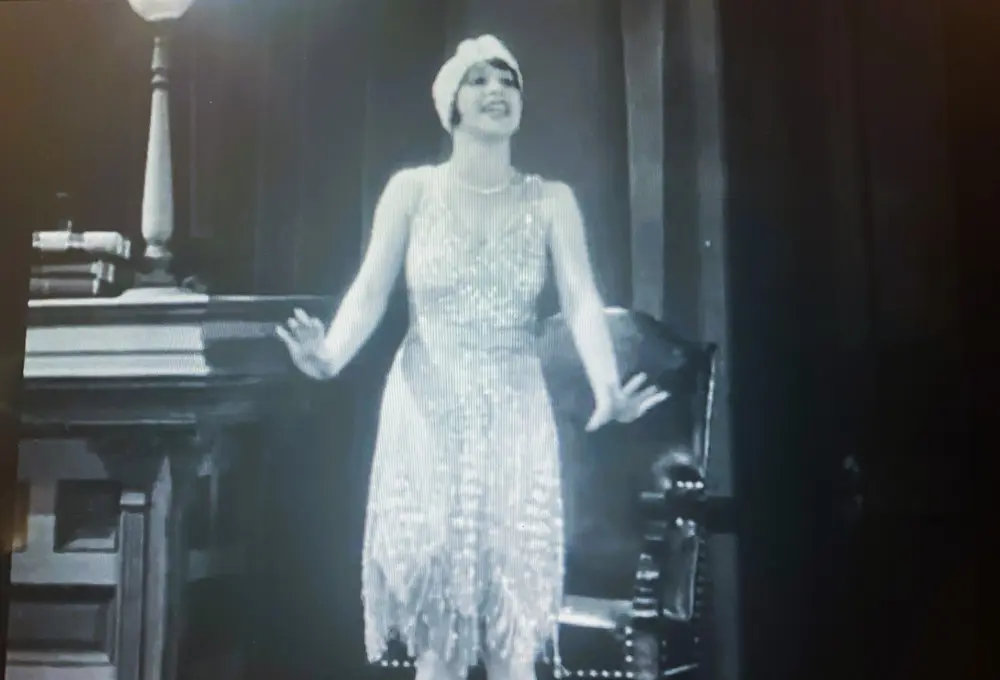
In one specific scene, Demarest’s interaction with the judge highlights the absurdity of the pre-Code era. His banter is fast, cynical, and surprisingly modern in its delivery. It’s a stark contrast to the more theatrical performances of his co-stars. He isn't just playing a character; he's managing the stage. It works. But it’s flawed. The limitations of the sound-on-disc system mean that every movement feels choreographed to stay within the range of the stationary microphones, which robs the comedy of some of its spontaneity.
Compare this to the performances in Wine, Women, and Song, and you see the difference between a performer who understands the screen and one who is merely transplanting their stage act. Demarest understands the screen. He uses his face as much as his voice, a skill that many of his contemporaries in 1927 had yet to master.
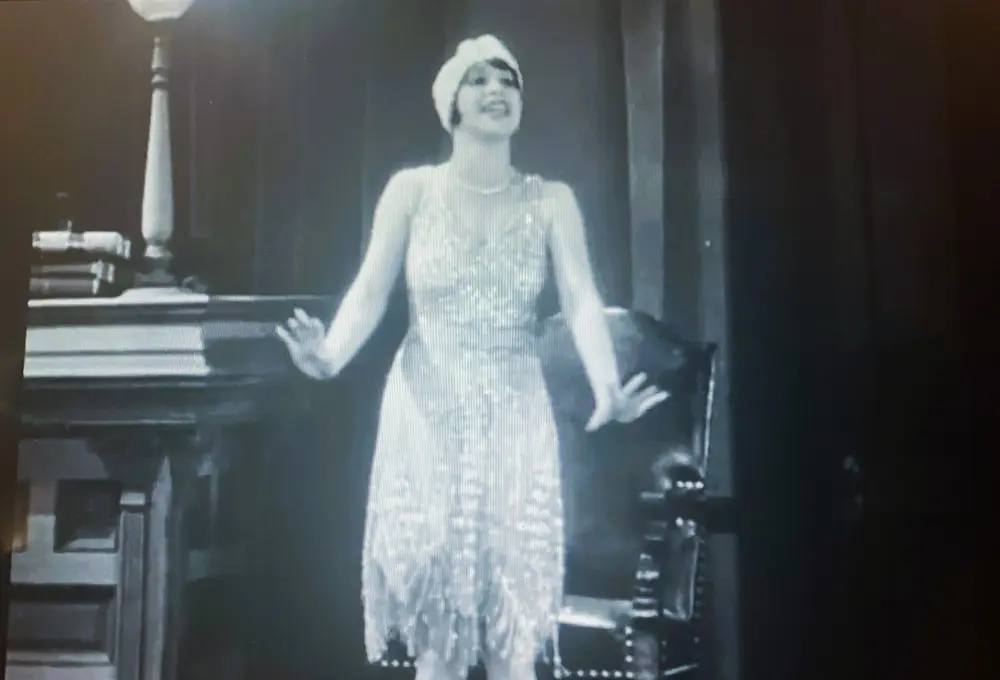
Joyzelle Joyner, billed simply as Joyzelle, provides the film's most visually striking moments. Her 'exotic' dance routine in the middle of the courtroom is a peak example of pre-Code sensibilities. It is suggestive, strange, and entirely out of place in a legal setting. The camera lingers on her movements with a curiosity that feels almost voyeuristic, a hallmark of early Vitaphone shorts that were designed to show off the 'completeness' of the audio-visual experience.
Her performance serves as a reminder that early cinema was often more interested in spectacle than story. Much like My Official Wife, there is an obsession with the 'other'—the exotic performer who disrupts the staid, domestic or legal world of the protagonists. Joyzelle’s dance isn't just a plot point; it’s the film's raison d'être. Without these variety acts, there would be no film.
However, the 'exoticism' is undeniably dated. The way the judge and the court officers react to her is played for laughs, but it reveals a deep-seated cultural anxiety of the time. The film positions the nightclub performers as a disruptive force that must be 'judged' and ultimately integrated into the social order through their entertainment value. It is a cynical take on the value of art, suggesting that it only has merit if it can amuse the powers that be.
From a technical standpoint, The Night Court is a nightmare of early sound constraints. The camera rarely moves, as the bulky 'iceboxes' used to silence the cameras made tracking shots nearly impossible. This creates a stagey, proscenium-arch feel that can be difficult for modern viewers to sit through. Every scene feels like a single take, which adds to the feeling that we are watching a live performance rather than a film.
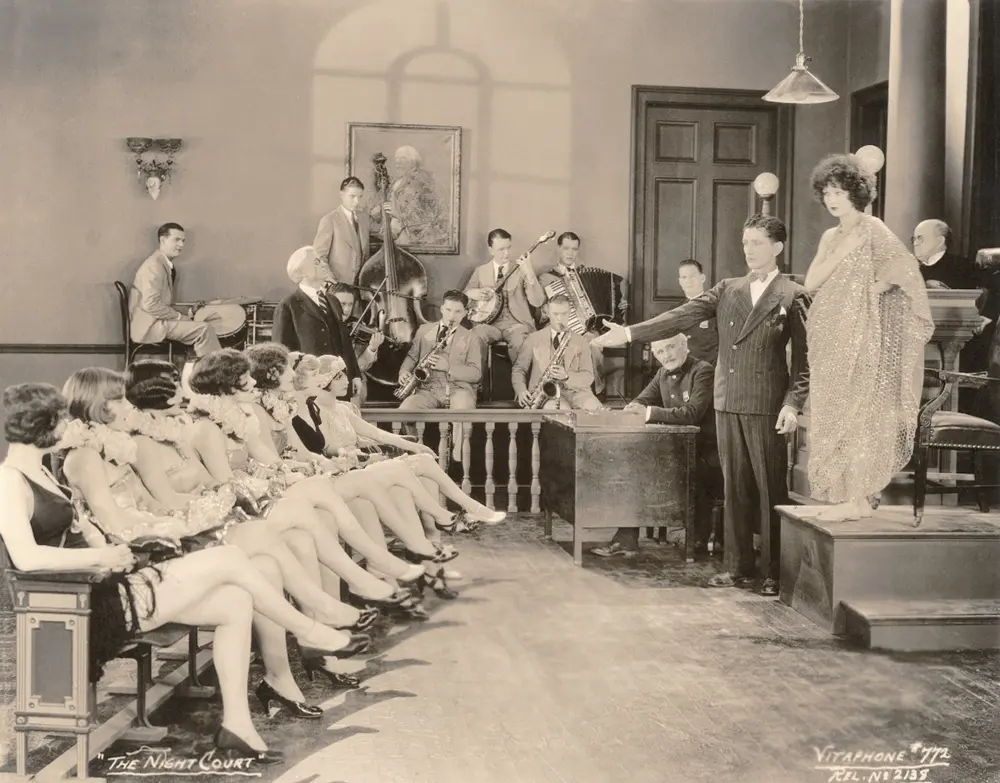
The lighting is flat and functional, lacking the expressionistic shadows found in late silent masterpieces like The Moment Before. In 1927, the industry took a massive step backward in visual storytelling to accommodate the microphone. You can see the actors hitting their marks with mathematical precision, terrified to move an inch away from the hidden audio receivers. It creates a tension that isn't part of the script—a tension between the performer and the technology.
"The judge isn't a character; he's the first-ever cinematic stand-in for a bored Netflix subscriber, waiting to be entertained or to move on to the next act."
This technical rigidity actually enhances the film’s central theme of being 'trapped' in court. The performers are literal prisoners of the frame. When Dottie Lewis begins her routine, there is no cutting to close-ups or reaction shots. We see her exactly as the judge sees her: a distant figure on a cold floor. This lack of cinematic grammar makes the experience feel more authentic to the period, even if it makes for 'bad' filmmaking by today’s standards.
The Night Court is worth watching if you value historical context over narrative cohesion. It offers a rare glimpse into the transition from silent film to sound. The performances are energetic, though the structure is fragmented. For the casual viewer, it may feel dated. For the film historian, it is an essential piece of the Vitaphone puzzle. It is a film that demands you meet it on its own terms—as a piece of filmed vaudeville rather than a cinematic narrative.
The film provides a rare, unedited look at 1920s variety acts. The sound quality, for 1927, is surprisingly clear in surviving prints. It serves as a great introduction to the early career of William Demarest. The pre-Code humor is often sharper and more cynical than what followed in the 1930s.
The pacing is glacial despite the short runtime. The 'plot' is non-existent, serving only as a wrapper for the acts. Many of the musical numbers feel repetitive. The technical limitations of the era make for a very 'flat' visual experience.
The Night Court is a glorious failure that accidentally invented the variety show format for television. It is a mess, but it is a fascinating mess. While it lacks the polish of Shoot Straight or the narrative drive of Fighting Bill, it possesses a unique, grimy charm that is hard to find elsewhere. The courtroom setting isn't a satire of justice; it's a celebration of the era's disregard for it. It is a loud, proud, and deeply weird artifact of a transitional moment in art history. If you can stomach the static cinematography and the shouting actors, there is a strange joy to be found in this midnight court session. It is not a masterpiece, but it is a vital document of the day the movies started talking—and wouldn't shut up.
IMDb 7.5
1918
Community
Log in to comment.