DbcultAccessing Vault...
Cult Review
Senior Film Conservator
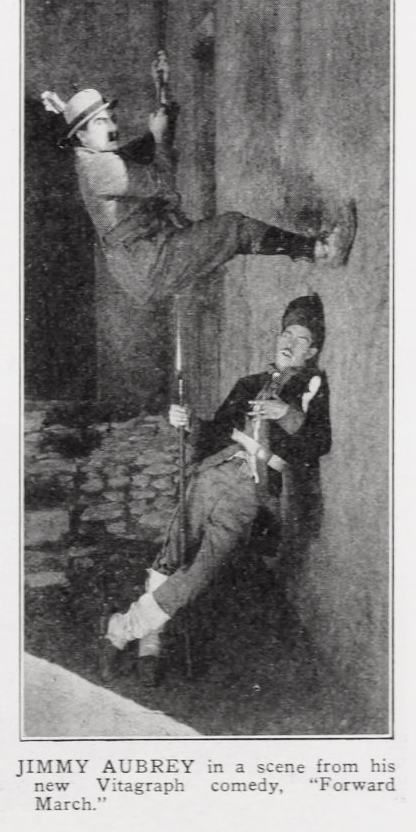
The silent era of cinema was an alchemical forge where the base metal of vaudeville was transmuted into the gold of visual storytelling. In the 1920 short Forward March, we witness a fascinating intersection of physical comedy and proto-surrealism. Jimmy Aubrey, a performer whose kinetic energy often rivaled the greats of his time, presents a narrative that functions as both a slapstick romp and a psychological exploration of the 'little man' archetype. Much like the themes explored in The Fall Guy, Aubrey’s character is defined by his vulnerability to the whims of gravity and fate.
The film opens with a sequence that is deceptively simple: a painter on a scaffold. This image of precarious labor serves as a perfect metaphor for the human condition in the early 20th century. When Jimmy falls, he doesn't just hit the pavement; he falls into the rabbit hole of his own subconscious. This transition from the vertical world of labor to the horizontal, sprawling landscape of a dream-state espionage thriller is handled with a narrative fluidity that belies the technical limitations of 1920. The dream logic employed here is reminiscent of the stylistic choices seen in The Black Envelope, where the stakes are heightened by the protagonist's internal projections.
The casting of Vernon Dent as General Bimbo is a masterstroke of comedic counterpoint. Dent, with his imposing physicality and expressive facial work, provides the necessary friction for Aubrey’s more fluid, chaotic movements. In the dream world, Bimbo represents the unyielding authority of the state—a force that Jimmy must navigate with cunning rather than brute strength. This dynamic creates a tension that elevates the film above mere gag-reels. While Paz e Amor explored different cultural nuances of the era, Forward March focuses on the universal struggle against a relentless, bumbling bureaucracy.
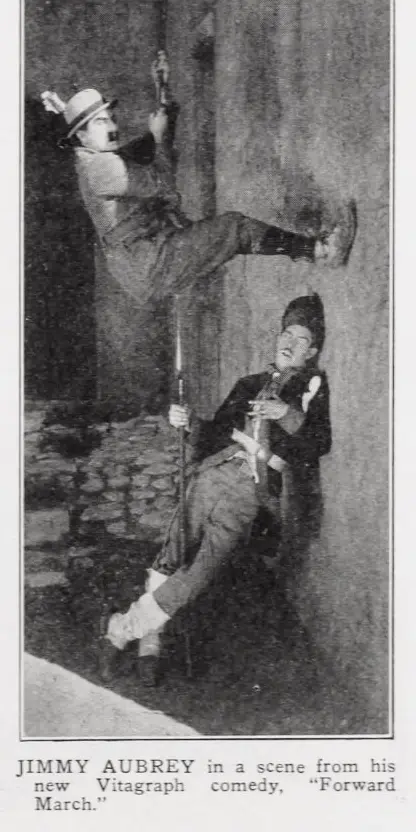
The sequence involving the bear cage is particularly noteworthy. It taps into a primal, almost Jungian fear, yet subverts it through the lens of comedy. Jimmy’s refuge becomes his prison, and his prison becomes his salvation—a recursive loop of irony that is a hallmark of John Smith’s writing. The use of animals in early silent comedy often bordered on the hazardous, but here it serves to highlight Jimmy’s desperation. He is a man caught between the jaws of a beast and the clutches of an army, a theme that resonates with the survivalist undertones of Until They Get Me.
Perhaps the most visually arresting moment in Forward March is the introduction of 'liquid fire.' In a moment that feels more like early sci-fi or a fever dream, Jimmy consumes a substance that allows him to melt the very bars of his confinement. This is not just a gag; it is a manifestation of the protagonist’s burning desire for agency. The physical transformation of the environment through Jimmy’s own breath is a powerful image of liberation. It contrasts sharply with the more grounded social dramas of the time, such as Love's Harvest or The Education of Elizabeth, by leaning into the impossible.
The mail stand sequence, however, is the film’s technical zenith. The stunt work required to simulate Jimmy being snatched by a passing train only to be launched through a roof is a testament to the era's ingenuity. It reflects a fascination with the burgeoning industrial age—the same fascination that permeates High Power. The train, a symbol of relentless progress, becomes the literal engine of Jimmy’s trajectory, propelling him toward a climax that he is entirely unprepared for.
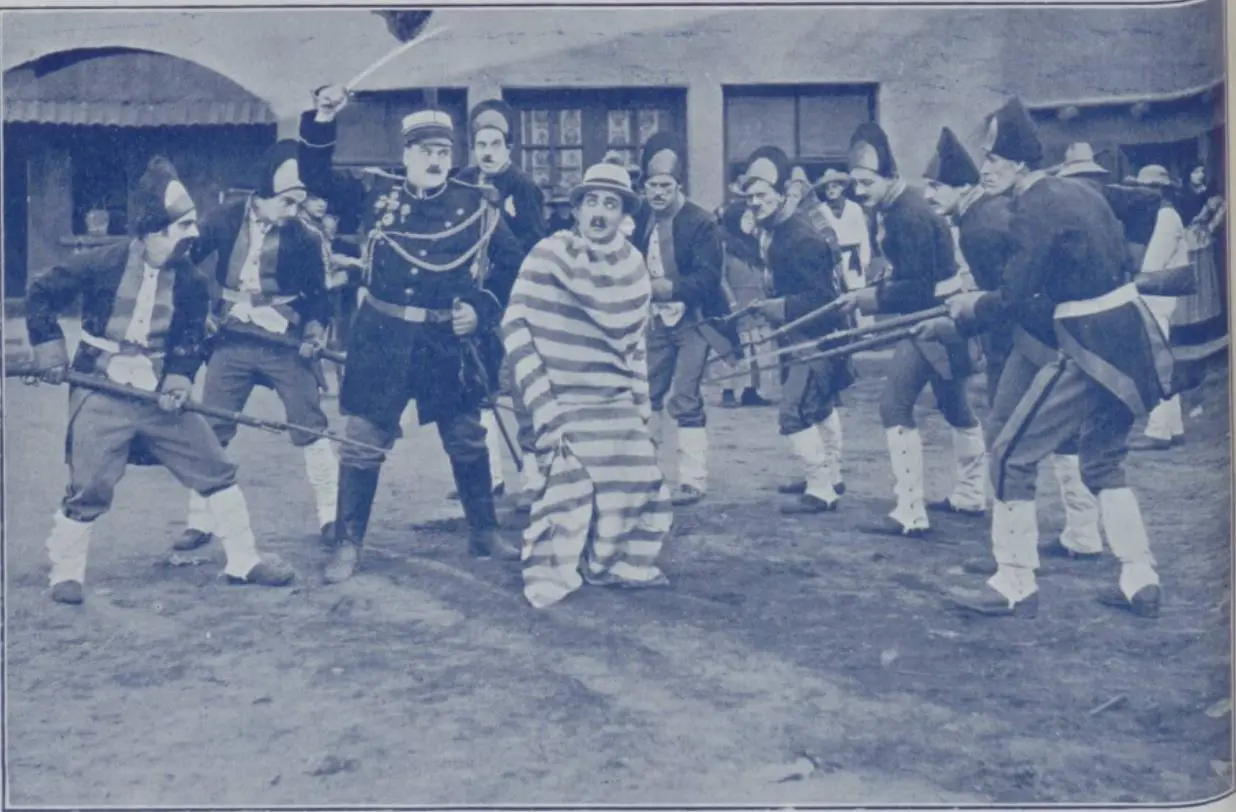
The brilliance of the screenplay lies in its final revelation. After enduring capture, torture, and life-threatening stunts, Jimmy discovers that his entire mission was a sham. He was the decoy—the 'red herring' designed to distract the enemy while the real message was delivered elsewhere. This twist is remarkably sophisticated for a 1920 slapstick short. It introduces a layer of disillusionment that feels surprisingly modern. Jimmy is not the chosen one; he is the expendable one. This narrative move mirrors the themes of hidden truths found in The Unveiling Hand and the social critiques of A Black Sheep.
By making the hero a fool not by his own actions, but by the design of those in power, the film touches on a cynicism that would later define the film noir genre. Even in his dreams, Jimmy cannot escape the hierarchy of the world he left behind on the scaffold. The realization causes him to faint—a final surrender to the absurdity of his situation—before he is resurrected into the waking world. This cyclical return to reality, where the 'real' sweetheart awaits, offers a sentimental resolution to an otherwise harrowing journey through the psyche.
When comparing Forward March to other works of the period, its unique blend of frantic pacing and narrative complexity becomes evident. While Dabbling in Art might focus on the aesthetic sensibilities of the era, and The Burning Soil deals with the weight of the land, Aubrey’s film is concerned with the weight of the self. It is a kinetic poem about the fragility of identity. Even the title, 'Forward March,' is a command that Jimmy follows to his own detriment, suggesting a critique of blind obedience that was perhaps a subtle nod to the post-war sentiment of the time, much like the sobriety of Is Prohibition a Dry Subject?.
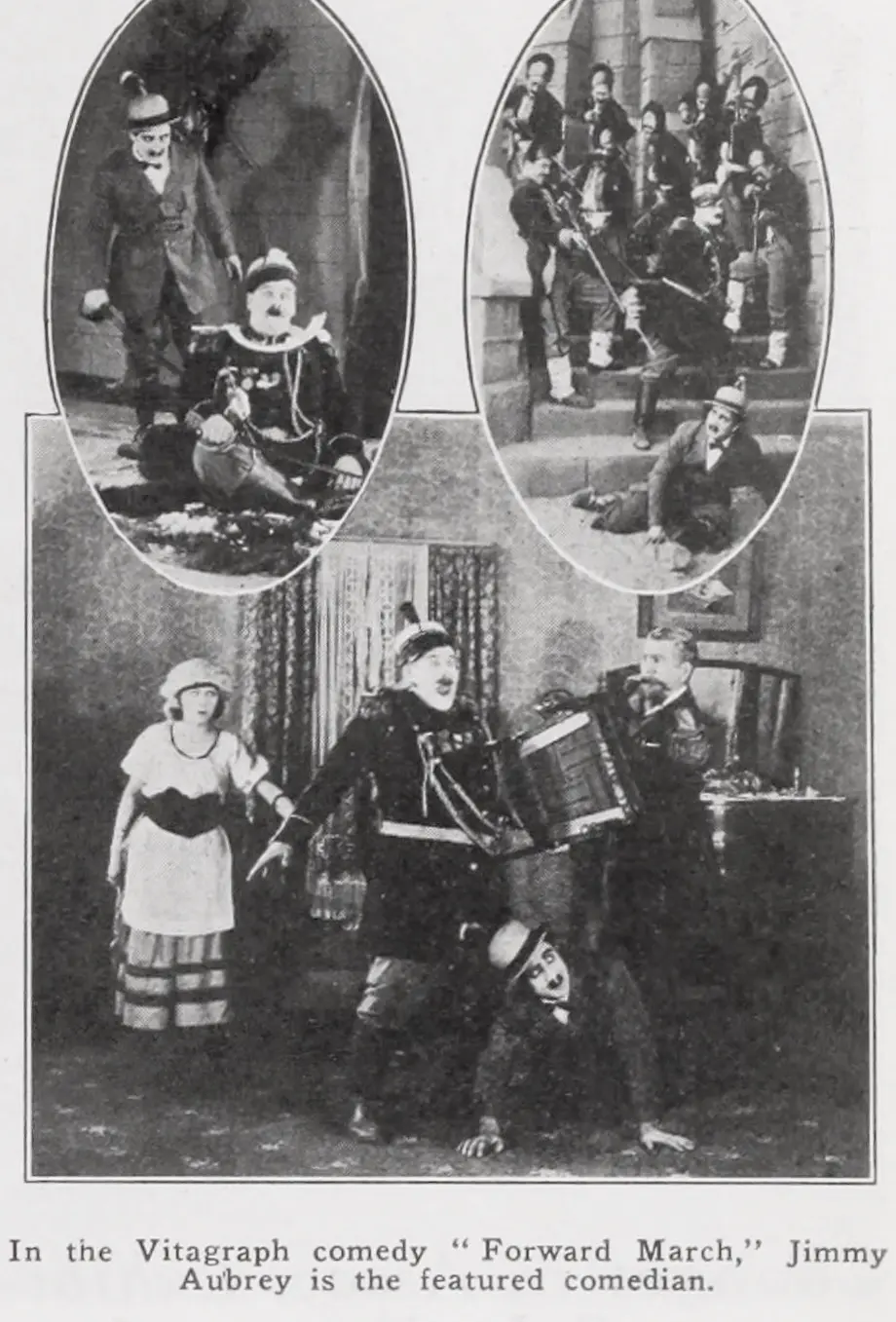
The technical execution, from the lighting of the barred cell to the framing of the palace hubbub, shows a director and crew comfortable with using the frame to tell a story without intertitles wherever possible. The visual language is dense. The way Jimmy leaps to the chandeliers is not just a display of athleticism; it is a disruption of the formal, orderly space of the 'Presidential' palace. It is the intrusion of the working-class painter into the halls of power, a theme also touched upon in Sudden Riches and The Bait.
Ultimately, Forward March stands as a testament to Jimmy Aubrey’s often-overlooked genius. While he may not have achieved the immortal status of Chaplin or Keaton, his ability to weave pathos and high-concept irony into a twenty-minute short is undeniable. The film remains a vital piece of the silent comedy puzzle, offering a glimpse into a time when the screen was a canvas for the most wild and uninhibited dreams of the human spirit. It reminds us that whether we are painting a house or carrying a secret code, we are all, in some way, decoys in a larger game we barely understand.
IMDb 6.8
1932
Community
Log in to comment.