DbcultAccessing Vault...
6.3/10
Senior Film Conservator
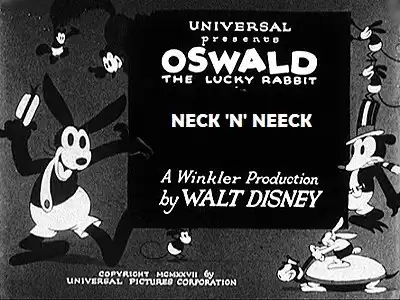
A definitive 6.3/10 rating for a film that redefined the boundaries of cult cinema. Neck 'n' Neck remains a cornerstone of transgressive art.
If you have five minutes to spare, Neck 'n' Neck is absolutely worth your time, specifically because it represents the peak of Ub Iwerks’ technical prowess before the Disney studio pivoted toward the more grounded, 'realistic' animation of the 1930s. This isn't a film for people looking for a narrative arc; it is for anyone who appreciates the pure, unadulterated chaos of the silent era’s 'rubber-hose' animation. It’s a cartoon that understands it isn't bound by gravity or biology, and it leans into that freedom with a frantic, infectious energy.
For modern viewers, this is a fascinating look at the 'missing link' between early experimental shorts and the eventual global dominance of Mickey Mouse. Those who find the repetitive slapstick of the late 1920s tiresome might find the middle section a bit one-note, but the sheer inventiveness of the visual gags keeps it from ever feeling stale. It’s a historical artifact that actually manages to be funny, which is a rarity for films approaching their centennial.
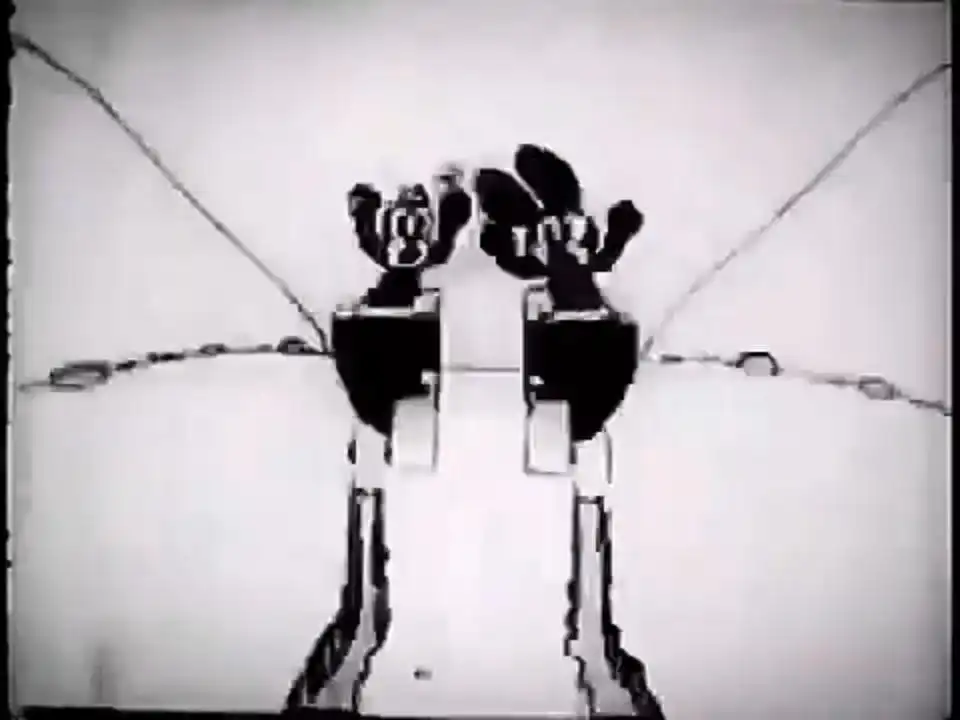
The standout element of Neck 'n' Neck isn't Oswald himself, but the way his environment and his vehicle react to the speed of the chase. In one of the most memorable sequences, Oswald’s jalopy doesn't just drive; it breathes. As the chase intensifies, the car stretches and compresses like an accordion. When they hit a hill, the car elongates to maintain contact with both the peak and the valley. It’s a specific brand of visual surrealism that Iwerks mastered—a style where machines have more personality and flexibility than the characters inside them.
There is a specific moment where the car needs to pass between two closely spaced trees. Rather than slowing down or crashing, the car simply thins out, becoming a vertical sliver of black ink, while Oswald and Ortensia are momentarily squashed into the shape of pancakes. This isn't just a gag; it’s a demonstration of how early animation used the medium to do things that live-action comedies like The Show simply couldn't touch. While live-action stars were relying on stunt work and timing, Iwerks was rewriting the laws of physics.
The film starts with a relatively slow, charming scene of Oswald and Ortensia (then often referred to as Sadie) 'necking' in the car—a bit of 1920s slang that gives the title its double meaning. The transition from this quiet, almost stiff character animation to the high-velocity chase is jarring in a way that works. Once the motorcycle cop enters the frame, the frame rate feels like it doubles.
The editing rhythm is relentless. We see the cop’s motorcycle wheels transform into legs as he gallops after the rabbit, a bizarre visual choice that highlights the 'anything goes' mentality of the era. The backgrounds blur into a series of repetitive lines, a technique that would become a staple of the industry but here feels fresh and experimental. There is no wasted space in these five minutes. Even when the car is just driving straight, Iwerks adds small touches—the way the tires wobble or the way Oswald’s ears flap in the wind—to ensure the screen is always alive with movement.
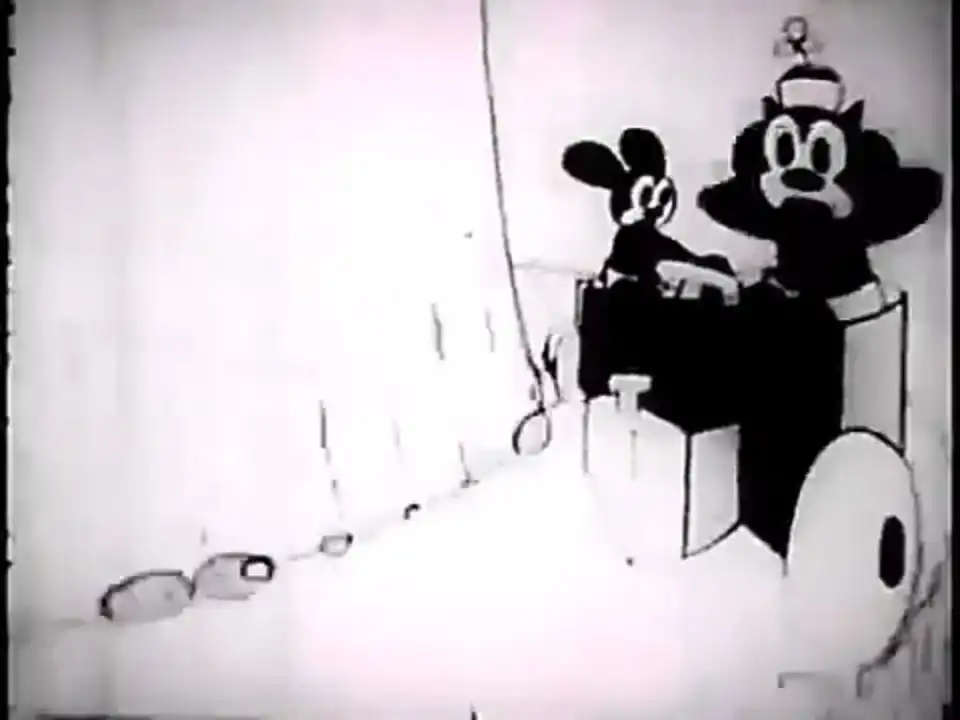
While the animation is fluid, the print quality of the rediscovered versions (specifically the 16mm copy found in Japan) can be a bit grainy, which occasionally obscures the finer details of the character expressions. However, the silhouette work is so strong that you never lose the thread of the action. Oswald is a remarkably expressive character despite his simple design; his panic is palpable when he looks back at the cop, his eyes expanding to twice the size of his head.
One awkward moment involves the scaling of the characters. As the car stretches, Oswald occasionally shrinks or grows in a way that feels less like an intentional gag and more like a slight lapse in the 'in-between' drawings. It’s a minor gripe, but for a film that relies so heavily on the precision of its distortions, these tiny inconsistencies stand out. Similarly, the ending feels a bit abrupt—a common trait of the Oswald shorts which often prioritized a final visual pun over a satisfying resolution.
In 1928, the competition in animation was fierce, but Neck 'n' Neck shows why Disney and Iwerks were pulling ahead. Compared to the more static, stage-bound feel of many contemporary shorts, this film feels cinematic. It uses 'camera' angles that suggest depth and perspective, such as shots looking down the winding mountain road that make the chase feel genuinely perilous. It lacks the heavy-handed sentimentality that would later define the Disney brand, opting instead for a sharp, cynical edge that feels more in line with the work being done in live-action features like The Nervous Wreck.
Neck 'n' Neck is a vital watch for anyone interested in the history of the medium, but it’s also just a remarkably fun piece of filmmaking. It captures a moment in time when animation was discovering its own unique language—one of elasticity, speed, and irreverence. It doesn't ask you to care about the characters; it asks you to marvel at what can be done with ink and paper. If you’ve only ever seen the polished, corporate version of Disney, this scrappy, high-speed rabbit will be a welcome surprise.
Strengths: Masterful use of squash-and-stretch animation; inventive mechanical gags; relentless pacing that never sags.
Weaknesses: Abrupt ending; some minor scaling issues in the hand-drawn frames; requires an appreciation for silent-era tropes.
IMDb —
1935
Community
Log in to comment.