DbcultAccessing Vault...
5.5/10
Senior Film Conservator
A definitive 5.5/10 rating for a film that redefined the boundaries of cult cinema. Dud's Home Run remains a cornerstone of transgressive art.
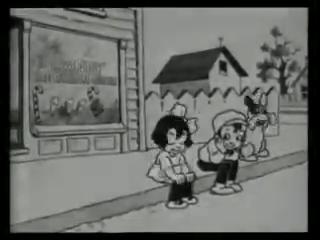
In the annals of early cinema, where brevity often belied thematic depth, Wallace A. Carlson’s Dud's Home Run stands as a fascinating, if understated, artifact. This short film, a product of an era still grappling with the burgeoning language of the moving image, distills a universal childhood experience into a potent, almost archetypal narrative. It’s a testament to the power of silent storytelling, where gesture, expression, and the stark simplicity of the plot carry the entire weight of meaning. Carlson, credited as both writer and part of the cast, leverages the nascent medium to explore themes that resonate far beyond the confines of its brief runtime: the impulse towards independence, the rigid structure of parental authority, and the often-painful lessons learned within the domestic sphere. It’s a vignette that, despite its apparent straightforwardness, invites considerable contemplation on the nature of childhood, discipline, and the elusive concept of freedom.
The film’s central conflict, initiated by Dud’s audacious act of breaking open a coin bank, is more than mere mischief; it represents a primordial assertion of agency. For a child, a coin bank is often the first tangible symbol of personal wealth, a repository of future dreams, however small. To breach it, to claim its contents without permission, is to challenge the very foundations of established order, both familial and societal. It's a nascent form of economic rebellion, a desire to accelerate gratification, to bypass the tedious accumulation process. This impulse, while seemingly trivial to an adult, is monumental in the mind of a child, signifying a yearning for control over one's immediate circumstances. Dud isn't merely seeking candy money; he's testing the boundaries of his world, pushing against the invisible fences that delineate acceptable behavior. This early act of self-determination, however misguided, sets the stage for a drama that is both deeply personal and universally recognizable.
The mother’s swift and decisive response – the spanking – is depicted not as an act of cruelty, but as a conventional exercise of parental authority in the early 20th century. Discipline during this period was often direct, physical, and immediate, reflecting a societal belief in the necessity of firm boundaries for child-rearing. This isn't a nuanced psychological intervention; it's a clear, unequivocal statement of consequence. The mother, in this context, embodies the societal norms of the era, the unyielding guardian of household rules and moral rectitude. Her action, while jarring to a modern sensibility, would have been understood by contemporary audiences as a justifiable, even necessary, response to a child’s transgression. The effectiveness of such discipline, however, is immediately questioned by Dud's subsequent flight, suggesting that while physical punishment might enforce compliance, it doesn't necessarily quell the underlying spirit of rebellion or truly teach a lasting lesson without further understanding. This immediate reaction from Dud highlights the film's subtle commentary on the limitations of purely punitive measures, even if unintentional.
Dud’s decision to run away from home is a classic childhood fantasy, a desperate bid for escape when faced with overwhelming parental displeasure. It’s a trope explored in countless narratives, from literary classics to cinematic adventures. The act of running away is an attempt to rewrite one’s reality, to seek a world where rules are less stringent, where desires are met without consequence. Yet, the film subtly, almost tragically, exposes the futility of such an escape for a child. The world beyond the familiar threshold, far from offering boundless freedom, is often a more daunting, less forgiving place. A child’s limited resources, understanding, and capacity for self-sufficiency quickly become apparent. This poignant reality is a recurring theme in films dealing with youthful escapades. For instance, while not a direct narrative parallel, the spirit of youthful ambition and the eventual encounter with harsh reality found in a film like The Country Boy might resonate with Dud’s journey, albeit in a more dramatic scale. Both explore the idealism of youth confronting the often-unyielding nature of the world. Dud’s journey, however brief, is a microcosm of this larger struggle, highlighting the profound dependence of a child on their domestic environment, even one that occasionally inflicts discomfort.
The film's denouement, Dud’s return and the repetition of the spanking, is where the title Dud's Home Run acquires its ironic, almost tragic, resonance. A "home run" typically signifies triumph, a successful completion of a challenging journey, a joyous return to base. For Dud, however, his "home run" is anything but triumphant. It’s a circular journey, a return to the very point of pain he sought to escape. The second spanking is a stark reaffirmation of the inescapable nature of his situation, a powerful statement on the gravitational pull of home and the persistence of parental authority. It suggests that for a child, the concept of true escape or absolute autonomy is largely an illusion. The domestic sphere, with all its comforts and constraints, remains the primary crucible of their existence. This cyclical punishment underscores a profound truth: certain lessons, particularly those concerning boundaries and consequences, often require repetition to be ingrained. The lack of a clear resolution or a happy ending, in the conventional sense, lends the film a raw, unvarnished realism, reflecting a less sentimental view of childhood than often portrayed in later cinematic eras. It’s a narrative that avoids easy answers, instead presenting a stark, unblinking look at the dynamics of power and learning within the family unit.
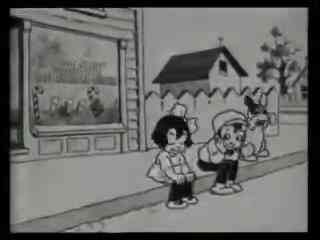
Wallace A. Carlson’s dual role as both writer and a member of the cast for Dud's Home Run speaks to the collaborative and often multi-hyphenated nature of early filmmaking. In an era before highly specialized roles became commonplace, pioneers like Carlson often wore many hats, shaping the narrative from conception to execution. His vision, however simple on the surface, captures a universal truth about childhood defiance and the often-harsh realities of growing up. As a silent film, the efficacy of Carlson's storytelling relies heavily on visual clarity and the expressive capabilities of his actors. Every gesture, every facial contortion, every movement, had to convey emotion and propel the narrative forward without the aid of dialogue. This demands a mastery of visual grammar, a skill Carlson evidently possessed, allowing him to distill complex interpersonal dynamics into a series of easily digestible, yet emotionally resonant, scenes. The film, therefore, serves as a valuable document of early cinematic technique, showcasing how narrative tension and character development could be achieved through purely visual means. The starkness of the black and white photography further enhances the almost allegorical quality of the tale, stripping away non-essential details to focus on the core emotional and thematic content.
Comparing Dud's Home Run to other films of its period or those with similar thematic undertones reveals its unique position. While films like The Sawdust Ring might delve into the spectacle and dreams of childhood within a specific setting, or The Gilded Youth might critique the superficiality of a certain social stratum, Carlson's film remains grounded in the raw, unadorned experience of domestic conflict. It lacks the grandiosity of historical epics like Karadjordje, choosing instead to focus on the intimate, often uncomfortable, moments that shape a child's understanding of the world. Even films exploring more dramatic forms of captivity or consequence, such as Held for Ransom, deal with external threats. Dud's predicament is entirely internal, a consequence of his own actions within the confines of his familiar environment. This makes his eventual "return" all the more poignant, as it is not a rescue from an external danger, but a re-entry into the very system of rules he attempted to evade. The film also contrasts with narratives that might romanticize childhood rebellion, such as Prudence, the Pirate, where defiance often leads to adventure and self-discovery. Dud's rebellion, by contrast, leads only back to the starting point, highlighting a more pragmatic, perhaps even cynical, view of youthful escapades.
The enduring legacy of Dud's Home Run, despite its humble origins, lies in its unflinching portrayal of a fundamental aspect of the human condition: the conflict between individual will and societal strictures, first experienced within the family. It’s a cinematic snapshot of an era’s approach to child-rearing, but also a timeless exploration of the limits of childhood autonomy. The simplicity of its plot allows for a universality that transcends its specific cultural context. Every viewer, regardless of their background, can likely recall a similar moment of childhood defiance, a similar attempt to bend the rules, and the inevitable confrontation with authority. This shared human experience is what elevates the film beyond a mere historical curiosity. It’s a testament to Carlson’s skill as a storyteller that he could evoke such profound themes with such minimal narrative scaffolding. The film invites us to reflect on the evolution of parenting philosophies, the changing definitions of childhood innocence, and the ways in which society has historically sought to mold its youngest members. It’s a powerful reminder that even the shortest films can leave an indelible mark, prompting introspection and dialogue long after the final frame.
Moreover, the film's significance extends to its contribution to the nascent art form itself. In an age where cinema was still finding its voice, films like Dud's Home Run were instrumental in establishing narrative conventions, character archetypes, and emotional arcs that would come to define the medium. Carlson, through his straightforward yet impactful storytelling, helped to lay the groundwork for future generations of filmmakers. His ability to convey a complete story, with a clear beginning, middle, and end, and to evoke a range of emotions without spoken dialogue, is a masterclass in silent film craftsmanship. The film serves as a valuable educational tool for understanding the historical development of cinema, showcasing the ingenuity and resourcefulness of early pioneers. It demonstrates how filmmakers, with limited technology and established techniques, managed to create compelling narratives that resonated with audiences. The film's unassuming nature belies its importance in the broader tapestry of cinematic history, offering a window into the creative spirit that defined the early decades of the moving picture. It’s a film that demands to be viewed not just as a historical curio, but as a thoughtfully constructed piece of art that speaks to enduring human experiences.
The thematic exploration within Dud's Home Run is surprisingly rich for its brevity. It touches upon the psychological impact of punishment, the development of a child's moral compass, and the foundational role of the family unit in shaping individual identity. Dud's journey, though physically short, is a significant emotional odyssey, marking a crucial step in his understanding of cause and effect. The film, in its quiet way, poses questions about the efficacy of fear as a disciplinary tool versus understanding and communication. While it doesn't offer explicit answers, the cyclical nature of Dud's experience suggests a deeper, perhaps more complex, lesson is yet to be learned, or that some lessons are simply ingrained through repeated, sometimes painful, encounters. This layered interpretation prevents the film from being a simplistic morality tale, elevating it to a more profound commentary on human nature. It's a reminder that the seemingly small conflicts of childhood often contain the seeds of larger, more complex struggles that define adulthood. The film, therefore, is not merely a depiction of a boy getting spanked; it is a meditation on the intricate dance between freedom and restraint, desire and consequence, that begins in the earliest stages of life. The very title, Dud's Home Run, with its blend of colloquialism and deeply ironic undertone, encapsulates this complex interplay, inviting viewers to ponder the true meaning of 'making it home' when the journey itself is fraught with lessons of submission and the often-unpleasant realities of growing up. It’s a film that, despite its age and simplicity, continues to provoke thought and discussion about the enduring challenges of childhood and the timeless dynamics of family authority.
IMDb —
1926
Community
Log in to comment.