DbcultAccessing Vault...
Cult Review
Senior Film Conservator
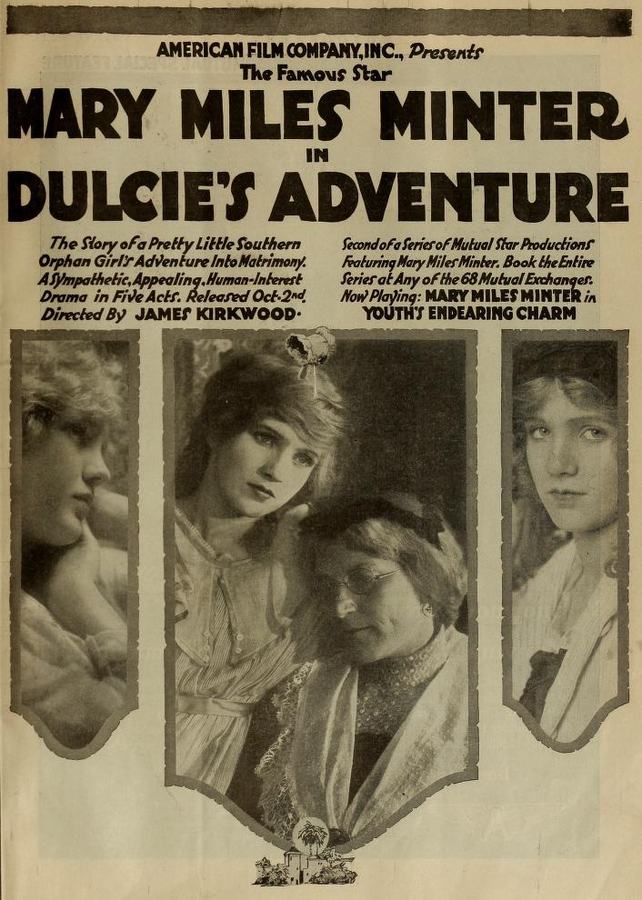
Ah, the silent era! A time when narratives, unburdened by dialogue, relied on the sheer power of visual storytelling, expressive performances, and the evocative pulse of a well-crafted score. Among the myriad films that graced the silver screen during this fascinating period, 'Dulcie's Adventure' emerges as a compelling, if somewhat melodramatic, exploration of love, sacrifice, and the enduring human quest for security – often at the expense of one's heart. It's a journey into a world where societal expectations and economic pressures could dictate a young woman's destiny, a theme that, despite its period setting, resonates with surprising contemporary echoes.
From the outset, the film immerses us in the plight of Dulcie, a young woman whose aristocratic Southern roots are now merely a faded memory, a grand ancestral home crumbling under the weight of financial destitution. This isn't just a personal setback; it's a societal fall from grace, a narrative common in the post-Civil War American South, where old money often found itself eclipsed by new industrial wealth. Dulcie's Aunt Netta, a character painted with broad strokes of desperation and pragmatism, becomes the architect of Dulcie's future, concocting a plan as bold as it is heartbreaking: a westward migration to California, a land of burgeoning opportunity and, crucially, a perceived abundance of eligible millionaires. The goal is starkly clear: find a wealthy husband for Dulcie, thereby restoring the family's fortunes and, perhaps more importantly, their social standing. It's a Faustian bargain, thinly veiled beneath the guise of familial duty.
Dulcie, portrayed with a delicate blend of innocence and burgeoning resolve by Mary Miles Minter, is not without her own affections. Her heart belongs to Harry, a sweetheart back home, whose earnest love stands in stark contrast to the transactional nature of her aunt's ambitions. This internal conflict forms the emotional core of the film: the clash between genuine affection and the crushing weight of obligation. Aunt Netta, ever the strategizing matriarch, triumphantly engineers an engagement between Dulcie and a seemingly wealthy suitor. The arrangement is presented as a victory, a necessary evil, a sacrifice Dulcie must make for the greater good of her impoverished family. Minter's performance here is particularly poignant, conveying Dulcie's quiet resignation and the palpable sense of impending doom that accompanies her acceptance of this loveless union.
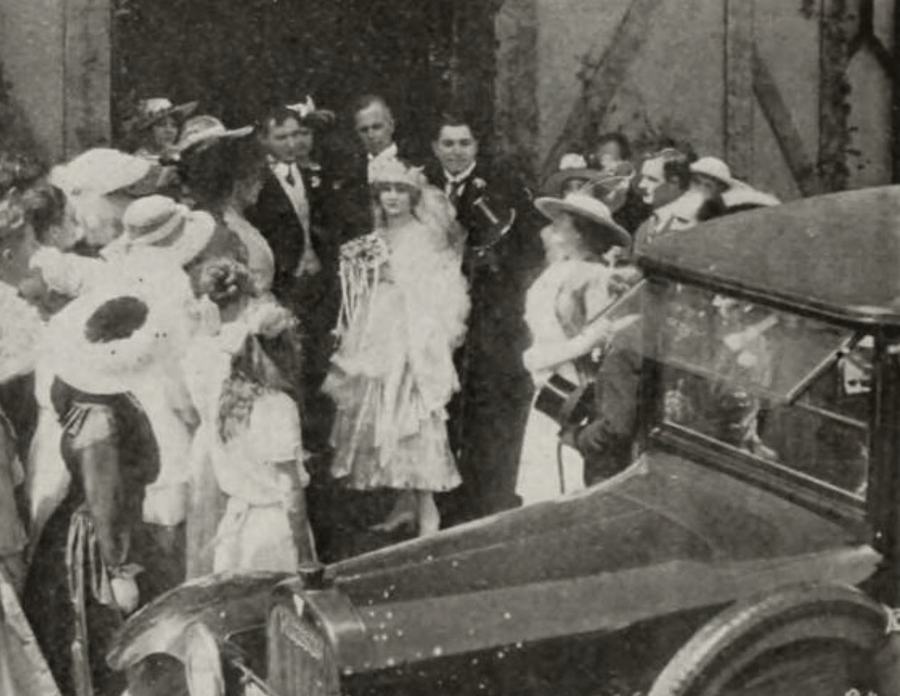
The narrative builds towards the inevitable wedding day, a day steeped in a solemn, almost funereal atmosphere for Dulcie. She is preparing to offer herself up, a living sacrifice on the altar of financial solvency. But then, as often happens in the grand tradition of silent cinema, fate intervenes with a dramatic flourish. Just as the vows are about to be exchanged, the carefully constructed facade of her fiancé's wealth crumbles. His millions, it turns out, are not his own; they are the spoils of illicit activities. The shocking revelation culminates in his arrest at the altar on a bank robbing charge, a moment of delicious, if somewhat abrupt, poetic justice. This sudden twist not only shatters Dulcie's forced engagement but also liberates her from a future she never desired.
In a perfectly timed cinematic flourish, Harry, Dulcie's true love, arrives on the scene. Having journeyed West with the singular purpose of reclaiming his beloved, he walks into the chaos of the interrupted wedding. Without a moment's hesitation, seeing Dulcie's predicament and the sudden vacancy at the altar, he volunteers to take the arrested fiancé's place. It's a grand, romantic gesture, perhaps a touch unbelievable by modern standards, but perfectly fitting for the era's dramatic sensibilities. Dulcie, now free from the shackles of a fraudulent engagement and face-to-face with genuine affection, accepts his offer instantly, bringing a heartwarming and undeniably satisfying conclusion to her adventure. The film, in its final moments, champions true love and moral rectitude over mercenary pursuits, a comforting message for its contemporary audience.
The success of 'Dulcie's Adventure' largely hinges on its cast, particularly the nuanced portrayal of its central figures. Mary Miles Minter, a prominent star of the era, imbues Dulcie with a captivating blend of vulnerability and quiet strength. Her expressions, often subtle yet profoundly impactful, convey the character's internal struggle without the need for extensive intertitles. We witness her initial despair, her reluctant acceptance of her fate, and finally, the radiant relief and joy upon Harry's arrival. Minter’s performance is a masterclass in silent film acting, where emotion is communicated through gesture, gaze, and posture, making Dulcie a character with whom the audience can deeply empathize.
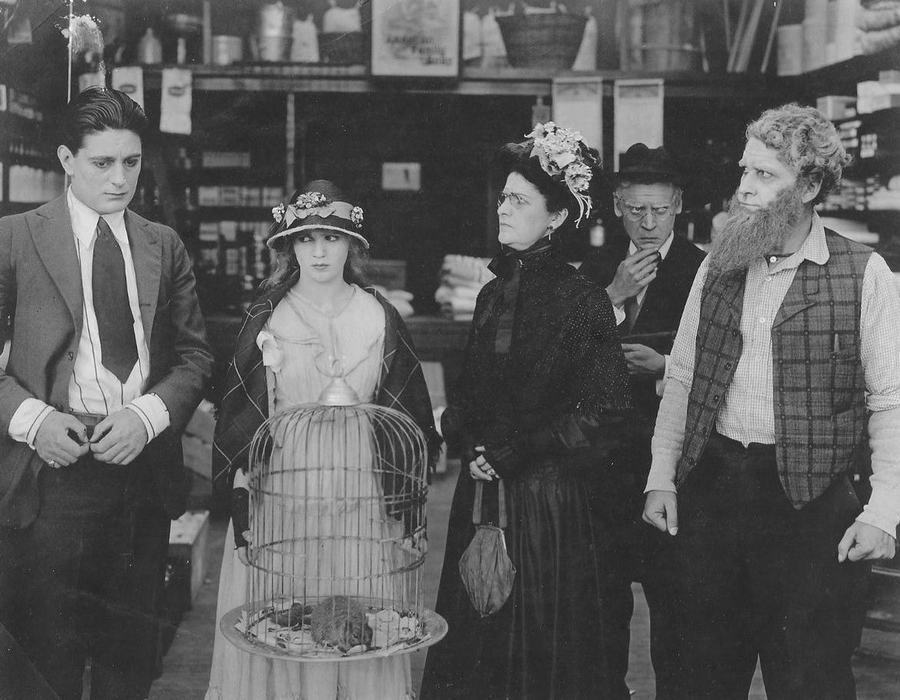
Harry von Meter, as the steadfast Harry, provides the necessary anchor of genuine affection. His character represents the ideal romantic hero of the time: brave, loyal, and unwavering in his pursuit of love. While perhaps less complex than Dulcie, his sincerity is crucial to the film's emotional payoff. His journey West, a testament to his devotion, is a classic trope, effectively executed and providing the much-needed contrast to the calculating machinations of Aunt Netta. Marie Van Tassell as Aunt Netta is another standout. She's not a villain in the traditional sense, but a woman driven by desperation and a misguided sense of duty. Van Tassell plays her with a determined intensity, making her actions understandable, if not entirely sympathetic. Her performance highlights the societal pressures placed upon women of the era, particularly those facing financial ruin, to secure advantageous marriages.
The writers, William Pigott and R. Strauss, deserve commendation for crafting a narrative that, while adhering to many silent film conventions, still manages to deliver genuine emotional beats and a satisfying dramatic arc. They understood the power of visual storytelling and used it to full effect, allowing the actors' physicality and facial expressions to carry much of the emotional weight. The pacing, typical of early cinema, builds steadily towards the climax, with the final reveal and resolution feeling earned, despite its theatricality.
At its heart, 'Dulcie's Adventure' is a poignant commentary on the eternal conflict between love and money. This theme, a cornerstone of countless narratives throughout history, is explored with particular clarity in this silent film. Dulcie's predicament forces her to confront the stark reality that, for many women of her time, marriage was less about romantic love and more about economic survival and social standing. Her initial willingness to sacrifice her happiness for her family's financial stability speaks volumes about the societal expectations placed upon women, especially those from 'good' but impoverished families.
The film also touches upon the transient nature of wealth and the dangers of superficiality. The fiancé's grand display of riches is ultimately revealed as a hollow deception, highlighting the moral bankruptcy that can accompany ill-gotten gains. This serves as a cautionary tale, contrasting sharply with Harry's honest, if less opulent, affection. The dramatic arrest at the altar is not just a plot device; it's a moral judgment, a cinematic affirmation that true value lies not in material possessions but in integrity and genuine human connection. This mirrors the thematic undercurrents seen in other films of the period, such as The Cheat, which, though far darker in its exploration, also delves into the moral compromises made under financial duress.
Furthermore, 'Dulcie's Adventure' subtly explores the burgeoning concept of female agency, even within the confines of societal expectations. While Dulcie is initially a passive recipient of her aunt's plans, her acceptance of Harry's offer is a moment of profound choice. It's not just a rescue; it's an active decision to choose love and authenticity over a life of pretense. This nascent exploration of a woman asserting her own desires, even if facilitated by a 'hero,' was a significant step in cinematic portrayals of women, contrasting with more overtly passive heroines in some earlier works.
As a product of its time, 'Dulcie's Adventure' showcases many of the stylistic conventions of early silent cinema. The film relies heavily on strong visual compositions, clear character blocking, and exaggerated expressions to convey narrative and emotion. While modern audiences might find some of the acting broad, it was entirely appropriate for the performance style necessitated by the lack of synchronized sound and the need to project emotion to the back rows of often cavernous picture palaces. The use of intertitles, while sometimes lengthy, is crucial for advancing the plot and providing insight into characters' thoughts, acting as a silent narrator guiding the audience through the emotional landscape.
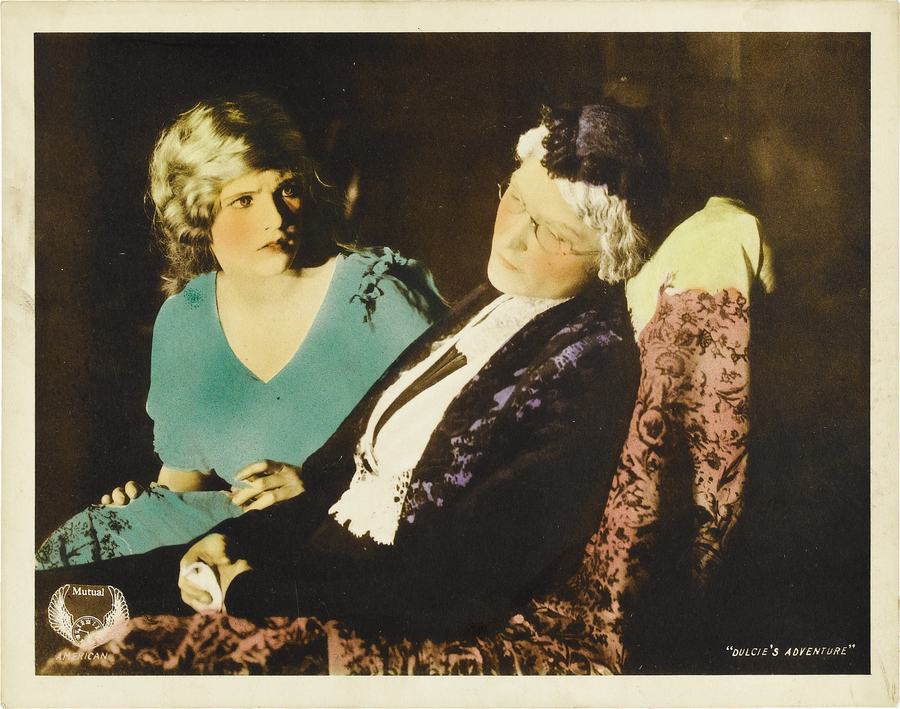
The film's setting, from the faded grandeur of the Southern home to the more opulent, if deceptive, Californian residences, is effectively used to underscore the themes of social standing and economic disparity. The costumes, too, play a vital role, with Dulcie's wedding gown symbolizing both her impending sacrifice and, ultimately, her liberation. The dramatic tension is expertly managed, building slowly through the aunt's machinations and Dulcie's internal turmoil, culminating in the exhilarating climax at the wedding. This narrative structure, with its clear setup, rising action, climax, and swift resolution, is a hallmark of popular storytelling that continues to captivate audiences. Comparisons could be drawn to films like Held for Ransom, if that film similarly relies on dramatic, last-minute interventions to resolve its central conflict, or His Brother's Wife for its exploration of familial duty intersecting with romantic entanglements.
The film's exploration of societal pressures and the desperation of maintaining appearances finds parallels in other works of the period. The idea of a woman being forced into a marriage for economic reasons was a prevalent theme, reflecting the limited options available to women at the time. Consider The Other's Sins, if it similarly delves into the sacrifices made for family honor or financial stability. Even the trope of the 'hero' arriving just in time, while a classic, was a powerful wish-fulfillment fantasy for audiences grappling with their own economic anxieties. The film, in many ways, serves as a social document, reflecting the values, anxieties, and aspirations of early 20th-century America.
'Dulcie's Adventure' may not possess the sprawling epic scope of some of its contemporaries, nor the revolutionary cinematic techniques that would define later masterpieces. However, its strength lies in its unpretentious yet effective storytelling, its clear moral compass, and its engaging performances. It’s a film that speaks to the timeless human desire for authentic connection and the universal struggle against external pressures. The journey Dulcie undertakes, from a pawn in a cynical game to a woman who ultimately chooses her own happiness, remains a compelling narrative arc.
For enthusiasts of silent cinema, 'Dulcie's Adventure' offers a charming glimpse into the narrative styles and thematic concerns of the era. It’s a testament to the power of a well-told story, even without spoken words, to captivate and move an audience. The film, with its dramatic twists and heartwarming resolution, reinforces the enduring appeal of romance triumphing over adversity and the ultimate vindication of integrity. It's a reminder that even in an age dominated by economic anxieties and rigid social structures, the human spirit's yearning for genuine love and freedom could, and often did, find its triumphant 'adventure.'
IMDb 6.2
1916
Community
Log in to comment.