DbcultAccessing Vault...
Cult Review
Senior Film Conservator
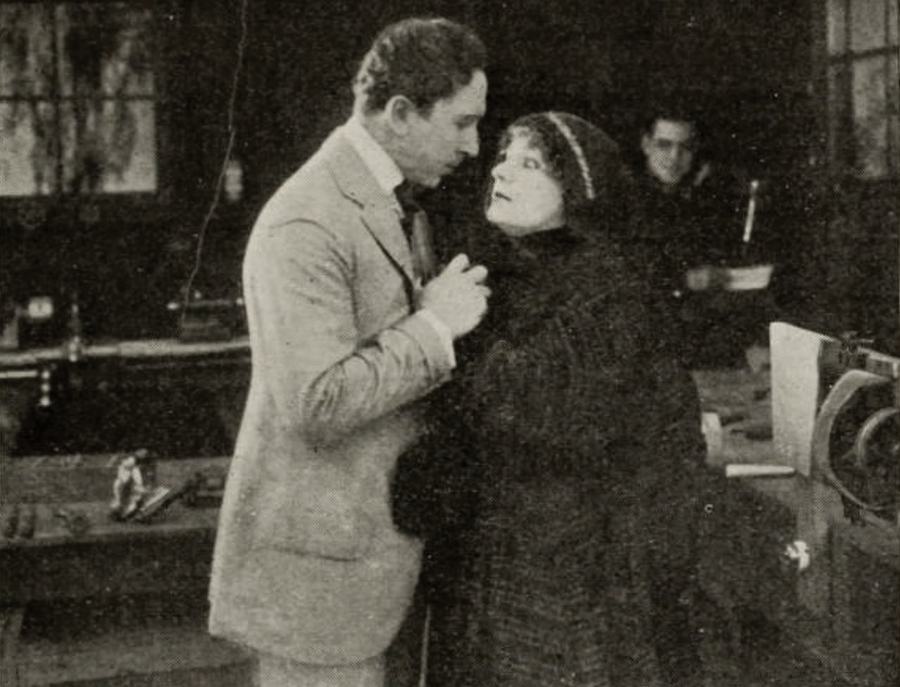
In the nascent years of American cinema, the medium often functioned as a mirror to the nation's burgeoning industrial anxieties. Dust, directed with a surprisingly modern sense of spatial irony, stands as a monumental example of the 'social problem' film. It is a work that refuses to allow its audience the comfort of distance, bridging the chasm between the opulent ballrooms of the elite and the grease-slicked floors of the factory. The film operates on a duality that is as relevant today as it was in 1916: the conflict between the aesthetics of charity and the ethics of systemic change. Unlike the more whimsical explorations of class found in The Marriage of Kitty, Dust plunges its characters into a crucible of soot and fire, demanding a visceral transformation that feels earned rather than scripted.
The narrative’s most striking sequence is the charity entertainment for the Belgian War Victims. Here, Marion Moore (played with a delicate but eventually steely resolve by Winifred Greenwood) portrays 'Humanity.' It is a masterstroke of irony by screenwriter Julian La Mothe. Marion is dressed in the ethereal robes of a goddess, receiving the adulation of her peers for her symbolic representation of suffering, while just miles away, the tangible humanity she purports to represent is being systematically ground down. This scene evokes the same sense of hidden grotesque reality found in Das Phantom der Oper, where a polished facade masks a world of pain. The 'dust' of the title refers not just to the factory floor, but to the metaphorical scales over the eyes of the ruling class.
When Mina, the child laborer, loses her hand to the machine, the film shifts from a social drama to a moral thriller. Frank Kenyon, the reformer, serves as the audience's surrogate, a man whose passion borders on the fanatical. His decision to bribe Marion’s chauffeur and force her into the slums is a radical narrative choice. It subverts the traditional romantic tropes of the era, replacing courtship with a forced confrontation with the real. The image of Marion, still in her 'Humanity' costume, standing in a hovel over a child dying of an opiate overdose—administered by a desperate mother to dull the pain of a mangled limb—is perhaps one of the most haunting visuals in silent cinema.
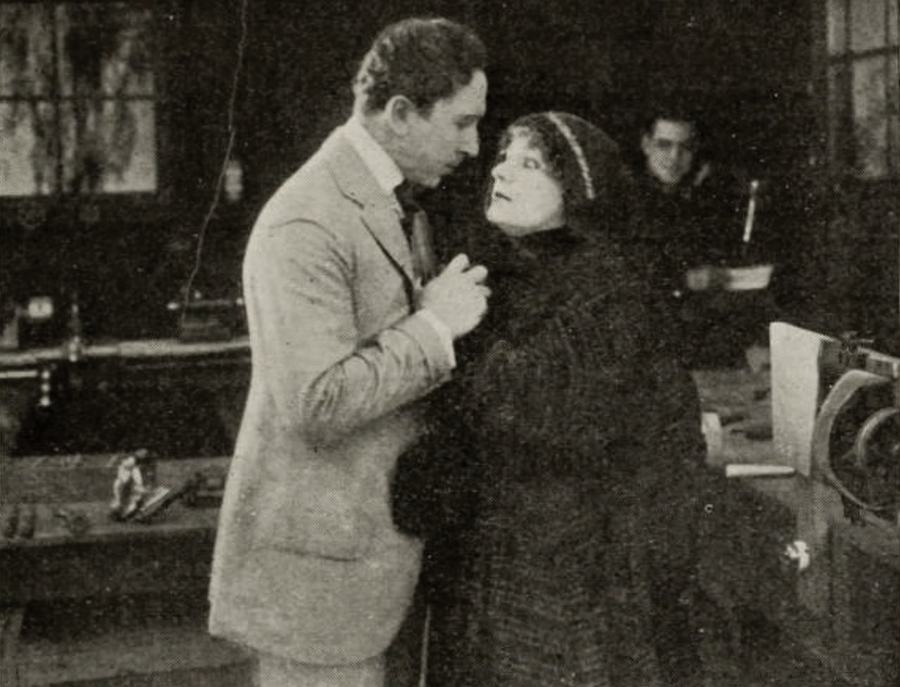
One of the most challenging aspects of Dust for a modern viewer is its portrayal of the 'animal mother.' After Mina’s death, Marion expects a display of maternal grief that fits her bourgeois sensibilities. Instead, she encounters a woman hardened by poverty, more concerned with the loss of Mina’s wages and the payments on a cheap piano than the loss of the child’s life. This is a brutal, unsentimental piece of writing. It suggests that poverty does not just starve the body; it atrophies the soul. While films like Bettina Loved a Soldier might romanticize the lower classes, Dust presents a world where survival has replaced sentimentality. Marion’s scornful laughter at Frank in this moment is the last gasp of her old self, a defense mechanism against the realization that her father’s wealth has created this monstrosity.
The second act of the film transitions into a political procedural, as Frank enters the legislature to pass safety laws. This expansion of the plot elevates Dust above mere melodrama. It acknowledges that individual acts of kindness are insufficient to combat the inertia of industrial greed. The tension during the passing of the bill mirrors the high-stakes drama of The War Correspondents, where the personal and the political are inextricably linked. However, the true climax is reserved for the factory fire—a staple of the era's spectacle, but utilized here with profound thematic weight.
The fire is started not by an outside force, but by the 'flimsy structure' itself, a direct consequence of Moore’s refusal to invest in safety. The sequence where Frank traverses a rope between buildings is a marvel of early stunt work, but its emotional resonance comes from the interaction between Frank, Bud (the young inventor), and Moore. When Moore shoves Bud aside to save himself, he seals his moral fate. In the grammar of silent film, the villain’s death must be a manifestation of their sins. Moore’s plunge into the flames is not just a death; it is a purgation of the old order. This sequence carries a visceral intensity that rivals the darker moments of Life Without Soul, where the creator is inevitably destroyed by his creation.
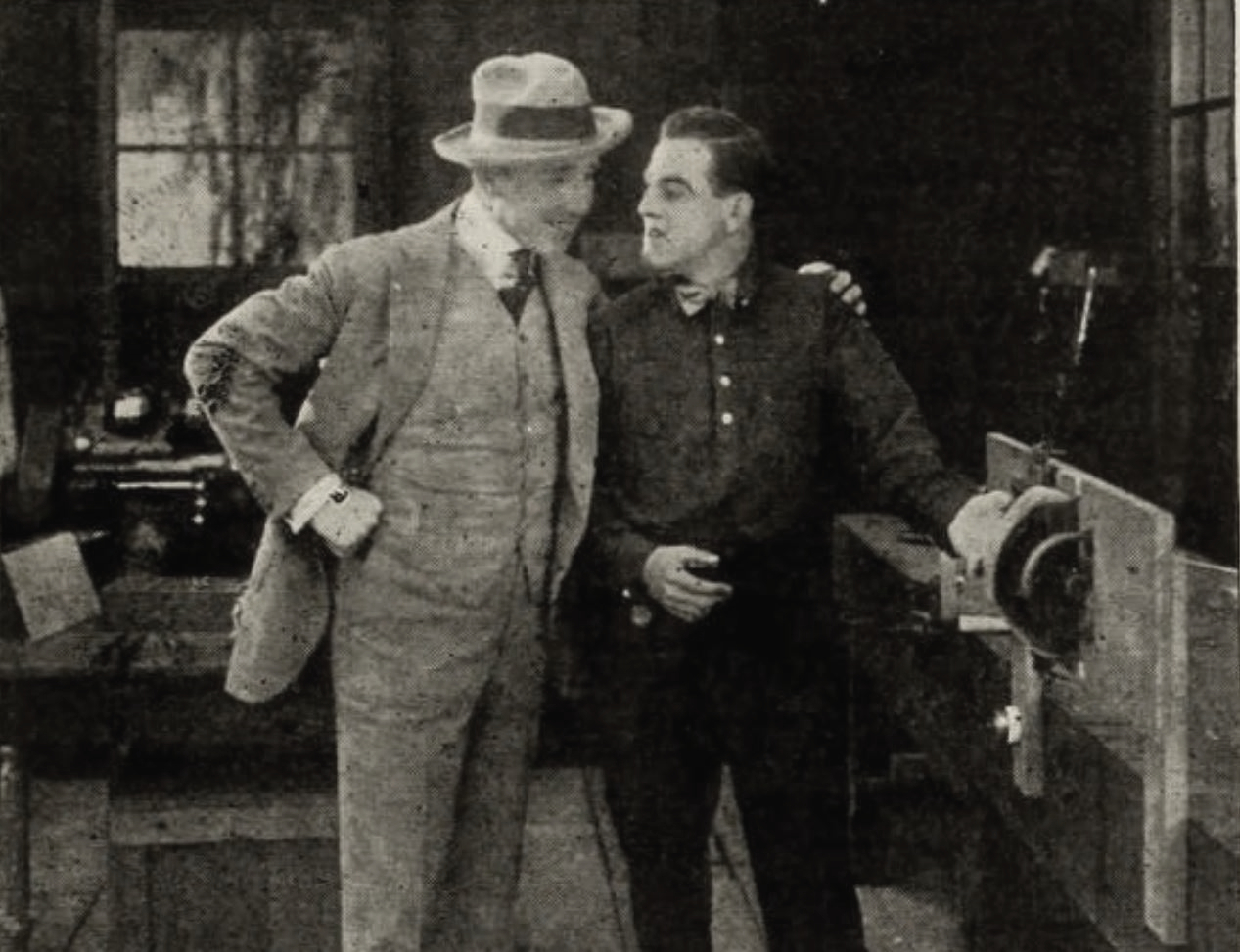
The resolution of Dust is surprisingly nuanced. It avoids the saccharine endings common in contemporary features like Snow White (1916). Marion does not simply marry Frank and live happily ever after; she undergoes a quiet, anonymous transformation. Her decision to fund charities through Bud, hiding her identity, suggests a genuine penance. She has moved from being the face of 'Humanity' to being its silent servant. This evolution reflects a sophisticated understanding of character growth that was rare for the time.
Technically, the film utilizes light and shadow to distinguish between the two worlds. The Moore estate is bathed in high-key lighting, creating an atmosphere of sterile perfection, while the factory and the tenements are defined by deep shadows and claustrophobic framing. This visual language prefigures the German Expressionism that would later define films like Das Phantom der Oper. The performances are equally noteworthy. Winifred Greenwood avoids the histrionics often associated with silent divas, opting instead for a restrained performance that makes her eventual breakdown all the more impactful. William Marshall’s Frank is a proto-typical hero, yet his methods are questionable enough to make him a complex figure—a man who is willing to kidnap a woman to save her soul.
When compared to Griffith’s The Battle of the Sexes, Dust feels more grounded in the economic realities of its time. While Griffith focused on the moral failings of the individual, Dust targets the failings of the system. It shares some of the detective-like pacing of Monsieur Lecoq, particularly in Frank’s investigation into the factory conditions, but its heart is firmly in the realm of social realism. Even in its more melodramatic moments, such as the rooftop rescue, it never loses sight of the 'dust'—the gritty, unglamorous reality of the working class.
In the pantheon of 1916 cinema, Dust is an essential watch for those interested in the roots of political filmmaking. It lacks the cynicism of modern social critiques but possesses a moral clarity that is refreshing. It reminds us that cinema has always been a tool for empathy, a way to force the 'Humanity' on the stage to look at the humanity in the gutter. Whether it is the tragic trajectory of Mina or the redemption of Marion, the film leaves an indelible mark on the viewer, much like the soot that clings to the characters’ skin. It is a film about the cost of progress and the price of a soul, rendered in flickering black and white with a power that remains undimmed after a century.
Dust is a masterclass in silent storytelling, utilizing high-stakes melodrama to deliver a potent social message. Its exploration of the disconnect between philanthropy and justice is hauntingly prophetic. While some elements of its class portrayal are dated, its core message remains a vital call to conscience. A landmark of the era that deserves a place alongside the works of the great silent masters.
IMDb —
1918
Community
Log in to comment.